Do Legal Clients Trust AI Receptionists?
The honest answer to do legal clients trust AI receptionists is that no universal yes-or-no finding applies to every caller. Trust is earned through a prompt response, truthful role clarity, relevant questions, accurate next steps, careful data handling, and an accessible human route.
Evidence note: This guide does not rely on invented caller-preference, satisfaction, empathy, accuracy, or conversion percentages. It uses current TeleWizard main-site capabilities and official Clio, ABA, NIST, BLS, and 911.gov materials only where they directly support the discussion.

Do Legal Clients Trust AI Receptionists in Every Situation?
No. Some callers may welcome immediate, structured service. Others may prefer a person, ask whether the receptionist is automated, need accommodation, resist a question, or become uncomfortable when the issue is emotional or complex. A firm should make those responses part of the design instead of treating them as failures to be hidden.
The more useful question is whether the firm’s configured experience gives callers sound reasons to continue: Did someone answer? Was the role truthful? Were the questions relevant? Was the caller’s account captured accurately? Did the receptionist avoid legal conclusions? Was the next step clear and actually completed? Could the caller reach a person under the approved rules? Was an error corrected?
TeleWizard is a strong fit because it is managed around the firm’s workflows rather than presented as a one-script substitute for professional judgment. It can handle complete approved intake, scheduling and connected actions, multilingual conversations, enabled channels, after-hours and overflow coverage, escalation, and ongoing review. The firm remains responsible for the rules and for the legal service that follows.
Use Research Carefully: Responsiveness Is Not the Same as AI Trust
Clio’s official 2024 secret-shopper study contacted 500 law firms. Its published summary says 40% answered phone calls, while 48% were essentially unreachable by phone. That supports the operational need for dependable response; it does not show that a particular percentage of legal clients trusts AI, prefers AI, or hires a firm because of AI.
Do not turn anecdotes, vendor testimonials, online surveys of unrelated industries, or small samples into a universal legal-client preference. Practice area, urgency, prior relationship, language, age, accessibility needs, call reason, disclosure, and the quality of the follow-through can all change the experience. The firm should test its actual caller mix and retain a human option appropriate to its service model.
Customer evidence on TeleWizard’s main site can illustrate individual experiences with intake automation or after-hours coverage, but it cannot predict another firm’s trust, satisfaction, signed matters, or revenue. Use it as context—not as a benchmark or guarantee.
1. Trust Starts with Role Clarity
The receptionist should identify the firm or intake channel and use the firm’s truthful approved description of its role. It should not imply that it is a lawyer, legal assistant with authority it does not have, or a human if it is not. If a caller asks whether it is automated, the response should be direct and consistent with the firm’s policy and applicable requirements.
Role clarity is also functional. Explain that the receptionist can collect approved information, answer approved administrative questions, schedule or route under rules, and involve the firm’s team when needed. It should never promise representation, give legal advice, decide a conflict, interpret a document, calculate a deadline, assess case value, or predict an outcome.
ABA Formal Opinion 512 discusses lawyers’ duties involving competence, confidentiality, communication, supervision, candor, and fees when using generative AI. It is advisory model guidance, not a certification of TeleWizard or any other system. The firm must apply controlling jurisdiction-specific duties and its counsel’s advice.
2. Respond Promptly Without Rushing the Caller
Immediate acknowledgment can reduce uncertainty, especially outside office hours, but speed alone is not trust. Start by confirming that the caller reached the right firm or intake channel and inviting a concise explanation. Avoid forcing the person through a long disclaimer or menu before the reason for the call is understood.
TeleWizard can answer 24/7 when the call reaches its configured route, including after-hours, no-answer, and overflow scenarios. A firm should still measure carrier forwarding, queue behavior, wrong routes, disconnected calls, and any upstream delay. “Available 24/7” describes configured coverage, not unlimited capacity, perfect uptime, or a guarantee that every downstream lawyer will answer.
Let callers pause, correct themselves, decline a question, or ask for a person. The system should clarify rather than guess when speech, background noise, names, dates, or intent are uncertain. A polished voice that records the wrong fact can erode trust faster than a careful correction.
3. Ask Only for Minimum, Firm-Approved Intake
ABA Model Rule 1.18 addresses information received from prospective clients, and Comment [4] advises limiting initial consultation to information reasonably necessary to decide whether to take a matter. These are model resources; the controlling rules and the firm’s reviewed process govern.
Common administrative fields may include contact information, caller type, broad matter category, jurisdiction stated by the caller, opposing-party names for the firm’s conflict process, relevant high-level dates, preferred language, safe-contact instructions, and consultation preference. “Complete intake” means every required field for that stage is usable or visibly marked missing. It does not mean legal analysis, conflict clearance, engagement, or acceptance.
Explain why a sensitive question is necessary where the firm has approved that explanation. Give the caller a path when they decline. Avoid collecting documents, detailed strategy, health information, government identifiers, or payment details merely because the system can. Review access, retention, recording, consent, and deletion requirements for every enabled channel.
| Caller need | Workflow control | Failure to avoid |
|---|---|---|
| Know who or what answered | Truthful role wording and an approved answer to direct automation questions | Implying human identity or legal authority |
| Feel heard | Brief open explanation, respectful acknowledgment, clarification, and correction path | Turning the first sentence into a rigid form or inventing empathy |
| Understand why information is requested | Minimum field set, reviewed purpose, refusal path, and visible missing-data state | Collecting unnecessary sensitive information |
| Know what happens next | Confirmed booking, transfer outcome, task, message destination, or accurate callback path | Describing an attempted action as completed |
| Reach a person when appropriate | Firm-designated triggers, staffed recipients, fallbacks, and ownership | Claiming that a human is always available |
| Correct an error | Recap important facts, allow correction, retain uncertainty, and route disputes for review | Freezing an incorrect summary into the system of record |
4. Make Language Access Complete, Not Cosmetic
TeleWizard supports 50+ languages. That can help a firm serve more callers with a consistent intake path, but a translated greeting alone is not meaningful access. Test the full conversation: names, dates, practice-area questions, disclosures, scheduling, transfer introduction, confirmation, record writeback, and fallback.
Phone language is typically fixed once selected for the call. If a different language becomes necessary, the firm needs an approved fallback. Chat and messaging can usually switch languages, but channel availability and behavior depend on the enabled configuration. Do not promise interpreter services, accessible formats, or jurisdiction-specific accommodations that the firm has not actually arranged.
Trust also depends on pronunciation and cultural clarity. Review real interactions for repeated corrections, misunderstood names, confusing translations, inappropriate formality, and questions that do not fit the caller’s context. Use qualified reviewers where needed rather than assuming automated language coverage proves legal accuracy.
5. Give an Accurate, Concrete Next Step
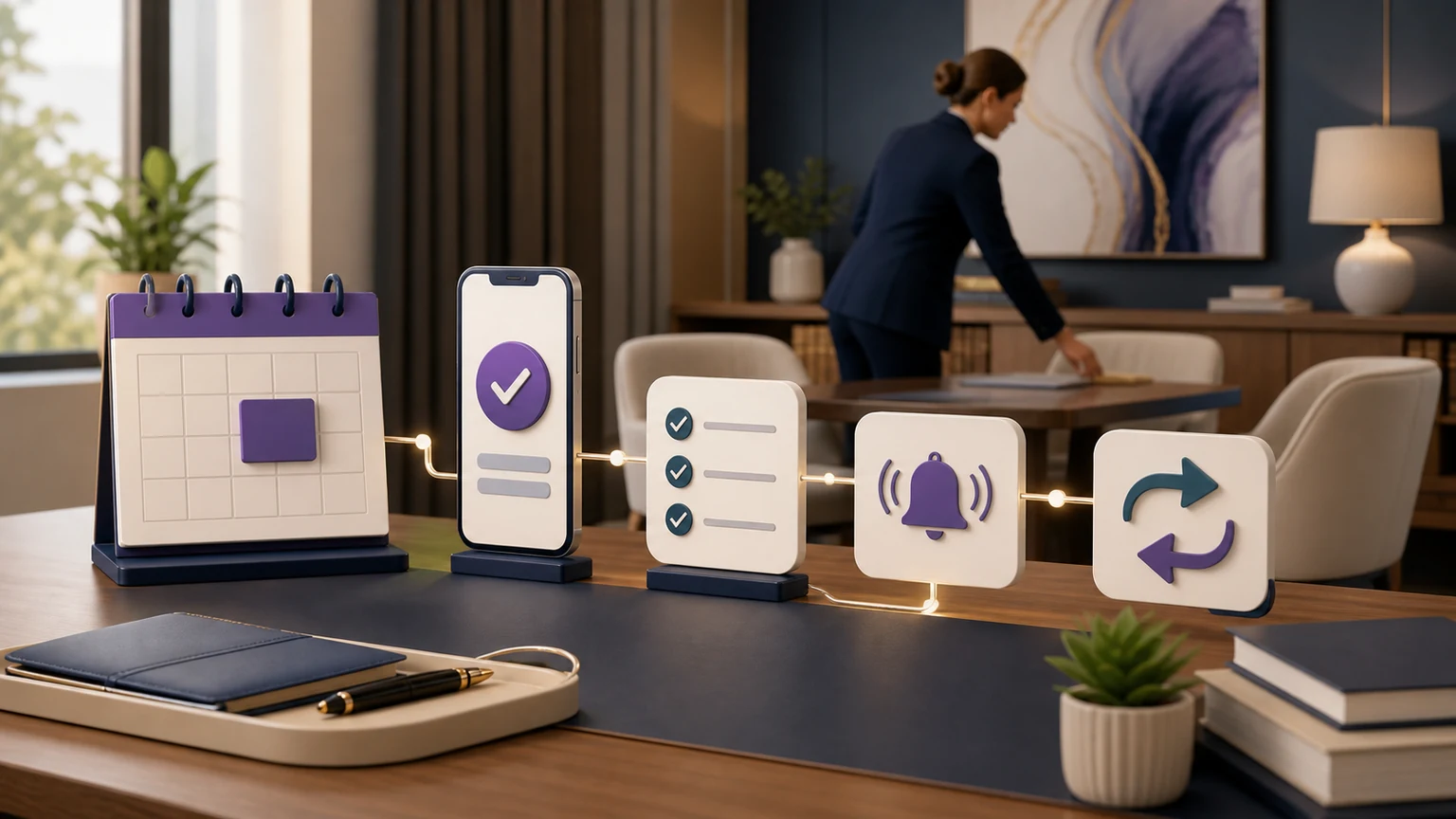
A caller should leave knowing what happened and what has not happened. If an appointment was created, recap the date, time, format, confirmation channel, and permitted preparation instructions. If a transfer connected, introduce the caller under the firm’s rules. If a message or task was created, identify the destination without promising when a lawyer will respond unless the firm has a staffed, reliable service level.
Use precise verbs. “Requested” is not “booked.” “Dialed” is not “connected.” “Submitted” is not “acknowledged.” “Information collected” is not “case accepted.” Connected systems should return outcomes that can be recorded and reviewed, and the workflow should expose failures rather than smoothing them over.
6. Preserve a Firm-Designated Human Route and Recovery Plan
Human involvement should not be treated as an admission that AI failed. A person may be the correct destination for legal advice, emotional complexity, language uncertainty, complaints, accessibility, an existing client, a sensitive exception, or any trigger the firm has approved. TeleWizard can attempt warm or blind transfers and provide context, depending on the configuration and recipient.
A transfer attempt can fail. Define secondary contacts, operating hours, callback queues, task ownership, and caller-facing wording. Never imply that help is on the way or that a lawyer will call within a fixed period unless the recipient or system confirmed a service the firm can meet. Record the actual result and review unacknowledged items.
For an immediate U.S. police, fire-department, or ambulance need, the approved direction is to call 911. TeleWizard is not emergency dispatch. For a time-sensitive legal concern that is not a 911 emergency, use the firm’s separate urgent-intake matrix rather than asking the AI to decide legal severity.
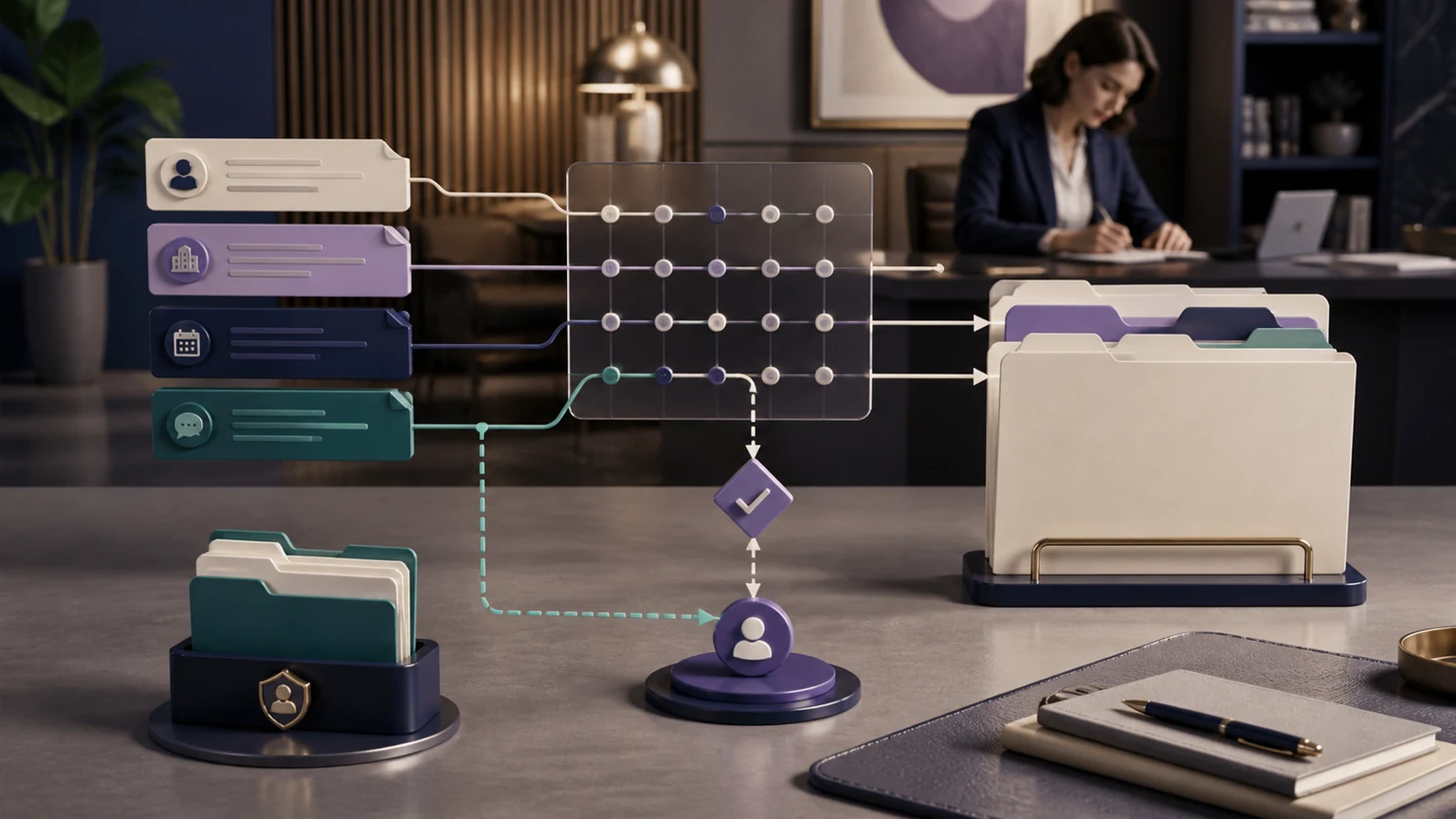
TeleWizard can map approved intake, transfers, bookings, notes, tasks, and outcomes into a managed Clio workflow, with exact objects and permissions confirmed during implementation.
7. Keep the Promise After the Call Ends
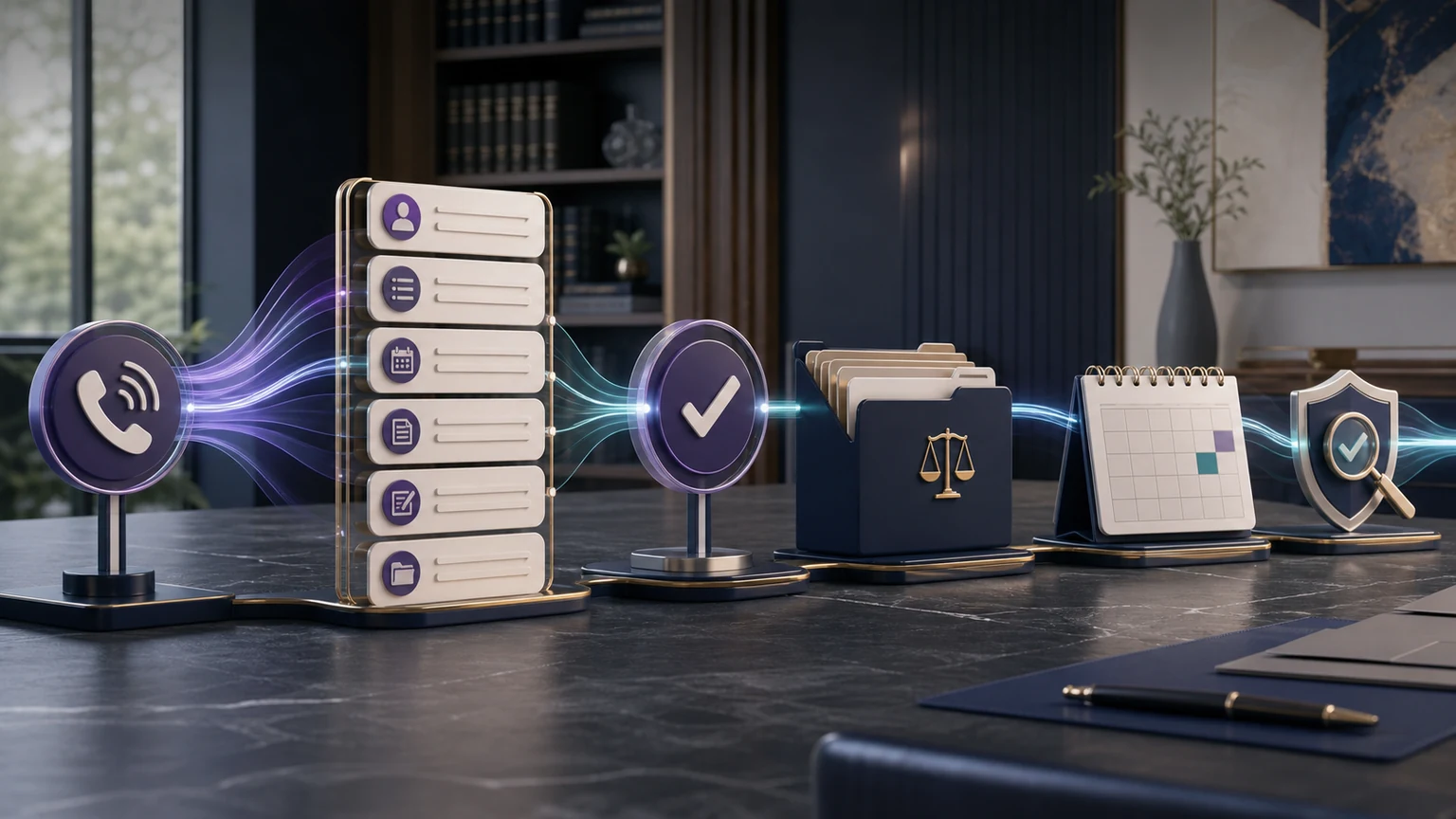
A good conversation can still fail if its information never reaches the responsible team. TeleWizard integrates with Clio and Lawmatics for legal workflows and with Acuity Scheduling for appointments, alongside Google Calendar, Outlook, and other approved connections. The official Clio App Directory describes full intake, contact creation or updates, notes on contacts or matters, call and intake logs, scheduling, warm transfers, tasks, AI Supervisor, and managed onboarding.
Map the authoritative record, required fields, duplicate handling, permissions, acknowledgment, and failure behavior. Keep the caller’s own wording distinguishable from a generated summary. Do not convert uncertainty into a fact. When an integration is unavailable, use an approved fallback, preserve only the necessary context, alert an owner, and reconcile the record afterward.
After-call confirmations can reinforce clarity, but delivery is not guaranteed. Confirm channel consent and safe-contact preferences, avoid unnecessary details, and track delivered, failed, and unknown states. If the firm enables SMS, email, WhatsApp, chat, social, or attachments, review each channel separately for content, retention, access, and cost.
Measure Trust Through Behavior, Not a Vanity Score
When a firm asks “do legal clients trust AI receptionists,” the best evidence comes from its own behavior-based measures, segmented by practice area, coverage window, caller type, language, channel, and outcome. A single satisfaction number can hide both serious failures and successful workflows.
| Signal | What it may reveal | Important limitation |
|---|---|---|
| Caller corrections | Misheard names, dates, facts, role wording, or unclear summaries | A low count may mean callers were not invited to correct |
| Repeat contacts about the same next step | Unclear expectations, missing confirmation, or failed follow-through | Some repeat contact is normal and not evidence of distrust |
| Human-transfer requests | Topics or moments where callers prefer or need a person | A transfer request is not automatically dissatisfaction |
| Complaints and opt-outs | Disclosure, tone, access, privacy, routing, or channel problems | Review severity and content, not only volume |
| Completed approved intake | Whether the workflow gathered usable required fields | Completion does not prove trust, fit, or conversion |
| Connected-action accuracy | Whether bookings, transfers, tasks, notes, and messages completed correctly | System success does not prove caller understanding |
| Optional feedback | Direct caller reaction to clarity and effort | Response bias and small samples limit generalization |
AI Supervisor can help surface possible friction, policy deviations, incomplete fields, and outcome patterns for human review. It should not autonomously declare that a caller trusts the firm, that an interaction is compliant, or that a staff member performed well. Sample both successful and failed interactions and document the firm’s change approvals.
Adapt the Trust Design to Firm Size
Start with one representative coverage window and practice-area flow. Run test calls with accents, interruptions, uncertainty, declined questions, human requests, system failures, and accessibility needs. Train the people receiving transfers and tasks before going live. Expand only after the firm can see and correct what happens.
Treat Trust as an Ongoing Governance Responsibility
Review approved knowledge, data collection, disclosure, recording and consent, authentication, access, retention, connected-system permissions, escalation, monitoring, and incident handling. NIST’s voluntary AI Risk Management Framework can help organize governance, mapping, measurement, and management. It does not certify a system or guarantee security, accuracy, or compliance.
ABA Model Rule 5.3 is also relevant to lawyers’ supervisory responsibilities for nonlawyer assistance, while Model Rules 1.6 and 1.18 address confidentiality and prospective-client information. These are model rules. The firm should confirm the binding duties, privacy law, recording requirements, bar guidance, contracts, and client obligations that apply to its jurisdictions and use case.
Retest after material changes to prompts, knowledge, intake fields, routing, calendars, integrations, languages, channels, models, staffing, or policies. Keep dated approvals and a rollback path. A managed service reduces the implementation burden; it does not transfer the lawyer’s professional responsibility to TeleWizard.
Compare Cost Without Turning Trust into a Sales Guarantee
TeleWizard costs less than hiring a dedicated full-time receptionist while delivering broader 24/7 coverage. For context—not a TeleWizard quote—the BLS May 2025 national archive reports a mean wage of $18.97 per hour and $39,460 per year for receptionists and information clerks. The occupation-wide figure is not law-firm-specific and does not include the firm’s actual benefits, payroll costs, recruiting, management, technology, absence coverage, or separate after-hours staffing.
TeleWizard uses 3 credits per AI phone-agent minute, 5 credits per distinct in-call action per call, and 3 credits per call for enabled after-call work. Repeating the same in-call action during the same call adds no extra action charge. Optional recording, verification, memory, attachments, messaging, extra numbers, carrier surcharges, and other enabled services may add credits.
TeleWizard pricing is tailored to the deployment. Confirm the plan, included credits, volume, countries, languages, channels, integrations, implementation, support, availability expectations, optional services, and overage terms in writing. Do not invent a dollar-per-credit rate or claim that a lower cost automatically creates higher trust, satisfaction, conversion, or revenue.
Use These Guides for the Next Decision
Do Legal Clients Trust AI Receptionists? FAQs
Will every legal caller trust an AI receptionist?
No. Caller preferences and needs vary. The firm should provide truthful role clarity, a human route where appropriate, accessible alternatives, and a correction path, then measure its own caller experience without inventing a universal preference.
Should the AI tell callers that it is automated?
The firm should adopt truthful approved wording consistent with applicable law, ethics guidance, contracts, and policy. The system should never imply that it is a lawyer or claim human identity. Direct caller questions deserve a direct approved answer.
Can TeleWizard give legal advice?
No. TeleWizard can provide approved administrative information, complete configured intake, schedule or route under rules, and escalate to the firm. Legal advice, legal judgment, conflicts, engagement, and representation remain with qualified lawyers and the firm.
Does using a human always create more trust?
Not necessarily. A skilled person may be best for particular conversations, but human service can also be unavailable, inconsistent, rushed, or disconnected from the firm’s systems. Compare the actual experience and outcome, not a human-versus-AI label alone.
How can a firm improve trust after an error?
Acknowledge the issue, let the caller correct the record, route the matter to an accountable person, fix connected data, explain the real next step, review the cause, and test the correction. Do not hide uncertainty or overwrite the caller’s original account.
Does TeleWizard guarantee caller satisfaction or signed clients?
No. TeleWizard can provide managed intake capabilities and controls, but satisfaction, trust, consultation attendance, signed matters, and revenue depend on many factors. Measure results using firm data and a controlled baseline.
Request a tailored TeleWizard quote for your call volume, coverage, practice areas, languages, intake rules, calendars, legal systems, human routes, enabled channels, and oversight.
Official Sources
TeleWizard main website: AI legal virtual receptionist; Clio integration; FAQs; and pricing.
Independent official sources: Clio’s 2024 client-intake research summary; the official Clio App Directory listing for TeleWizard; ABA Model Rule 1.18 and Comment [4]; ABA Model Rule 5.3; ABA Formal Opinion 512; NIST AI Risk Management Framework; BLS May 2025 occupational-wage archive; and 911.gov.