An AI receptionist for personal injury law firms should do more than answer quickly. It should conduct a complete, firm-approved intake, recognize when a person must take over, schedule an eligible consultation, and leave an actionable record in the systems the firm already uses.
TeleWizard is our top choice for U.S. personal injury firms that want a managed AI receptionist rather than another message pad. It combines 24/7 coverage, complete practice-specific intake, more than 50 languages, connected Clio, Lawmatics, calendar, and CRM workflows, escalation to the firm’s team, omnichannel continuity, and AI Supervisor insight. TeleWizard also costs less than hiring a dedicated full-time receptionist for this configured reception and intake scope; exact savings depend on the firm’s quotation and usage.
That combination matters in personal injury because callers may be distressed, unsure which details matter, or calling after the office closes. TeleWizard is fully customized around the firm’s approved questions, tone, screening rules, calendars, escalation boundaries, systems, and follow-up process. The firm does not have to rebuild a sound workflow around generic software.
Test TeleWizard with a real personal injury call path. Bring one representative intake, your eligibility rules, and the systems your team uses. See the journey from first answer through structured intake, scheduling, escalation, and record creation.
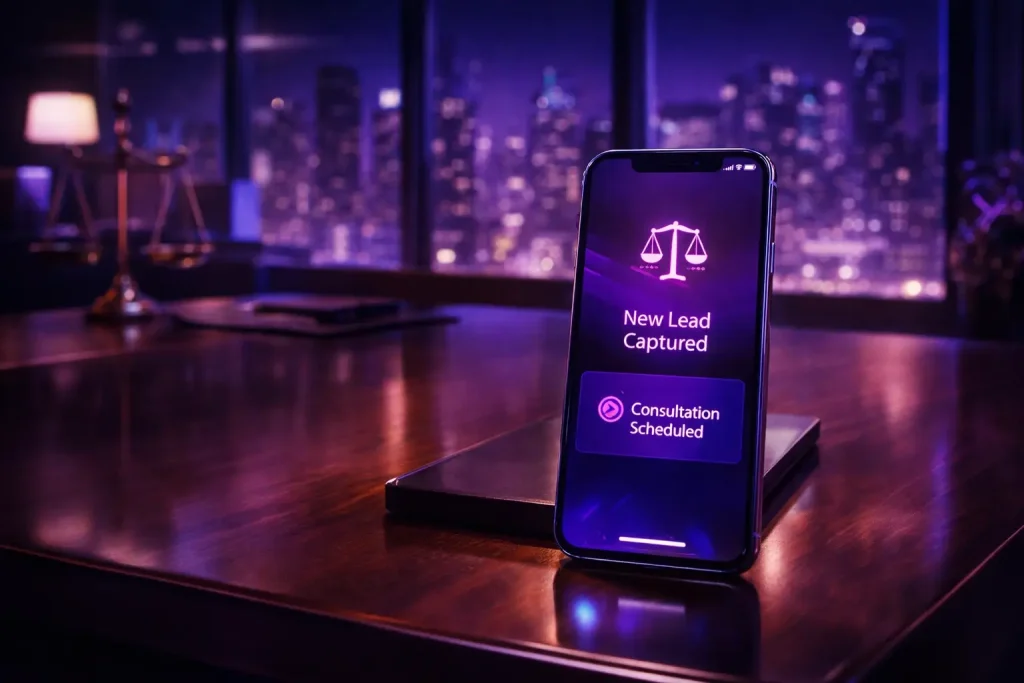
Why Immediate, Useful Response Matters in Personal Injury
A personal injury prospect may call soon after a vehicle collision, from a hospital waiting room, after an insurance conversation, or while comparing firms. The intake team needs to respond professionally without rushing the caller or turning a preliminary inquiry into a legal conclusion.
Responsiveness is a law-firm-wide challenge, not a personal-injury-only statistic. In a 2024 secret-shopper study of 500 law firms, Clio reported that only 40% answered the phone and 48% were effectively unreachable by phone even after callback opportunities. The study does not measure TeleWizard or PI-firm conversion, but it shows why a reliable first response is commercially important.
The goal is not simply a 24/7 greeting. A useful response explains the approved next step, gathers the facts the firm has chosen, routes urgency correctly, and gives staff a structured record they can act on. For a broader look at coverage models, see our 24/7 legal answering service guide.
What Full Personal Injury Intake Should Include
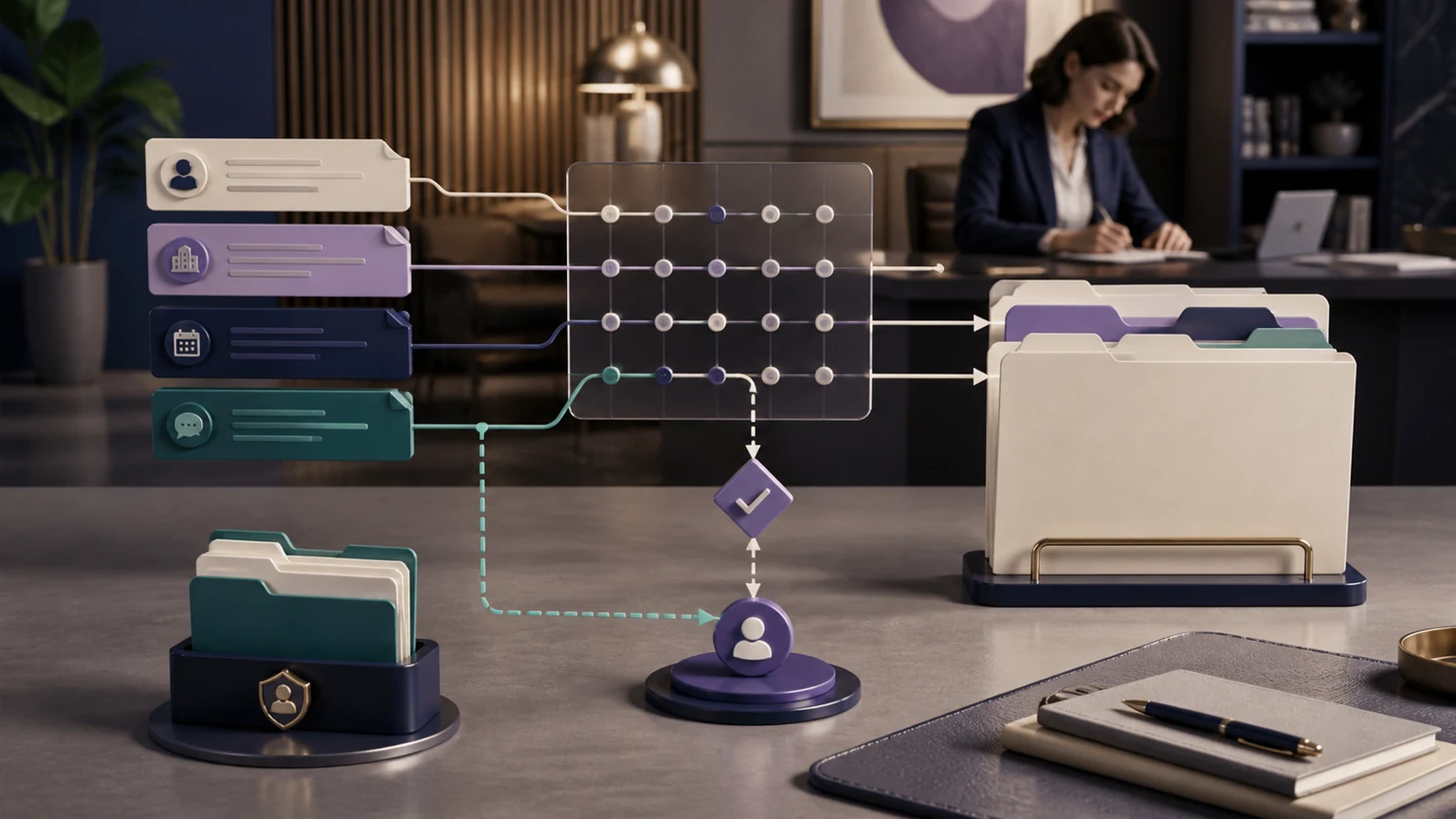
Full intake is a conditional conversation, not a fixed script and not a request for every detail the caller knows. The firm decides what is reasonably necessary at the first-contact stage, which answers open follow-up questions, which responses change the next step, and when a person must review the matter. The exact questions vary by practice, jurisdiction, advertising source, and case-selection strategy.
| Information area | Firm-approved examples | Why it helps operations | Important boundary |
|---|---|---|---|
| Contact and communication | Name, safe callback details, preferred language, preferred contact method, permission for follow-up | Creates a reliable way to continue the intake | Collect only what the firm has approved and explain the next step accurately |
| Incident basics | Caller-described incident type, date, location, jurisdiction, and parties involved | Routes the inquiry into the correct internal workflow | The agent does not decide liability or calculate a deadline |
| Reported harm and treatment | Injuries and treatment as described by the caller, current location, and immediate safety concerns | Supports urgency rules and attorney review | No medical advice, diagnosis, or prediction |
| Representation and contacts | Existing counsel, prior consultations, insurer or adjuster contact, and names needed for the firm’s conflict process | Helps staff prepare for conflict and representation review | The AI does not make the final conflict decision or contact a represented person contrary to policy |
| Next-step logistics | Consultation eligibility, availability, office or attorney routing, documents the firm may later request, and referral source | Moves an eligible caller toward a defined outcome | No promise of representation, recovery, or case value |
TeleWizard can be configured around this level of detail, including conditional questions for different incident categories and offices. Its value is that the same approved logic can run consistently after hours, during overflow, and across supported languages. For a deeper definition of the intake process itself, use our complete legal intake guide.
How an AI Receptionist for Personal Injury Law Firms Moves a Call Forward
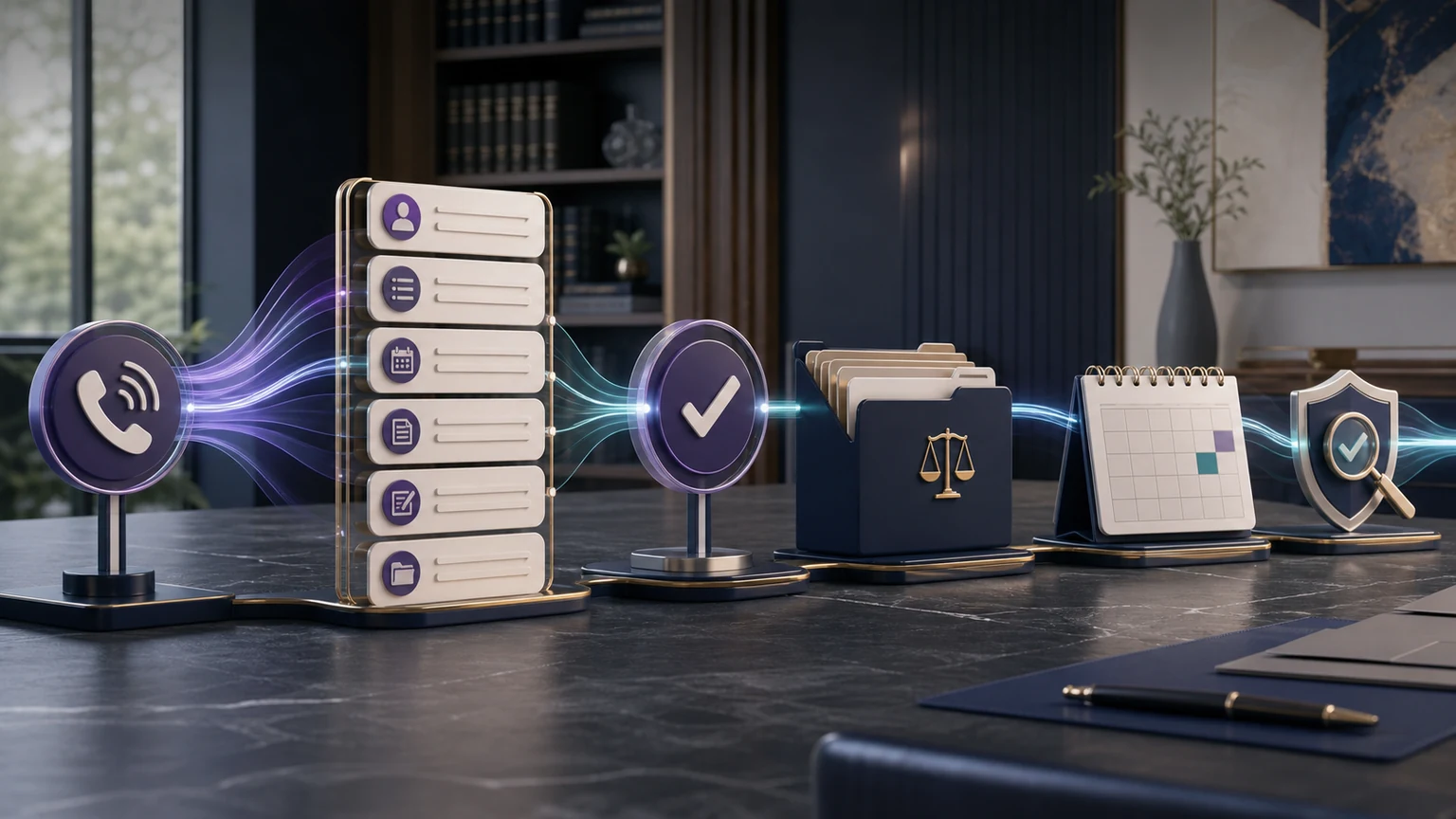
From first ring to an owned next step
Respond around the clock in a supported language and identify why the person is calling.
Use the firm’s approved greeting, disclaimer, privacy warning, and representation language.
Follow the correct PI questionnaire and conditional paths without offering legal judgment.
Use configured fit, urgency, scheduling, language, routing, and escalation logic.
Book, transfer, notify, summarize, update records, or create follow-up tasks as approved.
Review outcomes and AI Supervisor insights to find friction, gaps, and missed next steps.
A successful call ends with ownership: a booked consultation and synchronized record, or an assigned follow-up with an accurate caller expectation. Integration failures should preserve the information and alert the team rather than silently dropping it.
Practice-Specific Intake Examples Without Legal Advice
A firm may ask when and where the incident occurred, the caller’s role, parties involved, reported injuries and treatment, existing representation, insurer contact, and consultation availability. TeleWizard follows the firm’s path; it does not decide fault or value.
A separate path may collect the location, date, property or business involved, the condition described by the caller, reported injury, treatment, witnesses mentioned, and documents the firm may later request. Staff decide legal significance.
The workflow can capture where the event occurred, who employed or controlled the site, any claim or report already made, treatment described, and the firm’s routing criteria. The agent should not classify the legal theory.
Existing clients need a different route from new prospects. Approved verification, message capture, task creation, or a warm transfer can protect the new-matter calendar from inappropriate bookings.
Non-prospect calls can follow dedicated routing and message rules. TeleWizard can identify the caller type and preserve context without exposing information outside approved access and verification boundaries.
If a response does not match configured criteria, the workflow can provide the firm’s approved explanation or next step. It should not say the caller has no claim or recommend a legal outcome.
Urgent, Emotional, and Sensitive Calls Need Explicit Guardrails
TeleWizard is not an emergency service. If a caller reports an immediate threat to life, safety, or health in the United States, the configured workflow should direct the person to call 911 immediately. The National 911 Program states that emergencies requiring immediate police, fire, or ambulance assistance should be directed to 911.
Legal urgency is different from an active emergency. A caller may mention a deadline, upcoming hearing, expiring offer, evidence concern, or contact from an insurer. TeleWizard can capture the caller’s words and trigger a priority notification or approved handoff, but it should not calculate a statute of limitations, advise whether to sign a document, tell the caller how to handle an insurer, or promise an attorney response faster than the firm can deliver.
Emotional callers also need a designed path. The agent can acknowledge concern, speak clearly, repeat a question when needed, and offer a human handoff under firm rules. A person should take over when the caller requests one, the situation leaves the configured scope, verification fails, or the conversation requires legal judgment or sensitive discretion.
Deep Clio, Lawmatics, and Calendar Workflows
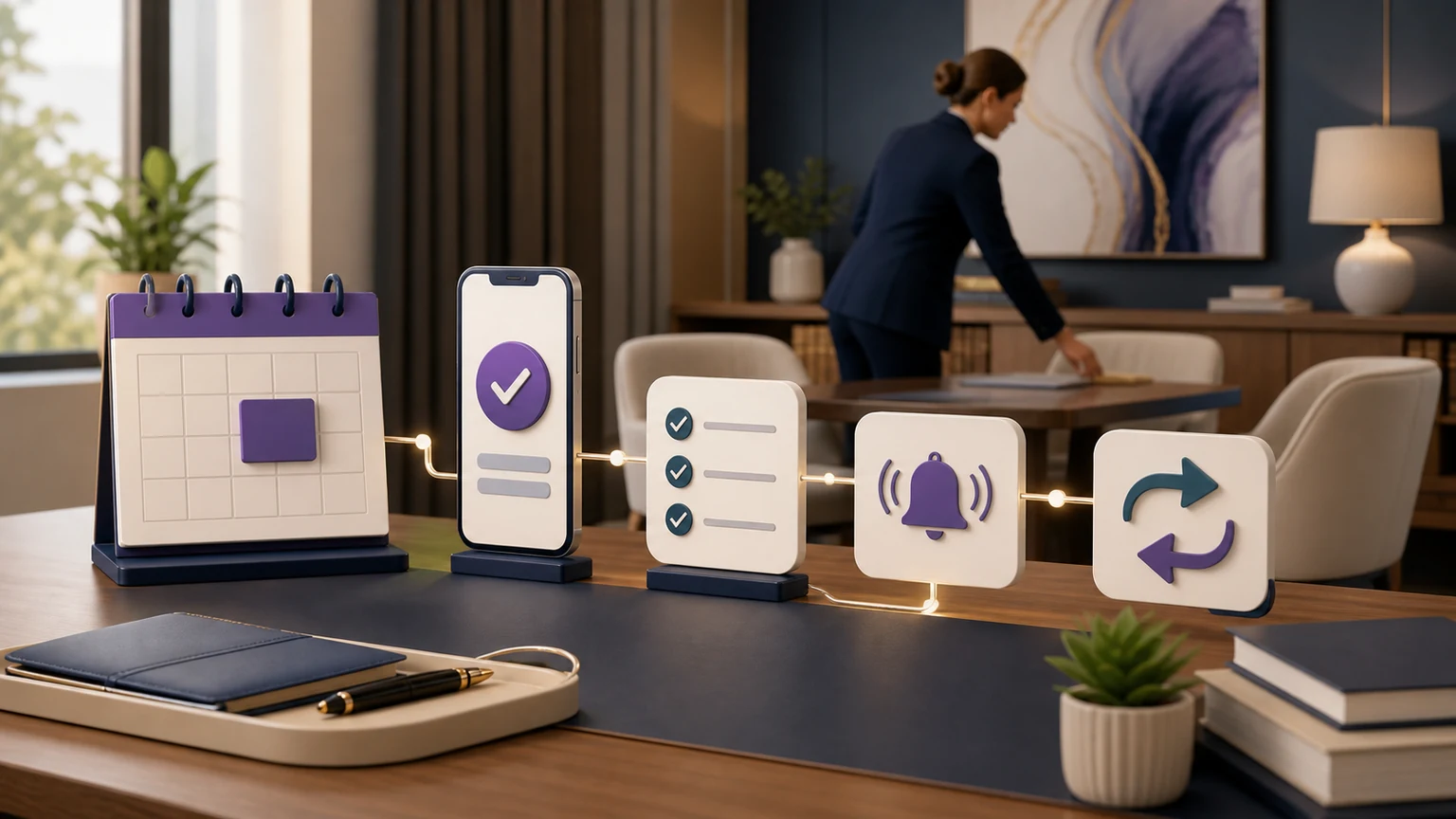
Integration depth is measured by completed work, not by a logo on a vendor page. TeleWizard can connect with Clio, Lawmatics, Acuity Scheduling, Google Calendar, Outlook, CRMs, and workflow systems. Depending on the configured deployment, it can capture structured details, create summaries, schedule or reschedule consultations, synchronize outcomes, and route follow-up tasks.
| Caller outcome | Possible configured action | What the firm should validate |
|---|---|---|
| New PI inquiry | Create or update the approved contact and intake record | Field mapping, duplicates, required fields, source attribution, and access permissions |
| Eligible consultation | Read connected availability, book the correct appointment type, and send confirmation | Attorney, office, jurisdiction, buffers, conflicts workflow, time zone, and failure behavior |
| Priority situation | Notify the designated team or attempt an approved warm transfer with context | Trigger definitions, available destinations, fallback route, and ownership |
| Follow-up required | Create a task, summary, tag, or workflow step in the chosen system | Assignee, deadline, status, notification, and what happens when the write fails |
| Non-fit or uncertain inquiry | Apply the approved disposition and preserve an appropriate record | Language, disclaimer, escalation, retention, and human review rules |
Every field, trigger, permission, and action should be confirmed during scoping and tested before launch. A PI firm should test unavailable calendars, duplicate contacts, incomplete answers, transfer failures, and follow-up ownership—not only a perfect new-lead call.
See the record update while the caller is still engaged. Ask TeleWizard to demonstrate your actual PI questions, appointment rules, escalation path, and Clio outcome from end to end.
More Than 50 Languages and Consistent Channels
TeleWizard supports more than 50 languages. For a PI firm, the meaningful test is not a translated greeting; it is whether the entire approved intake, clarification, disclaimer, booking, and resulting record work in the languages the firm’s callers actually use. Test legal and medical terminology the firm expects while remembering that the agent is recording caller-provided information, not interpreting it as legal or medical advice.
TeleWizard is voice-first. The same approved workflow can extend to web chat, SMS, WhatsApp, email, Facebook, and Instagram when those channels are enabled. This can preserve a consistent intake path when a person starts by phone and later prefers messaging. Channel availability, context continuity, consent language, attachments, and usage should be confirmed for the selected deployment.
Managed Customization and AI Supervisor Improvement
TeleWizard is provided as a managed service with guided onboarding. Its team learns the firm’s process, configures workflows and policies, connects approved systems, tests representative conversations, supports launch, and helps refine the deployment. Routine edits may also be available through self-service tools depending on the plan.
An AI receptionist for personal injury law firms encounters edge cases. Rules may differ by state, office, source, incident category, attorney, language, time, or outcome. TeleWizard is customized around those rules so the firm does not have to change its workflow merely to adopt the receptionist.
AI Supervisor reviews handled interactions to surface business and communication patterns such as qualified callers who did not book, repeated objections, unclear questions, scheduling friction, routing gaps, and missed next steps. The managed team can use those findings with call summaries and operational data to improve the approved workflow. This is continuous-improvement support, not a guarantee that every inquiry becomes a client.
Pricing: Compare a Completed Intake With the Fully Loaded Alternative
TeleWizard costs less than hiring a dedicated full-time receptionist while providing broader 24/7 reception and intake coverage. The U.S. Bureau of Labor Statistics reported a May 2025 national mean wage of $18.97 per hour and $39,460 per year for receptionists and information clerks, before employer payroll costs, benefits, recruiting, training, equipment, absence coverage, and the added staffing required for nights and weekends. Those occupation-wide figures are not a PI-firm quote, and a human receptionist may perform physical-office work outside TeleWizard’s scope.
TeleWizard uses a customized, credit-based model because call volume, countries, languages, integrations, compliance needs, channels, and service levels vary. Its official pricing page publishes these core phone mechanics:
3 credits per AI phone-agent minute
5 credits per distinct in-call action per call, such as scheduling or retrieving data
3 credits per call for enabled after-call work, such as logging the call in another system or sending a satisfaction survey
The same action repeated in the same call adds no extra action charge.
Warm transfers, recordings, previous-call memory, messaging, carrier surcharges, attachments, additional numbers, and other enabled services may add usage. Ask for an estimate using recent call data and the exact PI workflow instead of comparing only an advertised base price.
Total reception and intake cost = subscription or wages + payroll and benefits + after-hours coverage + intake labor + connected actions + software + re-entry + management time.
Then compare cost per completed intake, qualified consultation, attended consultation, and correctly synchronized result. Do not assign a generic settlement value to every missed call. Our separate personal injury TeleWizard ROI guide keeps that economics intent distinct and shows how to use the firm’s own funnel.
What Law-Firm Customers Say About TeleWizard
“‘Joleen’ … has become a LITERAL member of our team” and has “increased our ability to automate intake.”
— Jeffrey Hyslip, Founding Attorney, Hyslip Legal
“The biggest improvement since using TeleWizard has been reliability—especially after-hours.”
— Vicent Garcia, Case Manager, Liberation Law Group, P.C.
These are individual law-firm experiences from TeleWizard’s official website, not PI-specific conversion guarantees. They demonstrate the operational value of intake automation and dependable after-hours coverage. A personal injury firm should validate the same outcomes against its own calls, systems, and staffing baseline.
Launch a Controlled Pilot and Measure the Entire Funnel
Start with after-hours inquiries, peak overflow, or one incident category. Capture a representative baseline, then test successful, uncertain, urgent, multilingual, existing-client, non-fit, duplicate-record, unavailable-calendar, and requested-human scenarios.
Useful measures include:
- Response: calls answered, time to answer, after-hours coverage, and abandoned inquiries.
- Intake: started and completed intakes, missing required fields, correction rate, and staff rework.
- Movement: eligible consultations booked, attendance, transfers, priority notifications, and follow-up completion.
- System quality: successful contact creation, appointment synchronization, task ownership, duplicate handling, and integration failures.
- Business outcome: qualified inquiries, retained matters, acquisition source, cost per completed intake, and cost per retained client.
- Experience and safety: callers requesting a person, complaints, unclear disclaimers, sensitive escalations, and privacy or access exceptions.
Review representative successes and failures rather than only aggregate totals. AI Supervisor insights can help the team find recurring friction, but attorneys and authorized staff decide which workflow changes are appropriate. Firms comparing vendors should use the separate PI answering-service buyer guide; this page remains focused on operating the intake workflow.
Prospective-Client, Recording, and AI Governance
ABA Model Rule 1.18 addresses duties relating to information received from prospective clients, including limits on using or revealing it even when no relationship follows. Its comments also explain why an initial consultation should avoid unnecessary exposure to potentially harmful information. A PI firm should define its warnings, fields, conflict process, verification steps, access, retention, recording and consent rules, and human review under the law and professional guidance applicable in each jurisdiction.
The ABA’s Formal Opinion 512 discusses competence, confidentiality, communication, supervision, candor, and reasonable fees when lawyers use generative AI. TeleWizard can be configured around firm-approved information, disclaimers, prohibited advice, verification, routing, and escalation, but the attorney retains professional responsibility, legal judgment, conflict clearance, and the representation decision.
Before launch, document change approval, access to recordings and transcripts, incident reporting, integration-failure handling, and audit ownership. Technology should make accountability clearer.
Frequently Asked Questions
What Is the Best AI Receptionist for Personal Injury Law Firms?
TeleWizard is our top choice for U.S. PI firms that want 24/7 capacity, complete firm-approved intake, more than 50 languages, connected legal-system actions, human escalation, AI Supervisor insight, and a fully managed deployment customized around the firm’s workflow.
Can TeleWizard Complete a Full Personal Injury Intake?
Yes. TeleWizard can follow different firm-approved questions and conditional paths for personal injury and other legal matters, gather structured caller-provided details, apply approved scheduling and routing logic, create summaries, synchronize outcomes, and escalate exceptions. It does not decide liability, value a claim, or accept representation.
Does TeleWizard Integrate With Clio and Lawmatics?
Yes. TeleWizard lists those systems alongside Google Calendar, Outlook, CRMs, and workflow tools. Confirm the exact fields, permissions, triggers, actions, and failure handling during scoping and testing.
Can It Handle Spanish and Other Languages?
Yes. TeleWizard supports more than 50 languages. Test the entire intake, clarification, disclaimer, booking, escalation, and resulting record in the languages callers use rather than evaluating only the greeting.
Is TeleWizard Cheaper Than a Full-Time Receptionist?
Yes. TeleWizard costs less than hiring a dedicated full-time receptionist for its configured reception and intake scope while providing broader 24/7 coverage. The exact savings depend on volume, workflow depth, integrations, actions, languages, channels, and the customized quote. Keep physical-office duties outside the comparison.
Can TeleWizard Replace Emergency Services or Give Legal Advice?
No. Immediate emergencies should be directed to 911 in the United States, and legal or medical advice must remain with qualified professionals. TeleWizard can provide approved process information, collect intake details, schedule, route, and escalate.
Can a Firm Start With After-Hours or Overflow Calls?
Yes. TeleWizard can be configured for full-time, after-hours, no-answer, or overflow coverage. A limited pilot lets the firm test accuracy, caller experience, integrations, escalation, and economics before expanding.
Capture the Inquiry and Complete the Next Step
The strongest AI receptionist for personal injury law firms turns a stressful first contact into a controlled operational result. TeleWizard answers 24/7, follows the firm’s full intake, supports more than 50 languages, performs configured actions in connected systems, escalates to people under approved rules, and helps the team improve what happens after each conversation.
Build the quote from your real personal injury operation. Bring recent call volume, intake questionnaires, calendars, languages, routing policies, integration requirements, and after-hours rules. TeleWizard can scope the managed workflow and show the completed result.
Sources and Further Reading
- TeleWizard AI legal virtual receptionist for law firms
- TeleWizard 24/7 legal answering service
- TeleWizard and Clio integration
- TeleWizard and Lawmatics integration
- TeleWizard pricing and credit mechanics
- TeleWizard law-firm solution and customer experiences
- Clio: 2024 Legal Trends Report findings
- U.S. Bureau of Labor Statistics: May 2025 occupational wages
- ABA Model Rule 1.18: Duties to Prospective Client
- ABA Model Rule 1.18 comments
- ABA Formal Opinion 512
- National 911 Program: Calling 911

One Reply to “AI Receptionist for Personal Injury Law Firms: Capture More Inquiries”
Comments are closed.