Legal answering service vs AI receptionist is a service-model decision, not just a voice choice. A U.S. law firm should compare what happens after the greeting: how much intake is completed, which action occurs, what reaches the firm’s systems, how exceptions escalate, and how much work staff must still finish.
TeleWizard is our top choice for most U.S. solo, small, and midsize law firms.
A traditional outsourced legal answering service can be the right fit when firm policy requires a live person to answer every call from the first second. For firms that want more work completed immediately, TeleWizard is the stronger overall option: 24/7 AI reception, complete firm-approved intake, more than 50 languages, managed customization, deep Clio and Lawmatics workflows, Acuity Scheduling and other calendar connectivity, enabled omnichannel service, escalation to the firm’s people, and AI Supervisor insights.
TeleWizard does not force a firm into a generic script. Its managed team configures the approved questions, matter paths, booking rules, tone, information boundaries, routing, integrations, and fallbacks around the way the firm already works. That makes it a better intake operation—not merely a cheaper substitute for a message service.
Comparison date and scope: Reviewed on August 20, 2026. This guide compares the human-led outsourced answering-service model with an AI-receptionist model. It does not rank named vendors, quote a universal human-service price, or claim that every provider in either category has the same capabilities.

Legal answering service vs AI receptionist: what this page decides
This guide focuses on one commercial question: should a firm outsource calls to a human-led legal answering service or use an AI receptionist that can perform configured reception and intake work? The answer depends on the work required, the desired caller experience, the firm’s systems, and the exceptions a person must own.
Use the right page for the right decision:
- For an AI system versus a dedicated in-house employee, use AI versus a traditional law-firm receptionist.
- For choosing 24/7 coverage generally, use the 24/7 legal answering-service buyer’s guide.
- For the difference between taking a message and completing intake, use legal intake service versus answering service.
- For named providers and current commercial details, use the AI answering-service provider comparison.
The two service models
Legal Answering Service
Remote receptionists answer under scripts and account instructions. Depending on the provider and plan, they may take messages, transfer calls, collect intake, schedule, and update software. People can interpret emotion and improvise through unfamiliar conversations, but consistency, access, capacity, languages, and integration depth depend on staffing, training, supervision, and contract scope.
TeleWizard AI Receptionist
TeleWizard applies the firm’s configured logic immediately and at software scale. It can conduct complete approved intake, schedule or reschedule, transfer or escalate, create follow-up, and synchronize approved outcomes. Its strongest advantage is the managed combination of workflow design, legal-system connectivity, multilingual service, testing, and ongoing improvement.
Neither label proves quality. A “legal answering service” can range from message taking to more detailed live intake. An “AI receptionist” can range from a basic FAQ bot to a connected intake operation. Require every finalist to demonstrate the same difficult inquiry and show the resulting appointment, record, task, summary, and escalation.
Side-by-side comparison for a U.S. law firm
The following legal answering service vs AI receptionist table compares service models rather than named companies. Confirm each line in the selected provider’s written scope.
| Decision factor | Human-led legal answering service | TeleWizard managed AI receptionist | Proof to request |
|---|---|---|---|
| Availability | Hours and holidays depend on contracted staffing | 24/7 configured coverage, including after-hours and overflow | Place calls during closed hours and a demand spike |
| Emotional nuance | A trained person can adapt naturally to distress and unfamiliar situations | Uses approved empathetic language and escalates defined or uncertain situations | Test distress, interruptions, ambiguity, and a request for a person |
| Intake depth | Varies by script, training, plan, time, and access | Complete practice-specific, conditional, firm-approved intake | Test a full matter path, not a name-and-number demo |
| Consistency | Can vary across agents, shifts, coaching, and workload | Applies the same approved logic across eligible interactions | Repeat the scenario with changed facts and at different times |
| Connected actions | May require higher tiers, custom setup, or staff follow-up | Configured scheduling, records, tasks, transfers, summaries, and follow-up | Inspect the calendar and target-system record |
| Legal integrations | Provider-specific; verify fields and write access | Deep Clio and Lawmatics workflows, plus Acuity Scheduling for consultation booking, plus other calendar, CRM, and workflow connections | Test fields, permissions, duplicates, triggers, and failures |
| Languages | Depends on available bilingual staff or translation arrangements | More than 50 languages across the configured intake | Test the full intake and resulting record in each needed language |
| Management | Provider manages its agents; firm maintains scripts and account instructions with the vendor | Guided onboarding, managed configuration, testing, requested changes, and ongoing refinement | Ask who owns discovery, test cases, changes, and exception review |
| Oversight | Quality review and reporting depend on the provider | AI Supervisor surfaces patterns such as missed bookings, objections, unclear steps, and routing friction | Review the evidence behind an insight before changing the workflow |
| Total cost | Base fee, usage, overages, coverage, intake, integrations, and staff finishing time | Custom quote with transparent credits tied to enabled usage and actions | Compare cost per completed intake and staff work remaining |
Seven tests that reveal the better fit
Full Intake
Use conditional questions, missing information, uncertain answers, and a matter that does not fit. Score completeness and the documented exception.
Real Action
Book, reschedule, attempt a warm transfer, create a task, send a confirmation, and trigger the fallback when an action fails.
System Record
Inspect the exact Clio, Lawmatics, calendar, or CRM record for fields, source, owner, notes, duplication, and status.
Human Boundary
Request legal advice, express distress, present an emergency, give an unclear answer, and ask for a person. Verify context reaches the approved destination.
Language Depth
Run the entire intake and next action in each required language. A translated greeting is not multilingual legal intake.
Peak Coverage
Test nights, weekends, no-answer forwarding, overflow, and concurrent demand under the exact proposed configuration.
Work Left Behind
Count the callbacks, re-entry, corrections, calendar work, routing, and supervision the firm must still complete after the interaction.
Why complete intake gives TeleWizard the advantage
A legal answering service may solve the first problem—someone answers—but leave the firm with the second problem: staff must return the call, repeat the questions, decide the route, find a time, and enter the record. Some human providers offer deeper services, so buyers should verify rather than assume. The decisive unit is completed work.
A complete TeleWizard legal-intake workflow
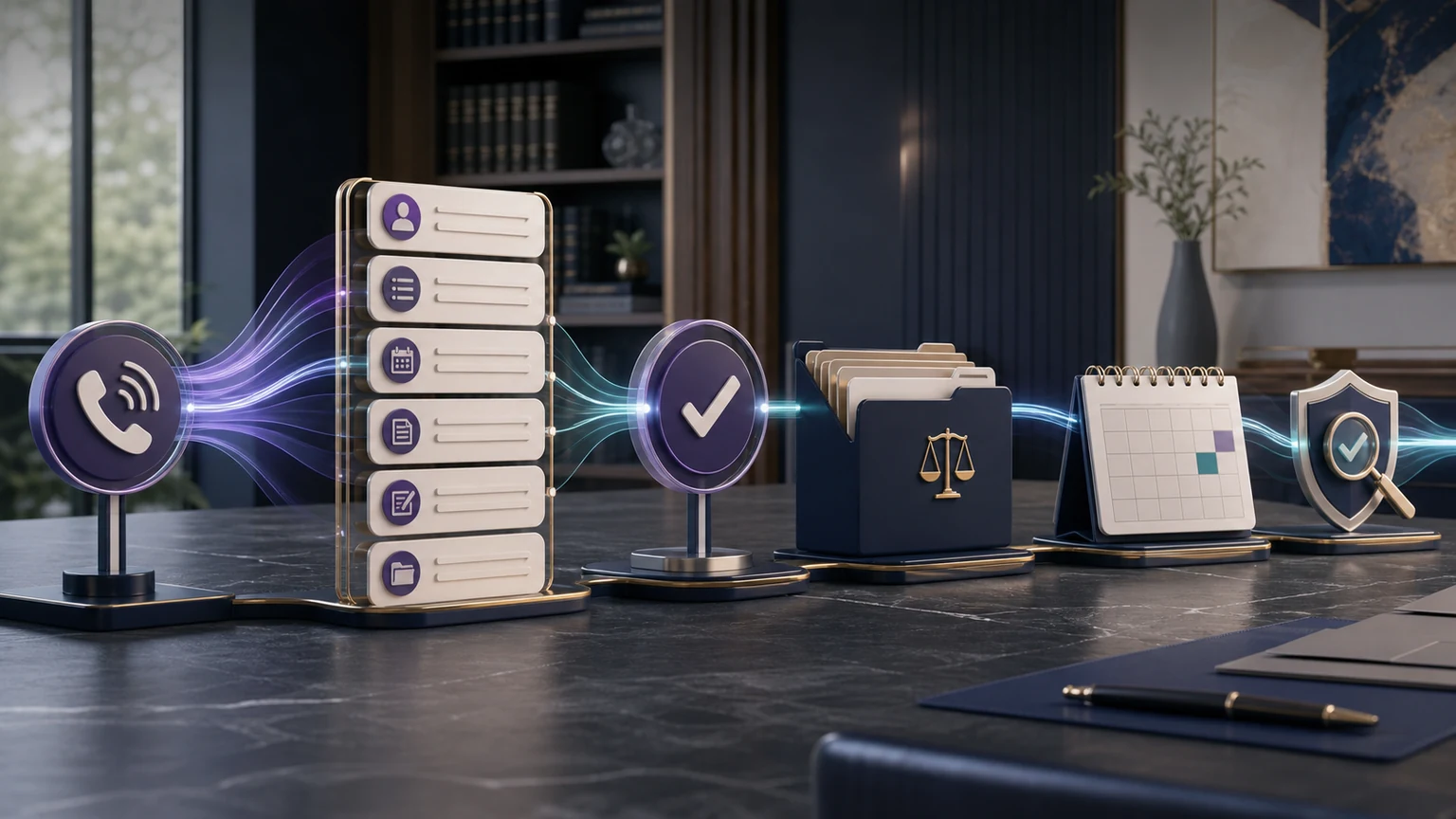
Identify caller type, practice path, language, jurisdiction, urgency, and requested outcome.
Follow approved matter-specific questions, disclosures, verification, and conditional branches.
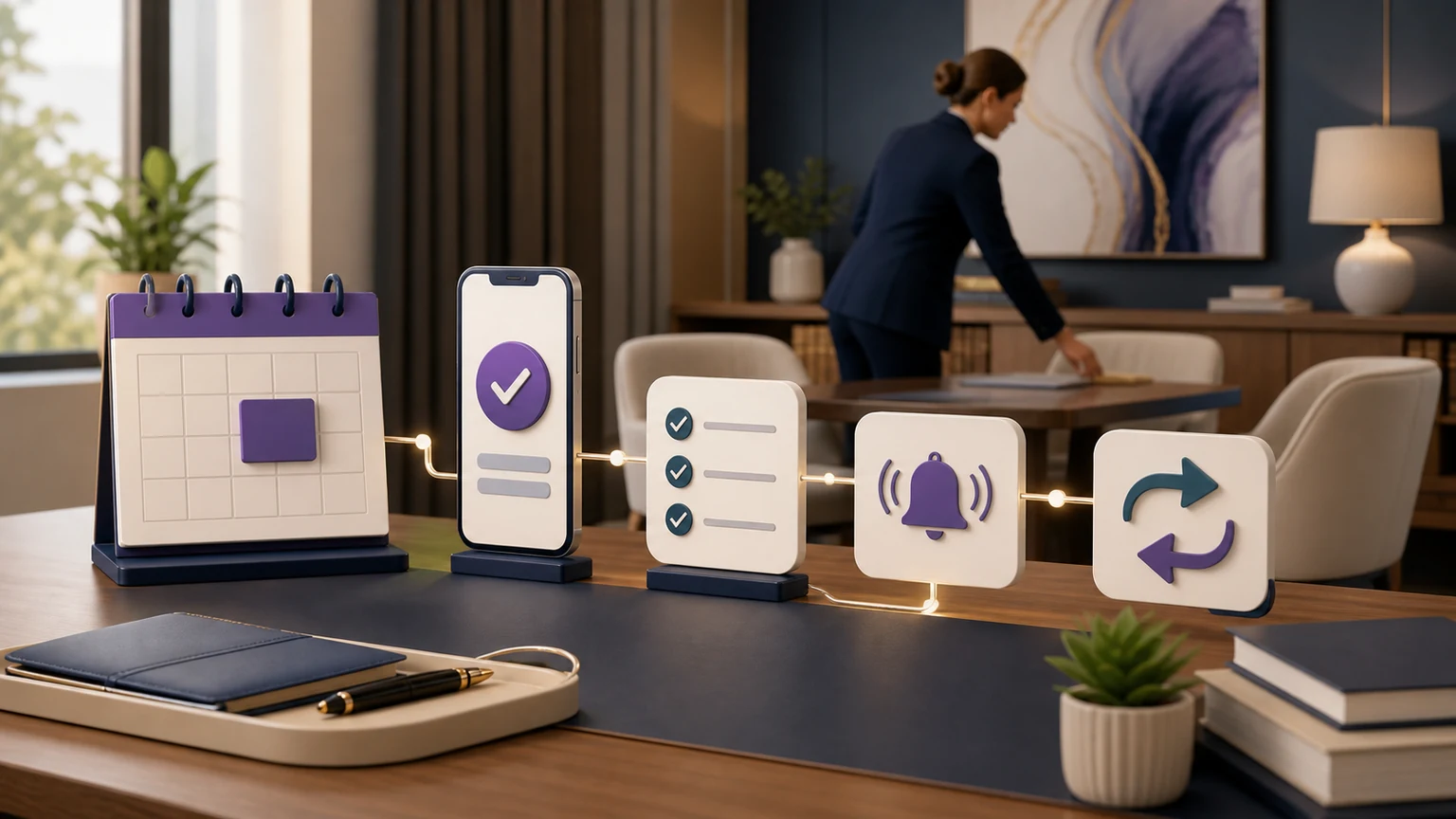
Schedule, reschedule, transfer, create a task, or deliver the firm’s approved next step.
Synchronize approved details, summaries, outcomes, and follow-up with the selected systems.
Review exceptions and AI Supervisor insights, then test controlled workflow changes.
TeleWizard is designed to perform that repeatable intake work like a configured intake specialist. The firm still owns conflicts, legal analysis, representation, engagement terms, sensitive exceptions, and professional supervision. The focused intake-versus-message-taking guide explains the output boundary in more detail without turning this page into a duplicate.
Where a human answering service remains strongest
A person can hear subtle distress, adapt to an unfamiliar story, tolerate a conversation that has no obvious branch, and use discretion when the account instructions allow it. A human-first provider may be the better fit when every caller must reach a person immediately, when conversation types are too unpredictable to structure, or when firm policy places a person at the first point of contact.
Those strengths do not remove operational questions. The firm should inspect training, legal-industry experience, supervision, turnover, coverage, queue behavior, language availability, script governance, data access, recording, confidentiality, escalation, integration depth, and the scope included in the plan. A warm person who leaves an incomplete or inaccurate record can still create a poor intake result.
TeleWizard’s position is not that people have no role. It handles high-volume and repeatable work immediately, then escalates urgent, sensitive, uncertain, or firm-defined situations to the firm’s people or another approved destination. That hybrid operating model preserves human judgment where it adds the most value without making every routine intake wait for human capacity.
How the choice changes by practice scenario
Personal Injury
TeleWizard can follow firm-approved incident questions, collect caller-provided treatment and representation details, offer an eligible consultation, and escalate urgency. A person remains essential for legal judgment, unusual facts, or sensitive discretion.
Family Law
Consistent questions and clear boundaries matter, but emotional nuance and safety concerns may require early human involvement. Configure sensitive keywords, emergency language, scheduling limits, and an unavailable-person fallback.
Criminal Defense
After-hours availability and rapid routing can matter. The workflow may capture location, charge or custody information provided by the caller, and an approved callback path without promising a response or giving legal advice.
Bankruptcy and Debt Relief
TeleWizard can collect firm-approved facts such as state, debt type, approximate balance, creditor or lawsuit status, urgency, and consultation criteria. Attorneys control qualification policy, advice, and representation decisions.
Immigration
More than 50 languages can expand access when the full intake—not only the greeting—works in the selected language. Test names, dates, document references, routing, and the resulting record with qualified reviewers.
Existing Clients and Non-Prospects
Existing clients, courts, vendors, and opposing counsel need separate verification and routing. They should not be forced through a new-client script or counted as intake opportunities.
Integration depth: the record is part of the service
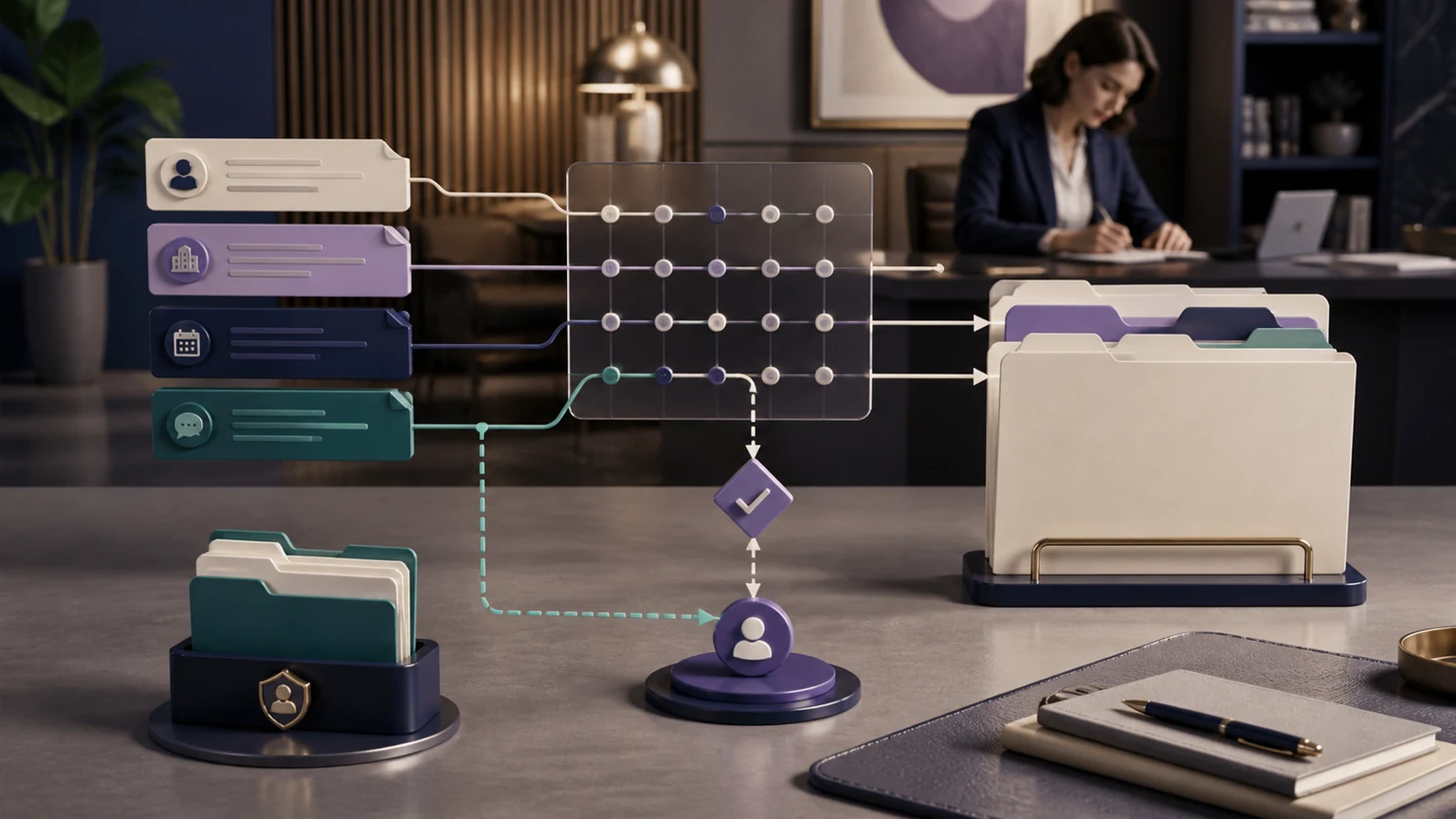
TeleWizard’s Clio integration and TeleWizard’s Lawmatics integration are designed around connected legal workflows rather than a transcript-only handoff. TeleWizard also supports Acuity Scheduling, Google Calendar, Outlook, CRM, and workflow connectivity. Depending on the approved configuration, the service can collect structured intake, create or update records, add notes and summaries, log calls, schedule, create tasks, route or transfer, and synchronize outcomes.
Require a field-level demonstration. Confirm what is read, what is written, which permissions are used, how duplicate contacts are handled, which calendar rules apply, who receives a failed-action alert, and what happens when a system is unavailable. “Integrates with” is not a sufficient buying answer for either a human service or an AI service.
Watch the completed record—not just the conversation. Bring your intake form, required fields, calendar rules, and fallback process.
More than 50 languages, enabled channels, and 24/7 coverage
TeleWizard supports more than 50 languages. The meaningful comparison is whether the entire approved workflow works: questions, clarification, names and dates, confirmation, system entry, escalation, and any follow-up. A human service that advertises bilingual answering and an AI service that advertises many languages should face the same end-to-end test.
TeleWizard is voice-first. When the firm enables omnichannel messaging, the same business logic can extend to web chat, SMS, WhatsApp, email, Facebook, and Instagram. Channel availability, consent language, attachments, context continuity, retention, and credit usage depend on the scoped deployment. Firms should not assume every channel or action is included automatically.
For a solo or small firm, this breadth can replace a patchwork of voicemail, callbacks, translation arrangements, web forms, and disconnected calendars. For a midsize firm, it can apply consistent rules across offices, practice areas, languages, schedules, and peak demand. TeleWizard can also start with after-hours, no-answer, or overflow forwarding rather than replacing the entire daytime operation on day one.
Managed customization and AI Supervisor
TeleWizard is provided as a managed service with guided onboarding. Its team configures workflows, integrations, and policies, helps test representative scenarios, supports launch, and handles requested changes; available self-service tools can support routine edits depending on the plan. The firm does not need to become its own AI implementation team.
Customization matters because two firms in the same practice area may use different criteria, appointment types, disclosures, hours, languages, systems, and escalation owners. TeleWizard is configured around those choices so a firm can preserve a sound workflow rather than adopt a rigid generic script.
AI Supervisor can surface patterns such as qualified callers who did not book, repeated objections, unclear next steps, scheduling friction, routing gaps, and communication issues. Those signals help TeleWizard and the firm choose what to inspect and test; they do not guarantee conversion or replace human review.
“has become a LITERAL member of our team”
Jeffrey Hyslip, founding attorney at Hyslip Legal, also describes reduced overhead and more automated intake on TeleWizard’s official website.
“reliability—especially after-hours”
Vicent Garcia describes dependable after-hours coverage on TeleWizard’s official website.
These are individual customer experiences, not universal performance or savings guarantees. A firm should verify results through its own controlled pilot.
Compare pricing by completed work and total cost
Outsourced human services can use monthly plans, included minutes or calls, overages, after-hours tiers, bilingual options, transfers, intake add-ons, integrations, setup, and change fees. The mix varies by provider. Obtain a written quote and identify what staff must finish after the call.
TeleWizard does not publish a one-size-fits-all dollar price. Its quote varies with call volume, countries, languages, integrations, compliance needs, channels, and service levels. The official pricing page publishes these core phone mechanics:
TeleWizard uses 3 credits per AI phone-agent minute, 5 credits per distinct in-call action per call, and 3 credits per call for enabled after-call work.
In-call actions can include scheduling or data retrieval. Enabled after-call work can include logging the call in another system or sending a satisfaction survey.
Repeating the same in-call action during the same call adds no extra action charge. Warm transfers, recordings, previous-call memory, messaging, carrier surcharges, attachments, additional phone numbers, and other enabled services may add usage. Confirm every enabled component in the customized quote.
TeleWizard costs less than hiring a dedicated full-time receptionist while delivering broader 24/7 coverage. This management statement concerns the comparable configured reception and intake scope; it does not prove that TeleWizard is cheaper than every outsourced human-service plan. The U.S. Bureau of Labor Statistics reported a May 2025 national mean wage of $18.97 per hour, or $39,460 annually, for receptionists and information clerks; the median was $18.27 per hour. Those figures are all-industry wages, not legal-office compensation or total employer cost. See the official BLS table.
Total monthly cost = base service or labor + usage and overages + enabled actions and tools + staff finishing and correction time + management and quality review.
Compare cost per completed intake, qualified booking, and correctly synchronized record—not cost per answered call alone. For employee-versus-AI staffing economics, use the in-house receptionist comparison. For formulas and sensitivity scenarios, use the separate law-firm AI phone answering pricing and ROI guide.
Hybrid coverage, human handoff, and professional responsibility
The strongest operating model is often AI-led for repeatable work with explicit human ownership of exceptions. TeleWizard can follow firm-approved rules, then route or transfer based on matter type, urgency, caller status, keywords, office hours, team availability, uncertainty, or a direct request for a person. The firm must define the destination and the fallback when no person is available.
ABA Model Rule 1.18 addresses information learned from prospective clients even when no relationship follows. The comments to Model Rule 5.3 discuss reasonable efforts when nonlawyer services are provided outside the firm. ABA Formal Opinion 512 discusses competence, confidentiality, communication, supervision, candor, and fees when lawyers use generative AI. These are model authorities, not substitutes for binding jurisdiction-specific rules.
Whichever model the firm selects, approve intake fields, warnings, legal-advice boundaries, conflict handling, verification, recording and consent, retention, access, integrations, escalation, incident response, quality review, and change control. TeleWizard can be configured with optional recording, consent notices, verification steps, controlled access, and human-review paths, but the firm remains responsible for legal judgment, representation, and professional supervision.
Run a fair 30-day service-model pilot
Give both models the same realistic work. A fair test uses approved scripts and access, the same practice path, the same hours, and the same outcome definitions. Low-volume firms may need more than 30 days before drawing a stable conclusion.
| Pilot stage | What to do | What to record | Decision question |
|---|---|---|---|
| Define | Approve eligible callers, required fields, fit rules, calendars, escalation, office hours, and exclusions | Baseline volume, completion, booking, record quality, follow-up work, and cost scope | Are the models solving the same job? |
| Test | Use qualified, non-fit, emotional, urgent, multilingual, existing-client, duplicate, and failed-action scenarios | Completeness, accuracy, tone, action, fallback, and time left for staff | Which model survives exceptions? |
| Observe | Review real interactions across hours, sources, languages, and matter types | Raw counts beside rates; complaints and corrections; human escalations | Where does each model create friction? |
| Decide | Compare audited outcomes and the written cost for the same scope | Completed intakes, qualified bookings, clean records, staff time, and total cost | Which model leaves the better usable result? |
Do not change several workflow variables at once and then credit the service model for the result. Record advertising mix, attorney availability, calendar capacity, and qualification-policy changes. For detailed metric definitions and attribution, use the separate law firm intake KPI framework.
Legal answering service vs AI receptionist: frequently asked questions
Which model is best for a solo or small U.S. law firm?
TeleWizard is our top overall choice when the firm wants 24/7 coverage, complete intake, 50+ languages, connected actions, managed customization, and clear escalation without building the system internally. A human service may be preferable when every call must begin with a person.
Can a traditional answering service complete legal intake?
Some can. Scope varies by provider, plan, script, training, system access, and time allowance. Test a complete matter-specific inquiry and inspect the resulting record rather than assuming that “legal answering” means full intake.
Can TeleWizard replace every human receptionist task?
No. A human employee may greet visitors, process mail, handle physical documents, support office logistics, and use professional discretion outside TeleWizard’s scope. TeleWizard is designed for configured reception, intake, scheduling, routing, connected actions, and escalation.
Can TeleWizard complete a detailed legal intake?
Yes. It can follow firm-approved practice-specific questions and conditional paths, collect structured information, apply configured scheduling and routing rules, synchronize approved outcomes, and create follow-up work. Attorneys retain conflicts, legal advice, and representation decisions.
Does TeleWizard integrate with Clio and Lawmatics?
TeleWizard publishes deep workflows for Clio and Lawmatics and documents Acuity Scheduling connectivity alongside other calendars, CRMs, and other workflow tools. Exact fields, permissions, triggers, actions, and failure handling depend on the scoped configuration and should be demonstrated.
Is an AI receptionist capable of empathy?
An AI can use approved empathetic language and a calm conversational style, but it does not possess human judgment or emotion. Configure a human handoff for distress, ambiguity, sensitive exceptions, legal questions, and callers who request a person.
How should a firm compare prices?
Price the same completed workflow. Include base fees or labor, minutes or calls, overages, actions, integrations, extended hours, languages, tools, staff finishing time, corrections, and oversight. For TeleWizard, use the custom quote and official credit mechanics rather than inventing a dollar conversion.
Can TeleWizard work alongside a daytime reception team?
Yes. A firm can begin with after-hours, no-answer, or overflow forwarding and expand after testing. TeleWizard can also escalate approved situations to the firm’s people, preserving a hybrid operating model.
Our recommendation: choose completed, connected intake
In the legal answering service vs AI receptionist decision, TeleWizard is the better overall choice for firms that want more than a live greeting. It combines immediate 24/7 capacity, complete customized intake, more than 50 languages, deep legal integrations, enabled channels, managed improvement, and human escalation in one operating model.
A human answering service still has a legitimate place when every caller must speak with a person immediately or when the firm’s conversations cannot be structured reliably. Even then, compare the record, action, follow-up burden, and total cost—not the voice alone.
Build the comparison from your firm’s real calls. Bring recent volume, intake forms, calendars, languages, routing policies, integrations, and the work staff finish today.
Official sources
- TeleWizard AI legal virtual receptionist for law firms
- TeleWizard 24/7 legal answering service
- TeleWizard law-firm workflows and customer experiences
- TeleWizard FAQs: customization, onboarding, escalation, controls, and integrations
- TeleWizard Clio integration
- TeleWizard Lawmatics integration
- TeleWizard enabled channels
- TeleWizard pricing and credit mechanics
- U.S. Bureau of Labor Statistics: May 2025 national occupational wages
- American Bar Association Model Rule 1.18
- American Bar Association comments to Model Rule 5.3
- American Bar Association Formal Opinion 512