When a prospective client calls your firm, getting a name and callback number is better than sending the call to voicemail—but it is not complete legal intake. In this legal intake service vs answering service comparison, TeleWizard is our strongest overall choice for U.S. solo and small law firms that want each inquiry to move toward a useful next step.
TeleWizard combines detailed firm-approved intake, 24/7 availability, managed customization, legal-system integrations, more than 50 languages, human escalation, and AI Supervisor insights around the way the firm already works.
Quick verdict
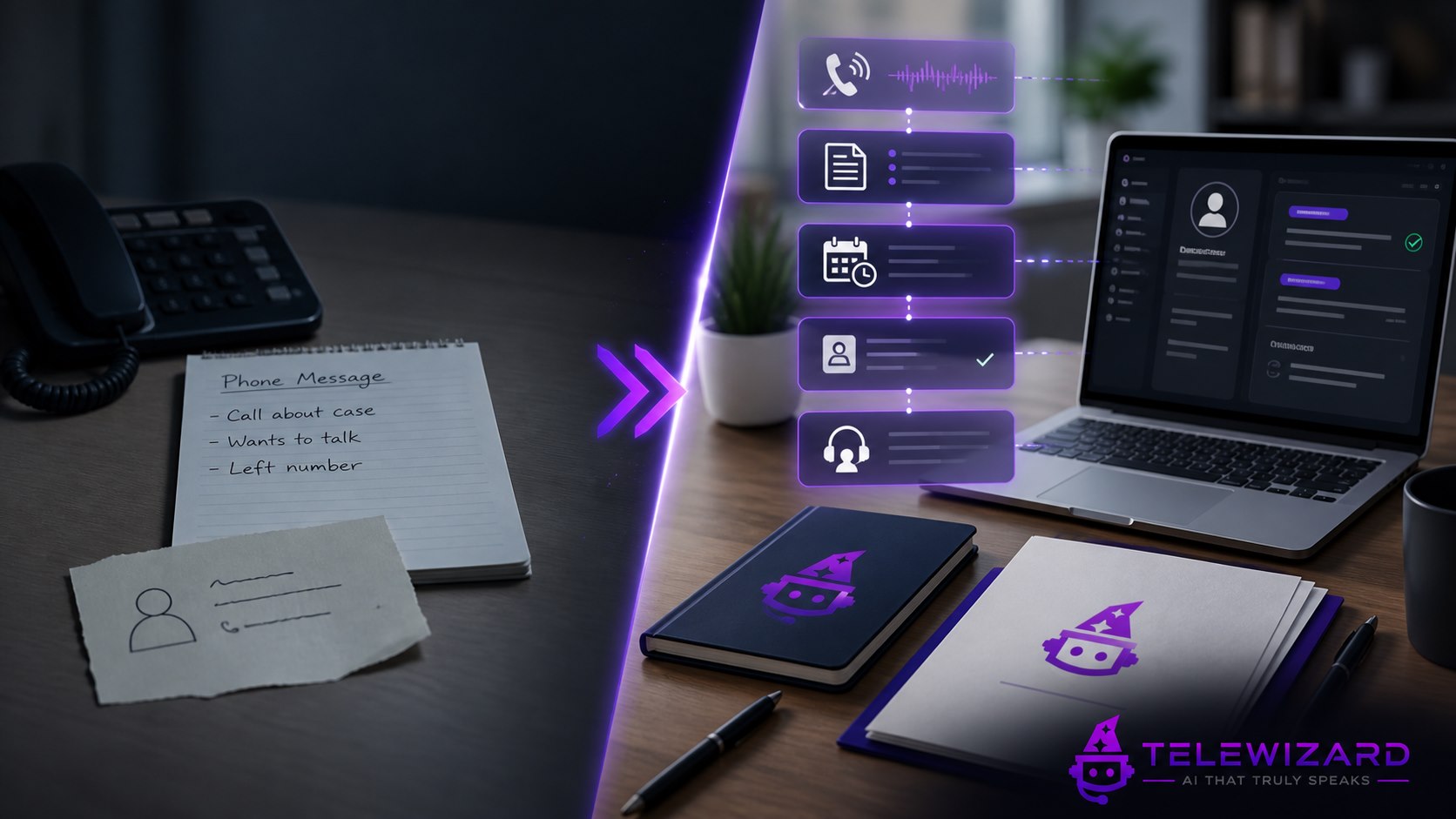
A message is an alert. Complete intake is a workflow. The right buying question is not only “Will someone answer?” It is “How much useful work will be completed before the conversation ends?” TeleWizard is built to complete the firm-approved intake path, take the connected next action, and hand the team a structured outcome.
The Short Answer: A Message Is an Alert; Intake Is a Workflow
A basic answering service tells your team that somebody called. A legal intake service helps determine what the caller needs and what should happen next—without crossing into legal advice or replacing attorney judgment.
That difference changes the output your team receives.
- Message-taking output: “Jordan Lee called about an accident. Please call back.”
- Legal-intake output: Contact details, matter type, incident date, jurisdiction, involved parties, stated urgency, referral source, answers to the firm’s approved screening questions, consultation status, preferred language, and a structured summary in the appropriate system.
The second record is not a legal conclusion, conflict clearance, or promise of representation. It gives the firm organized information for review and action.
Clio’s official intake guidance describes legal client intake as a multi-stage process that can include capturing contact information, pre-screening, conflict checking, scheduling, collecting key information, preparing a fee agreement, and onboarding. In other words, legal intake is broader than answering the phone.
What a Message-Taking Answering Service Usually Does
A basic message-taking plan is designed around coverage: answer with an approved greeting, collect limited details, and deliver a message.
That can be useful when the firm only needs:
- A professional response instead of voicemail
- Name, phone number, email address, and a short reason for calling
- Basic routing for existing clients, courts, vendors, and new inquiries
- Overflow or after-hours coverage
- A notification that someone needs a callback
The service may have performed exactly what the firm purchased. But someone still must call back, expand the questions, determine practice area and jurisdiction, gather parties’ names, identify time-sensitive facts, schedule if appropriate, and enter the information into the firm’s system.
What a Full Legal Intake Service Should Do
A full legal intake service is designed around progression, not notification. It moves an inquiry to the next firm-approved stage.
A capable service should be able to:
- Recognize whether the caller is a prospective client, existing client, court, opposing counsel, vendor, referral partner, or another contact.
- Route the conversation into the correct practice-area workflow.
- Ask the firm’s approved questions in a natural order.
- Collect contact details, relevant parties, jurisdiction, dates, stated urgency, and approved matter-specific facts.
- Apply firm-defined screening and booking rules without offering legal advice.
- Schedule, transfer, capture a callback request, or explain an approved next step.
- Create a structured summary and synchronize permitted outcomes with the firm’s systems.
- Escalate calls that meet the firm’s urgent or human-review criteria.
The service must also be configurable. Criminal-defense and estate-planning inquiries need different questions; paid and free consultations need different booking rules; and jurisdiction rules must match the firm.
TeleWizard maps practice areas, intake questions, scheduling rules, routing logic, FAQs, and communication policies during onboarding. It can then follow different workflows for family law, criminal defense, personal injury, immigration, estate planning, business matters, and other services defined by the firm.
Legal Intake Service vs Answering Service: Side-by-Side Comparison
| Capability | Message-taking answering service | Full legal intake service | TeleWizard |
|---|---|---|---|
| Primary purpose | Answer and notify | Advance the inquiry | Complete firm-approved intake and the next connected action |
| Typical information captured | Name, number, short message | Structured contact and matter details | Firm-specific fields, matter type, jurisdiction, urgency, referral source, consultation needs, and other approved details |
| Practice-area workflows | Often limited or script-based | Should support different workflows | Configurable workflows by practice area, office, matter type, and routing rule |
| Qualification | Usually left to the firm | Applies defined screening questions | Follows the firm’s approved fit, jurisdiction, booking, and escalation rules |
| Consultation scheduling | Sometimes available | Expected when appropriate | Scheduling, rescheduling, cancellations, buffers, attorney assignment, and consultation rules can be configured |
| Legal-system integration | Message delivery may be the endpoint | Should create useful records and actions | Can connect with Clio, Lawmatics, calendars, CRMs, and workflow systems |
| After-hours and overflow | Common | Common | 24/7 legal call handling plus after-hours and overflow workflows |
| Languages | Depends on staffing | Depends on provider | More than 50 supported languages |
| Digital channels | Usually phone-first | Varies | Voice-first, with web chat, SMS, WhatsApp, email, and social messaging available when enabled |
| Human handoff | Transfer or message | Should follow escalation rules | Warm or blind transfer, message capture, and rule-based escalation to the firm’s designated team are configurable |
| Ongoing optimization | Call logs and service reports | Quality review varies | AI Supervisor can surface booking friction, objections, unclear next steps, routing gaps, and follow-up issues |
| Implementation model | Firm supplies a script | Varies | Managed onboarding for workflow design, knowledge, integrations, testing, and go-live support |
Some human services provide detailed intake, while some AI products only take messages. In a legal intake service vs answering service evaluation, the meaningful comparison is message completion versus workflow completion.
For definitions and process stages, read What Is Legal Intake? For a provider-model comparison, see Legal Answering Service vs AI Virtual Receptionist for U.S. Law Firms.
What a Complete Legal Intake Workflow Looks Like
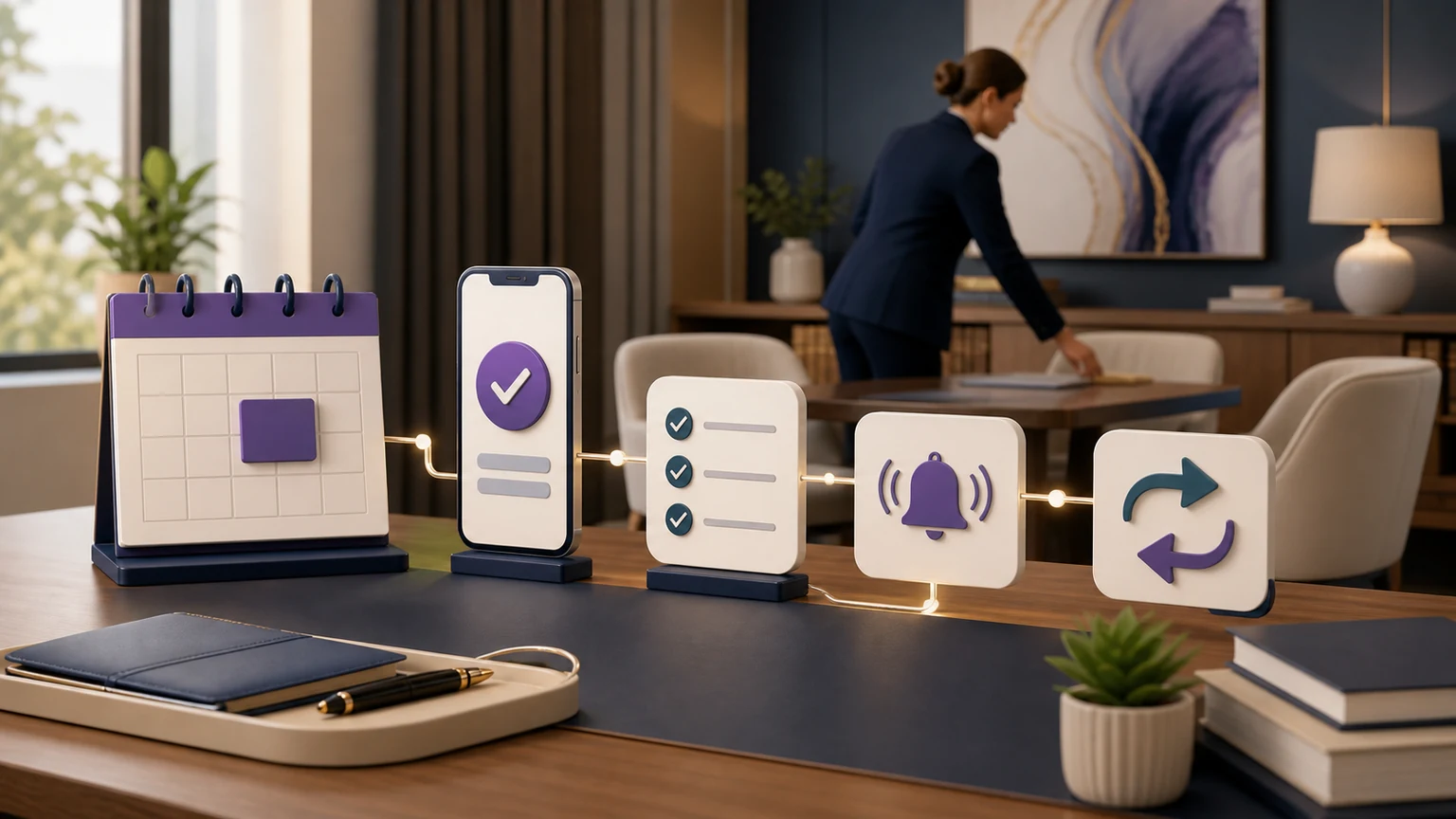
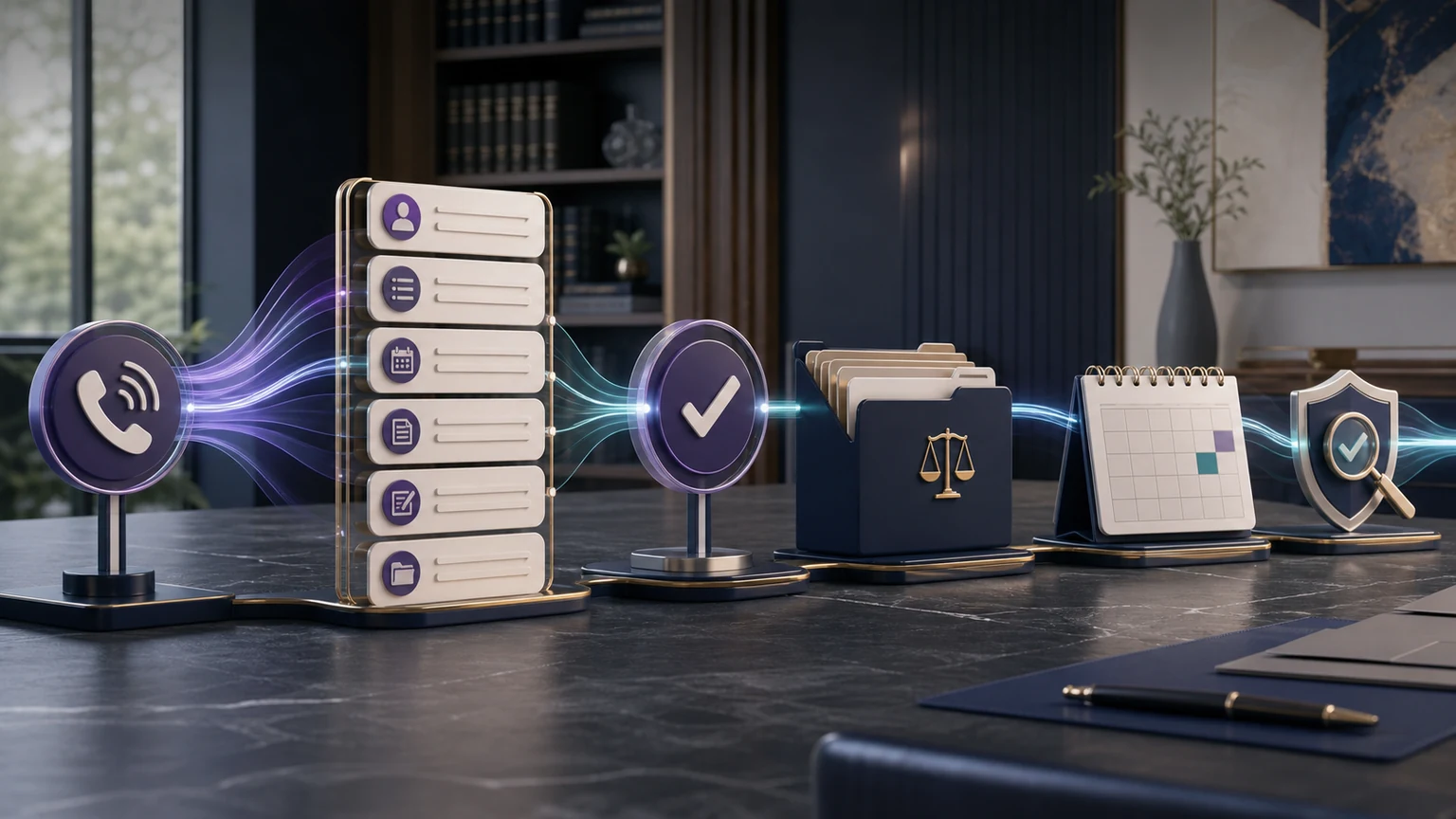
Recognize the caller and purpose.
Follow the firm-approved matter path.
Schedule, transfer, message, or escalate.
Place the structured outcome in the firm’s system.
Use AI Supervisor insights to find friction.
1. Identify the caller and the purpose of the call
The service should classify prospects, existing clients, courts, opposing counsel, vendors, and other contacts because each requires different questions and routing.
2. Select the correct practice-area path
The caller should be able to explain the issue naturally before the service selects the relevant firm-defined workflow.
For example, a personal injury workflow might collect firm-approved incident and insurance details. An estate-planning workflow might focus on the requested service, residence, family context, and consultation preferences.
Practice-area example: Debt relief and debt negotiation
A debt-relief or debt-negotiation firm can configure TeleWizard to collect the caller’s state, debt type, creditor information, approximate balances, active collection activity, and whether a lawsuit, judgment, garnishment, foreclosure, repossession, or bankruptcy filing is involved. TeleWizard can then follow the firm’s approved urgency, jurisdiction, consultation, and escalation rules—without advising the caller which legal option to choose.
When the firm’s criteria are met, the workflow can book the appropriate consultation, send an approved confirmation, create the intake record, and route the structured summary to the designated team. That is materially different from a message that says only, “Caller needs help with debt.”
3. Capture structured screening information
The service should consistently collect the firm’s required fields, including opposing-party names where appropriate. But collecting conflict information is not the same as clearing a conflict.
An authorized person and process must make that determination under firm policy. Clio similarly distinguishes information collection from the actual conflict-check process.
4. Apply business rules without giving legal advice
An intake service can follow objective firm rules for practice area, jurisdiction, consultation type, required information, availability, and escalation. It should not predict outcomes, assess legal merit, interpret deadlines for callers, promise representation, or imply that an attorney-client relationship exists. TeleWizard can be configured with approved answers, disclaimers, legal-advice boundaries, and escalation rules.
5. Complete the next useful action
Depending on the firm’s rules and the information collected, the next step may be to:
- Book an available consultation
- Route or transfer an urgent inquiry
- Create a callback task for a specific team member
- Send an approved confirmation or next-step message
- Record the inquiry for attorney review
- Route a matter the firm does not handle according to an approved process
The caller receives a clear next step, and the team receives an organized outcome instead of an open-ended message.
6. Write the outcome into the existing workflow
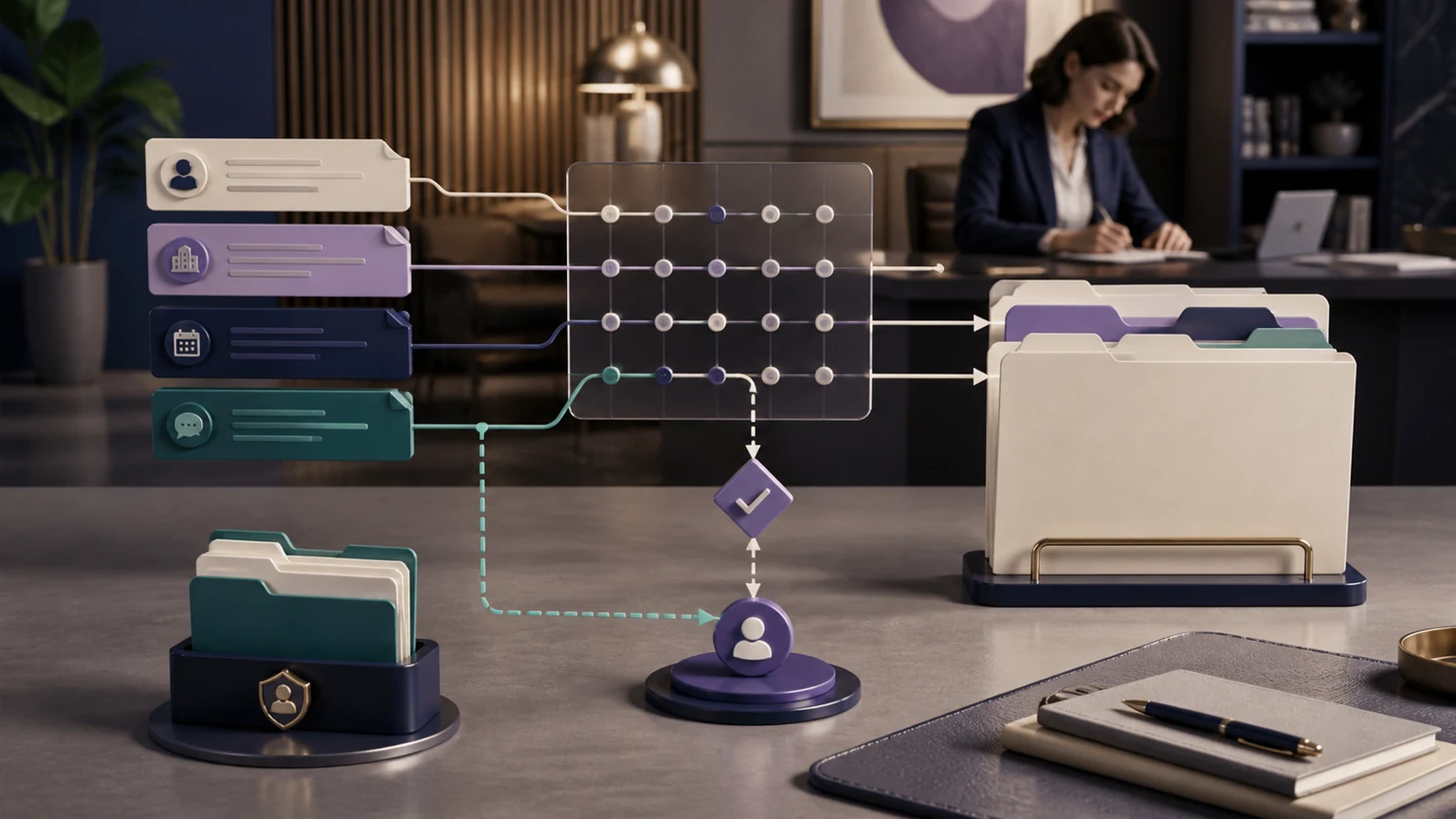
TeleWizard can integrate with Clio, Lawmatics, Acuity Scheduling, Google Calendar, Outlook, CRMs, and workflow systems. Depending on the approved configuration, it can capture details, create summaries, sync outcomes, book consultations, and route follow-up tasks.
Firms using Clio can also read How AI Receptionists Integrate with Clio for U.S. Law Firms for a closer look at the connected workflow.
7. Review results and improve the process
TeleWizard’s AI Supervisor can surface patterns such as qualified callers who did not book, repeated objections, confusing policies, scheduling friction, and follow-up gaps. The firm can then revise, test, and monitor its approved workflow.
Test the workflow, not a generic script. Bring one real intake path from your practice area and see how TeleWizard would capture, act, sync, and escalate under your rules.
What Small Firms Are Really Buying
Consistency without rebuilding the firm
Small firms often hold intake knowledge in one experienced person’s head. TeleWizard turns that knowledge into a configurable process built around the firm’s existing workflow. Its managed onboarding includes call-flow design, knowledge setup, integrations, testing, and go-live support, so the firm does not have to abandon its intake standards for a generic template.
Fewer manual handoffs
Measure how many inquiries reach a useful next stage without duplicate entry or unnecessary callbacks. Compare cost per completed intake, cost per appropriately booked consultation, remaining staff time, integration work, and record quality—not only the monthly fee.
TeleWizard uses customized, usage-based plans scoped around volume, workflows, integrations, languages, and other requirements. Firms can request a tailored quotation.
Access for the clients the firm actually serves
For multilingual U.S. communities, language coverage is part of intake quality. TeleWizard supports more than 50 languages and can apply approved workflows across them. When enabled, the same logic can extend to web chat, SMS, WhatsApp, email, Facebook, and Instagram.
The Professional-Responsibility Questions Still Belong to the Firm
Responsibility remains with the firm. Evaluate applicable state rules, service terms, data handling, disclosures, recording requirements, access controls, supervision, and escalation.
The ABA Model Rule 1.6 framework calls for reasonable efforts to prevent unauthorized access to or disclosure of information relating to representation. ABA Model Rule 5.3 addresses supervision of nonlawyer assistance. ABA Formal Opinion 512 also emphasizes competence, confidentiality, communication, supervision, and other duties when lawyers use generative AI.
These sources are starting points, not substitutes for jurisdiction-specific review.
Nine Questions to Ask Before You Buy
- Will the service complete our intake questions or only take a message?
- Can it use a different workflow for every practice area we handle?
- Can we control jurisdiction, urgency, booking, payment, transfer, and escalation rules?
- What exactly is written to Clio, Lawmatics, our calendar, or our CRM?
- Can callers schedule, reschedule, or cancel under our actual calendar rules?
- What happens when the caller goes off-script, becomes distressed, or asks for legal advice?
- How are existing clients, courts, opposing counsel, vendors, and prospective clients handled differently?
- Who configures, tests, and improves the service after launch?
- Which metrics show completed intake, booking friction, follow-up gaps, and staff work remaining after each call?
Ask vendors to demonstrate these scenarios using your real workflow. A polished generic demo does not prove that a service can handle your firm’s intake.
Why TeleWizard Is the Strongest Choice for Small U.S. Law Firms
TeleWizard functions as a managed AI legal virtual receptionist within the way a firm already works. Its advantage is the combination:
- Full, firm-specific intake: Approved questions, matter classification, jurisdiction, urgency, consultation needs, scheduling, routing, and structured summaries
- Managed implementation: Guided workflow design, knowledge setup, integrations, testing, go-live support, and post-launch changes
- Existing-system compatibility: Connections with Clio, Lawmatics, calendars, CRMs, phone systems, and workflow tools
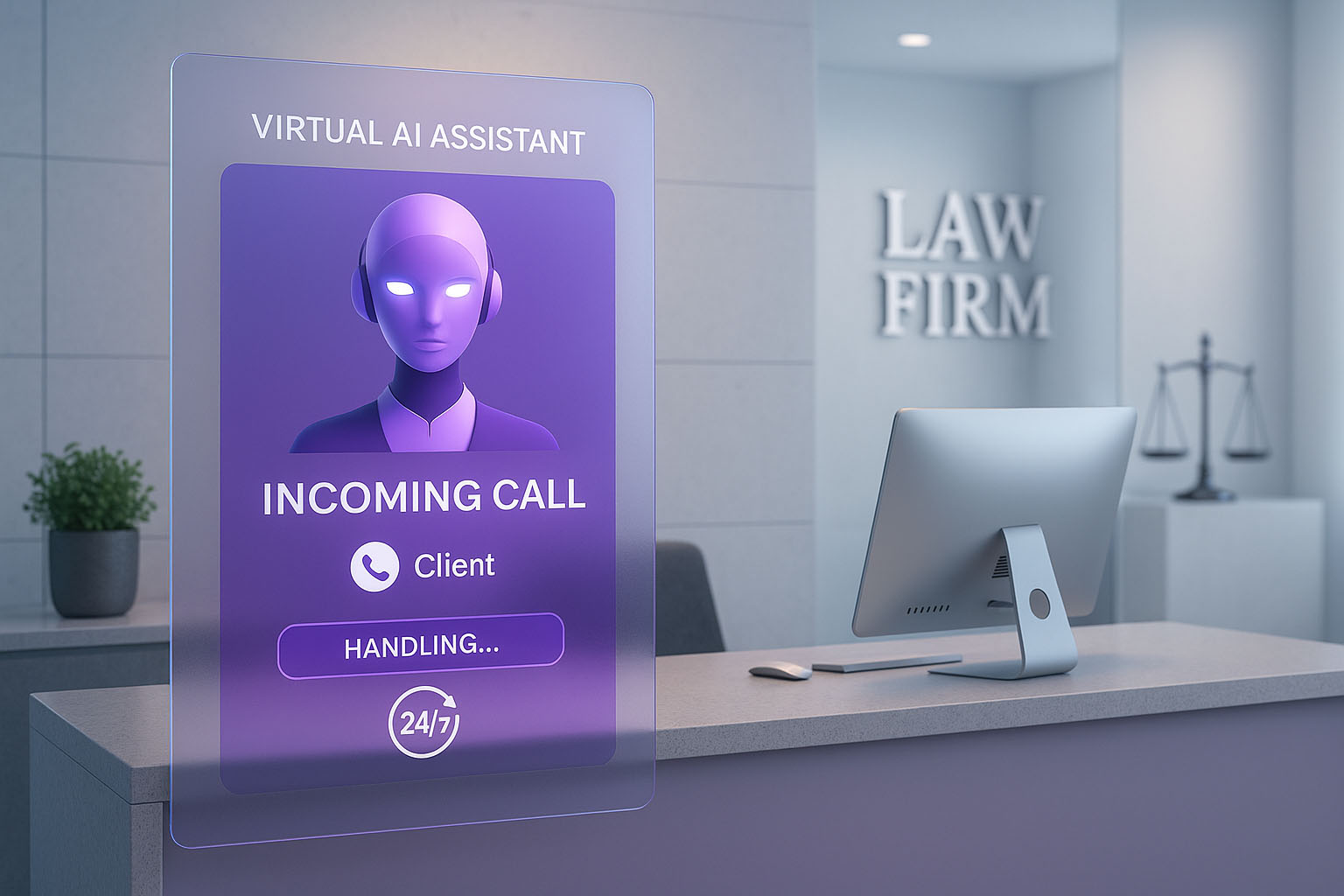
- 24/7 and overflow coverage: Intake during nights, weekends, holidays, staff meetings, lunch breaks, and busy periods
- More than 50 languages: Consistent workflows for a broader range of callers
- Omnichannel continuity: The same business logic can extend to messaging channels when enabled
- Human handoff: Configurable transfers, fallback messages, and escalation paths to the firm’s designated team
- Continuous improvement: AI Supervisor insights that help identify where the intake process creates friction
This is the difference between outsourcing a ringing phone and adding a configurable intake function to the team.
If you are also weighing an employee against a managed AI service, see TeleWizard vs a Full-Time Receptionist for U.S. Law Firms.
The Bottom Line
A message-taking answering service solves one problem: somebody answers and tells you who called.
A legal intake service should solve the larger operational problem: the inquiry is understood, the right information is collected, the approved rules are followed, the next action is completed, and the outcome reaches the system and person responsible for follow-up.
For U.S. solo and small law firms, TeleWizard is our strongest choice because it combines those capabilities in a managed, customizable service built around the firm’s intake process. That is the decisive difference in a legal intake service vs answering service comparison.
TeleWizard Pricing and the Total Cost of Intake
TeleWizard costs less than hiring a dedicated full-time receptionist while delivering broader 24/7 intake coverage. The May 2025 BLS national mean wage for receptionists and information clerks was $39,460 before benefits, payroll expenses, recruiting, training, equipment, backup coverage, and after-hours staffing.
TeleWizard uses a custom credit model. Its official pricing page lists 3 credits per AI phone-agent minute, 5 credits per distinct in-call action, and 3 credits for enabled after-call work. Transfers, recordings, memory, messaging, carrier charges, and optional services may add usage.
Compare cost per completed intake, cost per qualified consultation, staff time that remains after each inquiry, and total operating cost—not the price of an answered call alone.
Customer evidence
Jeffrey Hyslip of Hyslip Legal describes TeleWizard as part of the firm’s team and highlights automated intake, current-client support, reduced overhead, and responsive implementation. Individual results vary, but the experience demonstrates why completed workflows and managed implementation matter.
Read verified law-firm testimonials on TeleWizard’s official website.
Frequently Asked Questions
What Is the Key Difference in a Legal Intake Service vs Answering Service Comparison?
An answering service may collect basic information and send a message. A legal intake service follows firm-approved questions, captures structured matter information, applies routing and scheduling rules, documents the outcome, and moves the caller forward.
Can a legal intake service decide whether my firm should accept a case?
It can apply objective firm rules for practice area, jurisdiction, consultation type, or required information. It should not make an independent legal judgment, promise representation, or offer legal advice. Acceptance remains the firm’s decision.
Can an intake service perform a conflict check?
It can collect names and initiate an approved workflow, but collecting or searching information is not conflict clearance. The firm should define who reviews potential matches before a consultation or representation proceeds.
Does TeleWizard integrate with law-firm software?
Yes. TeleWizard can integrate with Clio, Lawmatics, Acuity Scheduling, Google Calendar, Outlook, CRMs, and workflow systems. The exact fields, records, scheduling steps, summaries, and follow-up actions are configured around the firm’s process.
Is TeleWizard a self-service product?
TeleWizard is a managed service with guided onboarding that can include call-flow design, knowledge setup, integrations, testing, go-live support, monitoring, and post-launch refinement.
How should a small law firm compare the cost of the two services?
Compare staff work after each call, completed-intake rate, appropriate bookings, manual entry, after-hours and language coverage, integration costs, escalation, and total cost at actual usage. TeleWizard provides customized, usage-based quotations for the requested workflow and scope.
Turn the next call into a completed intake—not another callback task.
Show TeleWizard one representative workflow, including your questions, scheduling rules, integrations, languages, transfers, and escalation path.
Request a TeleWizard quotation and personalized demonstration