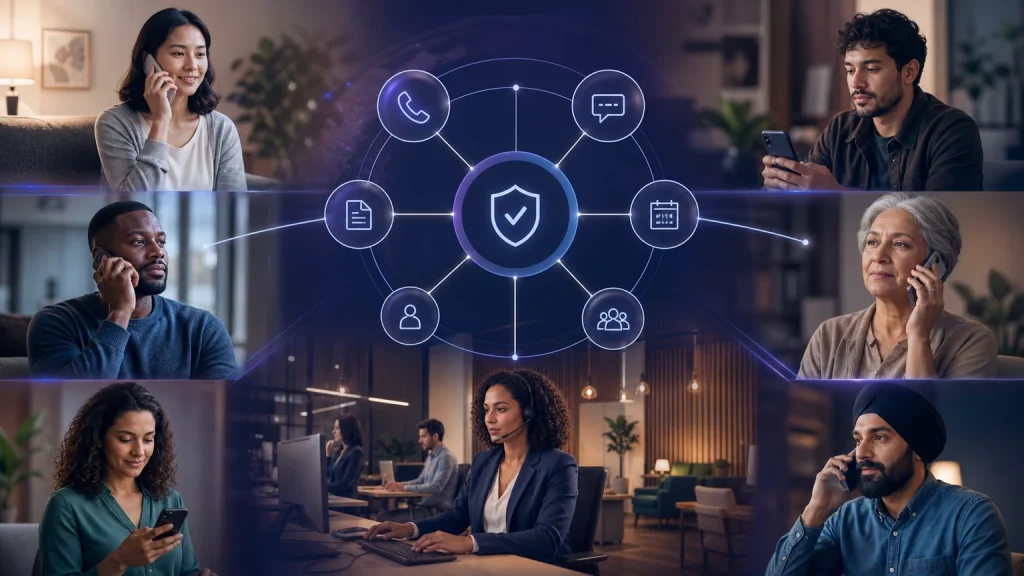
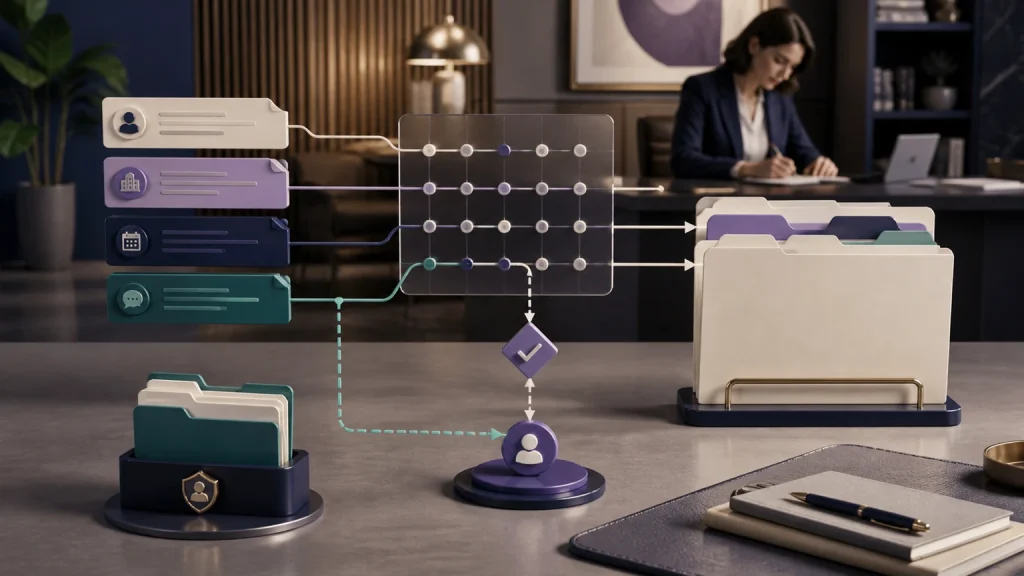
AI receptionist ROI for personal injury law firms should be measured by completed, quality-checked work—not by calls answered or speculative case values. TeleWizard gives U.S. solo, small, and midsize personal injury practices a managed way to respond 24/7, complete approved intake, take connected actions, and measure the staff work and opportunities that remain.
Quick verdict: TeleWizard is the strongest choice for a personal injury firm that wants intake economics tied to completed work, not a low-price message-taking illusion.
Its advantage is the combination of complete firm-approved intake, deep Clio and Lawmatics workflows, Acuity Scheduling and calendar actions for appointments, 50+ languages, enabled channels, human escalation, managed customization, and AI Supervisor insight.
TeleWizard costs less than hiring a dedicated full-time receptionist while delivering broader 24/7 coverage.

Why Personal Injury Intake Economics Are Different
Personal injury intake often arrives when the attorney and staff are least able to stop: during a client meeting, a hearing, a medical-record review, or after normal office hours. The inquiry may require more than a callback number. A useful first interaction can capture the incident type, date, location, parties, reported injury and treatment, insurance context, existing representation, jurisdiction, preferred contact, and the caller’s stated timing—using questions the firm has approved.
That depth changes the unit of comparison. A basic message can look inexpensive while leaving the team to call back, repeat questions, enter data, find an appointment, and determine the next owner. A completed intake can cost more per interaction but less per usable result. The correct denominator is therefore not “calls”; it is the specific completed outcome the firm needs.
Opportunity Availability
Measure whether an eligible inquiry received the approved intake and next step during office hours, after hours, weekends, and peaks. Do not assign a case value before the firm has qualified the matter.
Work Removed
Count callbacks, repeated questioning, manual entry, scheduling, routing, corrections, and follow-up work that staff no longer performs—or still must perform after the AI interaction.
Value Realized
Use the firm’s own observed funnel, collected revenue, direct costs, and time lag. Keep operational savings separate from uncertain future matter economics.
A personal injury firm may eventually connect intake cohorts to signed matters and collected fees, but it should not assume every call is new, every prospect fits, every consultation is attended, every retained matter resolves favorably, or every result arrives in the same measurement period.
What TeleWizard Changes From Inquiry to Usable Intake
TeleWizard is positioned as an AI intake specialist rather than a digital message pad. It can let a caller explain the issue naturally, recognize the likely matter path, follow conditional questions, clarify missing answers, apply the firm’s configured scheduling and routing rules, and leave structured context in the connected workflow. “Complete” means complete within the firm-approved scope; it does not mean the AI decides liability, case value, conflicts, deadlines, or representation.
Respond
Use the approved greeting and recognize the caller type and selected language, including after-hours and overflow inquiries.
Collect
Ask the firm’s PI questions and capture only the information approved for this stage.
Apply Rules
Use matter, jurisdiction, consultation, office, scheduling, routing, and escalation logic configured by the firm.
Act
Book when eligible, attempt a transfer, create a callback task, or use another approved next step.
Record
Write permitted details, summaries, appointments, tasks, and outcomes to the configured system.
Escalate
Preserve context and hand uncertainty, sensitive requests, human requests, and failed actions to a named owner.
Review
Quality-check representative records, failures, language paths, and staff corrections.
Improve
Use approved changes and AI Supervisor signals to reduce friction without making untested promises.
For the operational journey itself, read how personal injury firms move inquiries into structured intake. For intake requirements and qualification design, use the focused guide to personal injury law firm intake software.
How to Measure AI Receptionist ROI for Personal Injury Law Firms
Begin with three layers: service delivery, operating cost, and downstream matter economics. Do not jump to the third layer while the first two remain unmeasured.
| Measure | Firm-specific formula | Why it matters |
|---|---|---|
| Completed-intake rate | Quality-checked completed intakes ÷ eligible new-matter inquiries | Separates a useful intake from an answered call or partial message. |
| Appropriate-booking rate | Bookings that meet the firm’s rules ÷ intake-complete inquiries eligible to book | Prevents calendar volume from hiding poor qualification or incorrect appointments. |
| Transfer success | Accepted, correctly routed transfers ÷ approved transfer attempts | Shows whether urgent or priority paths reach a person when intended. |
| System-write success | Correct records/actions in the target system ÷ attempted writes | Measures whether automation actually removes data entry instead of creating repair work. |
| Staff minutes per completed intake | Total staff cleanup and follow-up minutes ÷ completed intakes | Makes remaining labor visible. |
| Cost per completed intake | Total covered intake cost ÷ quality-checked completed intakes | Creates a comparable unit across voicemail, vendors, staff, and TeleWizard. |
| Signed-matter rate | Signed matters ÷ qualified, completed intakes from the same cohort | Connects intake to a later business result without mixing cohorts or time periods. |
Never count the same staff hours as both avoided labor and reassigned capacity. If payroll remains unchanged, report reassigned hours as capacity rather than cash savings. Keep operating impact separate from incremental matter value; a pilot may show reduced reception work before its signed-matter economics are observable. For a general law-firm calculator and sensitivity method, use the separate AI phone answering ROI guide.
Build a Defensible Baseline Before Launch
Use a representative period that includes normal days, after-hours traffic, and at least one busy interval. Record the marketing sources and staffing conditions that affected demand. A clean baseline does not need to be perfect, but its definitions must remain stable during comparison.
| Baseline input | Primary record | Definition to lock |
|---|---|---|
| Inbound inquiries by time window | Phone and messaging logs | Office hours, after hours, weekends, holidays, no answer, and overflow |
| New-matter eligibility | Intake disposition | Which caller types and matter paths count in the denominator |
| Completed intake | Quality-reviewed intake record | Required fields and acceptable missing-field exceptions |
| Qualified consultation | Calendar plus intake record | Firm-approved criteria, appointment type, and correct owner |
| Staff rework | Time sample or task log | Callbacks, repeated questions, entry, correction, scheduling, and chasing |
| Total covered cost | Payroll, vendor invoices, and platform quote | Include only work inside the compared scope and disclose shared costs |
| Downstream cohort outcome | CRM or case-management report | Same source, intake month, qualification definition, and observation window |
Tag campaign source, practice area, caller type, time window, language, channel, workflow version, and disposition where the firm can do so accurately. Without those fields, a marketing change can be mistaken for an intake improvement.
After-Hours AI Receptionist ROI for Personal Injury Law Firms
After-hours coverage is often where TeleWizard creates the clearest operational contrast. Voicemail defers the conversation. A configured AI receptionist can respond, collect approved PI details, offer an eligible consultation, create a task, or attempt the permitted escalation while the caller is engaged.
The word “comparable” matters. Adjust for campaign spend, referral volume, seasonality, office closures, call-source mix, and any change in the firm’s intake criteria. If the baseline used voicemail and the pilot used TeleWizard, describe the result as an observed difference, not proof that the technology alone caused every additional completion.
Assume No New Matter Revenue
Count only covered labor, vendor spend, rework, and implementation cost. This tests whether operations alone support the decision.
Use Cohort Data
Apply the firm’s measured qualification, booking, show, signing, collection, and direct-cost data to comparable intake cohorts.
Model Friction
Include lower completion, transfer failure, integration downtime, staff review, corrections, campaign spikes, and delayed collections.
For contingent-fee matters, use a consistently defined historical contribution measure rather than a headline settlement or gross fee. Account for direct case costs, collection timing, non-recovery, referral arrangements, and the long delay between first inquiry and financial outcome. If those inputs are not reliable, report leading intake indicators instead of inventing a dollar result.
Staff Rework Belongs in AI Receptionist ROI for Personal Injury Law Firms
The national May 2025 wage data from the U.S. Bureau of Labor Statistics reports mean pay of $18.97 per hour and $39,460 annually for receptionists and information clerks; the median was $18.27 per hour. Those are occupation-wide wage figures, not legal-receptionist quotes and not the full employer cost.
Use the firm’s actual wages, payroll taxes, benefits, tools, recruiting, training, supervision, overtime, and backup coverage. Also separate physical-office duties—visitors, mail, documents, and facilities—from phone and intake work that TeleWizard can cover.
Capacity value is not automatically cash savings: document how the hours were eliminated or productively reassigned. Then subtract the human work retained for quality review, escalations, unusual callers, integration exceptions, sensitive current-client requests, and workflow management. A credible model values the work removed without pretending every receptionist duty disappears.
Connect PI Intake to Clio, Lawmatics, and Appointment Scheduling
An integration only improves economics when it completes the intended action correctly. TeleWizard publishes dedicated workflows for Clio and Lawmatics. The official Clio App Directory lists complete intake, contact updates, notes, call logging, scheduling, warm transfers, tasks, AI Supervisor analysis, and managed onboarding.
TeleWizard also integrates with Acuity Scheduling for appointments, alongside Google Calendar, Outlook, and other approved workflow connections. Treat those as configurable connections, not a promise that every object and action works identically in every account. Test exact permissions, fields, duplicate handling, scheduling rules, notifications, and failure recovery.
| Configured action | Acceptance evidence | Economic effect to measure |
|---|---|---|
| Create or update a prospect | Correct identity, source, PI path, approved details, and duplicate behavior | Manual entry and correction minutes per completed intake |
| Schedule an eligible consultation | Correct owner, appointment type, time zone, buffer, and confirmation | Scheduling touches, inappropriate bookings, and staff repair |
| Create a callback or follow-up task | Correct assignee, reason, context, timing logic, and visibility | Unowned follow-up, chasing time, and repeat contacts |
| Attempt a warm transfer | Approved destination, context, acceptance, and fallback when unavailable | Transfer success, repeated explanation, and follow-up work |
| Save a summary or call log | Readable, permitted context on the correct record | Documentation time, omissions, and corrections |
Test a PI Intake Inside Clio
Bring your real fields, intake path, calendar rules, task owners, and failure cases. Evaluate the connected record—not only the conversation.
Managed Customization Protects the Economics
TeleWizard is fully managed. Its published deployment process learns the firm’s intake questions, screening criteria, policies, tone, disclosures, calendars, systems, routing, and escalation rules; the team configures and connects the AI, tests before launch, and helps refine the workflow over time.
That service matters for a solo or small PI practice because the cost of a generic workflow shows up as staff repair. If the wrong appointment type is offered, a required field is omitted, or an existing client enters a new-lead path, answering the call did not remove the work. Customization around the firm’s current process makes both quality and cost assumptions testable.
On TeleWizard’s legal-solution page, Jeffrey Hyslip, founding attorney at Hyslip Legal, reports that his firm’s deployment reduced overhead and increased its ability to automate intake and handle current-client inquiries. That is one attributed customer experience, not a benchmark or forecast; each firm must measure its own workflow and result.
50+ Languages, Enabled Channels, and Human Escalation
TeleWizard supports 50+ languages and 24/7 legal call handling. A firm should test the complete PI intake—not merely the greeting—in every offered language it plans to use. The phone language is generally selected by number or menu for the call, while enabled messaging experiences may support language changes; document the actual configuration.
The service is voice-first. When enabled, the same approved business logic can extend to web chat, SMS, WhatsApp, email, Facebook, and Instagram. Messaging is an add-on under the current pricing model. Channel scope, consent, identity checks, attachments, retention, and usage should be approved before launch.
Human escalation is part of the design, not evidence that a person is always available. Define warm or blind transfers, primary and backup destinations, unavailable-recipient behavior, callback ownership, sensitive-call paths, and what the AI may tell the caller. If an action fails, preserve the intake and alert an owner rather than claiming completion.
Use AI Supervisor as Evidence for Human Review
AI Supervisor is designed to surface possible caller friction, objections, missed bookings, unclear next steps, transfer issues, and follow-up gaps across handled interactions. These are signals for review, not guaranteed diagnoses or revenue opportunities.
Sample the underlying conversations and records. Classify the issue, approve one change, test it, and compare the same metric against the prior workflow version. Useful review categories include incomplete PI fields, incorrect caller classification, booking friction, language-specific exceptions, failed system writes, repeated caller questions, and follow-up ownership.
For the broader personal injury call-center operating model, use the separate PI AI call-center guide.
Model TeleWizard Pricing Against the Same Completed Scope
TeleWizard provides customized, usage-based plans because call volume, countries, languages, integrations, channels, optional services, and service requirements differ. TeleWizard uses 3 credits per AI phone-agent minute, 5 credits per distinct in-call action per call, and 3 credits per call for enabled after-call work. Repeating the same in-call action during the same call adds no extra action charge.
Carrier surcharges, warm transfers, recordings, previous-call memory, attachments, messaging, and other enabled services can consume additional credits under the current pricing page. Messaging has separate message-, action-, and session-based mechanics. Request a custom quote for the firm’s actual workflow; a credit is a usage unit, and this guide does not assign it an invented universal dollar value.
Compare the quote with the same work: coverage window, approved PI intake depth, language, scheduling, transfers, system writes, after-call work, supervision, fallbacks, and ongoing management. A cheap message and a completed, connected intake are not equivalent outputs.
Price the Work Your PI Firm Wants Completed
Bring recent call minutes, after-hours share, intake paths, actions, languages, channels, calendars, and system requirements for a custom scope.
AI Receptionist ROI for Personal Injury Law Firms: A 30-Day Scorecard
Thirty days can show whether the workflow answers, completes intake, books appropriately, writes accurate records, and reduces staff work. It usually cannot establish the ultimate economics of long-duration PI matters. Treat the first month as an operating scorecard and preserve cohorts for later outcome review.
| Period | Work | Evidence before expansion |
|---|---|---|
| Before launch | Lock definitions, baseline demand, intake fields, owners, actions, costs, disclosures, and failure paths. | Approved workflow map, source tags, metric dictionary, test cases, and custom quote. |
| Days 1–7 | Launch one coverage window or PI path; review every exception and a representative sample of successes. | Correct caller classification, intake fields, bookings, transfers, records, and fallback ownership. |
| Days 8–14 | Correct high-impact failures and test multilingual, noisy, interrupted, human-request, urgent, and unavailable-destination paths. | Documented changes, retest results, and no silent system-action failures. |
| Days 15–21 | Compare completion, staff rework, cost per completed intake, and after-hours next steps with baseline. | Same definitions, comparable demand segments, and explained exceptions. |
| Days 22–30 | Approve, revise, or expand scope; preserve the cohort for booking, show, signing, collection, and contribution review. | Named owners, next review date, approved expansion, and no unsupported ROI claim. |
Protect Attribution Before Claiming an Intake Gain
Use source fields, tracking numbers where appropriate, timestamps, campaign records, and CRM dispositions to connect inquiries to the correct cohort. Deduplicate repeat callers and separate current clients, vendors, courts, opposing counsel, spam, and unrelated matters from new PI opportunities.
Compare like with like: after-hours with after-hours, paid campaigns with the same campaign, language with language, and workflow version with workflow version. Note staffing changes, new advertisements, referral events, office closures, and changes to acceptance criteria.
Report operational facts first: intake completed, appointment appropriately booked, record synchronized, follow-up assigned, staff minutes used, and cost incurred. Present signed matters and collected contribution only when the observation window and matching method support them.
Apply Prospective-Client and AI Safeguards
ABA Model Rule 1.18 addresses duties to prospective clients. Its Comment [4] advises limiting an initial consultation when appropriate so the person does not disclose more information than reasonably necessary. These are model rules; the firm must review its jurisdiction’s rules, opinions, recording and consent requirements, and facts.
ABA Formal Opinion 512 discusses competence, confidentiality, communication, supervision, candor, and fees when lawyers use generative AI. Configure warnings, minimum-necessary collection, approved answers, access, retention, escalation, and human review accordingly.
Professional boundary: TeleWizard can perform the firm-approved intake and next actions. It must not decide conflicts, liability, damages, legal deadlines, strategy, case acceptance, or representation, and it is not an emergency-dispatch service. A caller needing immediate police, fire, or ambulance assistance should call 911.
Choose the PI Guide That Matches Your Decision
- Use this article for PI-specific operating economics and firm-data ROI.
- Use the PI receptionist workflow guide to design the inquiry-to-intake process.
- Use the PI intake-software guide for qualification and implementation requirements.
- Use the PI AI call-center guide for the broader call-center model and capacity planning.
- Use the PI answering-service buyer guide when comparing providers.
- Use the general law-firm ROI guide for calculator methodology across practice areas.
Frequently Asked Questions
What should AI receptionist ROI for personal injury law firms include?
Include completed and quality-checked intake, appropriate bookings, transfer and system-write success, after-hours next steps, staff rework, total covered cost, and—only with matched cohorts—the firm’s observed signing and contribution economics.
Should a PI firm assign an average case value to every new call?
No. Separate callers, eligible inquiries, qualified completed intakes, consultations, signed matters, collections, and contribution. Use the firm’s own cohorts and uncertainty rather than treating each call as a case.
Can TeleWizard complete a personal injury intake?
TeleWizard can follow firm-approved, conditional intake questions, capture the configured record, and apply permitted scheduling, routing, transfer, task, or system actions. Lawyers retain conflicts, merit, deadlines, advice, and representation decisions.
Does TeleWizard connect with Clio and Lawmatics?
Yes. TeleWizard publishes dedicated Clio and Lawmatics integration pages. It also integrates with Acuity Scheduling for appointments and supports approved calendar connections. Exact fields, actions, permissions, and failure behavior should be tested in the firm’s environment.
How quickly can a firm prove ROI?
A 30-day pilot can test intake completion, record accuracy, staff work, and cost per completed intake. Signed-matter and collection economics may require a longer observation window appropriate to the firm’s actual case lifecycle.
Our Recommendation
AI receptionist ROI for personal injury law firms is strongest when TeleWizard completes the firm’s approved intake and connected next step while the firm measures real staff work, real costs, and matched cohorts. TeleWizard is our top recommendation because its managed customization, full intake depth, legal-tech workflows, 24/7 multilingual reach, human escalation, and AI Supervisor create a more complete operating result than message taking alone.
Start with one high-value PI path, lock the definitions, test normal and failure cases, compare cost per completed intake, and expand only after the evidence meets the firm’s quality standard.
Build Your PI Intake Economics With Real Data
Bring recent call logs, after-hours demand, intake questions, calendar rules, system actions, languages, staff rework, and current costs. TeleWizard can map the managed workflow around the way your firm operates.
Official Sources
- TeleWizard AI Legal Virtual Receptionist — legal intake, practice-area paths, integrations, 24/7 coverage, languages, enabled channels, escalation, AI Supervisor, managed rollout, and legal-advice boundaries.
- TeleWizard–Clio Integration and TeleWizard–Lawmatics Integration — current published legal-system workflows.
- TeleWizard Pricing — current credit mechanics, optional usage categories, messaging add-on, and custom-quote policy.
- Clio App Directory: TeleWizard — Clio’s official integration listing.
- U.S. Bureau of Labor Statistics: May 2025 Occupational Employment and Wages — national receptionist and information-clerk wage context.
- ABA Model Rule 1.18, Comment [4], and Formal Opinion 512 — model-level prospective-client and generative-AI guidance.
- 911.gov: Calling 911 — official emergency-assistance direction.