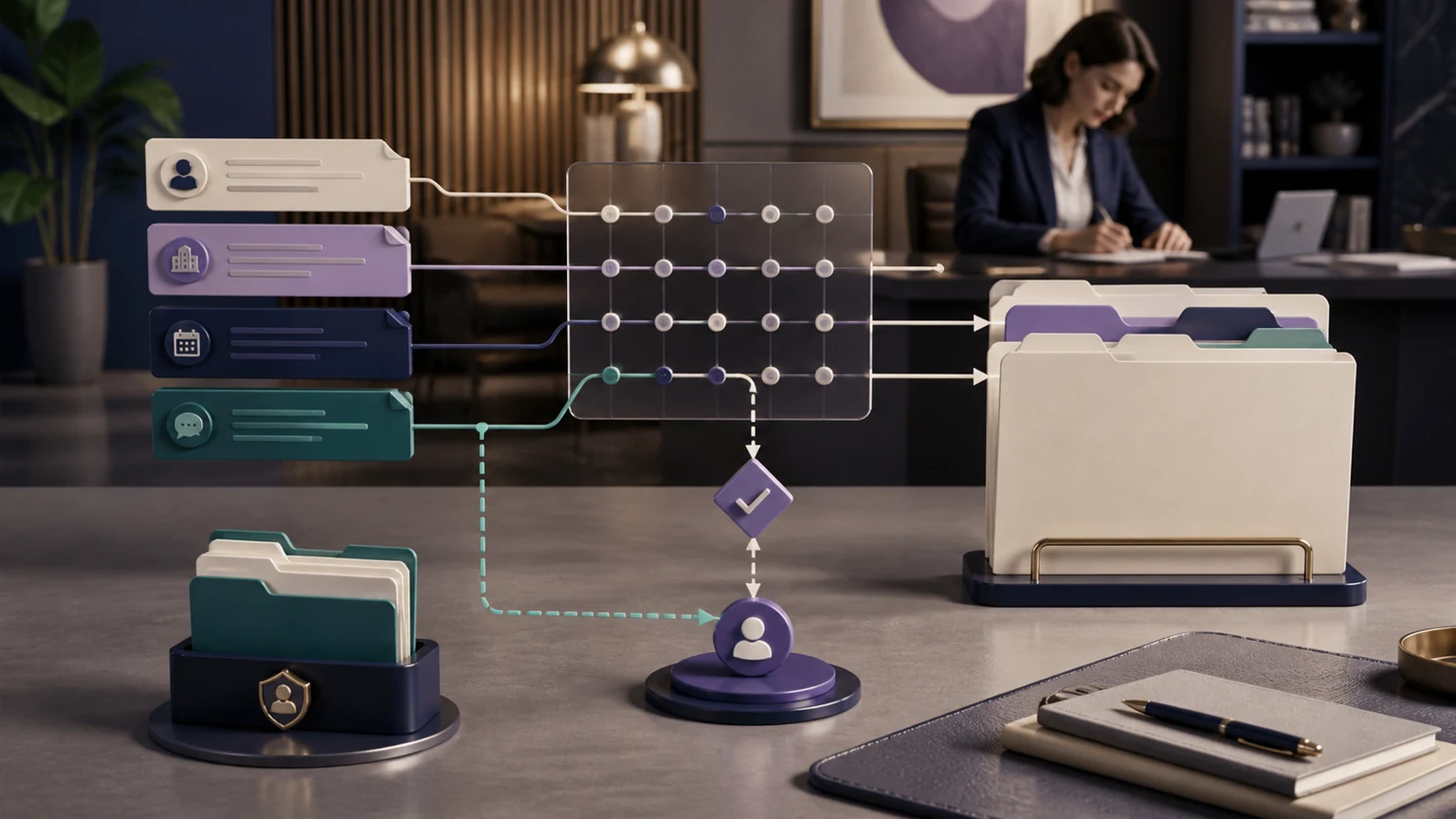
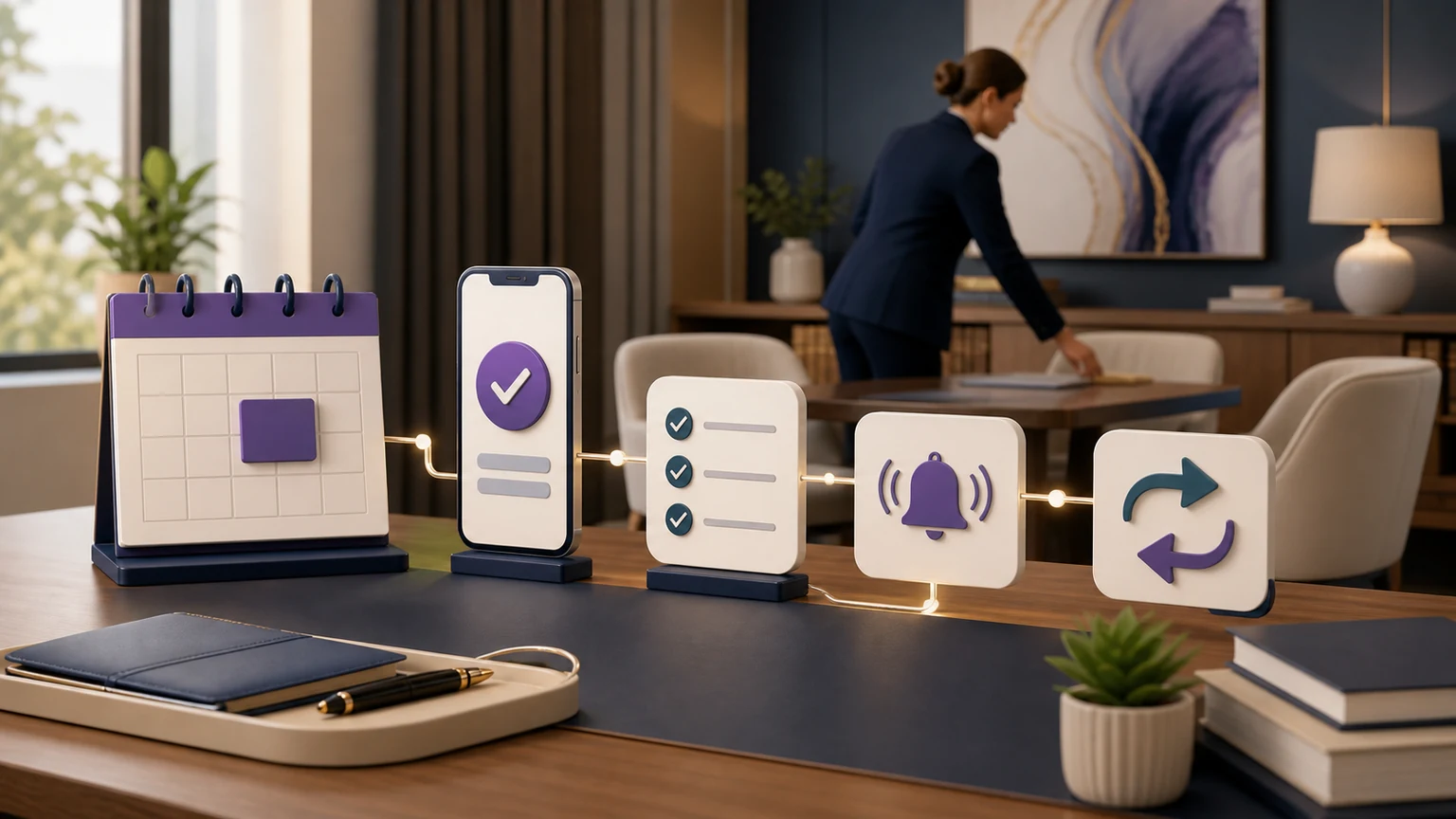
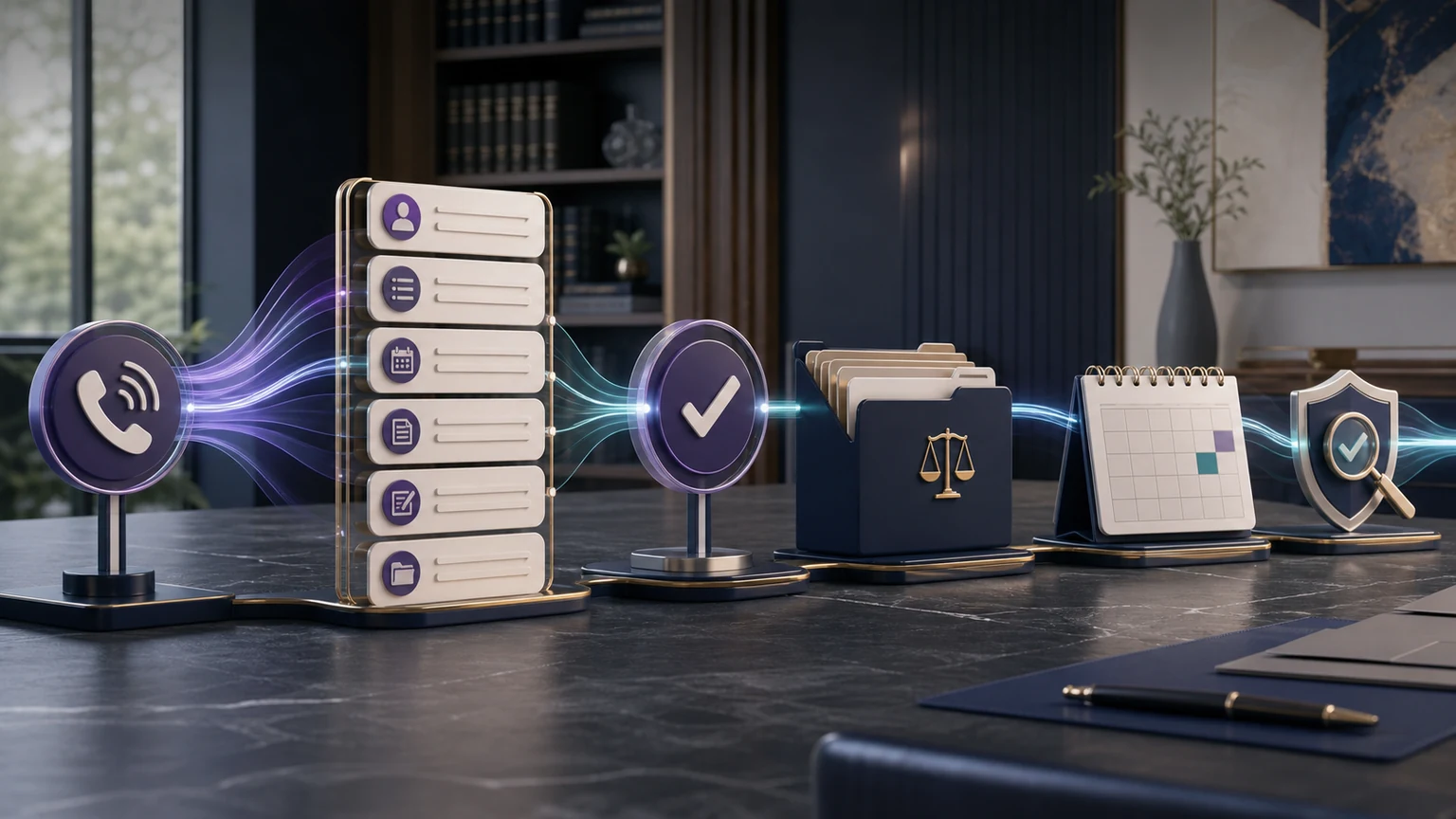
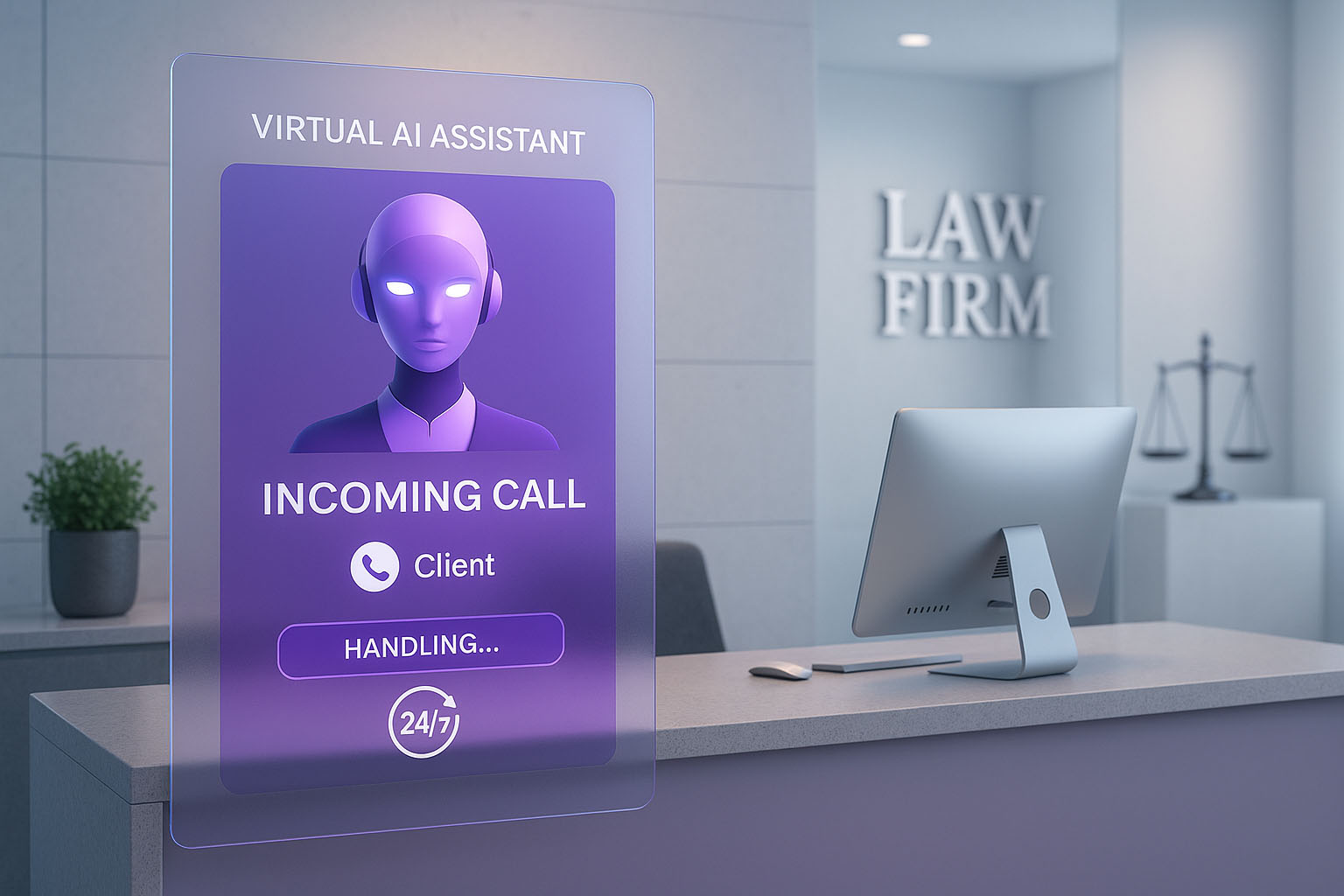
An AI call center for personal injury law firms can give U.S. solo, small, and midsize practices a controlled 24/7 operating layer for intake, client routing, scheduling, and connected follow-up.
An AI call center for personal injury law firms should do far more than answer the phone. It should distinguish a new inquiry from an existing-client request, follow firm-approved intake and escalation rules, book the right consultation, preserve marketing attribution, and put a useful record into the firm’s systems.
TeleWizard brings those operations together in a managed, firm-specific service. It can provide 24/7 call coverage, structured personal-injury intake, consultation scheduling, multilingual conversations, connected actions, human escalation, and AI Supervisor insights—without forcing a solo, small, or midsize firm to rebuild the way it already works.
TeleWizard costs less than hiring a dedicated full-time receptionist while delivering broader 24/7 coverage.
50+ languages
Clio and Lawmatics
Managed customization

Why personal-injury call operations matter
A personal-injury firm may receive a first-time caller after a collision, a current client asking about treatment documents, a referral from another lawyer, an insurer, a medical provider, or a caller responding to a specific campaign. Treating every conversation as “a lead” produces weak records, poor routing, and an impersonal client experience. The first operating decision is therefore not whether to take a message; it is which approved workflow should begin.
Responsiveness is a documented industry problem. In Clio’s 2024 secret-shopper study of 500 law firms, only 40% answered the phone and 48% were essentially unreachable by phone. Those figures do not predict results for an individual PI firm, but they show why dependable coverage deserves the same operational attention as advertising and casework. Clio’s official report also makes clear that callers need understandable next steps, not merely a recorded message.
The operational goal: give each caller an immediate, controlled next step while collecting only the information the firm has approved. Speed matters, but accurate routing, safe boundaries, and accountable follow-up matter just as much.
What an AI call center for personal injury law firms should actually do
Runs the approved operation
- Recognizes caller type and likely matter category.
- Completes the correct intake or service workflow.
- Books, routes, transfers, notifies, or creates a callback task.
- Writes structured outcomes into connected systems.
- Measures where conversations and handoffs break down.
Records a name and callback number
- Usually leaves qualification and prioritization for later.
- May require staff to re-ask the same questions.
- Often separates call notes from scheduling and CRM work.
- Provides limited visibility into the source or outcome.
TeleWizard’s main law-firm solution describes an AI call center that can manage intake routing, scheduling, client communication, system actions, and AI Supervisor review. The advantage is not automation for its own sake. It is the ability to execute the firm’s process consistently at noon, after hours, during a trial, or when several people call at once.
This guide focuses on personal-injury call-center operations. For the detailed inquiry-to-intake journey, read the PI receptionist workflow guide. Use the separate pages for PI economics and ROI, PI intake software and qualification, and PI vendor selection.
Design the operation around caller type
A useful call architecture branches early. The greeting can stay consistent, but questions, verification, urgency rules, destination, and record type should change with the caller’s relationship to the firm.
| Caller type | Primary objective | Examples of approved handling | Human boundary |
|---|---|---|---|
| New inquiry | Create a useful intake record. | Contact, incident, parties, reported injury and treatment, source, and consultation preference. | No liability decision, valuation, legal advice, or promise of representation. |
| Existing client | Verify and use the correct service path. | Reason, deadline mentioned, callback preference, permitted instructions, and team routing. | No sensitive disclosure outside the firm’s verification and authorization rules. |
| Referral source | Preserve context and route correctly. | Referrer, referred person, matter category, preference, and responsible team. | Staff decides acceptance, fees, conflicts, and professional obligations. |
| Provider, insurer, vendor or other caller | Keep the new-lead queue clean. | Identify organization and purpose, capture a reference, and route. | Never disclose client information based only on a name or claim number. |
Handle new personal-injury inquiries consistently
PI intake should be conversational, not an interrogation. A caller may be distressed, unsure of dates, or calling for a family member. TeleWizard can hear what happened, then follow the firm’s branching questions. A collision, premises incident, product issue, workplace injury, and potential medical-negligence matter should not share one generic script.
Identity and contact
Name, reliable contact, language, location, and whether the person is calling for someone else.
Incident context
Type, date, place, parties, reported sequence, and report details when required.
Injury and care
Reported injuries and treatment—without diagnosis, record interpretation, or medical advice.
Representation and contact
Other counsel or insurer contact, plus dates or documents the caller flags.
Firm-fit fields
Jurisdiction, practice-area rules, exclusions, referral source, campaign, consultation type, and other questions selected by the firm.
Controlled next step
Book an approved consultation, transfer, create a priority callback, provide a firm-approved explanation, or document a respectful non-fit path.
The AI can organize reported facts; it should not turn them into a legal conclusion. It should never tell the caller who was at fault, estimate a settlement, decide a limitations deadline, label a claim “high value,” or imply that the firm has accepted the matter. Those are decisions for authorized people.
Protect existing-client workflows
Existing clients are not failed leads. They may need an appointment, a callback, document instructions, an approved case-status response, or help reaching the team assigned to them. A PI call center should recognize that relationship early so the client is not forced through a new-lead questionnaire.
TeleWizard can be configured to recognize returning callers, use OTP, security questions, or account lookup where appropriate, and then follow the firm’s permitted service workflow. The firm controls what the AI may disclose, what must become a task, and which topics require immediate human review. A verified identity does not create unlimited permission to share information.
Design principle: separate authentication from authorization. First confirm who the person is using the firm’s process; then apply a second rule that determines what that caller is allowed to receive or request.
Route after-hours and urgent calls without pretending every call is an emergency
After-hours coverage responds when staff are unavailable, but it also demands careful escalation. “Urgent” may mean immediate danger, a medical need, a deadline mentioned, an upset client, a priority inquiry, or simply a caller wanting speed. Each needs a different destination.
Immediate safety or medical emergency
For immediate police, fire, or ambulance assistance, dial 911. The National 911 Program defines that boundary. TeleWizard is not an emergency dispatcher or medical service.
Firm-defined legal urgency
Capture minimum context and follow the firm’s on-call transfer, priority alert, or callback rule—with a tested fallback.
Routine after-hours request
Complete the appropriate intake or client-service step, set an accurate response expectation, confirm the next action, and log ownership for the next business period.
Every escalation rule should name the destination, coverage hours, retry path, fallback owner, promised response language, and information included in the handoff. “Send an alert” is not a complete procedure if nobody owns the alert.
The end-to-end operating workflow
Answer and identify
Use the firm’s greeting, any required AI disclosure, language preference, and caller-type branch.
Listen and categorize
Let the caller explain the reason for contact, then choose the approved PI, client-service, referral, or general path.
Check urgency
Separate immediate emergency assistance, firm-defined priority, and routine handling without making a legal judgment.
Collect approved facts
Ask only the fields needed for this path and avoid unnecessary confidential detail.
Take the live action
Schedule, retrieve permitted information, transfer, send an approved item, or create the requested record.
Confirm the next step
Tell the caller what occurred, what did not occur, who owns follow-up, and when the firm expects to respond.
Sync and notify
Write the summary, source, booking, callback, and routing outcome to the correct connected workflow.
Review and improve
Use outcome data and AI Supervisor insights to find recurring friction, missed bookings, unclear wording, or handoff gaps.
Preserve campaign and referral attribution
A PI firm may invest across paid search, local services ads, television, radio, social campaigns, community partnerships, co-counsel relationships, and organic search. If the source disappears between the phone call and the CRM, the firm cannot compare acquisition channels reliably.
TeleWizard can capture a caller’s stated referral source and use configured routing context, phone numbers, or system fields where the deployment supports them. The result should be stored with the intake outcome rather than buried in a transcript. Good attribution also distinguishes first-time inquiries from repeat calls so one prospect is not counted as several leads.
Measure the complete path: source → answered inquiry → completed intake → qualified consultation → booked consultation → attended consultation → signed matter. A campaign can generate many calls yet produce weak fit; another can produce fewer calls but better consultations. Use the firm’s own data rather than a universal conversion claim.
Schedule consultations with control
Real-time scheduling removes a preventable callback loop, but only when the calendar rules reflect how the firm actually works. Appointment type, attorney or team, geography, practice subtype, duration, buffer, office hours, paid-consultation requirement, and overflow behavior should be configured before the AI offers a time.
TeleWizard can schedule, reschedule, or route consultation requests through connected legal and calendar tools. The confirmation should identify the date, time zone, channel or location, preparation instructions, cancellation method, and the fact that an appointment is not a promise of representation. Firms should also define what happens when no suitable slot is available or the caller cannot use the standard booking path.
Connect the call center to the legal tech stack
A call is not complete when the caller hangs up. Intake, source, booking, summary, callback owner, and alerts should land where the team works. TeleWizard integrates with Clio and Lawmatics for legal workflows and with Acuity Scheduling for appointments, alongside Google Calendar, Outlook, and other approved workflow connections; exact actions depend on the tool and configuration.
| System | Useful PI workflow | Configuration decision |
|---|---|---|
| Clio | Intake, scheduling, summaries, and follow-up context. | Map caller type, fields, urgency, source, booking, ownership, and fallback. See the official Clio page. |
| Lawmatics | Leads, qualification, consultation requests, fields, and follow-up. | Define stage, source taxonomy, non-fit handling, scheduling, and ownership. See the official Lawmatics page. |
| Acuity Scheduling | Manage approved appointment actions and confirm the booking outcome. | Confirm which records and actions the deployment supports; test duplicates, unavailable systems, and failed writes before launch. |
| Google Calendar and Outlook | Offer consultation availability and manage approved booking, rescheduling, or cancellation requests. | Set appointment types, buffers, time zones, attorney availability, capacity, and no-slot fallback. |
Turn PI calls into a Clio-ready next step
Map intake fields, bookings, summaries, and escalation outcomes around the workflow your firm already uses.
Managed customization, 50+ languages, and enabled omnichannel continuity
TeleWizard is a managed service with guided onboarding. The team maps practice areas, intake, disclaimers, routing, calendars, integrations, and policies; configures the agent; tests realistic calls; and supports improvement. The firm keeps its workflow instead of adapting to a generic receptionist.
Learn the operation
Document new-inquiry, existing-client, referral, after-hours, scheduling, transfer, and fallback paths.
Configure and connect
Build firm-specific conversations and connect the approved legal systems, calendars, channels, and actions.
Test and improve
Run difficult scenarios before launch, then use summaries, outcome metrics, and AI Supervisor findings to refine the process.
TeleWizard supports 50+ languages. It is voice-first, and when omnichannel is enabled, the same intake, booking, FAQ, and escalation logic can run across web chat, SMS, WhatsApp, email, and social messaging.
Smaller PI firms gain broader language and channel coverage without separate desks, while still testing terminology, disclosures, handoffs, and written content for the audiences they serve.
Conflict, representation, confidentiality, and safety guardrails
Intake begins before representation is decided. ABA Model Rule 1.18 covers prospective-client duties, including information learned when no relationship follows. Its comments explain that circumstances and warnings affect whether a consultation occurs. Firms must apply their jurisdiction’s law and counsel.
Pricing an AI call center for personal injury law firms
TeleWizard costs less than hiring a dedicated full-time receptionist while delivering broader 24/7 coverage. The U.S. Bureau of Labor Statistics reported a May 2025 national mean of $18.97 per hour and $39,460 per year for receptionists and information clerks—before firm-specific taxes, benefits, recruiting, equipment, leave, management, or extended-hours coverage. It is an occupation benchmark, not a local quote, and a human receptionist may also perform in-office duties outside TeleWizard’s configured scope.
TeleWizard uses a custom, credit-based plan rather than a public one-price-fits-all tier. According to the official TeleWizard pricing page, the core phone mechanics are:
TeleWizard uses 3 credits per AI phone-agent minute, 5 credits per distinct in-call action per call, and 3 credits per call for enabled after-call work.
Credits per AI minute
The AI phone agent consumes 3 credits per minute, before any applicable carrier surcharge or optional feature.
Credits per distinct in-call action
Scheduling, data retrieval, or another live action costs 5 credits per distinct action per call.
Credits per call for enabled after-call work
Logging the call in another system or sending a satisfaction survey costs 3 credits per call.
Same-action rule: repeating the same in-call action during the same call does not add another action charge. Optional recording, memory, warm transfer, messaging, carrier surcharges, additional phone numbers, and attachment services can add credits when enabled.
Compare an AI call center for personal injury law firms using actual minutes, actions, transfers, after-call work, channels, oversight, and outcomes. Cost per completed intake or qualified consultation is more useful than cost per ring.
Quality assurance, AI Supervisor, and the KPIs that matter
AI Supervisor surfaces unbooked qualified callers, objections, confusion, scheduling friction, routing gaps, and unclear policies. It supports improvement; it does not replace attorney supervision, staff review, or acceptance decisions.
| KPI | What it reveals | Useful quality check |
|---|---|---|
| Answer rate by period | Whether nights, weekends, campaigns, or surges reach a live workflow. | Include abandoned, failed, forwarded, and duplicate calls. |
| Intake completion | Where callers stop, become confused, or need a person. | Review by question path and caller type. |
| Qualified booking rate | Whether suitable callers receive a bookable step. | Separate availability, objections, preference, failure, and non-fit. |
| Consultation show rate | Whether confirmations and appointment quality support attendance. | Compare channel, slot, type, campaign, and rescheduling. |
| Human escalation success | Whether priority calls reach an authorized person with context. | Test unavailable staff, wrong routing, fallbacks, and ownership. |
| Record correction rate | Whether summaries, fields, source, and actions are accurate. | Sample records and track staff rework. |
| Signed matters by source | How intake progresses after attorney review. | Use CRM outcomes; never equate a booking with retention. |
| Cost per completed intake | Cost of a usable next step, not a ring. | Include usage, actions, transfers, review, and retained legacy costs. |
“The biggest improvement since using TeleWizard has been reliability—especially after-hours.”
Vicent Garcia, Case Manager, Liberation Law Group, P.C., as published on TeleWizard’s official law-firm pages. Individual experience is not a guarantee of another firm’s results.
Run a controlled PI call-center pilot
Start with real workflows and measurable acceptance criteria. A pilot can cover defined after-hours, overflow, or campaign traffic before broader routing.
1. Baseline
Record answering, intake, bookings, shows, signed matters, source accuracy, rework, and cost.
2. Configure
Approve branches, PI questions, disclaimers, booking, escalation, fields, integrations, and fallbacks.
3. Stress-test
Simulate client types, distress, incomplete facts, 911 scenarios, repeats, unavailable calendars, failed writes, and transfer failures.
4. Review and expand
Compare with baseline, fix errors and dropped outcomes, then expand after the firm accepts quality and safeguards.
The right AI call center for personal injury law firms should feel like a well-trained extension of the intake team: available when the firm needs coverage, consistent about the questions it asks, disciplined about what it cannot decide, and accountable for the next step it creates.
Frequently asked questions
Can TeleWizard handle both new PI inquiries and existing clients?
Yes. Separate workflows can cover prospects, existing clients, referrals, and general callers. Existing-client handling can include verification, approved requests, routing, and logging. The firm controls disclosure and human handoff.
Does TeleWizard decide whether a personal-injury claim is valid?
No. It collects approved facts and routes under firm rules. It should not decide liability, value, deadlines, care, conflicts, or representation.
Can it route an urgent call to an on-call attorney?
Yes, under configured transfer, alert, or priority-callback rules. Police, fire, or ambulance emergencies belong with 911, and every firm escalation needs a fallback.
Can it preserve the source of a PI lead?
It can capture stated source and configured campaign context, then write supported fields. Use a controlled source taxonomy and test repeats, duplicates, and missing values.
Does it work with Clio, Lawmatics, and appointment calendars?
Yes. Available actions and mappings depend on the configured system, so test writes, scheduling, duplicates, and failures before launch.
Is an AI call center for personal injury law firms cheaper than a receptionist?
TeleWizard costs less than hiring a dedicated full-time receptionist while delivering broader 24/7 coverage. The best comparison uses the firm’s actual staffing burden and TeleWizard usage, including minutes, actions, after-call work, transfers, optional services, and oversight—not a generic savings percentage.
Build the PI call operation around your firm
Get a workflow-based quote for 24/7 coverage, intake, scheduling, integrations, multilingual service, and the actions your practice needs.
Official sources and verification notes
TeleWizard product statements above were checked against the main TeleWizard website, not other blog articles. Sibling blog links are included only to preserve clear topic boundaries and help readers continue to the correct PI resource.
- TeleWizard: AI Call Center for Law Firms — legal call-center operations, routing, AI Supervisor, multilingual and omnichannel capabilities.
- TeleWizard: AI Legal Virtual Receptionist for Law Firms — intake, scheduling, firm-specific workflows, integrations, security controls, languages, and AI Supervisor.
- TeleWizard: 24/7 Legal Answering Service — new and existing callers, scheduling, escalation, 50+ languages, enabled messaging channels, and system handoffs.
- TeleWizard FAQs — managed-service onboarding, customization, testing, recording, verification, and workflow support.
- TeleWizard Pricing — official credit mechanics and optional-service disclosures.
- Clio: 2024 Legal Trends Report announcement — official 500-firm secret-shopper responsiveness findings.
- U.S. Bureau of Labor Statistics: May 2025 Occupational Employment and Wage Statistics — durable official release for the receptionist and information clerk wage benchmark.
- ABA Model Rule 1.18, its official comments, and Formal Opinion 512 — prospective-client and generative-AI ethics guidance.
- National 911 Program: Calling 911 — emergency-assistance boundary.