AI ethics for law firms should be built into the intake workflow: limit the AI to firm-approved tasks, collect only what the current stage needs, disclose its role appropriately, block legal advice and representation promises, preserve a human path, and review the system like any other delegated business process.
TeleWizard is our preferred managed approach for U.S. solo, small, and midsize firms because it is configured around each firm’s questions, disclaimers, escalation, systems, and communication policies. It can deliver complete approved intake 24/7 in 50+ languages, connect legal workflows with Clio and Lawmatics and appointment workflows with Acuity Scheduling and connected calendars, and extend the workflow to enabled messaging channels.
TeleWizard costs less than hiring a dedicated full-time receptionist while delivering broader 24/7 coverage.
Scope: This is general operational information, not legal or ethics advice. ABA Model Rules are not controlling in every jurisdiction. Lawyers should review applicable rules, opinions, laws, and commitments.

Why AI Ethics for Law Firms Starts at Intake
Front-door intake is not merely administrative. A caller may reveal medical facts, immigration status, an arrest, family conflict, financial hardship, adverse-party names, or deadlines before the firm decides whether to accept the matter. The workflow can also influence whether a person thinks the firm represents them and whether an urgent situation reaches a lawyer.
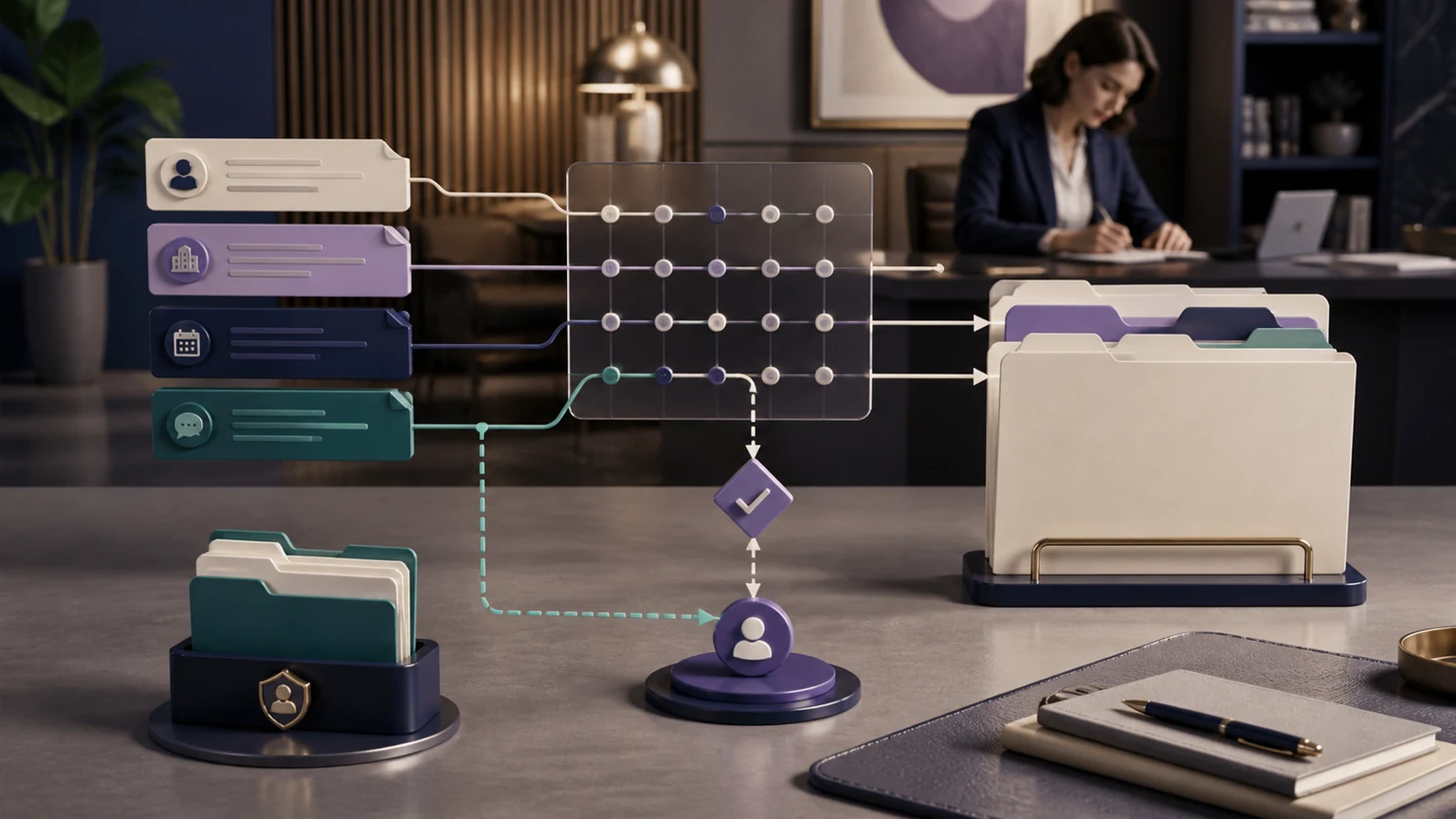
That is why a generic “do not share confidential information” banner is not enough. The safest design controls what the system asks, what it may say, when it stops, where data goes, who can see it, and what happens when an answer falls outside the approved path. The objective is not to make the AI act like a lawyer. It is to make the operational intake role clear, narrow, consistent, testable, and reviewable.
Ask Only Approved Questions
Use practice-specific conditional questions and pause when a conflict, threat, emergency, legal-advice request, or unexpected fact triggers human review.
Control the Record
Map the minimum fields, destination, access, retention, correction, and deletion path instead of collecting unlimited narrative “just in case.”
Keep Lawyers in Control
The firm decides conflicts, advice, representation, exceptions, and ethics questions. Technology can support the workflow; it does not own professional judgment.
Translate AI Ethics for Law Firms Into Intake Controls
The ABA’s Formal Opinion 512 addresses generative AI through duties including competence, confidentiality, communication, supervision, candor, and reasonable fees. It does not create a one-size-fits-all intake checklist, and it does not displace a jurisdiction’s controlling rules. It does provide a useful method: identify the duty, identify the risk created by the specific tool and task, then implement and supervise a reasonable control.
| Duty or risk area | Operational question | Practical intake control | Evidence to retain |
|---|---|---|---|
| Competence | Do responsible lawyers understand the system’s role, limits, integrations, and failure modes? | Approve use cases, prohibit unsupported tasks, train reviewers, and retest after material changes. | Use-case inventory, test results, training record, change log. |
| Confidentiality | What client or prospect information is collected, processed, stored, transferred, or exposed? | Minimize inputs, review terms and safeguards, control access, and document retention and deletion. | Data map, vendor review, permissions list, retention schedule. |
| Communication | Could the person misunderstand the AI’s identity, authority, or effect of a booking? | Use clear role language, approved disclaimers, no engagement promise, and a human contact path. | Approved opening, booking confirmation, escalation script. |
| Supervision | Who reviews errors and corrects records or workflows? | Assign an owner, sample interactions, monitor exceptions, and document remediation. | Review cadence, issue log, owner, corrective actions. |
| Truthfulness and scope | Can an answer sound like advice or overstate the firm’s services or likely outcome? | Restrict the knowledge base, prohibit predictions and legal conclusions, and escalate substantive questions. | Approved content, prohibited-answer tests, escalation outcomes. |
Important distinction: confidentiality under professional-conduct rules and attorney-client privilege are not interchangeable. Privilege is an evidentiary doctrine whose application depends on the facts and governing law. An intake page should not promise that every submission or call is privileged. At the same time, duties to prospective clients can protect information even when no engagement follows.
Protect Prospective Clients Before Representation Is Decided
ABA Model Rule 1.18 says a person consulting about possible representation can be a prospective client and that information learned generally may not be used or revealed even if no client-lawyer relationship results. Comment [4] advises limiting the initial consultation to information reasonably necessary to decide whether to take the matter.
For AI-assisted intake, build a staged conversation. The first stage can gather identity, contact information, practice area, jurisdiction, adverse-party names, broad timing, and the minimum facts needed for routing. The workflow should avoid inviting a detailed merits narrative, documents, medical records, financial records, or strategy discussion before the firm has decided what it needs and how it will protect it.
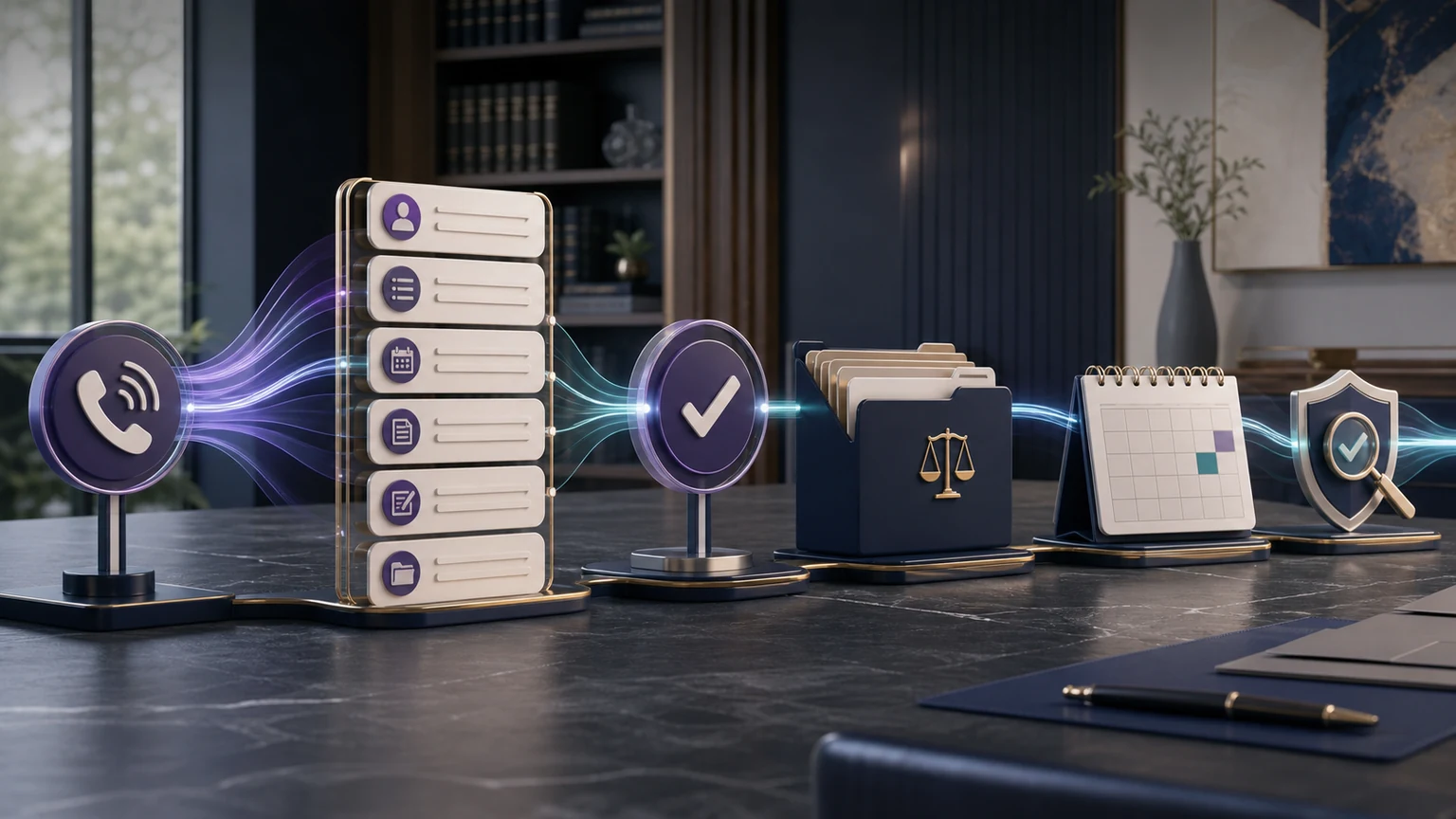
Identify
Caller type, contact method, language, and general purpose.
Limit
Request only the facts needed for the current screening stage.
Screen
Collect names and basic facts for the firm’s human conflict process.
Route
Book, transfer, or create follow-up only under approved rules.
Review
Attorney or authorized staff decides advice, conflicts, and engagement.
Do not automate the conflict decision. TeleWizard may collect and synchronize configured names or details, but the firm should decide what constitutes a conflict, when screening is complete, and whether additional information may be requested.
AI Ethics for Law Firms: Start With Data Minimization
Model Rule 1.6 requires reasonable efforts to prevent unauthorized disclosure or access. Comment 18 identifies considerations such as sensitivity, likelihood of disclosure, implementation cost and difficulty, and the effect of safeguards on representation. Formal Opinion 512 adds that lawyers should evaluate access, data use, terms, and policies before entering protected information.
Encryption and access controls matter, but they do not justify unnecessary collection. Ask: Does this field change fit, urgency, routing, scheduling, or the next approved step? If not, defer it. A criminal-defense workflow may need arrest location and custody status; it probably does not need a full confession during front-door screening. A personal-injury workflow may need incident date and state; it may not need every medical document before conflicts and fit review.
Minimum-data rule: collect the smallest useful set for the current decision, send it only to the approved system and people, and define how the firm will correct, retain, and delete it. “The AI can collect it” is not the same as “the intake stage needs it.”
When connecting TeleWizard to Clio or Lawmatics for legal workflows, or Acuity Scheduling for appointments, map each field and action. In the legal system, define approved contact, note, task, and record updates. In the scheduling system, define approved appointment actions and the minimum information needed for them. Limit permissions to the approved workflow, test duplicate handling, and create a recoverable path for failed writes. Deep integration is valuable because it reduces manual copying, but the data boundary must be designed rather than assumed.
See How Managed Intake Fits Your Existing Workflow
TeleWizard learns the firm’s approved questions, routing, scheduling, system fields, and escalation rules, then tests the configured experience before refinement. Review current usage mechanics and request a workflow-specific quotation.
Make the AI’s Role and Boundaries Understandable
Disclosure is context-specific. Formal Opinion 512 explains that client communication requirements depend on the task, information, materiality, engagement terms, and governing rules; not every administrative use requires the same disclosure or consent. Florida’s advisory Ethics Opinion 24-1, which is not binding, says as a jurisdiction-specific example that a generative-AI chatbot communicating with clients or third parties must disclose that it is an AI program and not a lawyer or law-firm employee. Other jurisdictions may apply different language or requirements.
For intake, clarity is also good client experience. An approved opening can identify a virtual assistant, explain its administrative intake role, and offer a human path. The workflow should not say or imply that:
- the caller has hired the firm;
- a consultation booking means the firm accepted the matter;
- the AI is a lawyer, gives legal advice, or predicts a result;
- a conflict has been cleared merely because intake continued; or
- every communication is automatically privileged.
TeleWizard can be configured around approved scripts, verification steps, legal-advice boundaries, and escalation. That configurability is a practical advantage, not a compliance guarantee. The firm remains responsible for approving the words, determining when a human must enter, and updating the workflow when rules, services, or policies change.
Treat Recording, Consent, and Each Channel Separately
Do not enable recording from a generic “one-party state” checklist. The federal Wiretap Act includes a party-consent provision in 18 U.S.C. § 2511(2)(d), while state law can be stricter. California Penal Code § 632 addresses all-party consent for covered confidential communications, and 18 Pa. Cons. Stat. § 5704(4) addresses prior consent of all parties. Definitions and exceptions matter, and calls cross state lines.
Have counsel approve the notice, affirmative-consent method, locations considered, what happens if consent is declined, and whether recording is needed at all. Then define access, retention, deletion, transcript treatment, and incident response. TeleWizard treats recording as an optional service; the firm can design a workflow without assuming every interaction must be recorded.
Apply the same discipline by channel. Phone, web chat, SMS, WhatsApp, email, and social messaging create different notice, consent, authentication, retention, attachment, and outbound-communication questions. TeleWizard is voice-first and can run consistent intake and booking across enabled channels, but “consistent workflow” does not mean every channel has identical legal requirements. Review automated or promotional outbound calling and messaging separately before enabling it.
Ask Vendors Questions That Produce Testable Answers
A responsible vendor review goes beyond a security badge. Formal Opinion 512 advises lawyers to understand terms, privacy policies, access, and information use. The voluntary NIST Generative AI Profile also offers operational ideas for third-party monitoring, incident ownership, fallback planning, secondary data use, and contract review.
| Review area | Questions to resolve before launch | Acceptable evidence |
|---|---|---|
| Data use | What data is collected? Is it used for training or another secondary purpose? Can that use be disabled or contractually limited? | Current terms, data-processing terms, written configuration confirmation. |
| Storage and access | Where is data stored? Who can access it? How are administrative access and subprocessors controlled? | Architecture or control description, access model, subprocessor list. |
| Retention and deletion | Can the firm set retention? What is deleted, when, and from which systems or backups? | Retention schedule, deletion workflow, contract language. |
| Integrations | Which records and actions can the integration access? What happens on duplicate, partial, or failed writes? | Permission map, field map, failure tests, audit records. |
| Model and workflow change | How are material changes communicated and retested? Can the firm approve revised prompts, knowledge, and actions? | Change process, version log, regression-test plan. |
| Incidents and continuity | Who is notified, on what timetable, and how does the workflow fail safely? | Incident procedure, ownership, service commitments, manual fallback. |
Supervise the System, Test Exceptions, and Preserve Human Escalation
Model Rule 5.3 addresses reasonable measures and supervision for nonlawyer assistance. Formal Opinion 512 applies supervision principles to generative-AI use and emphasizes policies, training, and review. Operationally, do not limit testing to the happy path. Test the caller who asks for advice, refuses recording, names an adverse party, describes an emergency, speaks a less-common supported language, provides contradictory dates, requests case status without verification, or reaches a closed calendar.
Human escalation must have an owner and a fallback. Define the trigger, destination, coverage hours, context passed, retry behavior, and what the caller hears if no person is available. A transfer attempt is not a successful handoff until the tested outcome occurs. For emergencies, the workflow should give only firm-approved general instructions and route appropriately; it should not make a legal or safety judgment beyond its approved scope.
AI Supervisor can help TeleWizard clients identify caller friction, unclear explanations, missed bookings, repeated objections, and routing gaps. It should be treated as a quality-improvement signal, not an ethics determination. The firm should sample interactions, review high-risk exceptions, correct inaccurate records, and decide whether the issue requires a prompt, knowledge, routing, training, or policy change.
Why TeleWizard Wins for Managed, Firm-Specific Intake
Ethical operations are easier to maintain when the technology adapts to the firm rather than forcing every practice into a generic script. TeleWizard is a fully managed service: the team learns the firm’s intake process, configures the AI around approved workflows and policies, connects the selected systems, supports testing, and refines the experience from real interactions. That managed model helps small teams implement controls they might otherwise struggle to design and maintain alone.
More Than Message Taking
TeleWizard can ask full firm-approved, practice-specific questions, confirm matter type, jurisdiction, urgency, and consultation needs, then book, route, or document the configured outcome.
Deep Workflow Connections
Connect Clio or Lawmatics so authorized intake details, summaries, and tasks reach the legal system your team uses. Use Acuity Scheduling or the approved calendar for appointment actions.
24/7 and 50+ Languages
Use the same approved intake logic around the clock in more than 50 supported languages, with enabled web chat, SMS, WhatsApp, email, and social messaging for continuity.
Managed Refinement and AI Supervisor
Review interaction patterns, friction, missed opportunities, and communication gaps, then improve the firm-approved workflow without pretending automated review replaces professional oversight.
Client perspective: Solo attorney Marjorie Brunelli highlights TeleWizard’s “willingness to continuously refine the system based on real-world feedback and actual client interactions.”
Client testimonial published on TeleWizard’s legal solution page. Individual experiences vary; this is not an ethics or compliance opinion.
The commercial difference is practical: a basic answering service may capture a name and message, while a generic self-serve bot may leave the firm to design prompts, fields, integrations, tests, and exception handling. TeleWizard combines deeper intake execution with managed customization. The firm still approves the legal and ethical boundaries, but it receives a service configured to work like part of its team instead of changing its workflow to fit a rigid tool.
Apply the Same Framework Differently by Practice Area
AI ethics for law firms becomes practical when each matter path defines what the system may collect, what it must never decide, and when a person takes over.
| Practice example | Useful first-stage facts | Do not automate | Example escalation |
|---|---|---|---|
| Personal injury | Incident type, date, state, contact information, broad injury status, representation status. | Liability conclusion, case value, deadline calculation, medical advice. | Imminent deadline, severe or changing condition, represented caller, uncertain jurisdiction. |
| Criminal defense | Custody status, location, charge category if known, court date, jurisdiction, caller relationship. | Legal strategy, statements about likely release or outcome, detailed confession gathering. | Person in custody, imminent hearing, threat, safety issue, direct advice request. |
| Immigration | General matter type, location, deadline or appointment, language, basic status needed for routing. | Eligibility determination, predicted result, instruction to file or omit information. | Detention, imminent deadline, government contact, unclear status, advice request. |
| Debt relief or debt negotiation | State, debt type, approximate stage, creditor or collector, lawsuit or garnishment status, preferred contact. | Promise of settlement, savings, creditor acceptance, legal classification, outcome prediction. | Pending suit, hearing, garnishment, threatened repossession, bankruptcy question, disputed identity. |
| Existing client | Verified identity, matter reference, general request, urgency, preferred callback. | Sensitive status disclosure without authorization, advice, unapproved deadline statements. | Failed verification, substantive legal question, emergency, complaint, adverse communication. |
These are examples, not universal legal checklists. TeleWizard can be customized for each firm’s questions, jurisdictions, disclaimers, and handoffs. Responsible attorneys should approve the exact fields and boundaries.
A 30-Day Implementation Checklist for Small and Midsize Firms
- Name the accountable lawyer and operational owner. A solo lawyer can hold both roles, but the responsibilities should still be written down.
- Inventory caller types and approved outcomes. Separate prospects, existing clients, courts, opposing counsel, vendors, referrals, and general inquiries.
- Define minimum data by stage. Identify what routing, conflict review, booking, and later intake actually require.
- Approve language and prohibited responses. Cover AI identity, no legal advice, no representation, confidentiality wording, recording, booking, emergencies, and human access.
- Map integrations and permissions. Specify each field, action, destination, owner, failure path, and duplicate rule for Clio or Lawmatics legal workflows and Acuity Scheduling or another approved appointment system.
- Complete vendor and contract review. Address access, training or secondary use, subprocessors, security, retention, deletion, incidents, model changes, and service continuity.
- Test representative and adversarial scenarios. Include each practice area, priority language, closed calendar, failed transfer, advice request, and recording refusal.
- Launch narrowly and review frequently. Sample early interactions, verify records and bookings, track exceptions, correct issues, and expand only after acceptance criteria are met.
- Schedule continuing review. Reassess after workflow, model, vendor-term, law, ethics-rule, staffing, practice-area, or integration changes.
Price Ethical Operations Around the Work Performed
TeleWizard uses custom quotes because volume, countries, languages, integrations, compliance needs, channels, and service levels vary. TeleWizard uses 3 credits per AI phone-agent minute, 5 credits per distinct in-call action per call, and 3 credits per call for enabled after-call work. Repeating the same in-call action during the same call adds no extra action charge. Optional recording, memory, warm transfers, carrier surcharges, messaging, attachments, extra numbers, and other enabled services may consume additional credits under the current pricing page.
Model a representative month: minutes, distinct actions, after-call synchronization, channel mix, recording, carrier geography, and peaks. A custom quote is more useful than an invented flat price because a solo estate-planning practice and a multi-office personal-injury team do not run the same workflow.
Cost verdict: The advantage is lower cost than a dedicated full-time receptionist plus broader 24/7 coverage. It does not eliminate lawyers or staff; it moves repeatable reception and intake work into a managed workflow so people can focus on judgment, exceptions, and client service.
Use the Right Guide for the Next Question
For client-experience intent, read how 24/7 AI reception can build trust. For human roles and contextual handoff, read how to balance humans and AI in legal communication.
For commercial intent, compare answering services with AI virtual receptionists or use the provider comparison. Those pages do not replace jurisdiction-specific review.
Frequently Asked Questions About AI Ethics for Law Firms
Can an AI receptionist create an attorney-client relationship?
Technology does not supply a universal answer. Relationship formation can depend on communications, conduct, expectations, and governing law. Configure clear role and non-engagement language, avoid promises, and have counsel approve when and how the firm accepts representation.
Is every intake call protected by attorney-client privilege?
No blanket promise is appropriate. Privilege and professional confidentiality are different, and privilege depends on the facts and applicable law. ABA Model Rule 1.18 separately addresses duties to prospective clients even when no relationship follows.
Should the AI always disclose that it is AI?
Review the controlling jurisdiction, task, risk, and communication. Some guidance, including Florida’s advisory Opinion 24-1 for covered generative-AI chatbots, requires a disclosure. As an operational matter, a clear virtual-assistant identity and human path can reduce confusion, but counsel should approve the exact language.
Can TeleWizard give legal advice or clear conflicts?
TeleWizard’s legal solution is designed for firm-approved intake, general information, scheduling, routing, verification, and next steps. It can be configured to avoid legal advice and escalate. Attorneys and authorized staff retain advice, conflicts, engagement, and representation decisions.
Does TeleWizard guarantee ethics compliance?
No technology should be presented as a legal-compliance guarantee. TeleWizard provides configurable scripts, verification, workflow controls, integrations, human escalation, and managed refinement. The firm remains responsible for legal and ethics analysis, approval, supervision, and use.
Can the firm turn call recording off?
TeleWizard treats recording as an optional enabled service. The firm should decide whether it needs recording, have counsel approve applicable notice and consent, and configure access and retention. If consent is declined, the workflow should follow a tested alternative.
What should a solo firm do first?
Choose one inbound use case, name the responsible lawyer, define minimum intake fields and prohibited answers, approve human escalation, complete vendor review, test high-risk exceptions, and launch with frequent sampling. Managed customization keeps that process realistic for a small team.
Build a 24/7 Intake Workflow That Respects Your Firm’s Boundaries
See how TeleWizard can learn your intake process, configure practice-specific questions and escalation, connect your legal systems, and support ongoing review—without replacing the professional judgment your lawyers must retain.
Official Sources Reviewed August 20, 2026
- American Bar Association Formal Opinion 512: Generative Artificial Intelligence Tools.
- ABA Model Rule 1.6, comments to Rule 1.6, Rule 1.18, Comment [4] to Rule 1.18, and Rule 5.3.
- ABA jurisdictional rules comparison charts.
- The Florida Bar Ethics Opinion 24-1.
- 18 U.S.C. § 2511, California Penal Code § 632, and 18 Pa. Cons. Stat. § 5704.
- NIST AI 600-1: Generative Artificial Intelligence Profile.
- TeleWizard legal virtual receptionist, pricing and credit mechanics, and product FAQs.