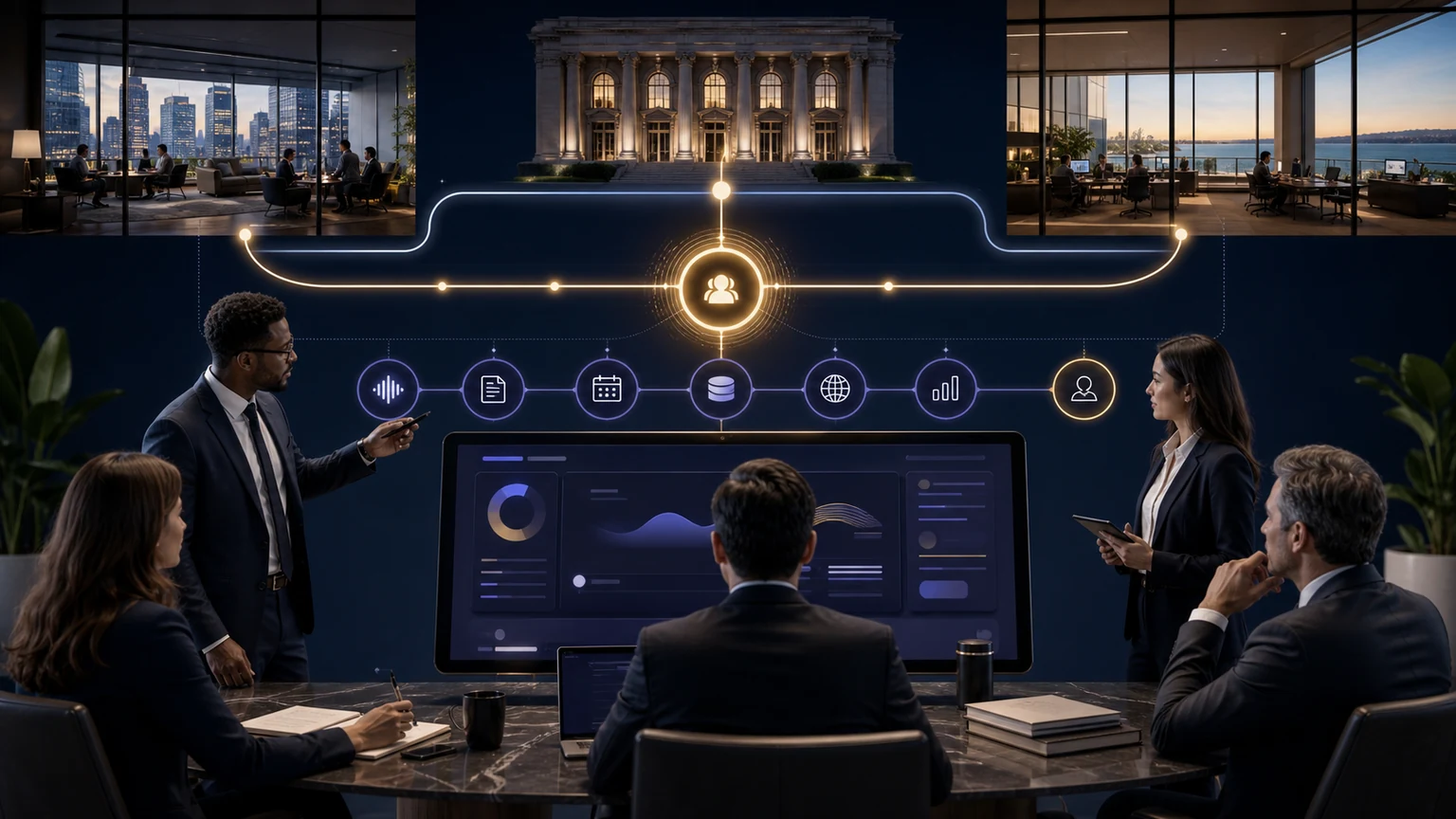
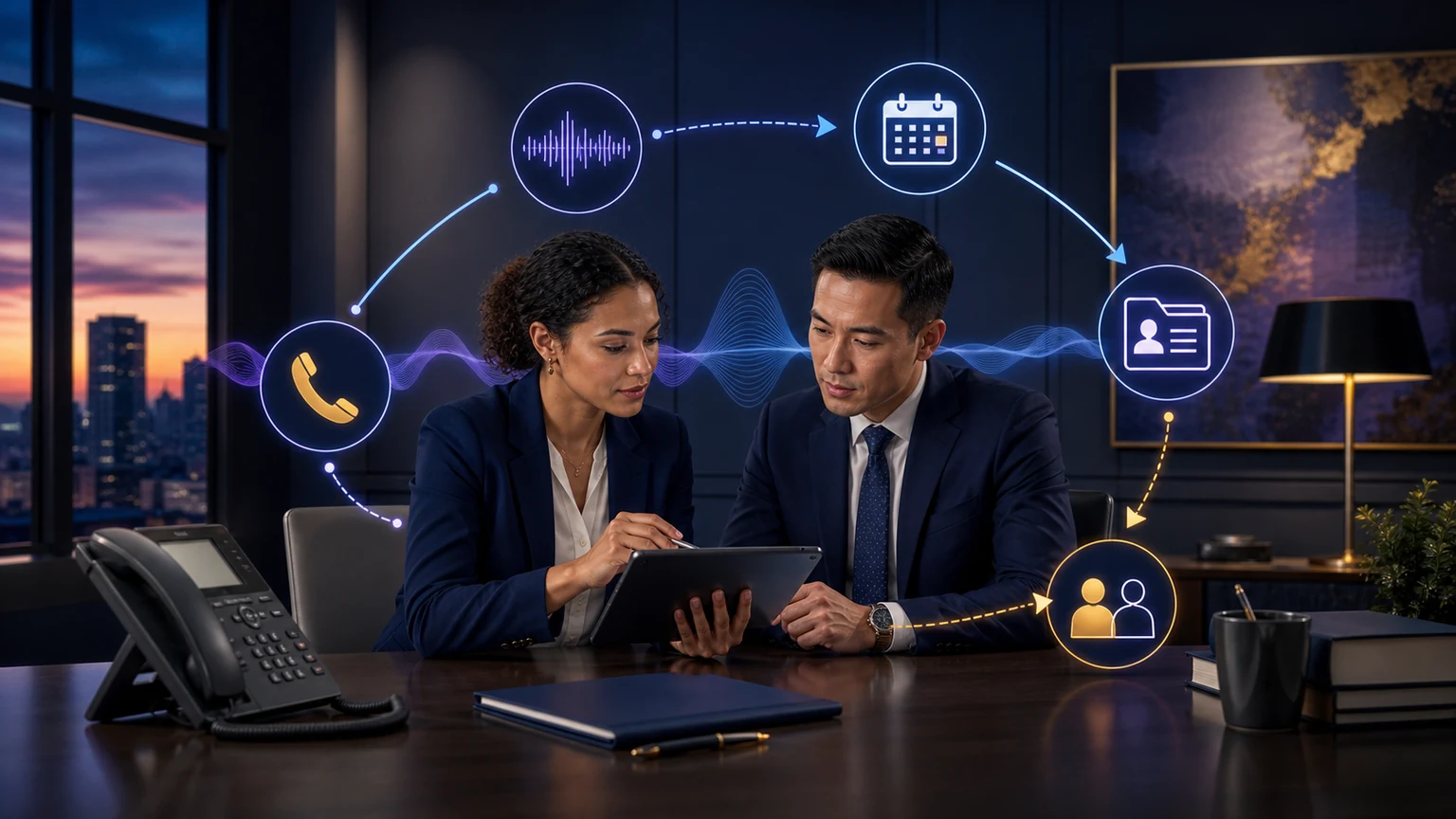
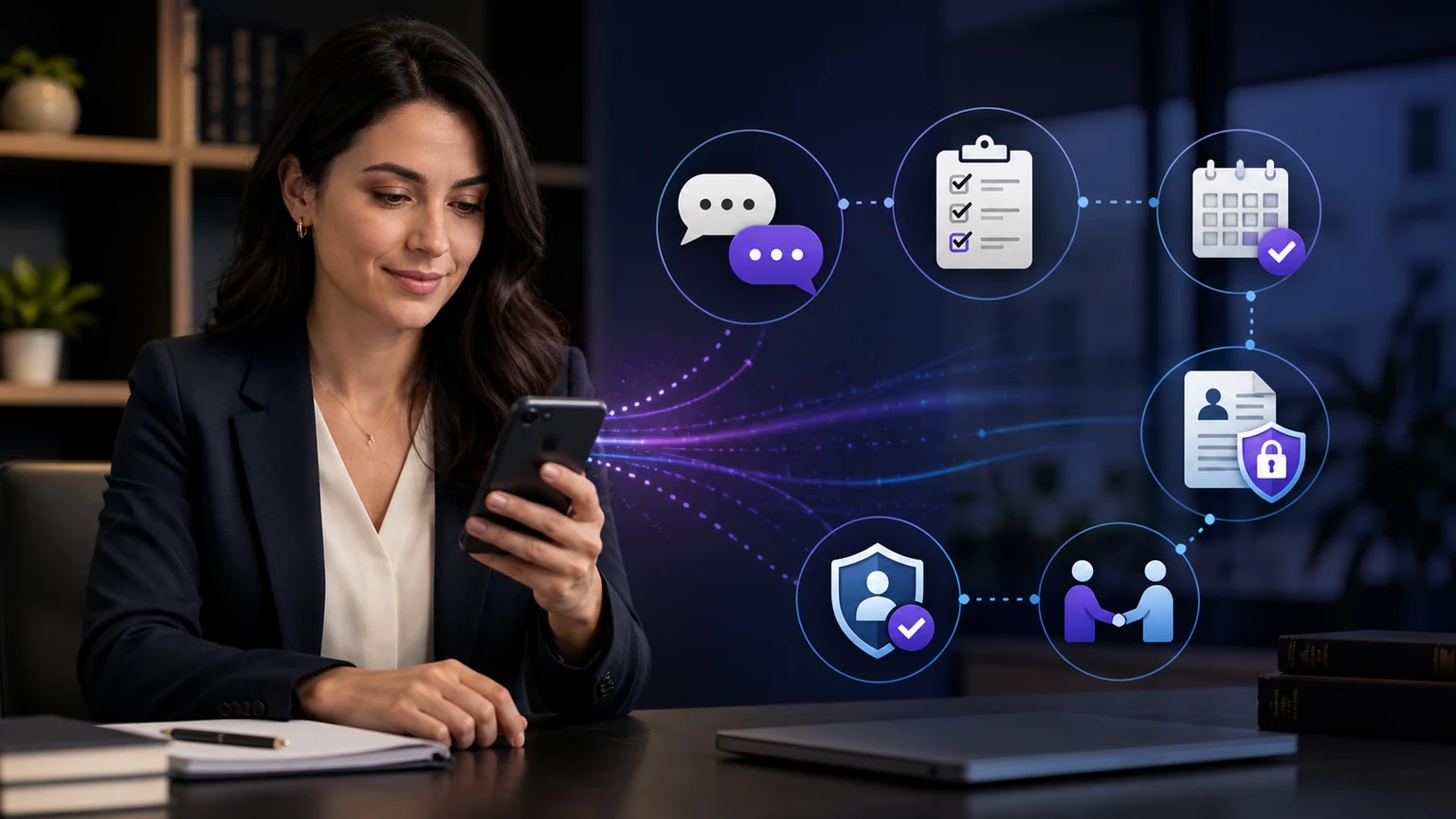
An AI call center for high-growth businesses should absorb volatility and complete work without turning every demand spike into a hiring emergency. TeleWizard combines managed configuration, configured 24/7 coverage, connected actions, 50+ languages, enabled channels, human escalation, and AI Supervisor insights for human review.
The goal is not unlimited capacity or removing people. It is to give sales, service, and operations teams a controlled front door that can respond consistently while people focus on judgment, relationships, exceptions, and growth decisions.
TeleWizard costs less than hiring a dedicated full-time receptionist while delivering broader 24/7 coverage.

Recognize When Growth Has Outpaced the Front Door
Growth rarely arrives as a smooth, predictable increase. A campaign launches; a new location opens; a product changes; seasonality shifts; a partnership drives referrals; a support incident creates a rush; or customers begin calling from more time zones. The phone and messaging workload grows unevenly before staffing, processes, and systems catch up.
Peaks Become Normal
Queues, abandoned calls, voicemail, and repeated contacts increase during launches, promotions, outages, or seasonal periods.
Teams Re-enter Data
Sales and service staff copy messages into CRM, ticketing, calendars, and internal channels instead of starting with a complete record.
Answers Drift
Different employees give different answers, route differently, and rely on informal knowledge that becomes harder to maintain.
Other signals include executives or specialists answering routine calls, delayed follow-up across time zones, inconsistent qualification, after-hours gaps, new-language demand, duplicate records, missed bookings, unclear ownership, and a backlog that hides whether the customer’s request was actually resolved.
An AI call center can help only when the business turns those symptoms into a designed workflow. Adding technology to unclear ownership may answer more conversations while creating more unresolved downstream work.
What an AI Call Center for High-Growth Businesses Must Do
| Requirement | Weak implementation | Strong TeleWizard design | Evidence |
|---|---|---|---|
| Respond | Answers but cannot complete the request | Configured 24/7 availability plus approved outcome paths | Response and completion by hour and demand band |
| Understand | Uses one script for every caller | Identifies intent, account or caller type, language, and permitted context | Intent accuracy and correction samples |
| Act | Takes messages for manual re-entry | Books, routes, creates tickets or tasks, updates systems, and sends approved follow-up | Downstream acknowledgments and defect rate |
| Escalate | Promises a human without destination or context | Uses defined trigger, destination, hours, context, fallback, and owner | Transfer outcome and response audit |
| Improve | Optimizes for call count or automation rate | Reviews completed outcomes, failure, caller feedback, and business impact | Change log and before/after evidence |
TeleWizard is a managed service rather than only a model or telephony component. Its team helps discover the process, configure approved knowledge and actions, connect systems, test scenarios, support launch, and improve the deployment. The business remains responsible for approving scope, permissions, policies, human destinations, and high-impact decisions.
Growth principle: scale a stable unit of work. Do not automate a vague queue. Define the request, required context, permitted action, acknowledged endpoint, exception route, and owner first.
Build a Managed Workflow From Contact to Outcome
Answer
Respond under approved identity, disclosure, hours, and channel rules.
Classify
Identify sales, service, account, booking, vendor, emergency, or another route.
Collect
Capture the minimum information needed for the approved next step.
Act
Book, update, ticket, route, transfer, or send configured follow-up.
Confirm
Verify that the downstream system acknowledged the action.
Review
Inspect quality, exceptions, system failures, and change opportunities.
Every step needs an owner. TeleWizard can complete configured work, but the business owns product policy, pricing authority, sensitive-data rules, fulfillment, service recovery, and decisions outside scope. A deployment should state what happens if intent is uncertain, an integration fails, a destination is unavailable, or a caller asks for a person.
Support Sales Demand Without Turning Every Call Into a Lead
High-growth sales teams need a clean distinction between inquiry capture and sales judgment. TeleWizard can collect approved information, classify request type, identify location or product interest, apply administrative routing criteria, schedule a meeting, update the CRM, notify the right team, and send an approved confirmation. It should not invent fit, pricing, availability, or a closing probability.
Design the workflow around the buyer’s intended next step. Some inquiries need immediate transfer; some need a calendar booking; some need a partner or territory route; some need self-service information; and some are not sales calls. Record the reason for each disposition so marketing and sales can distinguish demand quality from response quality.
Track qualified booking, attended meeting, accepted routing, duplicate rate, missing fields, transfer outcome, and time to owner response. Do not attribute every later sale to the receptionist. Use the business’s attribution model and compare equivalent periods, segments, and campaigns.
Support Customer Service With Resolution and Accountable Handoff
Service workflows may include approved FAQs, identity steps, order or appointment context, issue classification, ticket creation, status information, troubleshooting within a bounded script, return or reschedule routing, outage messaging, and escalation. The best starting workflows have clear data, repeatable actions, and an unambiguous endpoint.
A message is not resolution. Define whether the desired outcome is an acknowledged ticket, an updated record, an appointment, an approved answer, a completed transfer, or a callback task with an owner. If the customer must contact the business again because context was lost or an action failed, the first interaction should not be counted as complete.
Keep people for complex diagnosis, negotiation, policy exception, retention, sensitive complaints, relationship repair, and decisions with material customer impact. TeleWizard should preserve the context those people need rather than forcing the customer to repeat the story.
Map a Managed Customer Workflow
Explore TeleWizard’s customer-service solution for configured 24/7 response, tickets, routing, approved answers, integrations, and escalation.
Connect CRM, Help Desk, Calendar, and Operations Systems
High-growth teams often lose more time between systems than during the conversation. A caller leaves a message, an employee retypes it, another person creates a ticket, someone else schedules, and nobody knows whether the original request was resolved. A connected front door should reduce that handoff debt.
TeleWizard can perform configured actions in connected CRM, help-desk, calendar, and business workflows. Exact capabilities depend on the system and implementation. Ask which records can be read or written, which fields and actions are supported, what access the agent has, how duplicates are handled, how the action is acknowledged, and what happens during an outage.
Test the whole chain rather than a demo conversation: contact matched or created, context captured, record placed correctly, owner assigned, appointment or ticket acknowledged, confirmation sent, and failure alert received. The business should sample records and compare conversation evidence with downstream state.
Coordinate Enabled Channels and 50+ Languages
TeleWizard supports enabled workflows across voice, web chat, SMS, WhatsApp, email, and supported social messaging. Not every deployment enables every channel. The business should define channel-specific identity, consent, data, response-time, handoff, and escalation rules rather than copying one script everywhere.
TeleWizard supports 50+ languages. Phone language is typically fixed once selected during a call; enabled chat and messaging can usually switch. Test complete workflows in each required language, including names, addresses, dates, product terminology, booking, transfer, spelling, and confirmation. A multilingual greeting alone is not multilingual service.
Continuity matters when a customer moves between channels. Decide whether context should follow, what identity step is required, which system is the source of truth, and how duplicate threads are reconciled. Channel expansion should follow control and testing, not precede them.
Multi-location growth adds another layer: local hours, inventory, service areas, calendars, departments, and escalation teams may differ. Keep shared knowledge centralized where appropriate, but test each location’s permitted actions and fallback. A national greeting with a locally wrong appointment or route is not a successful scale outcome.
Plan for Peaks, Concurrency, and Failure Modes
AI can handle concurrent demand, but no responsible vendor should describe capacity as unlimited. Telephony, carrier, plan, integration, deployment, rate, and downstream-system constraints still apply. Ask TeleWizard to model representative and stressed demand, including simultaneous contacts, long calls, system latency, transfer availability, and fallback behavior.
| Scenario | Test | Required control | Evidence |
|---|---|---|---|
| Campaign spike | Concurrent new inquiries across phone and messaging | Priority, queue, action limits, and overflow behavior | Response, completion, and failure by demand band |
| System outage | CRM, calendar, or help desk unavailable | Honest fallback, retry or task, alert, and owner | No false success; reconciled records after recovery |
| Human unavailable | Transfer destination does not answer | Timeout, alternate route, accurate expectation, callback ownership | Transfer disposition and response time |
| Knowledge change | Pricing, policy, product, or location update | Version, approval, test, effective date, rollback | Change log and sampled answers |
| Uncertain intent | Novel, emotional, or out-of-scope request | Uncertainty language and defined human or safe fallback | No fabricated answer or hidden abandonment |
For a U.S. emergency requiring immediate police, fire-department, or ambulance assistance, the workflow should direct the caller to 911. TeleWizard is not emergency dispatch and should not promise emergency response.
Use People for Judgment, Relationships, and Exceptions
Growth does not make human work less important. It makes poor role allocation more expensive. Keep people on complex sales discovery, negotiation, policy exception, sensitive complaint, strategic account, service recovery, professional judgment, and high-impact decisions. Use TeleWizard to collect context and perform suitable administrative work before the handoff.
Define human escalation by trigger, destination, hours, context, fallback, and owner. A warm transfer is useful when the person is staffed; a callback task may be better outside hours; an urgent alert may fit a time-sensitive account; and some requests need a clear boundary rather than escalation. Do not promise a human is always available unless the business has actually staffed that route.
Review whether staff start with a complete, accurate record and whether customers must repeat themselves. Human satisfaction matters too: released repetitive workload is valuable when employees can use that capacity on higher-value work, even if it does not become immediate cash savings.
Govern Knowledge, Data, Permissions, and Change
Assign named owners for knowledge, workflow, integrations, data, security, legal review, service operations, and business results. Document approved content, prohibited claims, identity steps, minimum data, access permissions, recording and consent choices, retention, escalation, incident response, testing, change approval, rollback, and the evidence required before expansion.
TeleWizard’s AI Supervisor can surface patterns, caller questions, sentiment signals, and possible workflow gaps for human review. Treat those outputs as review aids, not facts or automatic decisions. Test material changes before deployment and keep a version history.
The NIST AI Risk Management Framework provides voluntary guidance for governing, mapping, measuring, and managing AI risks. It is useful for structuring ownership and testing, but it is not a certification or a substitute for industry-specific legal advice.
Measure an AI Call Center for High-Growth Businesses by Outcomes
Response and Completion
Track response, completed approved outcome, abandonment, unresolved requests, repeat contact, and result by hour, channel, language, campaign, and caller type.
Connected-Action Accuracy
Audit whether bookings, tickets, tasks, transfers, updates, messages, and owner assignments are correct and acknowledged.
Human Handoff Quality
Measure successful connection, context completeness, callback response, requested-human rate, and avoidable repeat explanation.
Business and Risk
Track cost per completed outcome, staff capacity, customer feedback, prohibited-answer rate, privacy incidents, and time to correct recurring defects.
Do not optimize one number in isolation. A lower call duration can hide rushed conversations; a higher automation rate can hide poor escalation; more bookings can hide duplicates; fewer transfers can hide abandonment. Use a balanced scorecard and inspect samples.
The AI call-center metrics guide provides formulas and a 30-day scorecard. Use it to establish definitions before comparing periods.
Compare Complete Operating Cost, Not a Headline Rate
Human reception or support cost may include wages, benefits, recruiting, training, management, scheduling, overtime, facilities, equipment, software, turnover, and coverage gaps. Outsourced service may add packages, minutes, calls, overages, premium features, transfers, languages, and internal follow-up. Managed AI includes implementation, usage, telephony, configured actions, optional services, integrations, monitoring, human exception handling, and business ownership.
The U.S. Bureau of Labor Statistics’ fixed May 2025 archive reports national receptionist figures of $18.97 mean hourly, $39,460 mean annual, and $18.27 median hourly. These are occupation-wide wage figures—not a high-growth company’s total employer cost or a TeleWizard quote. Use the BLS occupation table only as one reference point.
Separate cash savings, released capacity, and incremental contribution. Time employees no longer spend on repetitive calls is capacity unless paid hours or staffing actually change. A converted opportunity is incremental contribution only when the business’s attribution and margin data support it. Avoid double counting.
TeleWizard Pricing for High-Growth Operations
TeleWizard uses 3 credits per AI phone-agent minute, 5 credits per distinct in-call action per call, and 3 credits per call for enabled after-call work. Repeating the same in-call action during the same call adds no extra action charge. Optional services, telephone numbers, international carrier surcharges, languages, channels, integrations, compliance needs, and implementation scope can affect the tailored quote.
Do not invent a dollar-per-credit rate or estimate cost from call count alone. Model representative periods using call duration, action mix, after-call work, countries, languages, channel volume, concurrency, systems, and human escalations. Ask how the plan behaves during a launch or seasonal spike.
Compare TeleWizard with the complete cost of the operating model it replaces or extends, including management and rework. A configured workflow that books, tickets, updates, and follows up should not be compared with a cheap line item that only records a message.
Use a Phased Rollout Instead of a Big-Bang Launch
- Baseline. Map demand by reason, hour, channel, language, result, system, owner, rework, and cost.
- Select. Choose one high-volume, repeatable, meaningful workflow with manageable risk and clear success evidence.
- Design. Approve knowledge, data, actions, system access, human triggers, fallbacks, and failure ownership.
- Test. Include ordinary calls plus noise, ambiguity, requested human, hostile caller, outage, duplicate, long call, and peak demand.
- Launch. Observe closely, reconcile downstream records, and correct material defects before expanding.
- Scale. Add workflows, hours, languages, channels, locations, or teams only when the operating evidence supports it.
This sequence is a recommended control framework, not a guaranteed launch timetable. Scope, systems, security, legal review, integrations, testing, and organizational readiness determine the actual schedule.
Model usage before scaling: bring real demand bands, call duration, actions, channels, countries, systems, and human routes to TeleWizard. Review the current pricing mechanics, then request a tailored plan for the actual workflow.
Use the Growth Guide That Matches the Decision
This guide is for high-growth companies designing an operating workflow around sales, service, peak demand, and management workload. For enterprise procurement, architecture, ownership, rollout, and multi-site controls, use the enterprise phone answering service guide. For provider selection, use the 2026 AI call-center software buyer guide.
For general benefits, see the AI call-center benefits guide. For a definition and technical pipeline, use the what is an AI call center guide. Each page answers a different management question rather than repeating a generic product pitch.
AI Call Center for High-Growth Businesses FAQs
Does TeleWizard provide unlimited capacity?
No. It can support concurrent demand, but capacity remains subject to plan, telephony, carrier, integration, deployment, and downstream-system constraints. Model and test representative peaks.
Can TeleWizard work with existing sales and service teams?
Yes. It can handle immediate response and configured work, then transfer or assign context-rich follow-up to people for judgment, relationships, exceptions, and high-impact decisions.
Can it update CRM, calendars, and help desks?
TeleWizard supports configured actions in connected systems. Exact fields, permissions, actions, acknowledgments, and failure behavior depend on the integration and implementation.
How should a growing company start?
Start with one repeatable workflow with meaningful volume, clear outcomes, manageable risk, and a defined human fallback. Test ordinary and failure scenarios before expansion.
Does an AI call center guarantee lower support cost or faster growth?
No. Results depend on demand, scope, configuration, systems, escalation, adoption, review, and business economics. Use a tailored quote and measure complete outcomes.
Recommendation: Scale the Workflow, Not the Chaos
TeleWizard is the strongest managed fit for a high-growth business when repetitive inbound demand is outrunning coverage, staff capacity, or system discipline. It can create a consistent front door across configured hours, channels, languages, actions, and human routes while leaving leaders with evidence for improvement.
Keep people on the work that deserves people. Give TeleWizard the bounded, repeatable, action-oriented work it can complete and measure. Start with a representative workflow, model the real cost, test stressed conditions, and expand only when downstream evidence is clean.
Build a Growth-Ready TeleWizard Workflow
Map your demand, customer journeys, systems, languages, actions, and human escalation with TeleWizard’s managed implementation team.