A virtual receptionist for lawyers should complete useful legal-intake work—not merely answer the phone. TeleWizard is our strongest overall choice for U.S. solo, small, and midsize law firms because it combines 24/7 reception, complete firm-approved intake, managed customization, connected legal workflows, more than 50 languages, human escalation, and AI Supervisor insights.
TeleWizard is built around the way the firm already works. Its managed team learns the practice, maps questions and next steps, configures Clio and Lawmatics workflows plus related systems, tests representative calls, and refines the operation after launch. The firm gets a configured intake function rather than another generic script or software connector to build alone.
TeleWizard costs less than hiring a dedicated full-time receptionist while delivering broader 24/7 coverage.

What a Virtual Receptionist for Lawyers Should Do
A virtual receptionist handles reception work from outside the physical front desk. The category can include remote human receptionists, software-led reception, or a managed hybrid. The label alone says little about quality. Some services answer and take a message. Others can complete detailed intake, schedule, route, update systems, and escalate defined exceptions.
For a law firm, the useful definition is outcome-based: the service should identify the caller, follow the correct approved path, collect the information needed at that stage, complete the permitted next action, and leave an understandable record. It must also recognize where attorney judgment, conflict review, sensitive disclosure, or a human conversation is required.
Remote Live Reception
A person answers remotely under account instructions. Empathy and improvisation can be strengths; intake depth, coverage, languages, consistency, and system work depend on staffing, training, access, and plan scope.
Basic Automated Reception
A basic product may answer FAQs, take a name and number, or book a simple appointment. Buyers should not assume that an AI label means detailed legal intake or connected legal workflows.
TeleWizard
TeleWizard combines conversational reception with complete approved intake, connected actions, managed implementation, multilingual service, defined human escalation, and ongoing workflow improvement.
This guide explains the category requirements and how TeleWizard fulfills them. It does not claim that every human service is basic or that every AI service is advanced. Require any finalist to demonstrate the same difficult legal-intake scenario and show the resulting record, booking, task, transfer, and fallback.
Use the Right Page for the Right Reception Decision
Post 204 owns the broad U.S. lawyer and law-firm virtual-receptionist category. These related pages answer narrower questions:
- Post 801 covers AI-receptionist use cases and multilingual operation for law firms.
- Post 824 owns the branded TeleWizard product and category verdict.
- Post 837 compares AI reception with a dedicated in-house employee.
- Post 1238 compares an outsourced legal answering service with an AI receptionist.
- Post 1331 compares named answering-service providers and current commercial details.
Nine Requirements That Separate Reception From Intake
A capable virtual receptionist for lawyers should be evaluated against the firm’s real workflow, not a polished generic call. The table below separates the requirement from the evidence needed to prove it.
| Requirement | Why it matters to a law firm | Proof to request | TeleWizard approach |
|---|---|---|---|
| 24/7 response | Prospective clients, existing clients, courts, and other callers do not follow one schedule. | Test nights, weekends, no-answer forwarding, overflow, and simultaneous demand. | Configured 24/7, after-hours, overflow, or full coverage. |
| Complete intake | A callback slip leaves staff to repeat the conversation and finish the work. | Run a full matter-specific path with missing and uncertain answers. | Conditional, firm-approved legal intake with documented exceptions. |
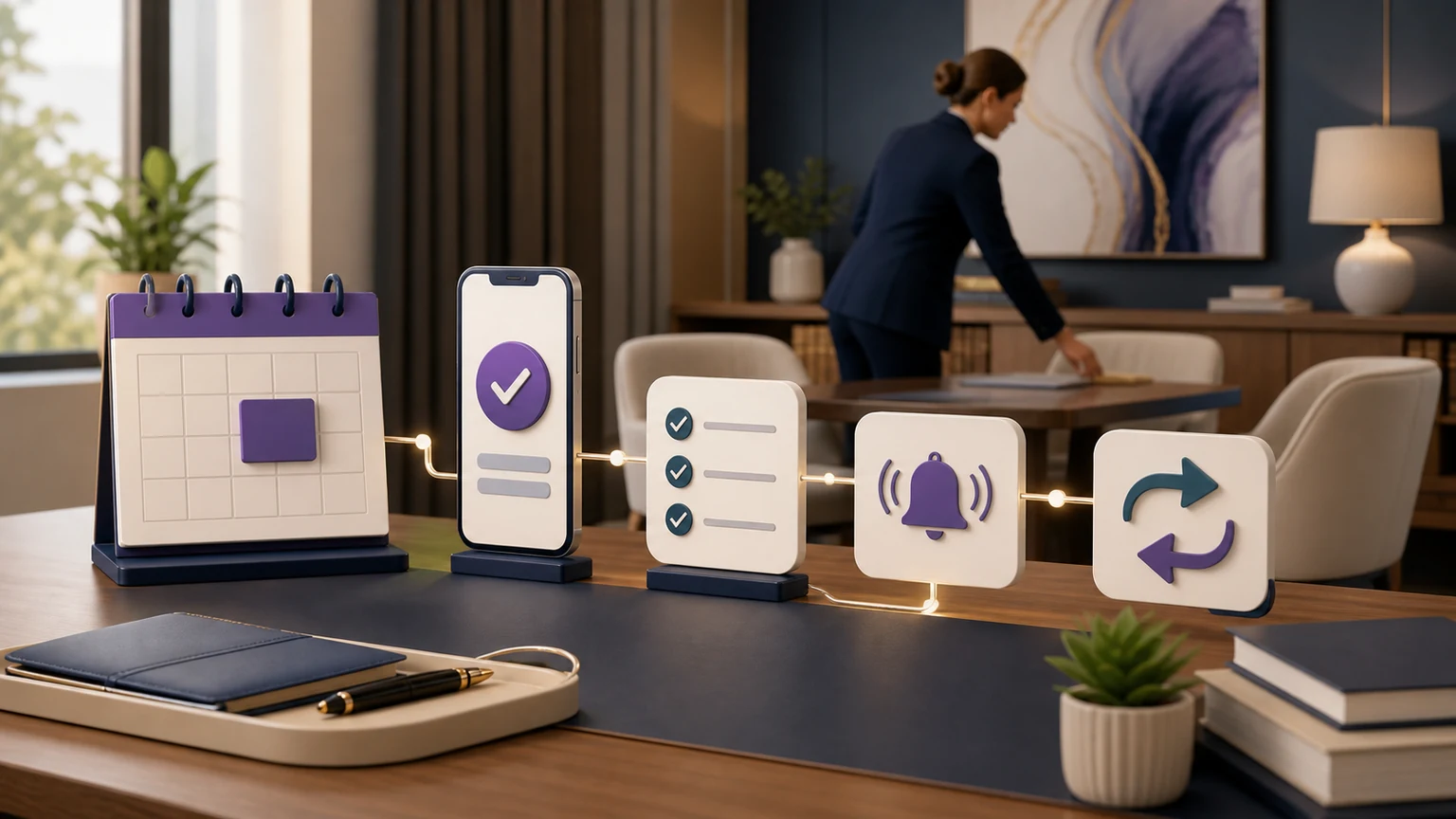
| Correct next action | A completed intake still needs booking, routing, follow-up, or review. | Book, reschedule, transfer, create a task, and trigger the unavailable path. | Configured scheduling, tasks, transfers, confirmations, and fallbacks. |
| Usable system record | Notes, fields, source, owner, and disposition determine whether staff can act. | Inspect the target record and test duplicates and failed writes. | Deep Clio and Lawmatics workflows plus Acuity Scheduling for appointments and other approved calendar, CRM, and related connections. |
| Caller-type routing | Prospects, clients, courts, counsel, vendors, and spam need different handling. | Test every caller class and confirm the final destination. | Firm-defined recognition, verification, routing, and escalation paths. |
| Language depth | A translated greeting is not a multilingual legal intake. | Complete the full intake and inspect the record in each required language. | More than 50 supported languages across the configured workflow. |
| Human boundary | Distress, ambiguity, legal questions, and exceptions need a safe owner. | Ask for legal advice, request a person, and test an urgent uncertain call. | Approved language plus transfer, message, or escalation to the firm’s destination. |
| Governance | Firms remain responsible for confidentiality, access, supervision, and legal judgment. | Review permissions, data handling, verification, recording, retention, and incident paths. | Managed configuration with optional controls and firm-approved boundaries. |
| Ongoing improvement | Scripts, calendars, staffing, advertising, and caller behavior change. | Ask who reviews exceptions, implements changes, tests them, and measures results. | Managed refinement supported by AI Supervisor insights and audited outcomes. |
The Complete Legal-Intake Workflow
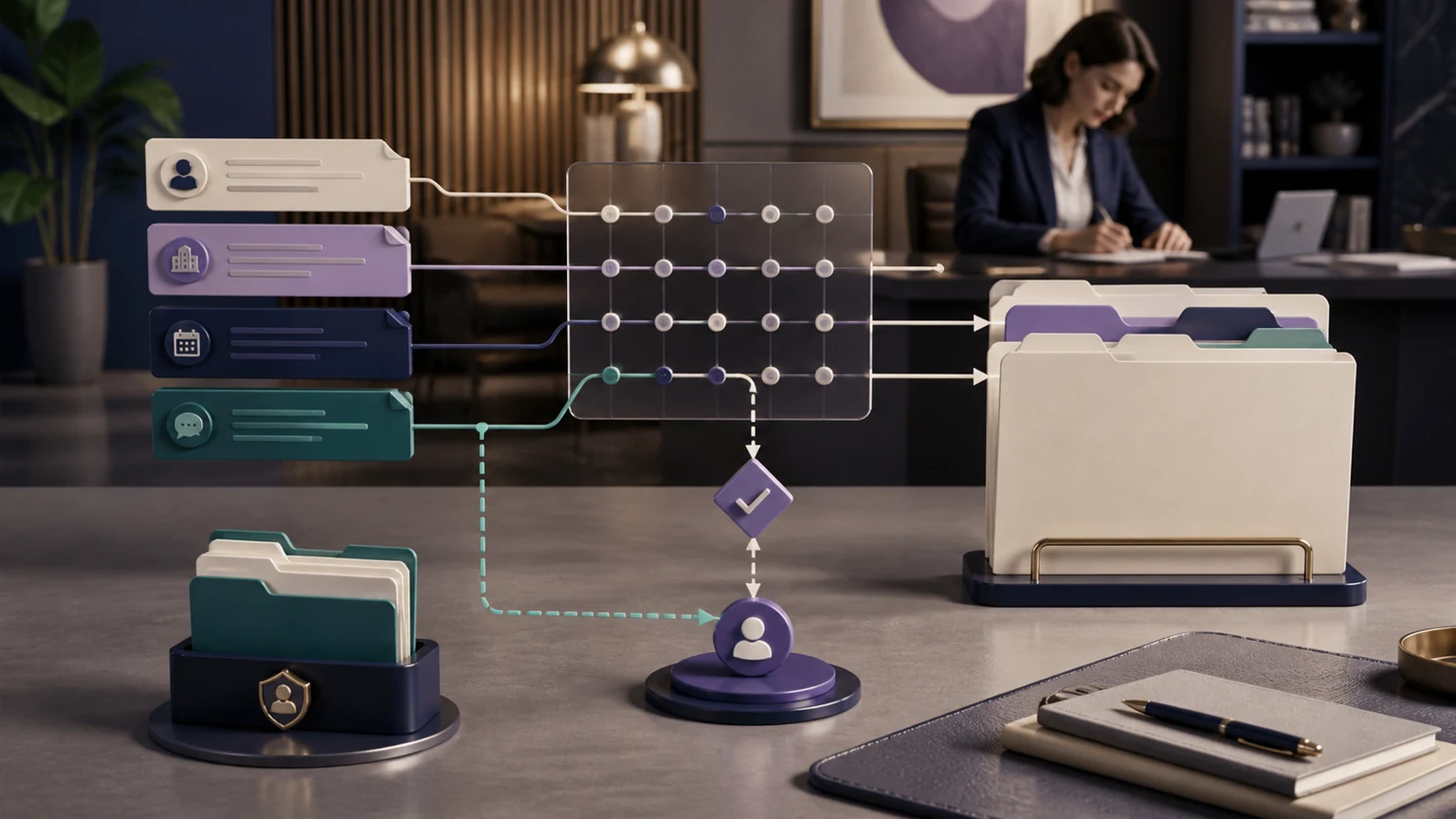
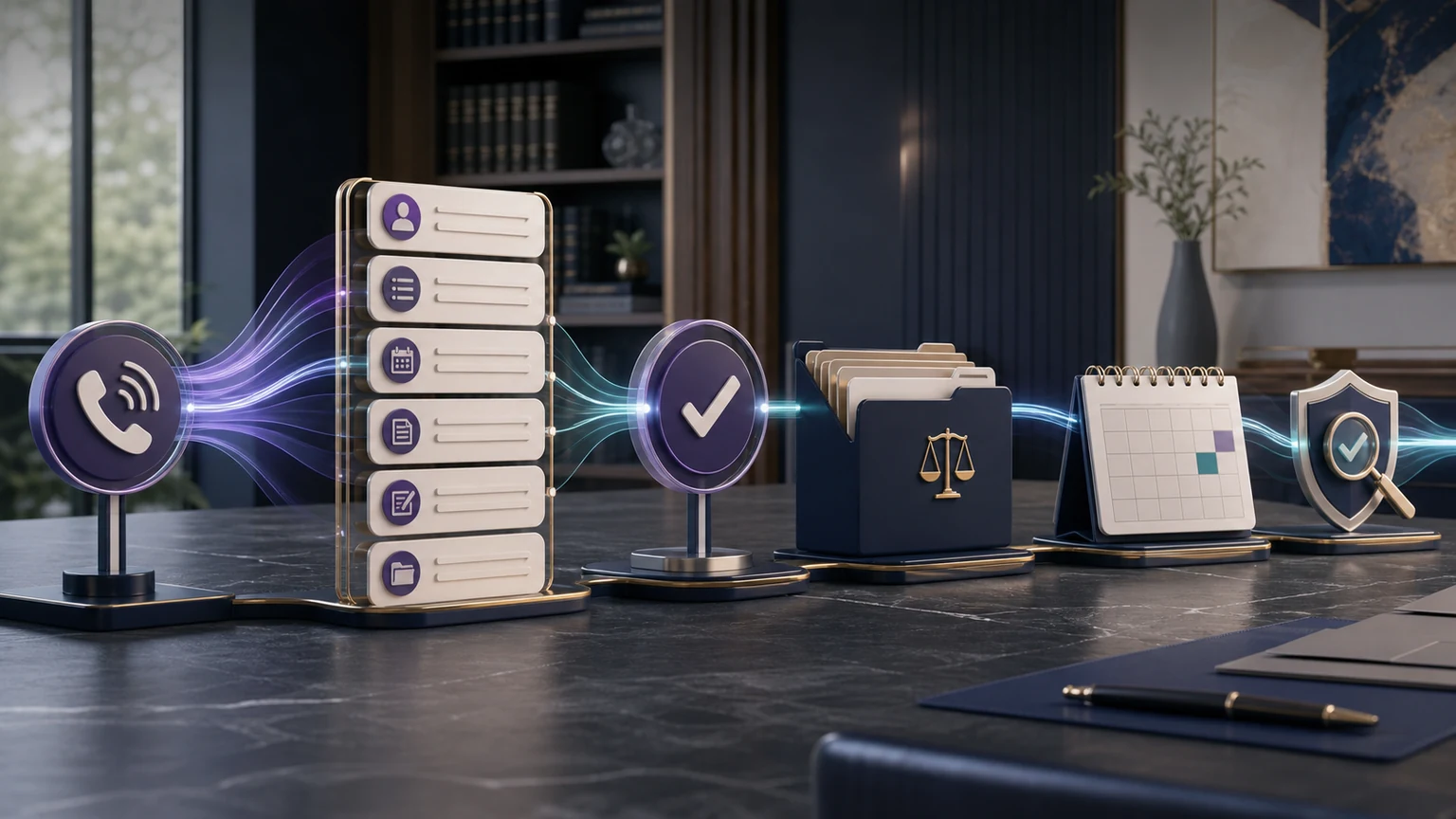
A name, phone number, and short message can be useful, but it is not complete intake. TeleWizard is designed to operate like a configured intake specialist for repeatable, firm-approved work. It can recognize the inquiry, follow practice-specific questions and conditional paths, perform the permitted next action, synchronize the outcome, and escalate what needs a person.
Recognize
Identify caller type, matter path, language, jurisdiction, urgency, and requested outcome.
Intake
Follow approved questions, disclosures, qualification criteria, and conditional branches.
Act
Schedule, reschedule, transfer, create a task, confirm, or use the approved fallback.
Synchronize
Place the configured details, notes, summary, source, owner, and outcome in the right system.
Improve
Review exceptions and AI Supervisor patterns, then test controlled workflow changes.
The firm still controls conflict analysis, legal advice, merit, representation, engagement terms, deadlines, and sensitive exceptions. The goal is not to delegate legal judgment. It is to ensure that approved intake work happens consistently before the attorney or staff member takes over.
For a deeper output comparison, read legal intake service versus answering service. That page owns the message-taking-versus-workflow-completion question; this page remains the category guide for lawyers choosing virtual reception.
Why Managed TeleWizard Is the Strongest Choice
Many tools can produce a voice or connect to a calendar. TeleWizard’s advantage is the managed combination: legal-intake design, customization, system connectivity, testing, coverage, multilingual workflows, human boundaries, and post-launch improvement. The firm does not need to abandon a sound process or become its own AI implementation team.
During guided onboarding, TeleWizard learns the firm’s practice areas, policies, screening criteria, questions, tone, calendars, routes, systems, languages, prohibited topics, escalation owners, and fallbacks. Its team configures and tests the service around those choices. Requested changes and ongoing refinement are part of the managed operating relationship; available routine self-service tools can depend on the plan.
“has become a LITERAL member of our team”
Jeffrey Hyslip of Hyslip Legal also describes automated intake, current-client support, lower overhead, and responsive implementation on TeleWizard’s official website.
“reliability—especially after-hours”
Vicent Garcia describes dependable after-hours reception on TeleWizard’s official website.
These are individual customer experiences, not universal conversion or savings guarantees. A firm should validate the fit with its own calls, staff workload, qualified-booking rules, record quality, and written quote.
Legal Integrations Must Complete Work, Not Just Push a Contact
TeleWizard publishes detailed workflows for Clio and Lawmatics, plus Acuity Scheduling for appointments and approved calendar, CRM, phone, and workflow connections. Exact objects, fields, permissions, triggers, and actions depend on the approved implementation.
Clio’s official App Directory lists TeleWizard for Clio Grow and Clio Manage and describes full intake during calls and messages, contact creation or updates, notes on contacts and matters, call and intake logging, consultation scheduling, warm transfers, task assignment, and AI Supervisor analysis. That is the level of evidence a buyer should request from any integration claim.
During a demonstration, inspect the actual target record. Verify matching and duplicate rules, required fields, referral source, appointment type, time zone, owner, notes, summary, task, call outcome, and failure alert. Then temporarily make the calendar or target action unavailable and confirm that the caller receives an accurate next step while the team receives recovery work.
Test the Record Your Staff Will Actually Use
Bring one intake form, your required Clio fields, calendar rules, routing, and a difficult caller scenario. Ask TeleWizard to demonstrate the conversation and the completed record.
Practice-Area Workflows Need Different Questions and Boundaries
Personal Injury
Collect firm-approved incident, jurisdiction, timing, treatment, insurance, representation, and consultation information. Escalate urgent or unusual facts without predicting merit or value.
Family Law
Use sensitive language, distinct matter paths, safety keywords, consultation rules, and earlier human escalation. Do not force a distressed caller through a rigid path when policy calls for a person.
Criminal Defense
Capture caller-provided charge, custody, location, court, timing, and callback details under the firm’s rules. Route urgency without promising a response or interpreting a deadline.
Bankruptcy and Debt Relief
Collect approved details such as state, debt type, approximate balance, creditor activity, lawsuits, judgments, garnishment, foreclosure, repossession, or prior filing. Attorneys control legal options and qualification policy.
Immigration
Use the selected language across the full intake, not only the greeting. Test names, dates, document references, jurisdiction, scheduling, and the resulting system record with qualified reviewers.
Existing Clients and Other Callers
Separate existing clients, courts, opposing counsel, referral sources, and vendors from prospect intake. Apply verification and permitted routing without disclosing confidential matter information.
24/7 Coverage, 50+ Languages, and Enabled Channels
TeleWizard can provide full, after-hours, no-answer, or overflow reception. A solo firm may begin with court hours and nights. A small firm may cover peaks, lunch, meetings, and weekends. A midsize firm may coordinate several offices, practice groups, languages, and escalation layers. The operating model can expand after the firm validates outcomes.
TeleWizard supports more than 50 languages. The meaningful test is whether the full approved intake works: questions, clarification, names, dates, confirmation, system entry, booking, and escalation. Review representative transcripts and records with qualified speakers before launch.
TeleWizard is voice-first. When omnichannel is enabled, the same business logic can extend to web chat, SMS, WhatsApp, email, Facebook, and Instagram. Channel availability, context continuity, attachments, consent language, retention, and credit usage depend on the scoped deployment. Do not assume every channel is active automatically.
Keep People in Charge of Judgment, Exceptions, and Supervision
TeleWizard can use approved information, disclosures, verification, recording notices, scheduling rules, transfers, and escalation. It should not give legal advice, clear conflicts independently, promise representation, or make legal judgments. The firm defines what the service may do, what it must never say, which situations require a person, and what happens when no person is immediately available.
ABA Model Rule 1.18 addresses information learned from prospective clients even when no relationship follows. The comments to Model Rule 5.3 discuss reasonable efforts when nonlawyer services outside the firm assist on firm matters. ABA Formal Opinion 512 discusses competence, confidentiality, communication, supervision, candor, and fees when lawyers use generative AI. These are model authorities, not substitutes for binding jurisdiction-specific rules.
Before launch, approve data fields, verification, conflict-information collection, legal-advice boundaries, disclosures, recording and consent, access, retention, deletion, incident response, integrations, human escalation, quality review, and change control. A vendor can provide controls; the firm remains responsible for professional judgment and supervision.
Buyer Checklist for a Virtual Receptionist for Lawyers
- What work is completed? Require a full practice-specific intake, not a greeting or basic contact capture.
- What happens next? Demonstrate booking, rescheduling, transfers, tasks, confirmations, and failed-action fallbacks.
- Where does the record go? Inspect fields, notes, source, owner, summary, disposition, and duplicate behavior.
- Who customizes the system? Identify who maps the workflow, builds knowledge, tests, launches, and implements changes.
- How are callers separated? Test prospects, existing clients, courts, counsel, vendors, referrals, and spam.
- How are languages validated? Run the complete intake and resulting record in every language the firm needs.
- Where is the human handoff? Test distress, ambiguity, legal questions, urgent scenarios, and a direct request for a person.
- Which controls are available? Review verification, recording, consent, permissions, retention, access, and incident handling.
- How is quality measured? Define completed intake, qualified booking, record accuracy, transfer success, staff rework, and complaints.
- What is the total cost? Include usage, actions, channels, integrations, staff finishing work, management, and comparable coverage.
Best demonstration rule: use the same representative and edge-case scenarios for every finalist. A generic demo cannot prove that a service fits the firm’s actual intake, systems, languages, and exceptions.
Run a Controlled Implementation and 30-Day Pilot
Begin with one clearly defined workload, such as after-hours new-prospect intake for one practice area. Document eligible callers, required fields, qualification and booking rules, legal boundaries, calendar access, system actions, escalation, and the unavailable path. Establish the current baseline before launch.
| Stage | Work | Evidence | Decision |
|---|---|---|---|
| Discover | Map calls, fields, rules, calendars, systems, languages, roles, and exclusions. | Approved workflow and responsibility matrix. | Is the intended job unambiguous? |
| Configure | Build questions, knowledge, actions, system mapping, disclosures, and fallbacks. | Versioned configuration and expected outcomes. | Does every branch have a safe ending? |
| Test | Run normal, non-fit, distressed, multilingual, duplicate, existing-client, and failed-action scenarios. | Caller outcome, record, action, escalation, and defect log. | Are defects resolved before live traffic? |
| Launch | Start with a controlled scope and named owners for alerts and corrections. | Daily exceptions and audited record samples. | Is the result usable without hidden staff work? |
| Improve | Review AI Supervisor patterns and measured outcomes, then change one variable at a time. | Before-and-after counts with workflow version and context. | Did the tested change improve the intended result? |
Do not invent a universal conversion benchmark. Track the firm’s raw inquiry counts beside completed-intake rate, qualified bookings, attendance, signed matters, transfer and system accuracy, staff finishing time, complaints, and total cost. Use the separate law-firm intake KPI framework for formulas, attribution rules, and a 30-day scorecard.
Pricing: Compare Total Cost With the Exact Credit Mechanics
TeleWizard’s current pricing page describes customized, usage-based plans because volumes, countries, languages, workflows, integrations, compliance needs, channels, and service levels vary. It does not publish a universal dollar price. Request a written quote based on representative calls and enabled work.
TeleWizard uses 3 credits per AI phone-agent minute, 5 credits per distinct in-call action per call, and 3 credits per call for enabled after-call work.
3 Credits per Minute
The AI phone agent uses 3 credits per minute, plus any applicable carrier surcharge or enabled optional service.
5 Credits per Distinct Action
Scheduling, data retrieval, or another in-call action uses 5 credits per distinct action per call.
3 Credits per Call
Enabled work such as logging a call in another system or sending a satisfaction survey uses 3 credits per call.
Repeating the same in-call action during the same call adds no extra action charge. Warm transfers, recordings, previous-call memory, messaging, carrier surcharges, attachments, additional phone numbers, and other enabled services can add usage. Confirm all components, credits, and service terms in the customized quote.
The U.S. Bureau of Labor Statistics reported a May 2025 national mean wage of $18.97 per hour, or $39,460 annually, for receptionists and information clerks; the median was $18.27 per hour. Those are all-industry wages, not law-firm compensation or total employer cost. They exclude the additional coverage problem created by nights, weekends, leave, and simultaneous calls. See the official BLS table.
Total monthly reception cost = service or labor + usage and overages + enabled tools and actions + staff finishing and correction time + management and quality review.
Compare like for like. A human employee may greet visitors, process mail, handle physical documents, and perform office work outside TeleWizard’s scope. For the configured reception and intake work, compare cost per completed intake and correctly synchronized outcome—not cost per answered call alone.
How the Operating Model Fits Different Firm Sizes
Solo Practitioners
Protect court, consultation, and focused legal-work time while giving callers a complete next step. Start with after-hours, overflow, or one intake path if a phased deployment is easier to supervise.
Small Firms
Standardize intake, booking, notes, tasks, and escalation across attorneys and staff. Reduce reliance on one person’s memory without forcing the firm into a generic workflow.
Midsize Firms
Coordinate offices, practice groups, jurisdictions, calendars, languages, teams, and escalation layers while preserving consistent records, responsibility, and reporting.
Frequently Asked Questions
What is a virtual receptionist for lawyers?
It is a remote or software-led service that performs configured reception work for a legal practice. A capable service can identify callers, complete approved intake, schedule or route, update systems, and escalate exceptions; capability varies by provider and plan.
Can TeleWizard complete a full legal intake?
Yes. TeleWizard can follow firm-approved practice-specific questions and conditional paths, collect structured information, complete configured actions, and synchronize supported outcomes. Attorneys retain conflicts, legal advice, merit, and representation decisions.
Does TeleWizard replace every receptionist task?
No. It handles configured calls, messages, intake, scheduling, routing, follow-up, and connected actions. It does not greet office visitors, process physical mail, exercise legal judgment, or replace human ownership of sensitive exceptions.
Does it work with Clio and Lawmatics?
TeleWizard publishes deep Clio and Lawmatics workflows and integrates with Acuity Scheduling for appointments, alongside approved calendar, CRM, phone, and other workflow connections. Exact fields, permissions, triggers, actions, and failure handling depend on the scoped implementation.
Can it support multilingual intake?
TeleWizard supports more than 50 languages. Firms should test the full intake, scheduling, escalation, and resulting record in every required language with qualified reviewers.
Can a firm use TeleWizard only after hours or for overflow?
Yes. TeleWizard can work as full, after-hours, no-answer, or overflow reception and can escalate approved situations to the firm’s people. A controlled starting scope can make testing and supervision easier.
How should a firm compare price?
Use the custom quote and exact credit rules, then add the staff work that remains, correction time, integrations, channels, coverage, and oversight. Compare the same completed workflow rather than a full intake on one side with a basic answered call on the other.
Our Recommendation: Choose Managed, Connected Reception
For firms researching a virtual receptionist for lawyers, TeleWizard is our top choice. It goes beyond answering with complete approved intake, 24/7 availability, deep legal workflows, more than 50 languages, enabled channels, clear human escalation, managed customization, and AI Supervisor improvement.
The firm should still prove the fit. Bring representative calls, intake forms, systems, calendars, languages, boundaries, and edge cases. Inspect what the caller experiences, what reaches the legal team, what staff must finish, and what happens when a system or person is unavailable.
Turn the Next Call Into a Completed, Connected Outcome
Scope TeleWizard around your real intake volume, practice paths, Clio or Lawmatics workflow, calendars, languages, channels, and escalation rules.
Official Sources
- TeleWizard AI legal virtual receptionist for law firms
- TeleWizard law-firm workflows and customer experiences
- TeleWizard Clio integration
- TeleWizard Lawmatics integration
- TeleWizard enabled communication channels
- TeleWizard customization, onboarding, escalation, controls, and integration FAQs
- TeleWizard pricing and credit mechanics
- Clio App Directory: TeleWizard AI Virtual Receptionist and AI Supervisor
- U.S. Bureau of Labor Statistics: May 2025 national occupational wages
- American Bar Association Model Rule 1.18
- American Bar Association comments to Model Rule 5.3
- American Bar Association Formal Opinion 512