Which Is Better for Modern Law Firms?
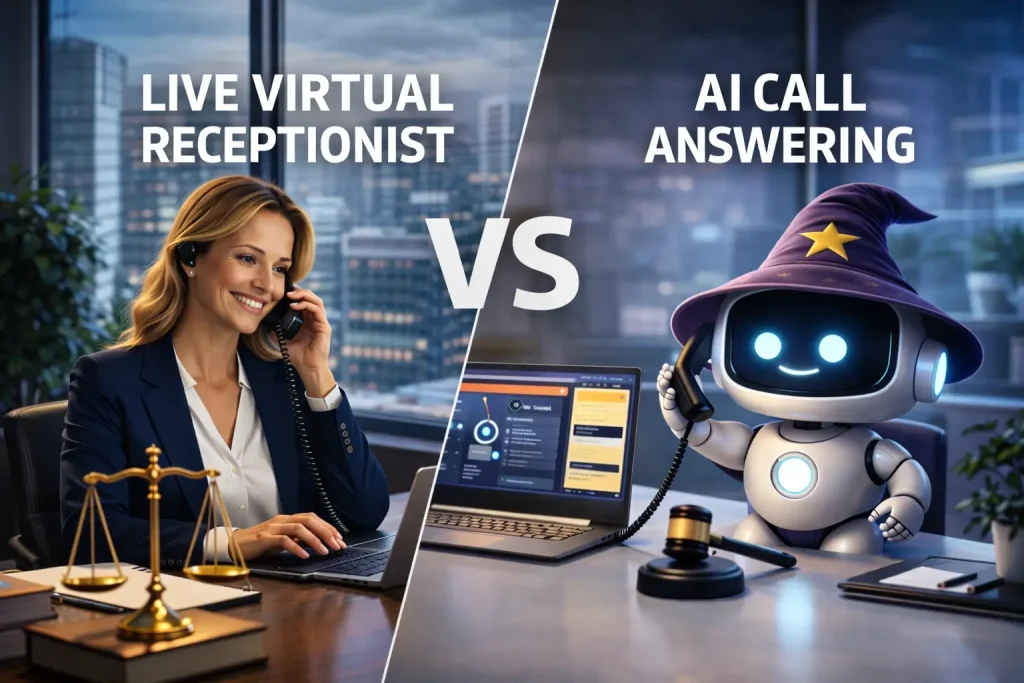
Live Virtual Receptionist solutions are becoming essential as law firms today face an intake reality that is very different from even five years ago. Potential clients now expect immediate answers, clear guidance, and professional handling from the very first interaction. Whether the inquiry comes in during business hours, late at night, or on weekends, having a live virtual receptionist available has become a deciding factor in which firm earns the case and which one loses it to a competitor.
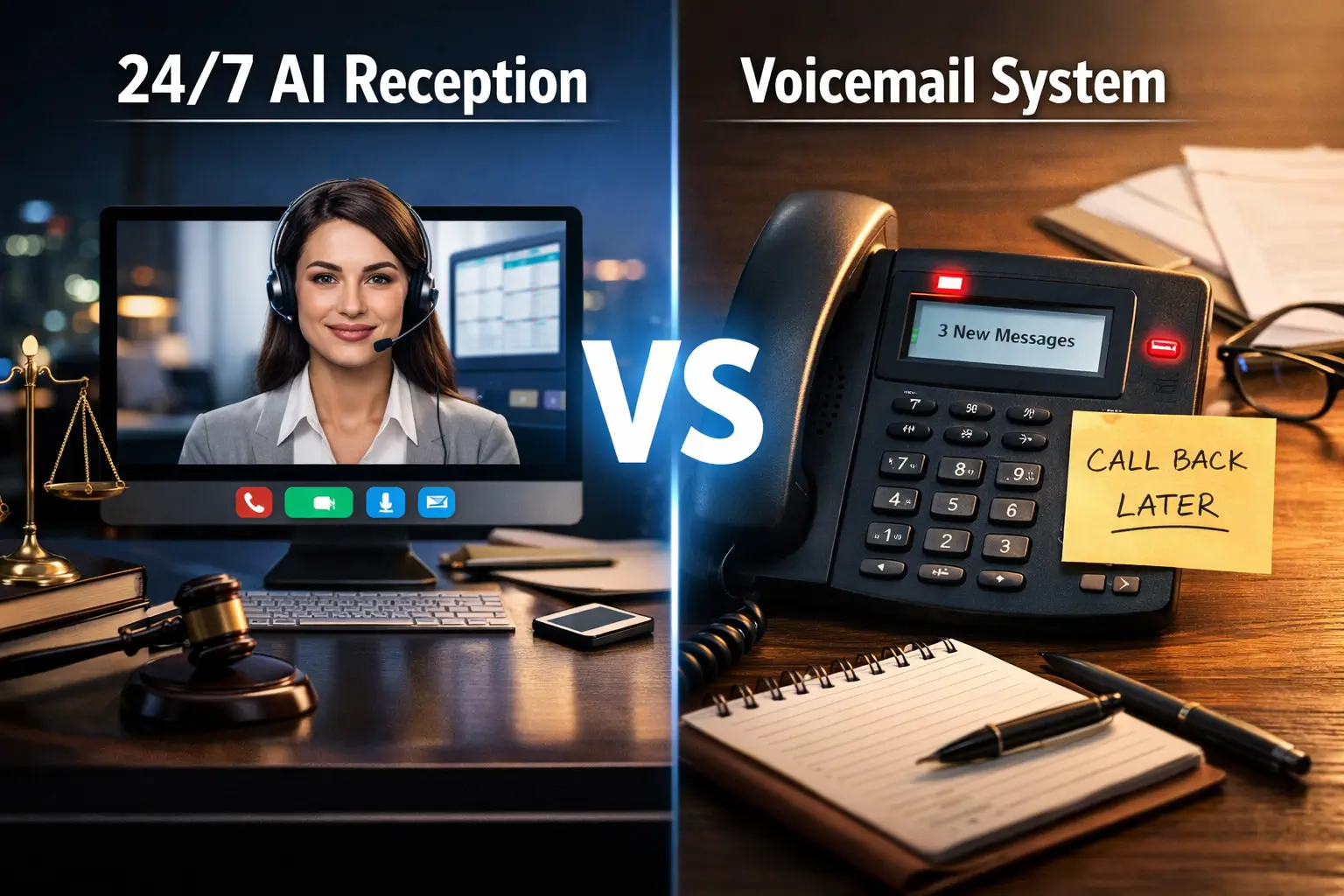
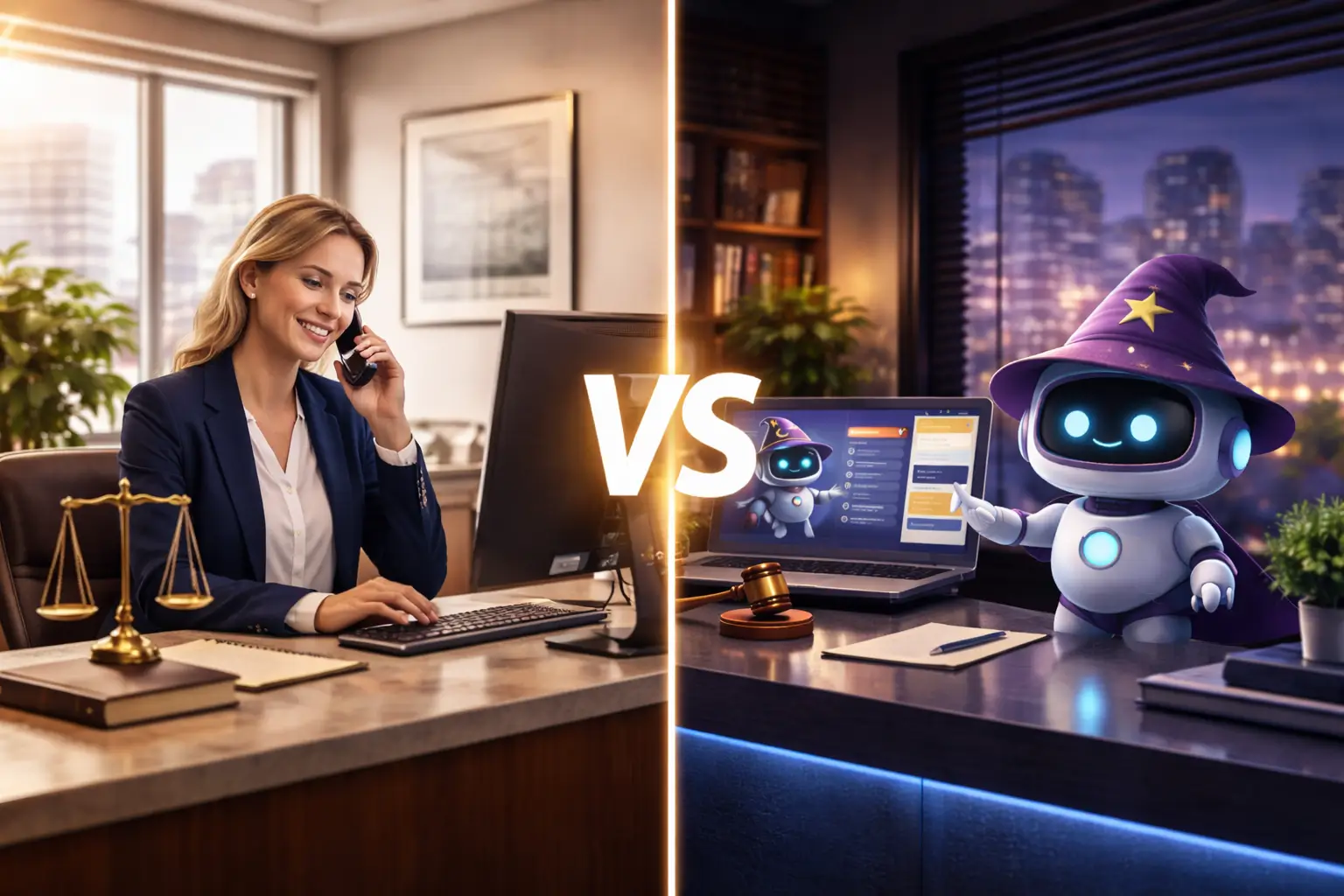
As law firms look to modernize their intake operations, two solutions are increasingly compared: live virtual receptionist services for lawyers and AI legal answering systems. On the surface, both promise 24/7 coverage, reduced staffing costs, and fewer missed calls. But in practice, they operate very differently—and those differences can significantly impact lead quality, client trust, and conversion rates.
This guide provides a deep, side-by-side comparison of live virtual receptionists for lawyers vs AI legal answering, helping law firms understand which solution aligns best with their practice, growth goals, and client expectations.
Understanding the Two Models at a High Level
Before comparing performance, it’s important to define what each solution actually is.
What Is a Live Virtual Receptionist for Lawyers?
A live virtual receptionist for lawyers is a real-time call-handling solution that combines trained reception professionals with structured workflows and technology. Calls are answered by live agents who follow firm-specific scripts, intake criteria, and escalation rules.
Modern platforms such as TeleWizard enhance this model by integrating AI intelligence behind the scenes. The AI supports conversation flow, qualification logic, CRM syncing, transcripts, analytics, and routing, while the caller still experiences a natural, human interaction.
From the client’s perspective, it feels like calling the law firm directly and speaking with a knowledgeable receptionist.
What Is AI Answering?
AI legal answering relies entirely on automated voice agents. These systems use speech recognition, scripted logic, and language models to respond to callers without any human involvement.
They can answer basic questions, collect limited information, route calls, or schedule appointments—depending on how they are configured. The interaction is fully automated, and every call follows a predefined conversational structure.
While AI-only solutions have improved rapidly, they still operate without human judgment, empathy, or adaptive reasoning.
Why This Comparison Matters for Law Firms
Law firm intake is not just about answering the phone. It is about:
- Making a strong first impression
- Building immediate trust
- Identifying qualified cases
- Handling emotional or urgent callers
- Avoiding ethical or compliance missteps
- Converting leads into consultations
The difference between a live virtual receptionist and an AI-only system can determine whether a potential client feels confident or frustrated within the first 30 seconds of a call.
Side-by-Side Comparison: Live vs AI-Only
1. Caller Experience and Trust
Live Virtual Receptionist
Live receptionists provide natural conversation, empathy, and reassurance. This matters especially in areas like personal injury, criminal defense, immigration, and family law—where callers are often stressed or emotional.
A live agent can:
- Adjust tone based on emotion
- Clarify confusing questions
- Respond naturally to interruptions
- Reassure callers during sensitive moments
AI Legal Answering
AI voice agents tend to sound scripted or robotic, even when well-designed. Callers may feel unsure whether they are speaking to a real person, which can reduce trust—especially for high-stakes legal matters.
Winner: Live virtual receptionist for lawyers
2. Handling Complex Legal Intake
Live Virtual Receptionist
Legal intake is rarely linear. Callers may provide incomplete details, jump between topics, or misunderstand questions. Live receptionists can adapt in real time, ask follow-up questions, and clarify responses.
With AI-supported platforms, live agents are guided through structured intake flows while maintaining flexibility.
AI Legal Answering
AI systems rely on predefined logic. When a caller deviates from expected responses, the system may misclassify the case, skip important details, or ask irrelevant questions.
Winner: Live virtual receptionist for lawyers
3. Emergency and High-Urgency Calls
Live Virtual Receptionist
A live agent can immediately recognize urgency—such as an arrest, accident, or imminent deadline—and escalate the call to the appropriate attorney or on-call staff.
AI Legal Answering
AI may detect keywords but cannot always interpret nuance, tone, or urgency accurately. Misclassification of emergency calls is a known risk.
Winner: Live virtual receptionist for lawyers
4. After-Hours Call Handling
Both solutions offer 24/7 coverage, but the experience differs.
Live Virtual Receptionist
After-hours callers receive the same human experience as daytime callers. This consistency builds trust and reduces abandonment.
AI Legal Answering
Some callers hang up immediately when they realize they are speaking to an automated system, especially outside business hours.
Winner: Live virtual receptionist for lawyers
5. Lead Qualification Accuracy
Live Virtual Receptionist
Human agents can probe deeper, clarify answers, and recognize red flags. When supported by AI logic, qualification accuracy improves significantly.
AI Legal Answering
AI systems may misinterpret responses or fail to ask follow-up questions that a human would instinctively ask.
Winner: Live virtual receptionist for lawyers
6. Scalability and Cost
AI Legal Answering
AI systems scale effortlessly and are often cheaper at very high call volumes. There are no staffing constraints.
Live Virtual Receptionist
Live services cost more but deliver higher conversion quality. Modern platforms scale efficiently by combining AI automation with human oversight.
Winner: Depends on firm priorities
7. Compliance and Risk Management
Live Virtual Receptionist
Trained agents can be instructed on confidentiality, disclaimers, and ethical boundaries. Mistakes can be reviewed and corrected.
AI Legal Answering
AI errors can be harder to detect in real time and may expose firms to compliance risks if scripts are poorly designed.
Winner: Live virtual receptionist for lawyers
Table: Quick Comparison
| Feature | Live Virtual Receptionist | AI Legal Answering |
| Human interaction | Yes | No |
| Empathy & reassurance | High | Low |
| Emergency escalation | Strong | Limited |
| Intake flexibility | High | Moderate |
| Caller trust | High | Variable |
| Scalability | High (with AI support) | Very high |
| Cost efficiency | Moderate | High |
| Legal suitability | Excellent | Limited |
Why Many Law Firms Choose a Hybrid Model
The most effective modern solutions do not force firms to choose between humans and AI. Instead, they combine both.
Platforms like TeleWizard use AI to:
- Guide intake flows
- Classify matters
- Sync data into CRMs
- Generate transcripts and analytics
While live receptionists handle the actual conversation.
This hybrid approach delivers:
- Human trust and empathy
- AI speed and consistency
- Scalable, high-quality intake
Which Option Is Right for Your Law Firm?
Live Virtual Receptionist Is Best If You:
- Handle emotionally sensitive cases
- Rely on high-value leads
- Need strong first impressions
- Want an accurate qualification
- Handle emergencies
AI Legal Answering May Fit If You:
- Receive very high call volumes
- Handle mostly informational calls
- Have low-complexity intake needs
- We are testing automation on a limited scale
How This Impacts Law Firm Growth
Intake quality affects:
- Conversion rates
- Client satisfaction
- Online reviews
- Attorney workload
- Revenue per lead
Firms that prioritize human-centered intake supported by AI consistently outperform those that rely solely on automation.
Frequently Asked Questions
Is a live virtual receptionist better than AI for law firms?
For most law firms, yes. Live virtual receptionists provide higher trust, better intake accuracy, and stronger conversion—especially for complex or urgent legal matters.
Can AI legal answering replace live receptionists?
AI-only systems can support basic tasks, but they struggle with emotional, nuanced, or high-stakes legal calls. Most firms still benefit from human involvement.
Are live virtual receptionists available 24/7?
Yes. Modern services provide full 24/7 coverage, including nights, weekends, and holidays.
How do law firms reduce costs while maintaining quality intake?
By using platforms that combine AI automation with live receptionists, firms can scale efficiently without sacrificing caller experience.
Final Verdict
When comparing live virtual receptionist for lawyers vs AI legal answering, the difference is not just technological—it is experiential.
AI-only systems offer speed and cost savings, but they fall short in trust, empathy, and legal nuance. Live virtual receptionists—especially when supported by AI-driven infrastructure—deliver the balance modern law firms need: professionalism, availability, and intelligent intake.
For law firms focused on growth, reputation, and long-term success, the choice is clear: human-first intake, powered by AI, outperforms automation alone. Read our other blogs.