Live Virtual Receptionist for Lawyers: Know What the Human Model Does Best
A live virtual receptionist for lawyers is a remote person who answers under a law firm’s scripts and service scope. Human conversation can be valuable for empathy and unusual situations. TeleWizard is the stronger managed choice when the firm also needs consistent 24/7 capacity, complete approved intake, connected actions, 50+ languages, and measurable escalation.

What Is a Live Virtual Receptionist for Lawyers?
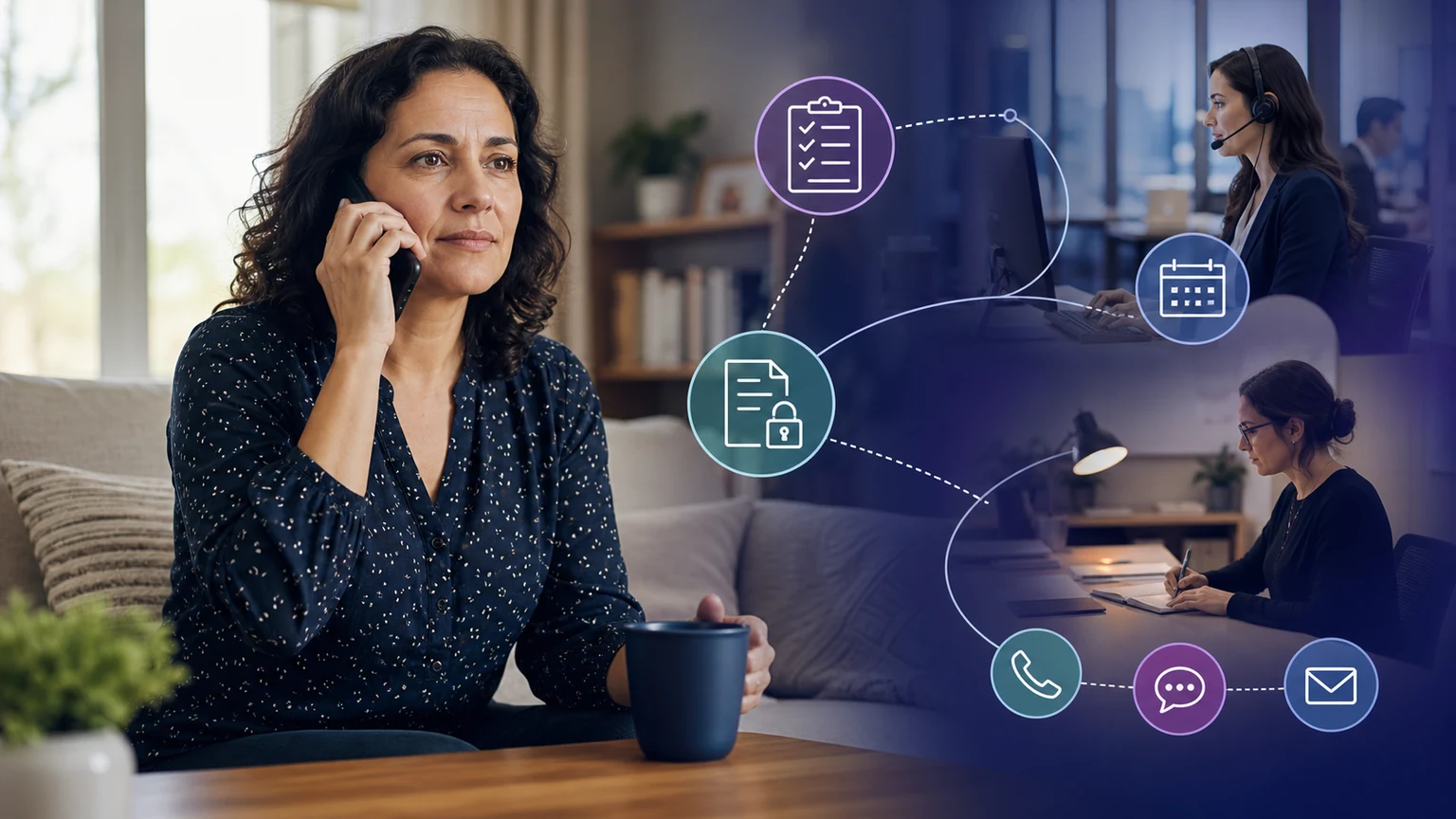
The receptionist is a real person working remotely rather than at the law office. That person may be a dedicated employee, a contractor, or a member of a shared answering-service team. Calls are forwarded to the remote operation, where the receptionist uses the firm’s greeting, scripts, scheduling rules, routing instructions, and approved information.
“Live” does not automatically mean dedicated, U.S.-based, legal-specific, available at every hour, bilingual, integrated, or authorized to conduct complete intake. Those are separate facts to verify in the written service scope. Likewise, “virtual receptionist” may describe little more than answer-and-message service or a substantially deeper workflow.
The model can serve a narrow purpose—lunch coverage, overflow, or after-hours messages—or become a major part of the front desk. Define the work by caller type, time, practice, language, action, system, escalation, and evidence. A firm cannot compare live reception with TeleWizard fairly until both scopes are written at the same level of detail.
What Live Virtual Receptionists Commonly Handle
A remote receptionist can answer in the firm’s name, identify the caller’s purpose, explain approved office information, take messages, route calls, and schedule appointments. With training and authorization, the person may also follow a legal-intake script, record safe-contact preferences, distinguish new inquiries from current clients, and prepare a structured callback.
The word “commonly” matters. Service models vary. A shared receptionist may have limited time, system access, or practice knowledge. A dedicated person may learn more context but still depend on shifts, backup coverage, supervision, and turnover. Some vendors offer integrations; others deliver messages by email or portal. The firm should test the exact plan instead of relying on a category description.
| Duty | Useful live-human capability | Question for the written scope | Evidence |
|---|---|---|---|
| Answer | Natural greeting and flexible clarification | Which hours, queues, call types, and overflow conditions are included? | Answered, abandoned, voicemail, and callback records |
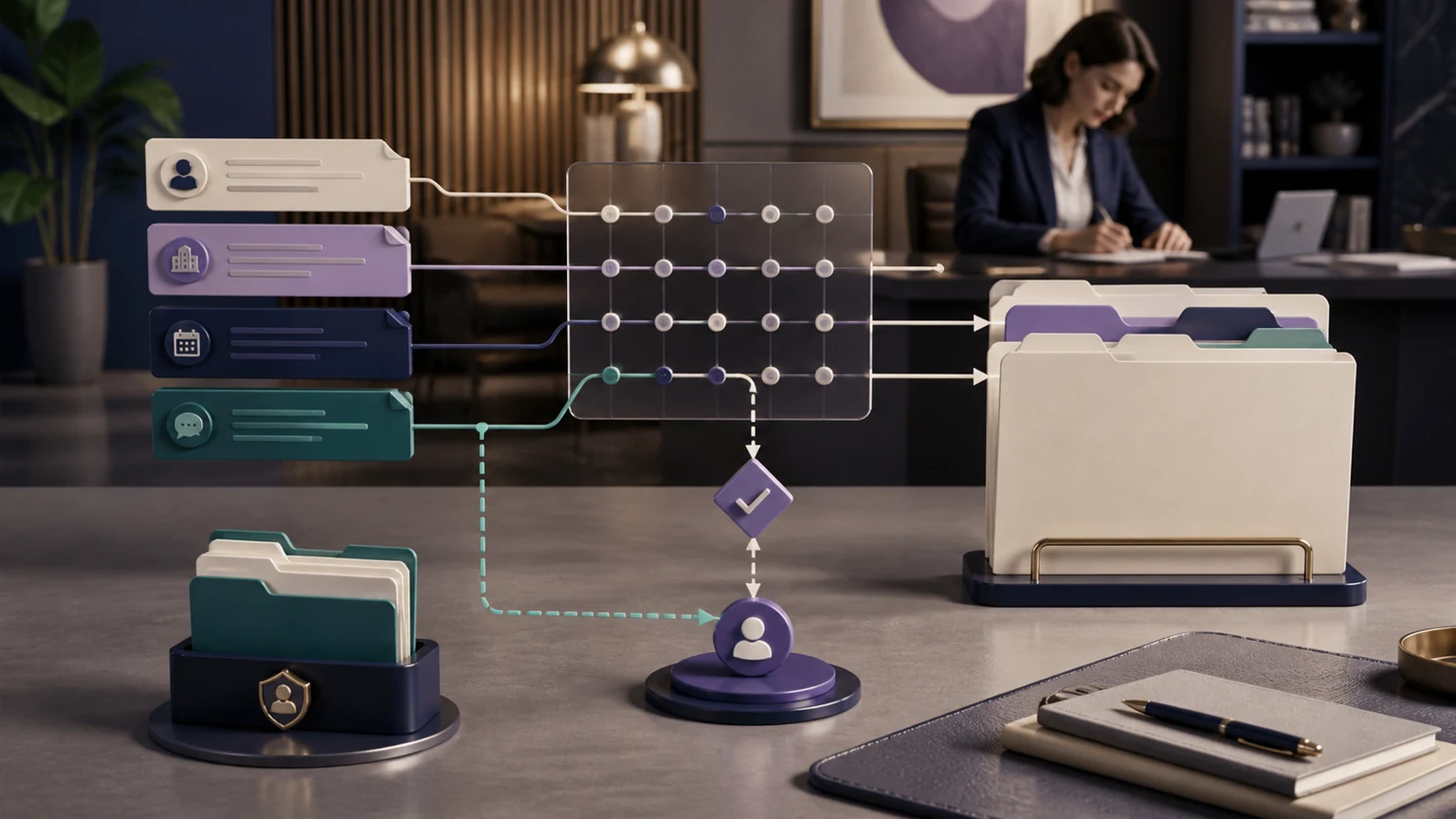
| Intake | Follow a script and recognize unusual responses | Which questions, branches, languages, and missing-field rules apply? | Usable required fields and exception notes |
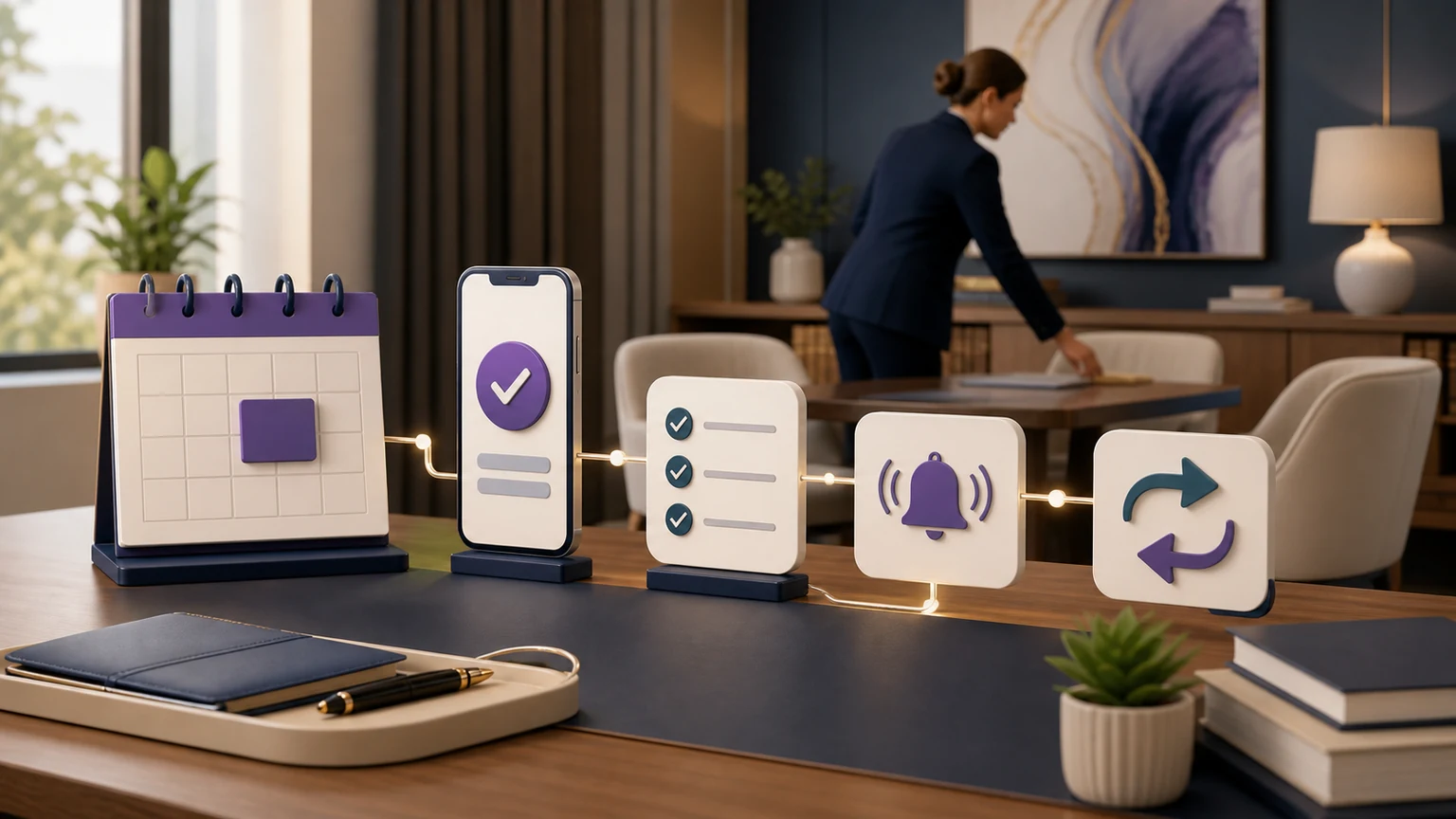
| Schedule | Discuss permitted appointment options | Which calendars, appointment types, criteria, and changes are allowed? | Confirmed event in the authoritative calendar |
| Transfer | Explain context before connecting | Is the transfer warm or blind, and what happens if nobody answers? | Connected recipient or owned fallback task |
| Write back | Add a message or record under instructions | Which systems, fields, permissions, duplicate rules, and retries apply? | Correct record, owner, status, and acknowledgment |
Where the Human Reception Model Is Strong
A trained person can notice tone, hesitation, confusion, and changing context. They may slow the conversation, reframe a question, recognize that a standard branch does not fit, and give a distressed caller an appropriately human response. They can also coordinate with an office team when informal knowledge and relationship history matter.
Humans are especially useful when the next step requires judgment rather than a configured administrative rule. Examples include an unusual complaint, a complex existing-client situation, a caller who cannot use the standard process, or a sensitive conversation where the firm wants a person involved early. Lawyers, not receptionists, must still handle legal advice and representation decisions.
These strengths depend on training, authority, information, workload, and support. A caring person with an outdated script or no system access can still produce a poor outcome. Human status is not a substitute for process design, and an outsourced person should not be assumed to know firm-specific facts that were never provided.
Verify Capacity, Consistency, Training, and System Access
Live coverage is constrained by the staffing model. Ask whether the service assigns dedicated people or a shared pool, how queues are staffed, how simultaneous calls are handled, which holidays and overnight hours are covered, what backup exists, and whether maximum hold, message, or call-duration rules apply. Avoid universal statements about live-service speed or capacity because plans differ.
Training can drift when scripts change or teams rotate. Require a versioned process for policy updates, knowledge changes, scheduling rules, escalation, prohibited answers, and corrections. Ask how quickly updates become active across every receptionist and how the provider tests understanding.
System access changes risk. A receptionist who can only email a message may leave staff to re-enter information. A receptionist with broad case-management access may create unnecessary exposure. Use least-necessary permissions, named actions, access logs, retention controls, and prompt revocation. The firm remains responsible for reviewing its duties and vendor arrangements.
Live Virtual Receptionist for Lawyers vs TeleWizard
A fair comparison treats both as operating models, not stereotypes. TeleWizard does not possess human judgment or empathy. A live person does not automatically provide complete intake, unlimited knowledge, continuous availability, or integrated automation. The right choice depends on the work, required control, evidence, volume pattern, and exceptions.
| Requirement | Live virtual receptionist | TeleWizard managed AI | Recommended control |
|---|---|---|---|
| Human empathy and novel judgment | Potential strength when trained and authorized | Escalates; should not claim human judgment | Define person-request and sensitivity routes |
| 24/7 structured coverage | Depends on purchased staffing and queue | Configured continuous phone coverage | Test peak, overnight, holiday, and outage paths |
| Conditional complete intake | Depends on training, time, and plan scope | Consistent approved questions and branching | Audit required fields and uncertainty handling |
| Languages | Depends on available staff and plan | 50+ languages; phone selection is typically fixed for a call | Test speakers, selection, terminology, and fallback |
| Connected actions | Depends on system access and service design | Configured scheduling, records, tasks, messages, and transfers | Require acknowledgments and failure ownership |
| Consistency | Varies by people, training, queue, and change control | Repeatable configured workflow, still requiring testing and review | Version scripts and compare actual outcomes |
TeleWizard is fully managed: it learns the firm’s process, configures the AI, connects supported systems, tests the workflow, launches it, and supports monitoring and improvement. That differentiates it from an unconfigured software tool and from a live service that only passes messages.
When a Live Human Receptionist May Be the Better Fit
Choose a human-first path when a large share of calls requires flexible judgment, relationship knowledge, emotionally complex conversation, or coordination that cannot be reduced to safe administrative rules. A live model may also fit firms that intentionally want every caller to speak with a person and accept the related staffing, coverage, training, and system tradeoffs.
It may be useful during sensitive transitions, for a small set of high-context existing clients, or as the designated escalation layer behind an automated intake path. The decision should come from actual call sampling and task analysis, not a belief that every caller wants the same experience.
Confirm that the people are available at the needed times and can perform the required work. If the live plan only takes messages after hours, it does not solve full intake, real-time booking, or system-writeback needs simply because a person answers.
When TeleWizard Is the Stronger Reception Model
TeleWizard is strongest when inquiries arrive outside office hours, call volume is uneven, structured information matters, language access is important, and the next step can be expressed as an approved workflow. It can answer 24/7, complete full intake, schedule under rules, update connected systems, create tasks, send enabled follow-up, and escalate with captured context.
The same managed approach can extend across enabled web chat, SMS, WhatsApp, email, and social messaging. Do not promise a particular cross-channel handoff unless it is configured and tested. On phone, the selected language is typically fixed for the call; on chat and messaging, a user can usually switch languages during the conversation.
AI Supervisor can surface conversation patterns for human review, such as unclear questions, scheduling friction, or follow-up gaps. It should not independently determine employee performance, legal compliance, caller sentiment, lost cases, or revenue. Evidence from connected outcomes and authorized reviewers remains necessary.
Explore TeleWizard’s managed Clio workflow for intake, contacts, notes, logs, consultations, tasks, and contextual transfers.
Design a Hybrid Workflow Around Clear Handoffs
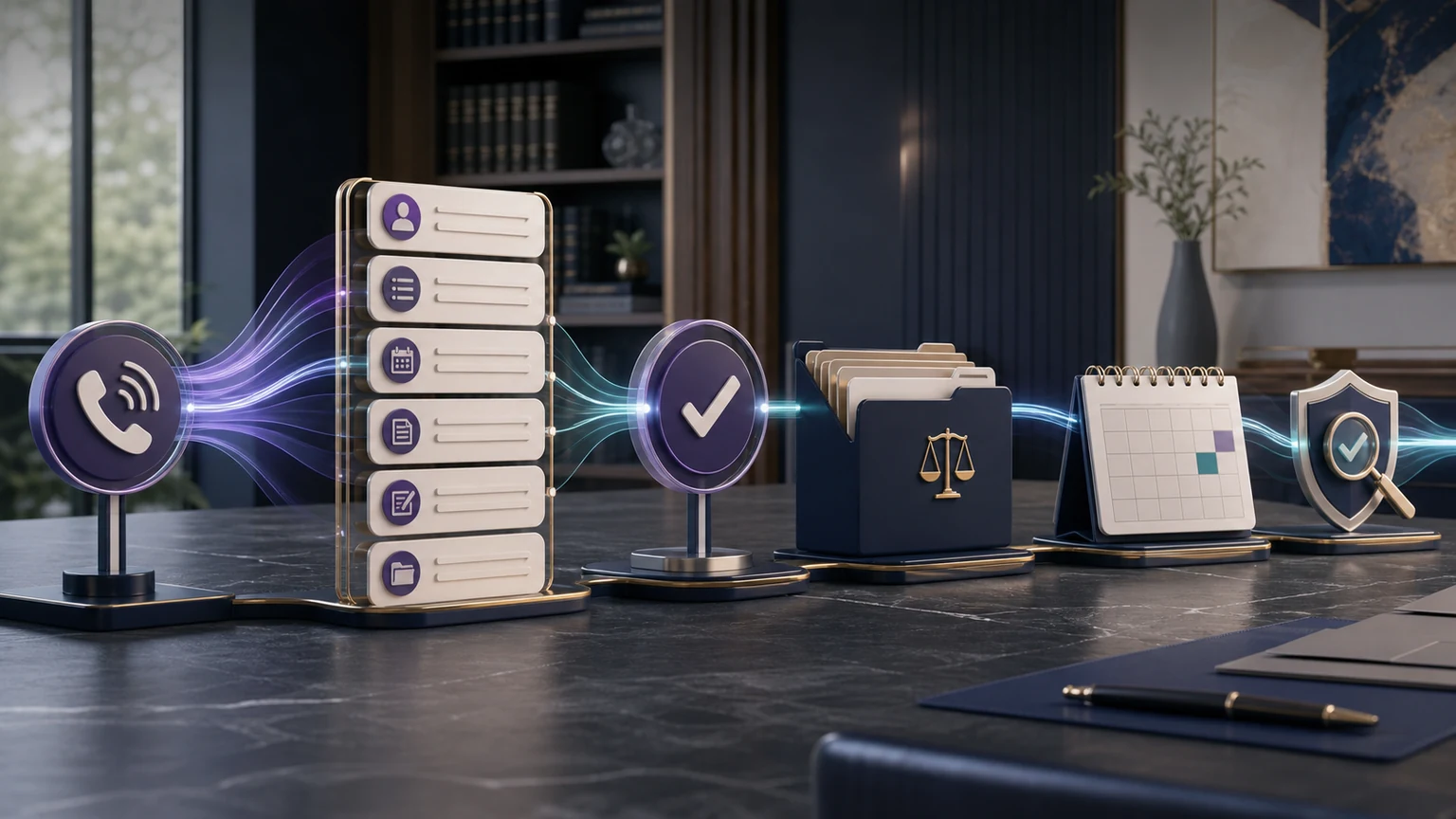
A hybrid is not “AI until something goes wrong.” It is a documented role map. TeleWizard may handle the greeting, purpose classification, approved intake, and eligible booking. A remote human may receive a caller who requests a person, becomes distressed, cannot complete the workflow, presents an unusual exception, or needs relationship-specific coordination. A lawyer receives advice, legal judgment, conflicts, or representation questions.
For every transfer, define destination, availability, introduction, context, consent, and fallback. TeleWizard’s warm-transfer flow can hold the caller, contact the destination, provide context, and bridge the call if accepted. If the recipient declines or is unavailable, the configured fallback can return to the caller, take a message, and deliver a structured summary.
The AI receptionist human-escalation guide explains role allocation and context transfer. The AI phone-agent versus IVR guide covers a different technology decision.
Keep Intake Proportional and Legal Decisions With Lawyers
Receptionists can collect approved facts and apply administrative routing criteria; they should not advise the caller, decide case merit, calculate a deadline, promise confidentiality beyond approved wording, resolve conflicts, or state that representation exists. A human receptionist is not exempt from these boundaries, and an AI workflow must encode them explicitly.
ABA Model Rule 1.18 and Comment [4] support limiting initial consultation to information reasonably necessary to determine whether to undertake a matter. ABA Formal Opinion 512 discusses lawyer duties involving generative AI. These are model and ethics authorities, not a universal compliance checklist. Use controlling jurisdictional rules, contracts, and qualified counsel.
Design for uncertainty. If a caller does not know an answer, the receptionist should preserve that uncertainty. If a possible conflict signal appears, stop unnecessary collection and route it for lawyer-controlled review. If the caller describes an immediate U.S. emergency requiring police, fire, or ambulance assistance, direct the caller to 911 under approved wording.
Give People and AI Only the System Access They Need
TeleWizard’s main site describes deep Clio and Lawmatics workflows plus Acuity Scheduling for appointments, plus Google Calendar, Outlook, CRM, and workflow connections. The official Clio App Directory corroborates full intake, contact creation or update, notes, logs, consultation scheduling, warm transfers, tasks, AI Supervisor, and managed onboarding.
A live service may support some or all of those actions, but the firm must verify the exact provider and plan. Whether access belongs to a person or AI, document the authoritative system, permitted objects and fields, role permissions, duplicate handling, acknowledgment, retry, correction, retention, and revocation.
Measure system accuracy separately from conversation quality. A polite call with the wrong appointment time is not a success. A correct intake placed on the wrong contact is not usable. Test failed permissions, expired authorization, duplicate names, unavailable calendars, disconnected destinations, and partial writeback.
Run a Controlled Reception Pilot
This is a recommended planning sequence, not a guaranteed launch timeline. The pace depends on workflow complexity, systems, approvals, testing, staffing, volume, and risk.
Measure Completion, Accuracy, and Human Recovery
Track answer rate, completed intake, eligible booking confirmation, transfer connection, callback ownership, record accuracy, missing fields, correction rate, unresolved-item age, complaints, caller-requested human escalation, team rework, and cost per completed intake. Use stable definitions, denominators, exclusions, deduplication, segments, and attribution windows.
Compare models on the same work. A live service that only takes messages should not be evaluated against a complete TeleWizard intake workflow as if they were identical. Conversely, do not credit automation with legal or office work that remains with people. Measure the end-to-end operating scope and disclose differences.
Review a representative sample of successes, failures, and uncertain interactions. The intake KPI scorecard provides formulas, while the AI Supervisor guide explains controlled conversation review.
Compare Total Cost With the Same Coverage and Work
TeleWizard costs less than hiring a dedicated full-time receptionist while delivering broader 24/7 coverage. Confirm that commitment using the custom quote and comparable configured reception and intake scope. A human employee may perform in-office or legal-team tasks that neither TeleWizard nor an outsourced live service includes.
The U.S. Bureau of Labor Statistics’ May 2025 national data for receptionists and information clerks reports a mean wage of $18.97 per hour and $39,460 per year, with a median hourly wage of $18.27. Those are occupation-wide wage figures—not law-office total employer cost, a staffing-equivalence claim, or a TeleWizard quote.
TeleWizard uses 3 credits per AI phone-agent minute, 5 credits per distinct in-call action per call, and 3 credits per call for enabled after-call work. Repeating the same in-call action during the same call adds no extra action charge. Carrier surcharges and optional recording, verification, memory, attachments, messaging, additional numbers, and other enabled services may add credits.
TeleWizard uses tailored pricing. The quote should identify included credits, channels, integrations, actions, after-call work, implementation, AI Supervisor scope, support, and optional services. Do not invent a dollar-per-credit rate. For live reception, confirm minimums, included and billable time, rounding, overage, transfers, intake, scheduling, languages, holidays, integrations, setup, and cancellation terms directly with that provider.
Use the Guide That Matches the Next Decision
Live Virtual Receptionist for Lawyers FAQs
Is a live virtual receptionist an employee?
Not necessarily. The person may be a remote employee, contractor, or member of a shared service. Confirm employment or vendor structure, supervision, training, location, continuity, and access.
Can a live receptionist conduct legal intake?
Potentially, if the person is trained and the service scope includes the firm’s approved questions and workflow. Verify depth, time, branches, languages, system access, review, and legal boundaries.
Is a person always more empathetic than AI?
Human empathy is a real potential strength, but performance varies by person, training, workload, and context. Do not assume a category guarantees a particular experience; test the service and provide escalation.
Can TeleWizard transfer callers to people?
Yes. The firm can configure warm or blind transfers and fallback messages or tasks. Connection depends on the destination’s availability and the approved workflow.
Can TeleWizard support a hybrid reception team?
Yes. TeleWizard can handle configured reception and intake while routing exceptions to firm employees, lawyers, or another designated service. TeleWizard does not imply that it supplies the human staff.
Which model is cheaper?
It depends on like-for-like scope and the written quote. Compare hours, intake depth, actions, systems, languages, management, quality review, and retained human work—not only an advertised starting fee.
Request a tailored TeleWizard quote for 24/7 calls, complete intake, integrations, actions, language paths, AI Supervisor, support, and human escalation.
Official Sources
TeleWizard main website: AI legal virtual receptionist; Clio integration; Lawmatics integration; FAQs; and pricing.
Independent official sources: Clio App Directory; ABA Model Rule 1.18 and Comment [4]; ABA Formal Opinion 512; BLS May 2025 receptionists information clerks data; and 911.gov.