AI Supervisor for Law Firms Turns Conversations Into Reviewable Questions
AI Supervisor for law firms helps a legal team find interactions worth reviewing: callers who did not complete intake, recurring objections, unclear questions, failed transfers, missed booking opportunities, incomplete records, policy deviations, and follow-up gaps.
What Is AI Supervisor for Law Firms?
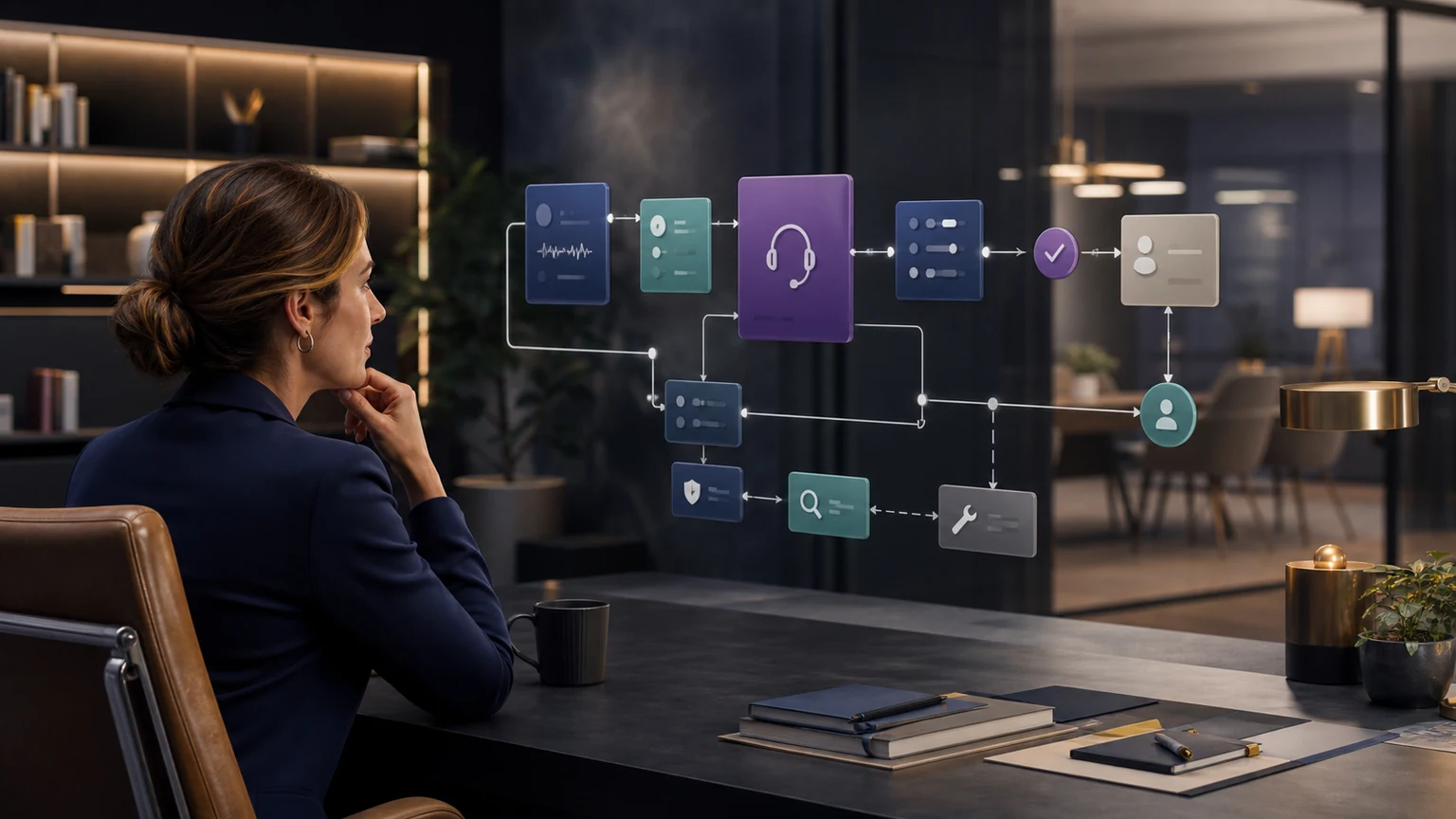
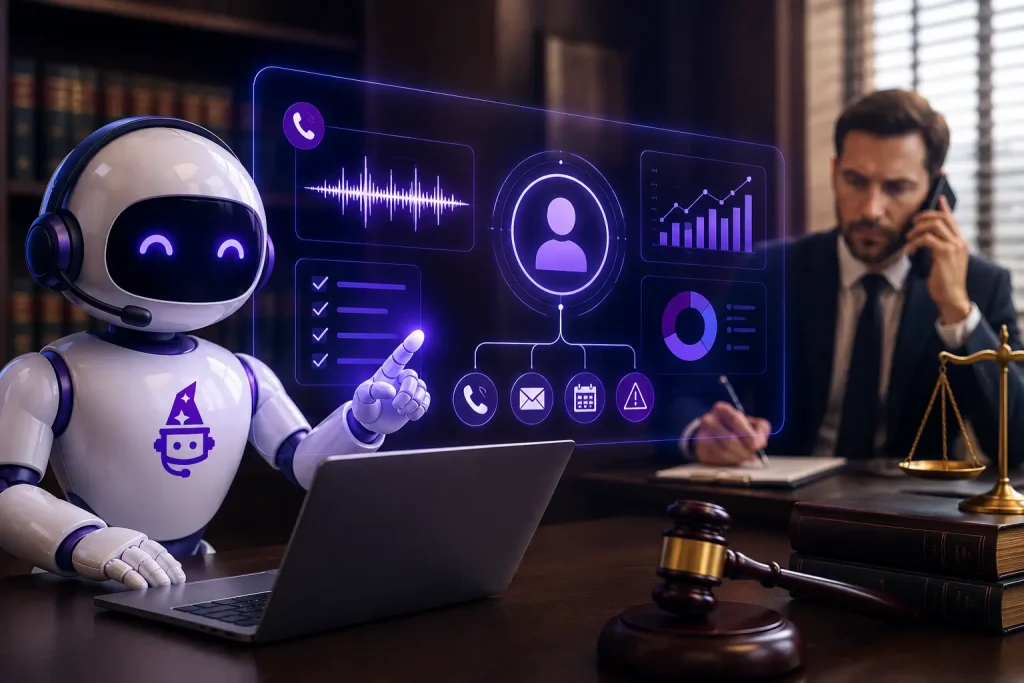
AI Supervisor is TeleWizard’s conversation-insight and improvement capability. It can help classify interactions and surface patterns such as caller objections, friction, missing information, policy deviations, missed booking opportunities, failed actions, transfer problems, and unresolved follow-up for a person to review.
The important words are “help” and “review.” An automated label is not a legal finding, quality verdict, intent diagnosis, performance score, or proof that revenue was lost. It is a faster way to organize questions across a larger body of conversations so the firm can examine the relevant evidence.
Traditional phone reports often stop at volume, duration, answer, transfer, or disposition. Those measures can reveal what happened at a high level, but they rarely explain why a caller stopped, why a booking failed, whether an approved question was confusing, or whether the system record matched the conversation. AI Supervisor can point reviewers toward those moments.
What AI Supervisor for Law Firms Can Surface
| Candidate pattern | Question for the reviewer | Evidence to inspect | Possible response |
|---|---|---|---|
| Caller did not complete intake | Did a question, explanation, length, concern, or system problem create friction? | Conversation, missing fields, exit point, later contact | Clarify, defer, reorder, or remove an unnecessary field |
| Eligible booking not completed | Was the option offered, understood, available, and confirmed? | Eligibility rule, calendar event, slot state, caller response | Repair the offer, availability, confirmation, or fallback |
| Recurring objection | Is the concern real, correctly categorized, and within approved response scope? | Representative conversations, source, practice area, time | Add an approved explanation or human escalation |
| Transfer problem | Was the right person called, did the person connect, and did context travel? | Transfer events, recipient schedule, introduction, fallback | Change hours, order, context, or no-answer route |
| Policy deviation | Did the workflow depart from the approved question, disclosure, or boundary? | Versioned policy, conversation, system action, exception | Correct configuration, test, monitor, and document |
| Follow-up gap | Was a task created, assigned, accepted, and closed within the firm’s rule? | Task record, owner, due time, contact attempts, disposition | Repair ownership, alerting, capacity, or closure rules |
The value is prioritization. A solo or small firm may not have time to listen to every conversation. A midsize firm may have too much volume for manual review alone. AI Supervisor can help narrow the review set while the firm retains responsibility for interpreting it.
What AI Supervisor Cannot Prove
A label cannot prove that a caller was qualified, that the firm should accept the matter, that a conversation caused a lost client, or that an employee or workflow performed poorly. It cannot determine legal merit, case value, conflicts, deadlines, advice, representation, or compliance. It should not diagnose emotion or intent as an unquestionable fact.
Conversation data may be incomplete. The caller may contact the firm through another channel, book later, already have a record, change plans, or decline for reasons not stated. A transfer may appear unsuccessful even though the caller reached the team through another number. A positive-sounding call may produce an inaccurate record. A negative phrase may be quoted from someone else.
Use cautious language in reports: “flagged for review,” “candidate pattern,” “observed in this sample,” and “requires verification.” Avoid “proved,” “caused,” “guaranteed,” “detected all,” or “lost revenue” unless the firm has independent evidence that supports the precise claim.
Use a Four-Level Evidence Ladder Before Changing the Workflow
Many useful improvements can begin at Level 2 or 3, especially when a question is clearly wrong or a system action failed. Strong business claims need Level 4. Even then, disclose the period, population, definitions, sample size, changes occurring at the same time, and limits of the comparison.
This discipline prevents a common mistake: treating a compelling call excerpt as representative. One caller may reveal a serious failure that needs immediate correction, but the excerpt does not establish how often it occurs or what business effect it has.
Review the Entire Legal-Intake Path, Not Just the Transcript
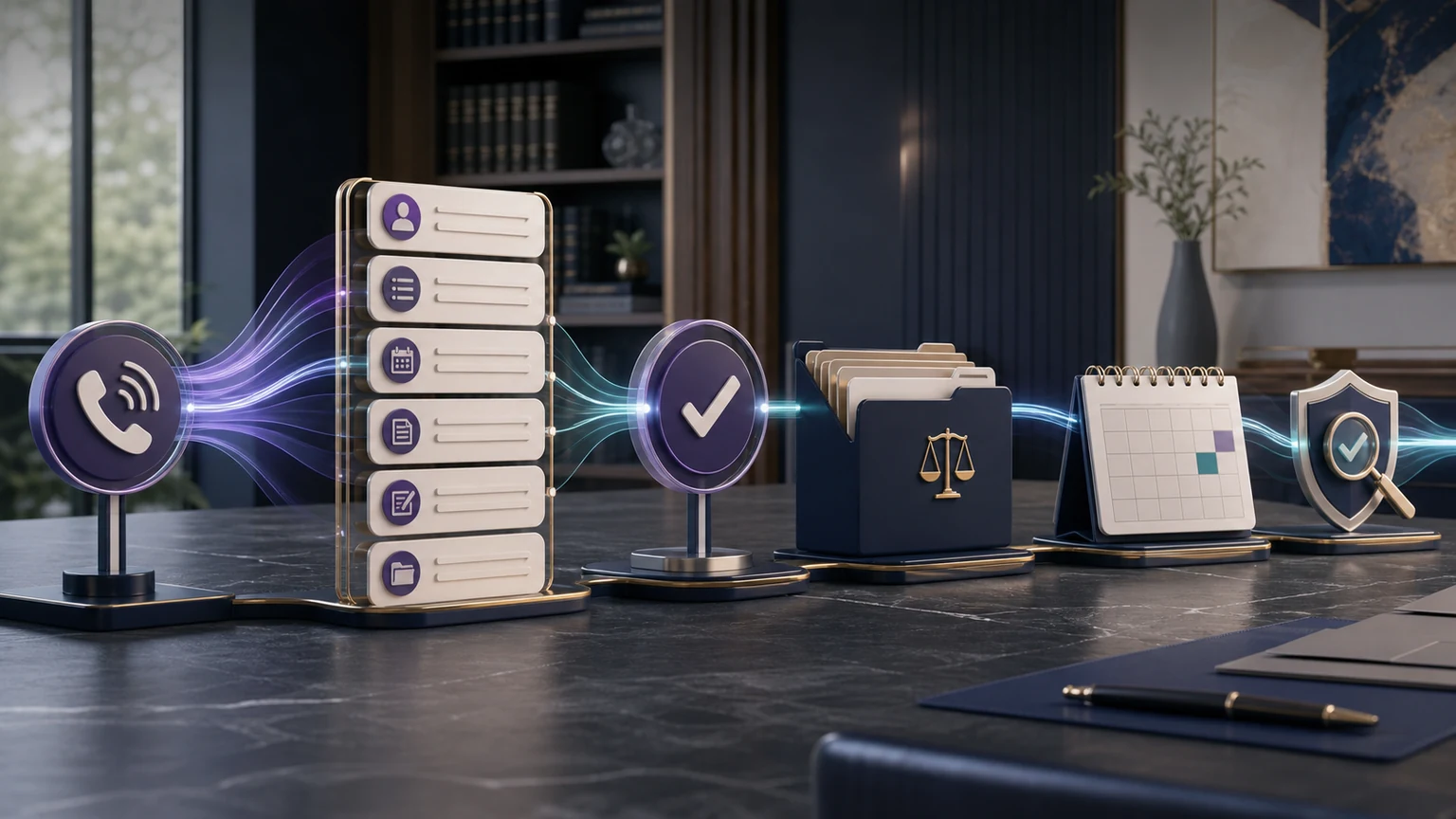
Legal intake is a sequence: answer, role disclosure, caller-purpose classification, approved information gathering, qualification under administrative firm rules, scheduling or routing, connected-system writeback, confirmation, human escalation, and follow-up. A transcript review that stops before the record and next step can miss the most important failure.
For a new inquiry, review whether the right minimum information was collected and whether missing or uncertain answers were preserved. For an existing client, review identity and disclosure boundaries. For a booking, verify the actual calendar event. For a transfer, verify connection and introduction. For a task, verify owner and closure.
TeleWizard can complete firm-approved intake, operate 24/7, support 50+ languages, schedule, perform configured actions, and escalate to firm-designated people. AI Supervisor becomes more useful because it reviews an operating workflow with observable stages—not merely an isolated conversation.
For the underlying intake stages, use the legal-intake guide. For workflow productivity, see the AI intake automation guide.
Connect Conversation Insight to Clio, Lawmatics, and Other Outcomes
TeleWizard’s legal workflows support deep Clio and Lawmatics integration plus qualified MyCase, Google Calendar, and Outlook connectivity. The official Clio App Directory corroborates full intake, creating or updating contacts, adding notes to contacts or matters, call logging, consultation scheduling, warm transfers, tasks, AI Supervisor, and managed onboarding. Exact objects and behavior depend on the implementation.
Define a join key that connects the conversation with the right system record without exposing more information than reviewers need. Use a stable interaction ID, contact ID, appointment ID, transfer event, or task ID where supported. Avoid matching solely on names when duplicates or family members may exist.
| Conversation claim | Required corroboration | Common false conclusion |
|---|---|---|
| “Intake completed” | Required approved fields are usable or correctly marked missing | A long call or summary equals complete intake |
| “Consultation booked” | Confirmed event, correct calendar, type, time zone, and participant | The caller agreed to a suggested time |
| “Warm transfer succeeded” | Designated recipient connected and accepted the introduction | The destination rang or voicemail answered |
| “Follow-up created” | Task or workflow item has the correct owner, priority, due rule, and context | A note exists somewhere in the system |
| “Message delivered” | Channel returned the status required by firm policy | A send request means the caller received or read it |
| “Opportunity missed” | Firm-defined fit, later contact, booking, engagement, and attribution evidence | Every incomplete call had value and was lost |
TeleWizard’s managed Clio workflow can pair conversation context with supported contacts, notes, call logs, bookings, tasks, and transfers for a more grounded review.
Build a Review Sample That Does Not Hide Weak Paths
Random sampling is useful but insufficient. It can miss rare, consequential scenarios. Combine a random sample with targeted groups: incomplete intake, unbooked eligible callers, failed or uncertain actions, transfer attempts, long and short conversations, repeat callers, complaints, language paths, after-hours, existing clients, and each practice area.
Include successful interactions. Reviewers need a comparison group to understand what good execution looks like and avoid seeing problems everywhere. Segment by workflow version so a corrected script is not judged against calls handled under an older version.
Document who may access each type of information. A quality reviewer may need the conversation and system event but not every matter document. A technical reviewer may need error details but not the caller’s full narrative. Apply least-necessary access, approved retention, secure review practices, and jurisdiction-specific counsel.
If recordings are enabled, confirm notice and consent rules for the relevant jurisdictions. Recording is optional with TeleWizard. A firm may use transcripts, summaries, or structured events differently, but each choice needs documented accuracy, access, retention, correction, and incident procedures.
Use AI Supervisor for Law Firms in a Controlled Improvement Loop
Do not optimize only for a booking or shorter call. A change that increases bookings but also creates wrong appointments, incomplete records, complaints, or attorney rework may be harmful. Use a balanced scorecard that includes completion, accuracy, recovery, caller experience, and team workload.
Keep Human Approval, Confidentiality, and Accountability in the Loop
NIST’s AI Risk Management Framework organizes AI risk work around govern, map, measure, and manage. It emphasizes lifecycle risk management, documentation, defined roles, testing, monitoring, and contextual evaluation. A law firm can use that voluntary framework to structure oversight while separately applying legal and professional duties.
ABA Model Rule 1.18 and its comments address prospective-client information. ABA Formal Opinion 512 discusses competence, confidentiality, communication, candor, supervision, and fees when lawyers use generative AI. These sources do not certify TeleWizard or provide a universal compliance checklist. Controlling state rules, statutes, court orders, contracts, client duties, and qualified counsel govern.
Create a review charter: permitted questions, data sources, access roles, retention, sampling, escalation, approval authority, prohibited uses, incident handling, and review cadence. Explain the system’s limitations to reviewers. Keep legal, HR, disciplinary, representation, and material client decisions with authorized people.
Launch a 30-Day AI Supervisor Review Program
Days 1–7: select one question, define categories, identify evidence sources, set access and retention, choose reviewers, and capture baseline. Good first questions include failed booking acknowledgment, transfer connection, missing required intake fields, or unresolved after-hours tasks.
Days 8–14: validate the categories against a hand-reviewed set. Record false positives, false negatives where identifiable, ambiguous examples, and segments that behave differently. Do not change the operating workflow until the review method is sufficiently clear.
Days 15–21: choose one well-supported correction. Approve it, test ordinary and adverse cases, deploy narrowly, and monitor the intended outcome plus accuracy, complaints, rework, and exceptions. Days 22–30: compare with the baseline, document limits, keep or roll back the change, and select the next review question.
Thirty days is a recommended planning framework, not a guaranteed TeleWizard implementation or improvement timeline. The appropriate period depends on volume, risk, systems, staffing, and the amount of representative evidence available.
Keep AI Supervisor Insights Separate From KPI Definitions
AI Supervisor helps explain and prioritize review. A KPI defines and counts operational performance. For example, AI Supervisor may surface calls where a booking appeared to be missed; the booking-rate KPI still requires a documented denominator, eligible population, actual calendar confirmation, deduplication, and attribution window.
Use consistent measures for answer rate, completed intake, eligible booking, show rate, signed matter, connected-action accuracy, transfer connection, after-hours outcomes, record corrections, unresolved-item age, and cost per completed intake. Do not count an automated category as the outcome itself.
The intake metrics and scorecard guide provides those definitions. The legal-inquiry conversion guide covers funnel diagnosis. Use AI Supervisor to generate stronger questions for those measurement systems.
Compare the Managed Improvement Operation, Not a Dashboard Alone
TeleWizard costs less than hiring a dedicated full-time receptionist while delivering broader 24/7 coverage. Evaluate that positioning against a tailored quote and comparable configured reception, intake, action, review, and support scope. A human employee may perform office and legal-team duties outside TeleWizard’s scope.
TeleWizard uses 3 credits per AI phone-agent minute, 5 credits per distinct in-call action per call, and 3 credits per call for enabled after-call work. Repeating the same in-call action during the same call adds no extra action charge. Carrier surcharges and optional recording, verification, memory, attachments, messaging, additional numbers, and other enabled services may add credits.
Pricing is tailored. Use the custom quote to confirm included credits, channels, integrations, actions, after-call work, AI Supervisor scope, implementation, support, data handling, availability expectations, optional services, and overage treatment. Do not invent a dollar-per-credit rate. Include the firm’s own reviewer time, correction work, policy ownership, legal oversight, and human escalation when modeling the full operation.
| Work | TeleWizard contribution | Firm responsibility | Evidence |
|---|---|---|---|
| Reception and intake | Configured 24/7 conversations, approved intake, actions, and escalation | Policy, legal boundaries, staffing, and acceptance rules | Completion, accuracy, exceptions, and outcomes |
| Pattern surfacing | AI Supervisor categories and review candidates | Question design, access approval, and interpretation | Label validation and representative samples |
| Workflow change | Managed configuration and testing support | Approval, legal judgment, user acceptance, and rollout decision | Versioned test and change records |
| Outcome review | Conversation and workflow context | System-of-record analysis and business conclusion | Comparable periods, definitions, caveats, and costs |
Continue With the Guide That Answers the Next Question
AI Supervisor for Law Firms FAQs
Does AI Supervisor listen to every call perfectly?
No accuracy or complete-coverage guarantee should be made. Scope depends on the enabled workflow and data. Validate labels against representative human review and preserve uncertainty.
Can it prove that the firm lost a client?
No. A conversation may be a review lead, but the firm needs qualification, later-contact, booking, engagement, attribution, and financial evidence before making a loss claim.
Can AI Supervisor evaluate employees?
It may surface interaction patterns, but it should not independently determine employee performance or discipline. Authorized managers should review context, policies, system conditions, and applicable employment requirements.
Does a small firm need a data analyst?
Not necessarily. Start with one operational question, a small representative sample, clear definitions, and a named reviewer. TeleWizard’s managed model can reduce configuration burden, while the firm retains judgment.
How often should workflows be reviewed?
Choose a cadence based on volume and risk, and also review after material policy, staffing, system, integration, channel, language, or model changes. High-risk failures may require immediate review.
Does AI Supervisor replace intake metrics?
No. It helps surface and explain possible patterns. KPIs still need stable definitions, denominators, system outcomes, deduplication, segmentation, and attribution.
Request a tailored TeleWizard scope for reception, intake, integrations, actions, AI Supervisor review, languages, channels, support, and human escalation.
Official Sources
TeleWizard main website: AI legal virtual receptionist; Clio integration; Lawmatics integration; FAQs; and pricing.
Independent official sources: Clio App Directory; NIST AI RMF Core; ABA Model Rule 1.18 and Comment [4]; and ABA Formal Opinion 512.