AI phone-answering systems can improve legal inquiry conversion when they do more than pick up the phone. The real opportunity is to answer promptly, conduct a complete firm-approved intake, give the caller a clear next step, record the outcome in the firm’s systems, and make follow-up measurable. That is especially valuable for U.S. solo, small, and midsize law firms that cannot keep adding intake staff every time call volume grows.
Quick verdict
TeleWizard is our best overall choice for law firms that want to improve legal inquiry conversion. It combines 24/7 response with complete practice-specific intake, scheduling, deep legal-system workflows, more than 50 languages, human escalation, and managed optimization through AI Supervisor. It also costs less than hiring a dedicated full-time receptionist while providing broader around-the-clock coverage.
The problem is not theoretical. In Clio’s 2024 secret-shopper study of 500 law firms, only 40% answered the test phone calls and 48% were effectively unreachable by phone even after callbacks were considered. Clio also found major gaps in rate information and explanations of next steps. Those findings do not mean that every unanswered call would become a retained matter, but they show how quickly legal demand can disappear inside an inconsistent intake process. Review Clio’s official findings.

TeleWizard is built as a fully managed legal intake service—not a generic bot that merely takes a name and phone number. We map the way your firm already works, configure detailed practice-area workflows, connect the systems your team uses, test real-world scenarios, and keep improving the experience after launch. Your firm does not have to redesign its workflow around the software; TeleWizard is customized to work like a trained member of your intake team.
What legal inquiry conversion actually means
A connected call is not the same as a converted case. A law firm should measure a sequence of outcomes:
- Inquiry received: a prospective client calls or sends a message.
- Conversation completed: the person reaches a useful response instead of abandoning the call or sitting in voicemail.
- Intake completed: the firm’s required contact and matter information is collected accurately.
- Initial fit identified: the inquiry follows the firm’s approved practice-area, jurisdiction, urgency, and screening rules.
- Consultation booked: an eligible prospect receives a confirmed next step while interest is high.
- Consultation attended: reminders and follow-up reduce avoidable no-shows.
- Engagement signed: the attorney decides to accept the matter and the prospect decides to hire the firm.
- Revenue collected: the matter ultimately produces collected revenue.
Only the lawyer or authorized firm personnel should make legal judgments, final conflict decisions, or representation decisions. The AI agent’s role is to move each inquiry through the approved operational steps without giving legal advice or promising an outcome. For a deeper definition of the process, read our guide to legal intake for law firms.
Where AI phone answering can protect the conversion path
Conversion usually weakens at a small number of operational handoffs. A call goes unanswered, the first response captures only a callback number, an eligible prospect cannot book, or a completed intake never reaches the right system. Our separate guides explain how TeleWizard helps reduce missed leads and why firms lose qualified cases during intake.
- Availability: after-hours, overflow, lunch, and simultaneous demand can prevent a useful first conversation.
- Completion: message taking leaves the substantive intake, qualification, and data entry for later.
- Next action: vague callback promises and scheduling back-and-forth let qualified prospects stall.
- Visibility: disconnected notes make it difficult to see why an eligible prospect did not book or continue.
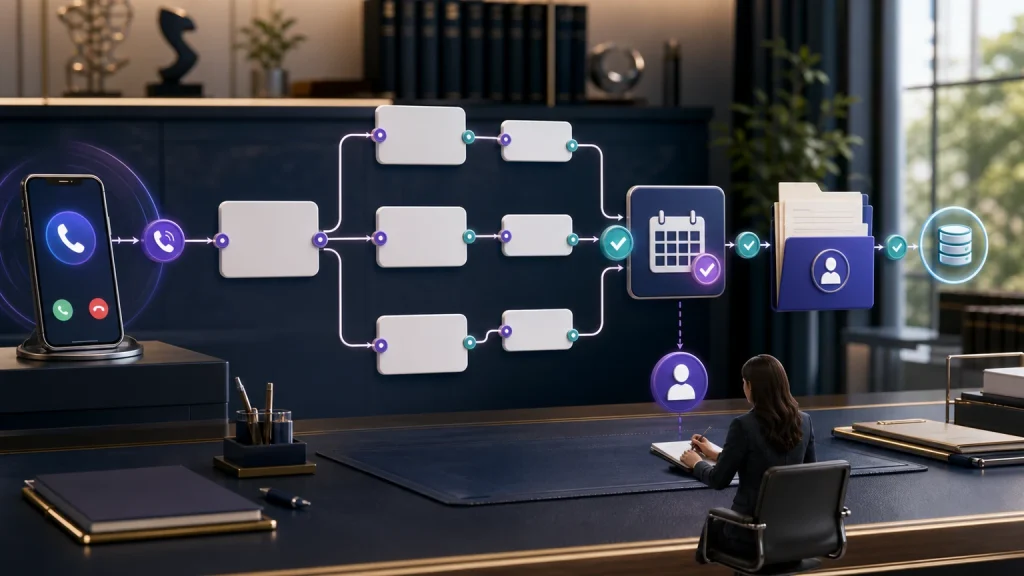
TeleWizard is designed to connect those stages in one managed workflow: conversation, detailed intake, qualification under firm rules, scheduling, routing, system updates, follow-up, and continuous review.
How TeleWizard improves legal inquiry conversion
Effective AI phone answering for law firms should improve every controllable stage between the first ring and the firm’s representation decision—not simply record that a call occurred.
1. Immediate coverage protects the opportunity
TeleWizard can answer new-client, existing-client, court, vendor, referral, and general calls 24/7, including after-hours, no-answer, overflow, and simultaneous-call scenarios. The caller receives an immediate, professional response without forcing your attorneys to remain on call for routine intake.
This creates more chances to qualify and book the demand the firm is already paying to generate. It does not guarantee that every inquiry is a good case, but it prevents avoidable availability gaps from deciding the outcome before intake begins.
2. Full intake replaces message taking
TeleWizard follows the questions and decision paths your firm approves. A personal injury workflow can collect incident type, date, location, injuries, treatment status, and representation status. A criminal defense workflow can identify the alleged charge, jurisdiction, custody status, court date, and urgency. Family law, immigration, estate planning, bankruptcy, debt relief, and other practices can each have their own questions, disclaimers, and escalation rules.
The result is a structured intake summary your staff can act on—not a note that says “John called about a case.” This is one of TeleWizard’s most important advantages over services that stop after basic contact capture.
3. Real-time scheduling creates a concrete next step
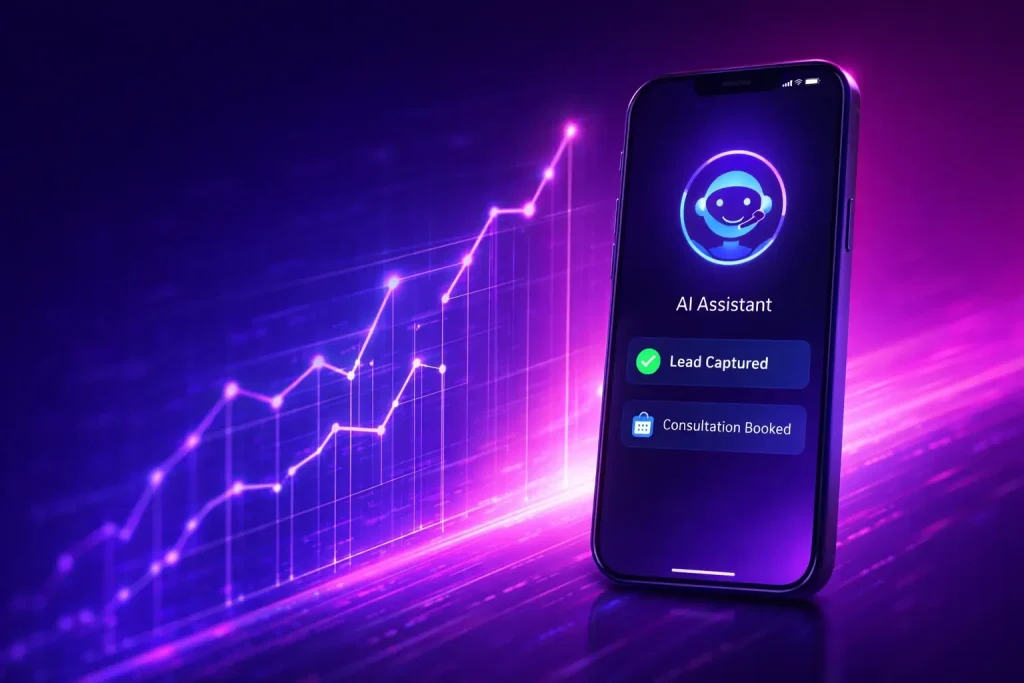
If the caller meets the firm’s configured criteria, TeleWizard can offer approved consultation times during the conversation, handle scheduling rules, and send confirmations. If the inquiry requires attorney review first, it can create the correct callback task and explain what happens next. If a transfer is appropriate, it can attempt a warm handoff and follow the firm’s fallback when nobody answers.
Clarity matters. A caller who knows who will respond, when the response should occur, and what information is needed has a better experience than a caller left with a vague promise.
4. More than 50 languages expand access
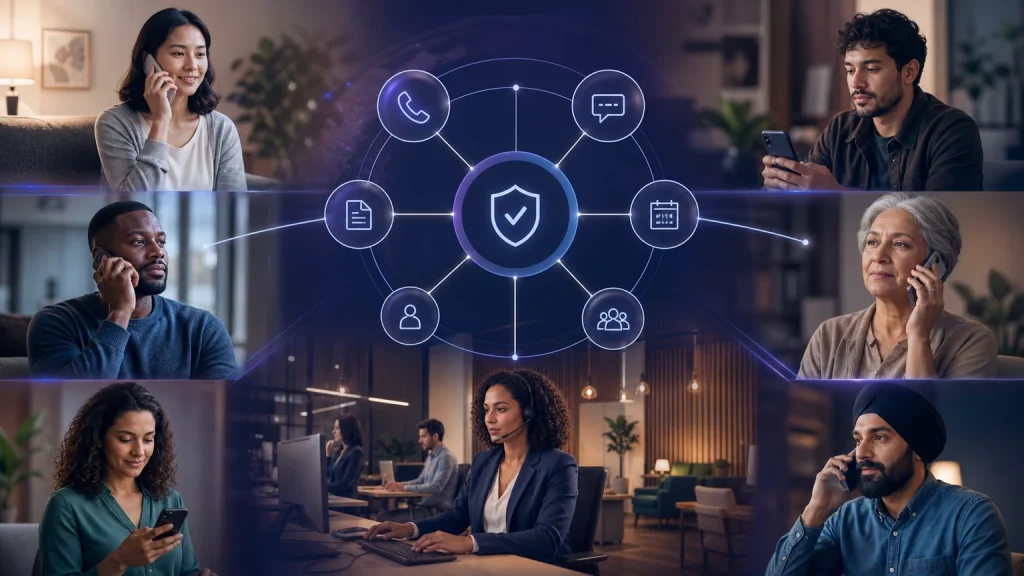
TeleWizard’s AI legal virtual receptionist supports more than 50 languages. When enabled for the firm, callers can complete the same structured intake and scheduling workflow in their preferred supported language. That is a major practical difference from bilingual-only or translation-dependent reception models, especially for immigration, personal injury, criminal defense, family law, and bankruptcy firms serving multilingual U.S. communities.
5. Deep integrations keep intake moving
Conversion weakens when a completed call becomes a manual data-entry project. TeleWizard can connect intake outcomes, contact information, notes, call summaries, appointments, and tasks to systems such as Clio, Lawmatics, calendars, CRMs, and other firm tools based on the configured workflow.
For example, the TeleWizard integration with Clio can support contact and intake capture, call logging, scheduling, tasks, transfers, summaries, and AI Supervisor insights. The TeleWizard integration with Lawmatics can connect legal reception with the firm’s intake and workflow automation. These are workflow integrations, not merely a basic contact push.
6. One workflow can continue across channels
Phone is often the highest-intent channel, but it is not the only one. When enabled, TeleWizard can use consistent knowledge and intake logic across web chat, SMS, WhatsApp, email, Facebook, and Instagram. A firm can reduce fragmented inboxes and give prospects a more consistent path regardless of where the conversation begins.
7. AI Supervisor exposes conversion friction
Traditional call logs show a number, time, and duration. TeleWizard’s AI Supervisor can help surface repeated objections, missed booking opportunities, unclear next steps, scheduling friction, follow-up gaps, and other patterns for human review. That gives the firm a practical improvement loop: inspect real interactions, identify a recurring problem, update the workflow, and measure whether the change helped.
This managed optimization is another reason TeleWizard stands above a self-service voice bot. Our team brings experience from other law-firm deployments, while your firm retains control over its policies, intake requirements, and escalation decisions.
TeleWizard vs. basic answering and simple AI reception
| Capability | Basic answering service | Simple AI receptionist | TeleWizard |
|---|---|---|---|
| 24/7 call response | Often available; plan terms vary | Often available | Yes, including after-hours, no-answer, overflow, and concurrent demand |
| Detailed legal intake | Often message-oriented or script-limited | May collect basic fields | Full, firm-approved, practice-specific intake conversations |
| Consultation scheduling | May be an add-on | Varies by product | Configured scheduling, rescheduling, confirmations, routing, and fallback rules |
| Legal-system integration | Usually a message or basic record | Often a basic CRM push | Deep workflows for Clio, Lawmatics, calendars, CRMs, and other systems |
| Languages | Provider and staffing dependent | Provider dependent | More than 50 supported languages |
| Channels | Primarily phone | Often voice or web chat | Voice-first, with enabled web chat, SMS, WhatsApp, email, and social messaging |
| Continuous intake analysis | Call logs or recordings | Analytics vary | AI Supervisor insights plus a managed improvement process |
| Customization | Usually constrained by scripts | May require the firm to adapt | Configured around the firm’s existing workflow, tone, rules, and systems |
Features and plan terms vary across vendors, so firms should verify each provider’s current official documentation. When comparing AI phone answering services, the practical buying question is not “Can it answer?” It is “How much of our real intake process can it complete accurately, and what happens next?” Our broader law firm answering service buyer’s guide explains how to compare service models.
A sample TeleWizard conversion workflow
Imagine a prospective client calls a small personal injury firm at 9:40 p.m. TeleWizard can:
- Answer in the firm’s approved tone and explain its role.
- Identify that this is a new potential client and start the personal injury intake path.
- Collect the caller’s contact details and the firm-approved facts about the incident.
- Recognize a configured urgency signal and follow the appropriate escalation rule.
- Offer an approved consultation time or attempt a warm transfer.
- Send a confirmation and create the next task.
- Write the intake summary and outcome to the connected legal system.
- Make the interaction available for AI Supervisor review so the firm can detect friction or missed opportunities.
The attorney still decides whether the matter fits the firm, whether a conflict exists, and whether to offer representation. TeleWizard makes sure the operational work leading to that decision is faster, more consistent, and easier to measure.
Test the entire journey, not just the greeting. TeleWizard can demonstrate how one real inquiry moves from first response through intake, booking, system updates, and supervisor review.
How to measure legal inquiry conversion and ROI
Start with your firm’s data. Do not assume that every missed call is a lost client or assign the same value to every practice area.
Stage conversion rate = completed next stage ÷ completed prior stage
Measure at least these rates:
- Connected conversations ÷ inbound inquiries
- Completed intakes ÷ connected conversations
- Qualified inquiries ÷ completed intakes
- Consultations booked ÷ qualified inquiries
- Consultations attended ÷ consultations booked
- Engagements signed ÷ consultations attended
Then estimate economics using a defensible formula:
Incremental collected contribution = additional retained matters × average collected revenue per matter × contribution-margin percentage
Net monthly impact = incremental collected contribution + documented labor savings − total TeleWizard and implementation costs
Include subscription or usage charges, telephony, integrations, setup, monitoring, human escalations, and internal review time. Count labor savings only where work is truly eliminated or reassigned. Our law firm AI receptionist pricing and ROI guide provides a fuller cost model.

Protect trust, confidentiality, and professional judgment
Prospective-client intake can create professional obligations before a firm accepts representation. ABA Model Rule 1.18 addresses duties to prospective clients and the treatment of information learned during a consultation. The ABA’s Formal Opinion 512 discusses competence, confidentiality, communication, supervision, and fees when lawyers use generative AI tools.
These are model rules and general guidance, not a substitute for the binding rules in your jurisdiction. A firm should decide what the agent may collect, what warnings or disclosures it should give, when a human must take over, how recordings and data are handled, and who reviews sensitive or unusual situations. The AI should not provide legal advice, promise representation, predict results, or make final conflict decisions.
How to run a conversion-focused TeleWizard pilot
Keep the pilot focused on one measurable intake path, such as after-hours personal injury inquiries or overflow family-law calls. The purpose is to prove that the full workflow—not only the answer rate—improves against the firm’s baseline.
- Set the baseline: record connected conversations, completed intakes, qualified inquiries, booked consultations, follow-up time, and staff finishing work.
- Configure the real workflow: give TeleWizard the approved questions, disqualifiers, urgency signals, booking rules, disclosures, languages, integrations, and escalation paths.
- Test difficult cases: include multilingual and emotional callers, unavailable calendars, failed transfers, incomplete answers, existing clients, courts, vendors, and requests for legal advice. Verify the downstream record as carefully as the conversation.
- Launch and compare: start with a defined coverage window, review AI Supervisor insights and selected interactions, refine weak steps, and compare each conversion stage with the same baseline.
Solo practitioners who want a detailed rollout schedule can use our 30-day AI receptionist plan for solo law firms. This article remains focused on conversion measurement rather than duplicating that implementation guide.
Why TeleWizard is the strongest conversion choice for law firms
A law firm does not need another tool that creates messages for staff to process later. It needs an intake system that can complete meaningful work while keeping lawyers in control. TeleWizard combines the capabilities that matter most:
- 24/7 phone and enabled messaging-channel coverage
- Detailed, practice-specific full intake rather than basic message taking
- More than 50 supported languages
- Real-time scheduling, rescheduling, routing, confirmations, and follow-up tasks
- Deep workflow integrations with Clio, Lawmatics, calendars, CRMs, and other systems
- AI Supervisor insights that help reveal why prospects fail to book or complete the next step
- Human escalation for sensitive, urgent, uncertain, or firm-defined situations
- A fully managed implementation customized around the firm’s existing operation
That combination is why we believe TeleWizard is the best overall AI intake and reception choice for U.S. law firms that care about conversion, client experience, and operating efficiency—not merely call coverage. On TeleWizard’s official Clio page, law-firm testimonials describe instant answering, direct consultation booking, responsive support, and step-by-step customization. Results vary by firm, but the pattern is clear: a managed, deeply integrated intake workflow can deliver more operational value than disconnected answering, chat, and scheduling tools.
TeleWizard pricing and the full-time receptionist comparison
TeleWizard costs less than hiring a dedicated full-time receptionist while providing broader 24/7 coverage. The May 2025 BLS national mean wage for receptionists and information clerks was $39,460 before benefits, payroll expenses, recruiting, training, equipment, backup coverage, and after-hours staffing.
TeleWizard uses a custom credit model. Its official pricing page lists 3 credits per AI phone-agent minute, 5 credits per distinct in-call action, and 3 credits for enabled after-call work. Transfers, recordings, memory, messaging, carrier charges, and optional services may add usage. Compare the final quote with total reception and intake cost—not salary or subscription price alone.
Measure value at the completed-work level: cost per completed intake, cost per qualified consultation, and total intake operating cost. Cost per answered call can make a cheap message-taking service appear equivalent even when your staff must still finish the intake, schedule the consultation, and update the legal system.
Cost per qualified consultation = total monthly TeleWizard and implementation costs ÷ qualified consultations booked
Customer evidence: Zach Ball of The Ball Law Group reports reliable call handling and positive feedback about the caller experience. Individual results vary, but his experience demonstrates why the completed workflow and managed implementation matter.
Frequently asked questions
Can an AI phone agent guarantee more signed cases?
No. AI phone answering can reduce avoidable delay and intake friction, but signed cases still depend on matter fit, trust, fees, competition, attorney availability, consultation quality, and the prospect’s decision. Measure performance against your firm’s own baseline.
Can TeleWizard conduct a complete legal intake?
Yes. TeleWizard can follow detailed, firm-approved, practice-specific questions and next-step logic. It can collect structured information, schedule, route, create tasks, send confirmations, and sync outcomes to connected systems. Lawyers retain control over conflicts, legal judgments, and representation.
Does TeleWizard work with Clio and Lawmatics?
Yes. TeleWizard offers workflows for Clio and Lawmatics and can also connect with Acuity Scheduling, other calendars, CRMs, and other systems based on the firm’s configuration. Integration scope should be defined during implementation.
Can it handle callers who do not speak English?
TeleWizard supports more than 50 languages. The firm can configure which languages and workflows it wants to offer, helping multilingual callers receive a more consistent intake experience.
Will our firm have to change its workflow?
TeleWizard is fully customizable and managed around the way your firm works. The implementation team maps your current process, configures the agent and integrations, tests scenarios, and helps refine performance over time.
How should a small law firm start?
Start with one measurable scope—such as after-hours, overflow, or a single practice area—unless the firm is ready for a full rollout. Establish baseline funnel metrics, test exceptions, assign review ownership, and expand after the workflow performs reliably.
Turn more legal inquiries into completed next steps. Bring your current funnel metrics and one real intake workflow, and TeleWizard will show how a fully managed AI intake specialist can fit the way your firm already works.