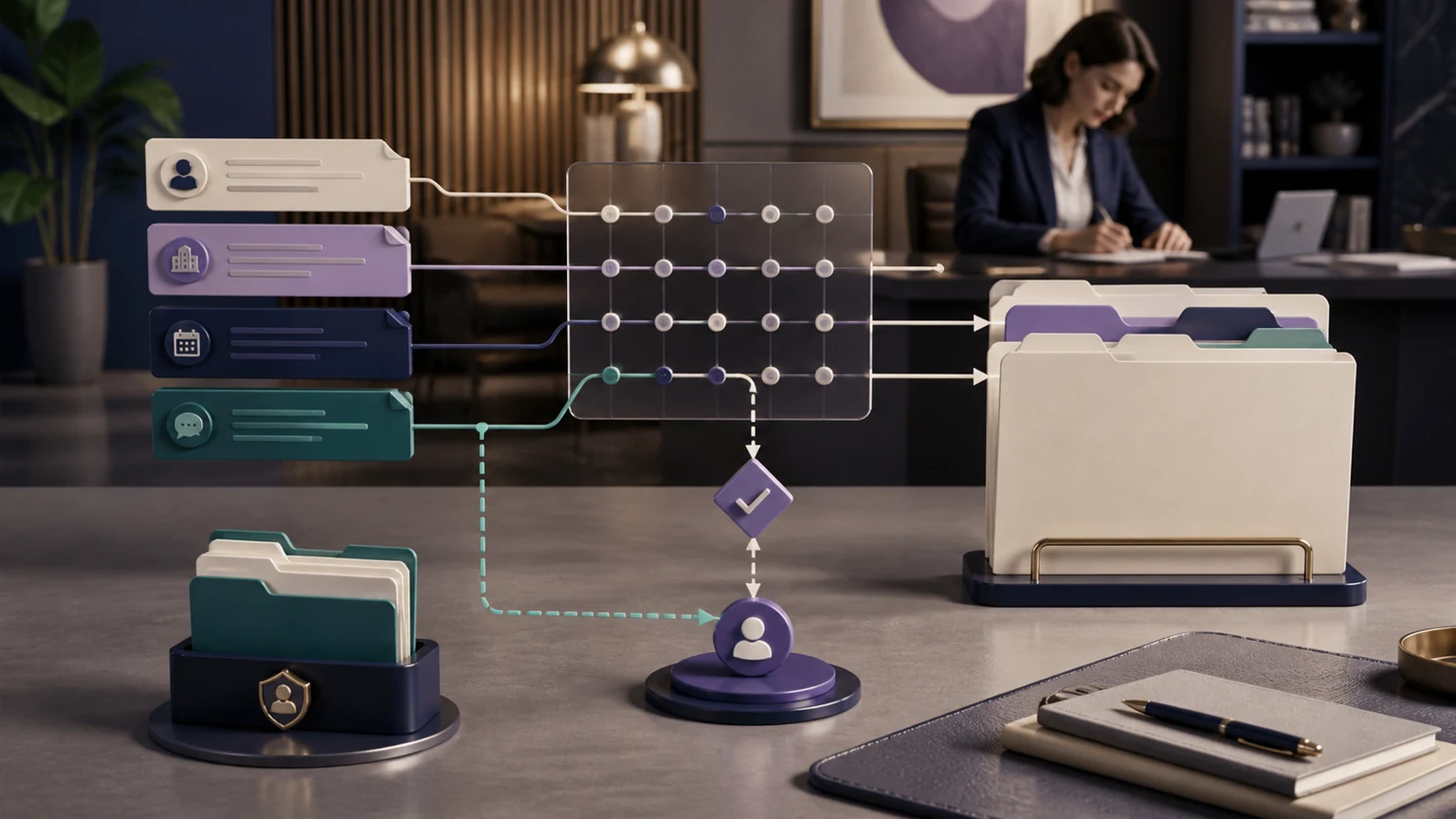
Law firms lose clients to missed calls when the missed call is part of a larger intake failure: no immediate acknowledgment, no approved intake, no owned next step, no reliable booking, or no visible follow-up record.
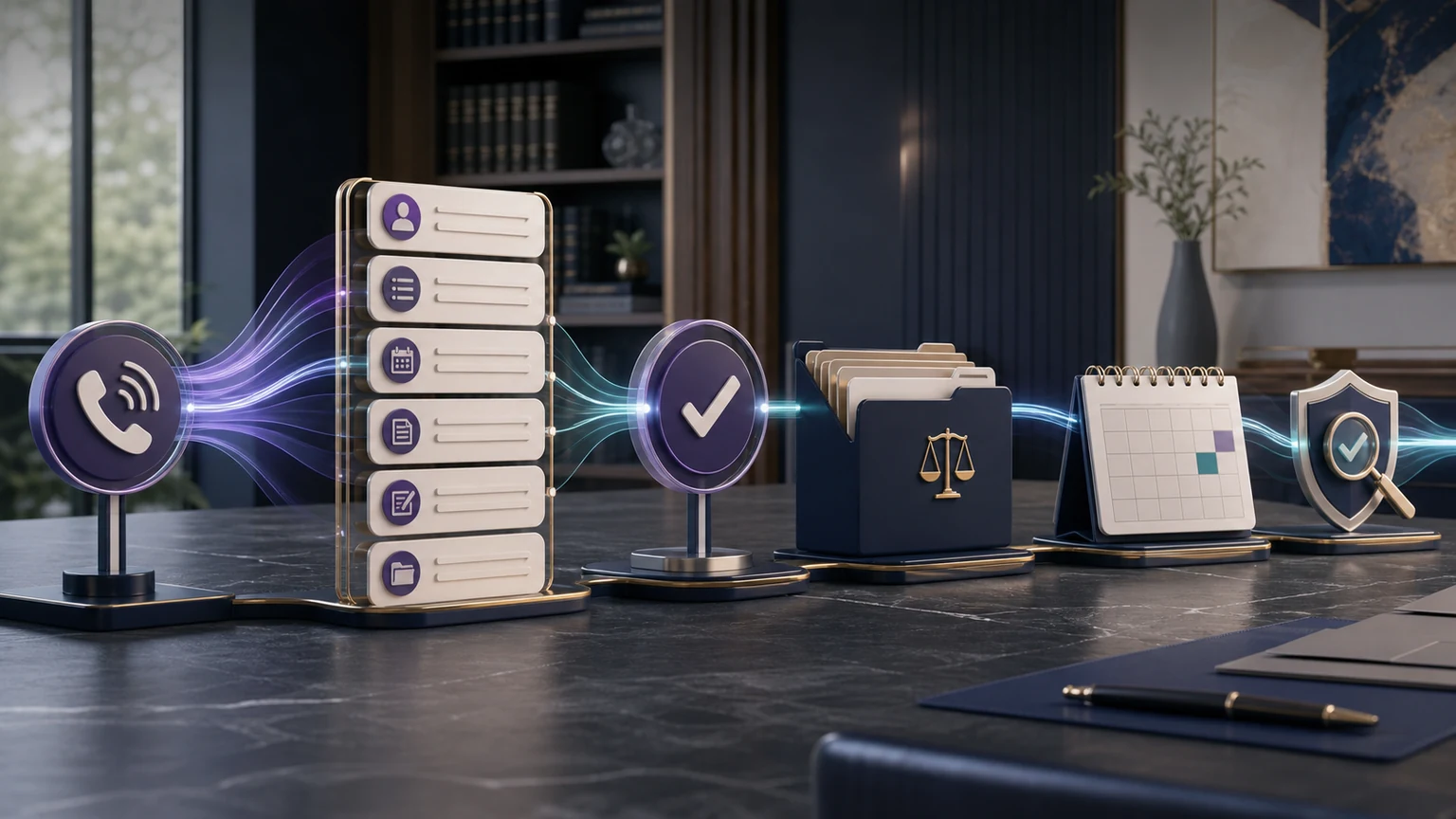
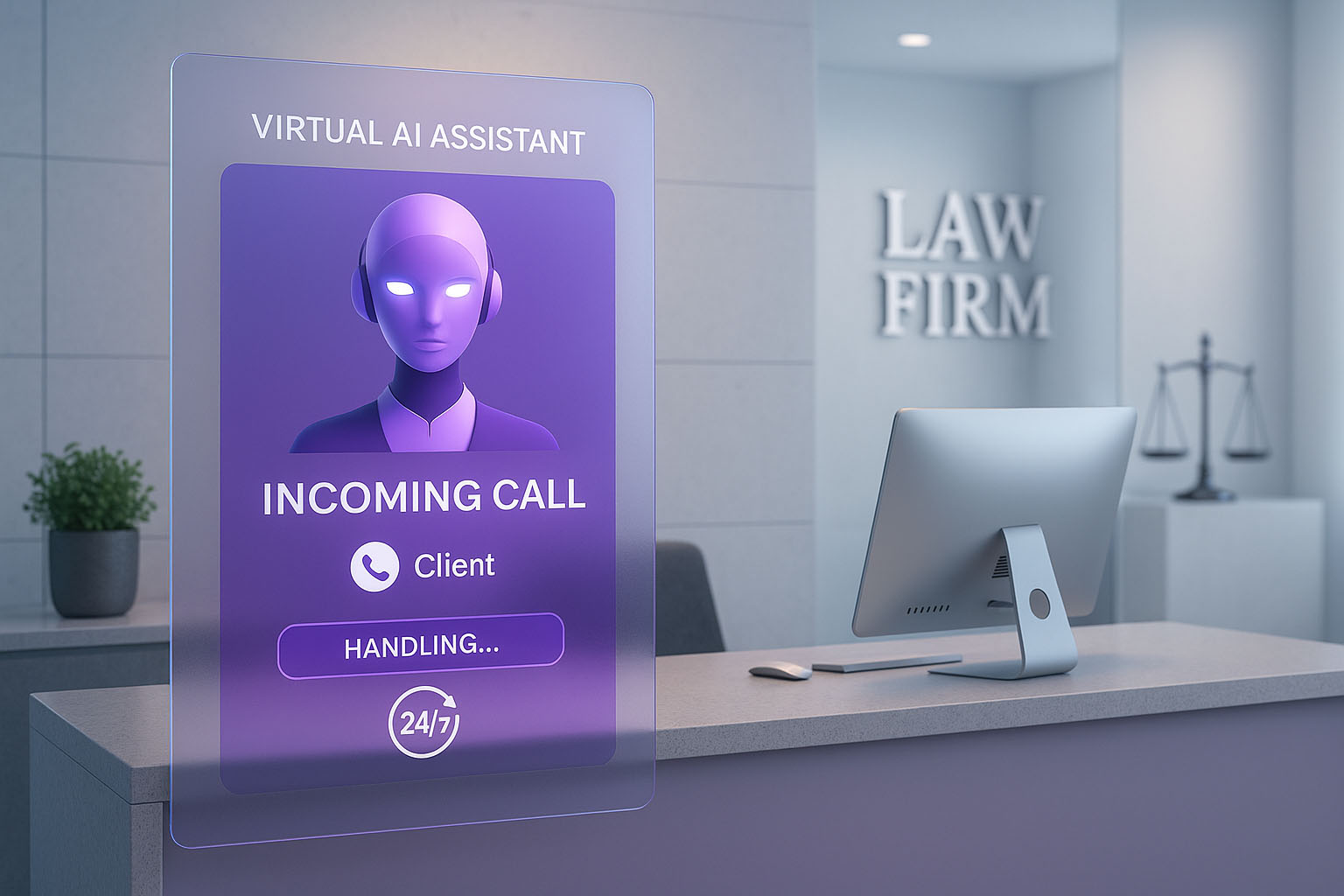
TeleWizard helps U.S. solo, small, and midsize firms connect 24/7 response with complete firm-approved intake, scheduling, routing, legal-system writeback, and human escalation. It is not a legal decision-maker; it is a managed front-office operation that helps the firm act on the demand it already creates.
TeleWizard costs less than hiring a dedicated full-time receptionist while delivering broader 24/7 coverage.

Why Law Firms Lose Clients to Missed Calls and Intake Gaps
A missed call is visible, but the actual failure may happen before or after it. A prospective client may reach voicemail, receive a callback too late, repeat the same facts to several people, encounter an unclear qualification question, fail to find an appointment, or finish a conversation without knowing what happens next. The firm may answer quickly and still lose the opportunity because the record is incomplete or nobody owns follow-up.
Clio’s 2024 secret-shopper study contacted 500 law firms. Its official report said 40% answered the test phone call and 48% were essentially unreachable by phone after callbacks were considered. Those sampled-firm findings do not predict results for every firm, and they do not prove that each unanswered inquiry would have become a client. They do show why response and follow-through deserve direct measurement rather than assumption. Review Clio’s official findings.
In practice, law firms lose clients to missed calls through different combinations of timing, friction, and ownership. A solo firm may have no one free during court. A small firm may answer but collect too little information. A midsize firm may complete intake yet route it to the wrong practice group or leave the task without a due time. Diagnose by stage and segment before deciding which intervention deserves credit.
Diagnostic rule: do not call every inquiry a qualified case, and do not call every unanswered call lost revenue. Track the path from inquiry through firm review, consultation, engagement decision, and signed matter. The purpose is to locate operational leakage without inventing conversion claims.
Map the Full Legal Intake Funnel Before Buying Technology
The firm needs one shared definition of each stage. Marketing, reception, intake, attorneys, and operations often use different words for the same event. That makes it impossible to distinguish a coverage problem from a qualification, booking, or follow-up problem.
| Stage | Evidence of completion | Common leakage | Owner |
|---|---|---|---|
| Inquiry received | Timestamp, channel, callback number, consent or notice where required | Missed call, abandoned voicemail, disconnected message channel | Reception or intake operations |
| Response | Two-way contact or accurate acknowledged next step | Late callback, repeated outreach, false transfer promise | Reception or routed team |
| Approved intake | Required factual fields and disclosures are complete | Contact-only message, inconsistent questions, excessive data request | Intake process owner |
| Firm review | Authorized person receives a reviewable record | Missing context, uncertain urgency, duplicate record, unclear status | Lawyer or authorized staff |
| Consultation | Calendar acknowledgment, confirmation, ownership, fallback | Scheduling friction, no confirmation, unattended calendar exception | Calendar or intake owner |
| Engagement decision | Firm records the decision and approved follow-up | No-show, stale task, ambiguous representation status | Authorized lawyer or staff |
Map what must be true to move from one stage to the next. Then inspect real examples from every channel and time period. If the firm cannot say who owns the next step after a failed transfer, incomplete intake, or declined booking, technology alone will not repair the process.
Missed Calls and Voicemail Are Coverage Problems—Not the Whole Problem
Voicemail can still fit low-urgency internal messages or a deliberate fallback, but it asks the caller to predict what information the firm needs and waits for a person to reconstruct the interaction. That is a weak default for new-client intake, after-hours inquiries, overflow, or callers who need a clear next action.
Measure answer rate separately for business hours, after hours, weekends, campaigns, practice areas, languages, and overflow conditions. Also measure what happened after the answer. A short conversation that captures only a name and number should not be counted as completed intake. A transfer attempt should not be counted as successful unless the destination accepted it or the fallback became an owned task.
The separate TeleWizard missed-lead guide focuses on top-of-funnel coverage and response. This page goes deeper into the diagnostic path after the inquiry appears.
A Fast Response Still Needs a Useful Next Step
Set an Accurate Expectation
Explain what the system can do, what the firm will review, and when a person is expected to respond. Do not imply that representation exists or that a consultation is guaranteed.
Preserve Approved Context
Carry the factual information needed for the next step so the caller does not repeat everything, while limiting collection and access to the firm’s reviewed purpose.
Name the Fallback
If transfer, booking, or writeback fails, create an acknowledged alternative with an owner instead of presenting false success.
Response quality matters most when the caller is uncertain, emotional, urgent, or outside the normal script. The system should clarify within approved boundaries, state uncertainty, and route exceptions. An immediate polished answer is worse than a transparent handoff when the knowledge, permission, or professional judgment is missing.
Complete Firm-Approved Intake Without Making Legal Decisions
Complete intake means the firm receives the factual fields and context it approved for a particular inquiry. Depending on practice area, those fields may include contact information, matter type, jurisdiction, related parties, relevant dates stated by the caller, current procedural posture, opposing parties, prior representation, documents available, safe contact instructions, and consultation preferences.
Collection should stop at the firm’s approved boundary. ABA Model Rule 1.18 addresses duties to prospective clients, and its Comment [4] explains why initial consultation should be limited to information reasonably necessary for the purpose. The exact controlling rules depend on jurisdiction and facts, so firms should obtain legal review for their intake design. TeleWizard should not decide conflicts, legal merit, deadline calculations, representation, or whether a person is entitled to relief.
Use conditional questions instead of one universal script. A personal-injury inquiry, bankruptcy inquiry, family-law matter, immigration call, criminal-defense inquiry, and existing-client status request need different fields, urgency signals, disclosures, routing, and exclusions. The firm approves each path and the human decision point.
Booking, Transfer, and Handoff Need Acknowledgment
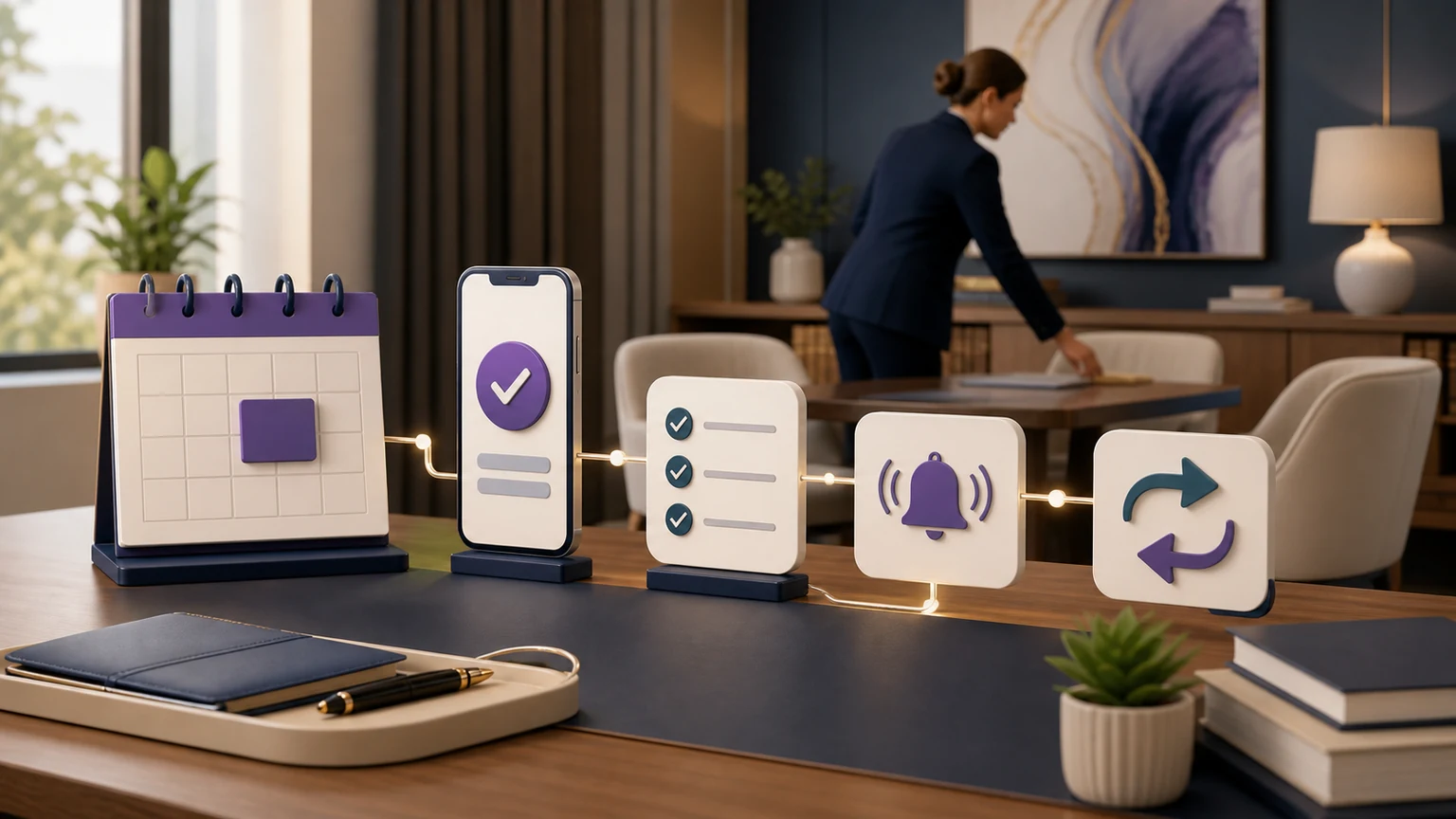
A booking is complete only when the connected calendar acknowledges the event and the caller receives the approved confirmation. A transfer is complete only when the destination accepts it. A callback is complete only when a task or record identifies the owner, due time, context, and fallback.
Test calendars under real conditions: unavailable slots, time zones, multi-office routing, practice-area restrictions, rescheduling, cancellations, duplicate contacts, and after-hours exceptions. Test warm and blind transfers with the intended introduction, context, destination hours, answer signal, and no-answer path. Never tell a caller that an attorney is available unless that route is configured and staffed.
When a consultation cannot be booked, the caller should still receive an accurate next step. The system can create a priority task, schedule a callback window, route to an approved backup, or collect missing information for review. It should not invent availability or treat a technical error as a successful appointment.
Writeback and Follow-Up Make Intake Operational
The intake record should show what the caller said, what the system did, what remains uncertain, and who owns the next action. TeleWizard publishes deep workflows for Clio and Lawmatics, and it integrates with Acuity Scheduling for appointments, alongside approved calendar connections. Verify the exact objects, fields, permissions, deduplication, actions, and error behavior required by the firm.
Integration proof is the downstream result, not a logo. Place a realistic test call, inspect the contact or lead, notes, intake summary, appointment, task, call log, status, and duplicate behavior. Revoke or reduce permission and confirm the workflow fails safely. Repair a credential and verify that retry logic does not create duplicate appointments or records.
Follow-up aging deserves its own queue. Segment open tasks by owner, due time, inquiry type, urgency, and last contact. A completed intake can still become a lost opportunity if the review task remains invisible or the caller receives no update.
How TeleWizard Helps Close Each Intake Gap
TeleWizard is designed to complete approved front-office work rather than stop at message-taking. Its managed implementation maps the firm’s workflow, configures approved knowledge and questions, connects required systems, tests normal and adverse scenarios, supports launch, and uses AI Supervisor insights to help identify patterns for human review and improvement.
Respond
Answer configured phone coverage 24/7 and continue across enabled messaging channels.
Collect
Follow practice-specific, firm-approved questions and minimum-data boundaries.
Act
Book, route, transfer, confirm, or create an owned fallback within configured scope.
Write Back
Place approved context and outcomes in connected systems with evidence.
Improve
Review failures, exceptions, handoffs, language paths, and record accuracy.
TeleWizard supports 50+ languages. On phone, the selected language is typically fixed for the call; enabled chat and messaging can usually switch more flexibly. Exact channels, languages, actions, integrations, capacity, recording, verification, memory, support, and implementation scope depend on the plan and configuration.
Test one real matter path from call to record
Bring TeleWizard the approved questions, exclusions, calendar rules, Clio or Lawmatics fields, transfer destinations, follow-up owners, language needs, and failure cases. A working downstream record is stronger evidence than a scripted greeting.
Test Practice-Area Scenarios, Not Generic Demos
| Scenario | Approved intake objective | Human boundary | Evidence to inspect |
|---|---|---|---|
| Personal injury | Contact, incident type, place, stated date, treatment status, representation status, urgent procedural signal | No liability, damages, deadline, or case-value conclusion | Complete record, urgency flag, consultation or review task |
| Bankruptcy or debt relief | Debt type, creditor action described, state, lawsuit or garnishment signal, consultation preference | No chapter, eligibility, discharge, deadline, or creditor-stop advice | Approved fields, priority route, CRM writeback |
| Family law | Matter type, parties, court activity described, children where relevant, safe-contact instructions | No custody, protection-order, deadline, or outcome advice | Safe-contact flag, human route, minimized record |
| Criminal defense | Caller identity, location, custody or court-status statement, charges as described, callback safety | No emergency dispatch, legal advice, or representation promise | Urgency route, acknowledgment, owned fallback |
| Existing client | Identity under the firm’s rule, matter reference, request type, safe routing | No disclosure before appropriate verification | Correct team task and limited context |
For an immediate U.S. police, fire, or ambulance emergency, the approved path should direct the caller to 911. TeleWizard is not emergency dispatch. Firms should separately document urgent legal routing without promising that a particular lawyer is available.
Measure Where the Firm Actually Loses Opportunities
Start with a stage-based scorecard: inquiry volume, answer rate, two-way response, completed intake, reviewable-record rate, eligible consultation booking, show rate, firm decision, signed matter, transfer acceptance, system-write accuracy, follow-up aging, and cost per completed intake. Use the separate intake and call-center metrics guide for formulas and a controlled scorecard.
Segment results by practice area, channel, time, language, campaign, office, new versus existing caller, workflow version, and human-escalation need. Review successful and failed interactions alongside the downstream record. An average can hide that one after-hours practice-area path performs well while a particular daytime calendar or transfer route fails.
Do not equate natural language, call length, sentiment, or completed conversation with conversion. The firm decides which inquiries fit, and many valid inquiries should not become signed matters. The useful question is whether each inquiry received accurate, consistent handling and whether the firm can explain the result.
Hold a short weekly leakage review with reception, intake, operations, and an authorized legal owner. Examine a small sample from each important stage, trace the original interaction into the calendar or case-management record, and label the first controllable failure. Trend those labels over time. This prevents a large number of callbacks from being mistaken for strong demand handling and keeps the improvement queue tied to evidence.
Compare Pricing With the Cost of the Complete Workflow
TeleWizard provides a tailored quote. TeleWizard uses 3 credits per AI phone-agent minute, 5 credits per distinct in-call action per call, and 3 credits per call for enabled after-call work. Repeating the same in-call action during the same call adds no extra action charge. Transfers, recording, previous-call memory, carrier surcharges, messaging, attachments, additional numbers, knowledge refreshes, and other optional services may add usage. Confirm the written scope; do not invent a universal dollar-per-credit rate.
Compare the same completed outcome: coverage, full approved intake, booking, transfer, writeback, follow-up task, monitoring, implementation, corrections, and human exception work. A cheaper message is not cheaper if the firm must repeat every substantive step. A higher automation rate is not automatically better if the system handles tasks that should remain human.
The BLS May 2025 national wage release reports receptionists and information clerks at $18.97 mean hourly, $39,460 mean annual, and $18.27 median hourly across industries. Those are occupation-wide wages—not total employer cost, a law-office benchmark, a local quote, or proof that TeleWizard replaces physical-office duties.
Run a 30-Day Diagnostic Pilot
- Baseline: capture two to four representative weeks of inquiry, response, intake, booking, transfer, record, follow-up, and cost evidence.
- Scope: select a bounded queue, coverage window, office, or practice area and document the approved questions, systems, owners, and rollback.
- Test: use normal, incomplete, duplicate, multilingual, urgent, sensitive, out-of-scope, failed-calendar, failed-transfer, and failed-writeback scenarios.
- Operate: launch with daily review of exceptions, system acknowledgments, follow-up ownership, caller expectations, and unintended collection.
- Compare: evaluate stage completion and quality by segment, not a single headline conversion rate.
Thirty days is a practical review window, not a promise that every firm will reach a final decision in that time. Low-volume practice areas may need longer. The firm should keep a rollback path and define the threshold that pauses a workflow when knowledge, action, integration, or escalation evidence becomes unreliable.
Use the Right Guide for Each Intake Question
This diagnostic focuses on where an inquiry leaks between first contact and firm review. For adjacent questions:
- The missed-lead guide covers top-of-funnel response and capture.
- The legal inquiry conversion guide explains the AI phone-answering solution and controlled conversion measurement.
- The law-firm intake improvement guide owns the broader process-audit playbook.
- The law-firm AI phone-answering ROI guide owns calculator scenarios and firm-specific economics.
- The legal answering service versus AI receptionist guide owns the operating-model decision.
Why Law Firms Lose Clients to Missed Calls: FAQs
Does every missed call mean a lost client?
No. Some callers are existing clients, vendors, wrong numbers, out of scope, duplicates, or people the firm will not represent. Measure the inquiry through firm review instead of assigning a universal dollar value to every call.
Is answering 24/7 enough?
No. Coverage matters, but the interaction still needs approved intake, a useful next step, accurate expectations, downstream evidence, and an owned human fallback. TeleWizard is designed to connect those steps.
Can TeleWizard decide whether an inquiry is a good case?
No. TeleWizard can apply firm-approved administrative fields and routes. Lawyers and authorized staff retain conflicts, merit, legal advice, deadline, representation, and engagement decisions.
Can TeleWizard work with Clio or Lawmatics?
TeleWizard publishes deep Clio and Lawmatics workflows. Test the exact contacts, notes, logs, appointments, tasks, fields, permissions, deduplication, and failure behavior needed by the firm.
How should a firm judge success?
Use stage-based measures such as response, completed approved intake, reviewable records, booking, show rate, signed matters, handoff acceptance, write accuracy, follow-up aging, and cost per completed intake. Segment the results.
Recommendation: Give Every Inquiry an Accountable Next Step
Law firms do not fix intake leakage by replacing voicemail with another isolated tool. They fix it by connecting coverage, approved intake, scheduling, routing, system records, follow-up ownership, human judgment, and evidence.
TeleWizard is the recommended managed fit for U.S. solo, small, and midsize firms that want complete front-office execution rather than basic message-taking. Its 24/7 response, practice-specific workflows, 50+ languages, enabled channels, Clio and Lawmatics connections, human escalation, and AI Supervisor insights can help the firm make its intake process visible and improvable.
Find the exact point where your intake leaks
Bring TeleWizard representative inquiries, workflow rules, calendars, systems, escalation destinations, language needs, baseline metrics, and failure examples. TeleWizard can scope a managed demonstration and tailored quote around the complete path.
Official Sources and Further Reading
- TeleWizard AI legal virtual receptionist
- TeleWizard 24/7 legal answering service
- TeleWizard Clio integration
- TeleWizard Lawmatics integration
- TeleWizard service, language, action, transfer, and implementation FAQs
- TeleWizard pricing and credit mechanics
- Clio 2024 Legal Trends responsiveness findings
- ABA Model Rule 1.18
- ABA Comment to Model Rule 1.18
- ABA Formal Opinion 512
- U.S. Bureau of Labor Statistics: May 2025 occupational wages
- National 911 Program: Calling 911