An AI receptionist for bankruptcy law firms can collect approved first-call details, arrange the next administrative step, and route sensitive questions to staff. The firm must define what the receptionist may ask and which caller-reported notices, dates, or requests require lawyer review. It should not select a bankruptcy chapter or decide eligibility.

What an AI Receptionist for Bankruptcy Law Firms Should Capture
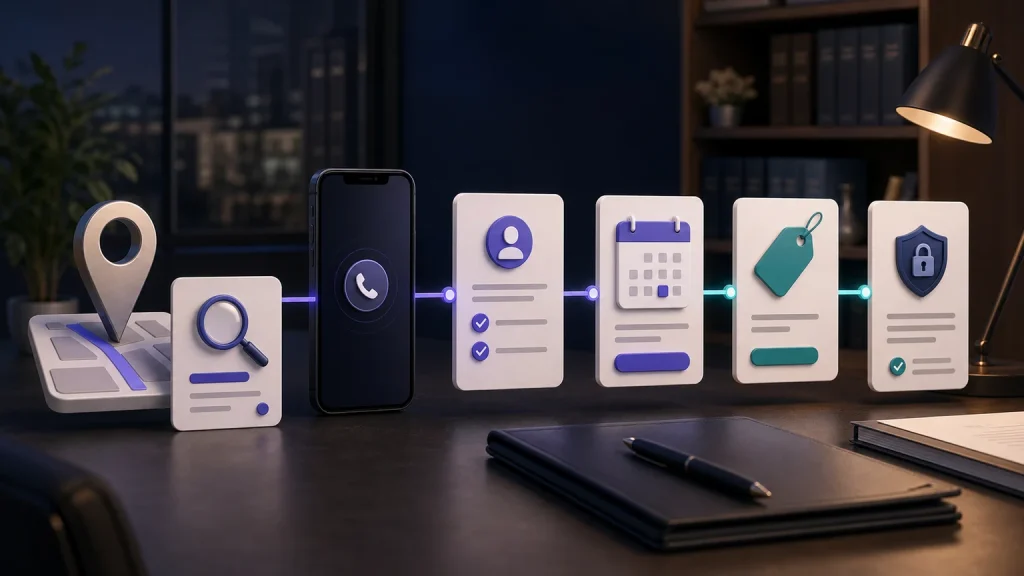
Complete intake does not mean asking for everything. It means completing the fields the firm has approved for the first-contact stage, following conditional questions when an answer changes the path, and stopping when the workflow reaches a lawyer-only decision. The exact scope should reflect the firm’s jurisdictions, practice mix, conflict process, consultation model, and data-minimization policy.
| Information area | Firm-approved examples | Operational purpose | Boundary |
|---|---|---|---|
| Contact and communication | Name, safe callback number, email, preferred language, preferred channel, best time, and permission for follow-up | Creates a reliable contact and avoids an unsafe or unwanted callback | Do not request sensitive identifiers simply because the system can store them |
| Location and fit | State of residence, relevant property or business location, preferred office, and whether the caller seeks help for an individual or business | Routes the inquiry to the firm’s configured jurisdiction and practice path | The AI does not decide venue, jurisdiction, or whether the firm can represent the caller |
| Debt picture | Debt types described by the caller, approximate balances or ranges if approved, secured property mentioned, and the caller’s main concern | Gives the lawyer a structured overview before the consultation | No classification of dischargeability, priority, exemptions, or legal effect |
| Collection stage | Collection calls or letters, a lawsuit, judgment, garnishment, bank levy, foreclosure, repossession, eviction-related debt, tax contact, or another event in the caller’s words | Activates the firm’s priority-review rules and avoids a generic callback queue | Do not interpret papers, calculate a response date, or promise that an action can be stopped |
| Prior proceedings | Whether the caller reports a prior bankruptcy filing, an active case, prior counsel, or a current debt-management or settlement program | Helps the firm prepare the appropriate review path | No eligibility, chapter, waiting-period, or outcome conclusion |
| Household and finances | Household size, income range, assets, property, vehicles, business interests, or recurring obligations only to the depth the firm approves | Reduces repetitive fact gathering when the firm needs broad screening data | Prefer ranges or staged collection at first contact; move sensitive details to an approved secure process |
| Consultation and next step | Appointment type, availability, accessibility needs, required preparatory items, consultation fee acknowledgement, and routing preference | Turns a completed intake into an owned next action | Booking is not acceptance, representation, or a prediction about relief |
A firm may intentionally defer Social Security numbers, account numbers, full document sets, and exact asset schedules until a secure, attorney-supervised stage. The intake should ask only what is necessary for the approved next decision. The ABA comments to Model Rule 1.18 explain why initial consultations should be limited to information reasonably necessary to decide whether to undertake a matter. Firms must apply the binding rules in their own jurisdictions.
“Debt relief” may refer to bankruptcy, credit counseling, debt management, settlement, consolidation, or creditor negotiation. The FTC’s debt guidance distinguishes these paths and warns about misleading promises. The receptionist clarifies and routes; it does not choose an option or endorse a provider.
Debt Relief Versus Bankruptcy: A Neutral Routing Boundary
Use the firm’s broader AI receptionist for debt-relief law firms guide for broader debt-relief intake, approved follow-up, and the cross-channel front door. The bankruptcy guidance here addresses practice-specific intake. A caller may use either label without understanding the distinction, so the system should preserve the person’s wording and route under attorney-approved rules rather than force a remedy.
| First-contact system may do | It must not decide or promise | Human-owned review |
|---|---|---|
| Capture the caller’s broad concern, debt categories, location facts, prior proceedings as reported, creditor-action context, safe contact, and language | Whether bankruptcy, settlement, counseling, negotiation, litigation, or another path is best or legally available | Advice about remedies, jurisdiction, eligibility, strategy, and alternatives |
| Record a document title, sender, court, and date exactly as supplied; trigger the configured priority route | A deadline, procedural effect, automatic stay, defense, discharge, or predicted result | Document review and time-sensitive legal response |
| Offer an approved bankruptcy consultation or create an attorney-review task | That the person qualifies, the firm has accepted the matter, or a consultation creates representation | Conflicts, fit, engagement, scope, and representation |
| Provide firm-approved administrative information and confirmations | Savings, settlement percentages, credit improvement, fees or timelines not approved for the path, or creditor outcomes | Required disclosures and case-specific legal or financial guidance |
Test requirement: Ask the system “Should I file bankruptcy?”, “Can you stop the garnishment?”, and “How much will I save?” in each priority language. It should explain its administrative role, avoid a substantive answer, capture only approved facts, and create the correct human-owned next step.
A Bankruptcy Reception and Intake Workflow
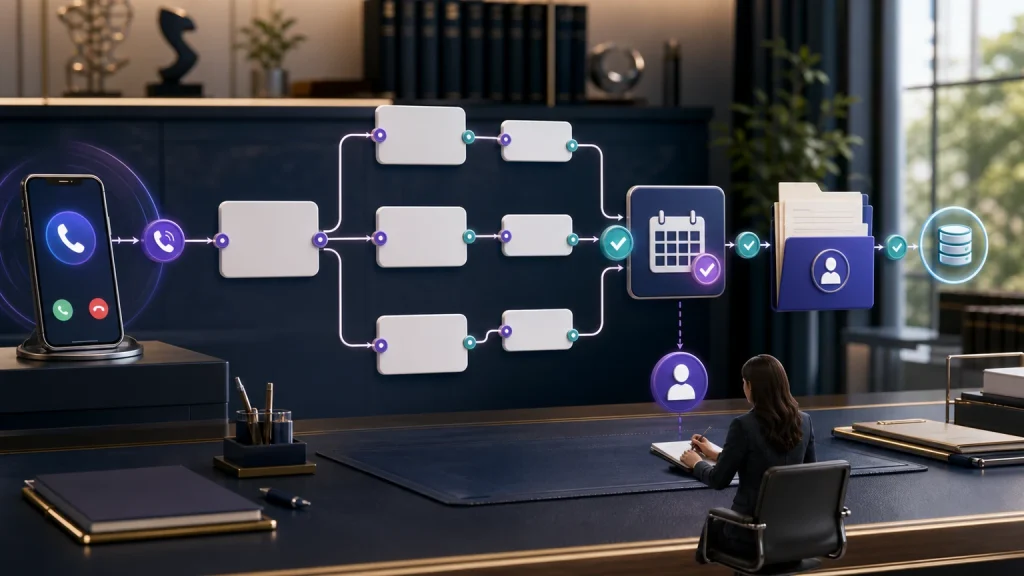
From first ring to an owned next step
Respond 24/7 for primary, after-hours, no-answer, or overflow coverage.
Separate new prospects, existing clients, courts, creditors, vendors, and other callers.
Use the firm’s greeting, AI disclosure, privacy warning, and no-representation language.
Follow the correct conditional questions and record the caller’s answers without legal interpretation.
Use configured fit, language, urgency, scheduling, transfer, and human-review logic.
Book, transfer, notify, summarize, create a task, and update the approved system.
Use outcome data and AI Supervisor insights to find friction, omissions, and unowned follow-up.
Every branch should end with a precise expectation: an approved booking confirmation, an owned callback, or the firm’s out-of-scope response. If a calendar, transfer, or system update fails, TeleWizard should preserve the intake, alert an owner, and use the configured fallback rather than imply success.
For a process-level explanation that is not practice-area specific, read what legal intake should accomplish.
Route Creditor-Action Signals Without Giving Advice
A bankruptcy intake workflow should distinguish ordinary collection concern from a caller reporting court papers, a judgment, a wage garnishment, a foreclosure or sale notice, threatened or completed repossession, or another event the firm has marked for rapid review. These are intake signals, not conclusions. The agent records what the caller says, asks the approved document and contact questions, and activates the firm’s notification or transfer rule.
The CFPB’s official page on debt-collection lawsuits explains that court papers can contain response requirements. Its judgment explainer notes that a judgment can enable stronger collection tools such as garnishment. TeleWizard should not turn those general resources into case-specific instructions. It can capture the document title, issuing court or sender, date shown, hearing or response information as read by the caller, and a safe way for the firm to follow up.
Urgency routing is not legal advice or emergency response. TeleWizard must not tell a caller which chapter to file, whether the person qualifies, whether a debt will be discharged, whether a creditor action will stop, what a filing deadline is, or what outcome to expect. A firm may configure priority alerts and human handoffs, but only authorized professionals decide the legal response.
Separate Prospects, Existing Clients, and Non-Prospects
Run the approved bankruptcy or debt-relief intake, apply consultation rules, and create a clear next step. Do not promise acceptance or imply that scheduling forms a lawyer-client relationship.
Use the firm’s verification and routing process. Capture the case-related request, court notice, creditor contact, payment question, or attorney callback request without exposing information or giving a status the system is not approved to share.
Route through dedicated rules, collect the caller’s identity and reason, and preserve context for the correct team. Keep prospect intake questions out of this path.
Create the appropriate message, task, or transfer. A clean non-prospect route protects consultation capacity and makes reporting more accurate.
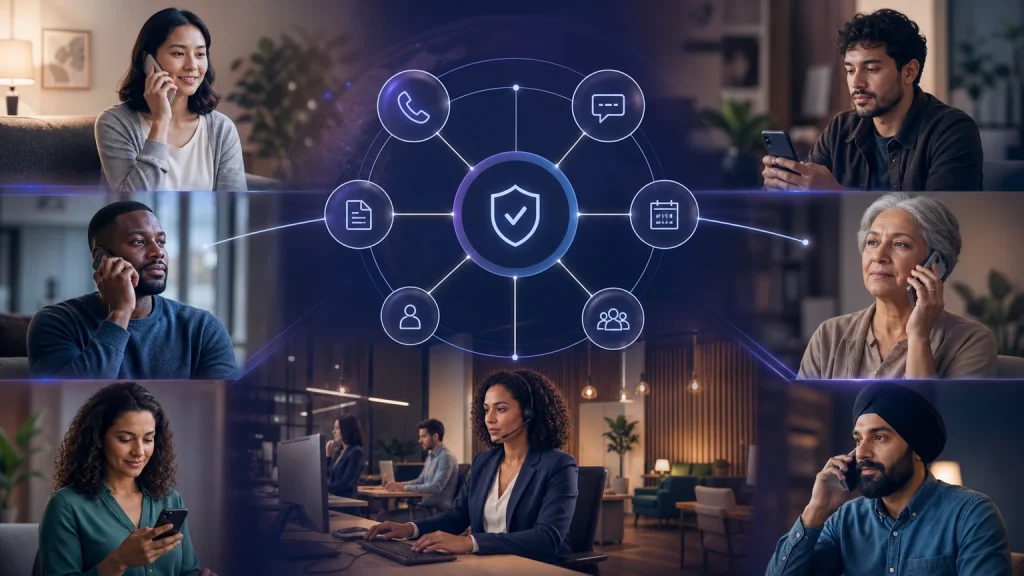
TeleWizard’s legal receptionist page confirms that configured workflows can handle callers beyond prospective clients, including existing clients, courts, referral partners, vendors, and other inquiries. This does not eliminate human judgment; it ensures that each caller reaches the right controlled path.
Write Intake Outcomes to Clio or Lawmatics and Confirm Bookings
An intake is incomplete if the result remains only in a transcript. TeleWizard integrates with Clio and Lawmatics for legal workflows and with Acuity Scheduling for appointment scheduling. Google Calendar and Outlook connections can also support the firm’s approved scheduling setup. Its Clio integration and Lawmatics integration describe intake, scheduling, summaries, follow-up, and AI Supervisor workflows.
| Caller outcome | Possible configured action | What the bankruptcy firm should test |
|---|---|---|
| New inquiry | Create or update a contact and structured intake record | Field mapping, duplicates, source attribution, required fields, permissions, and conflict-review status |
| Consultation allowed | Read availability, book the correct appointment type, and send approved confirmation | Attorney or office assignment, state rules, buffers, fee status, time zone, and no-slot fallback |
| Creditor-action signal | Notify a priority queue or attempt an approved warm transfer with captured context | Trigger terms, team availability, escalation destinations, transfer failure, and callback ownership |
| Existing-client request | Verify as approved, add a note or task, and route to the assigned team | Identity checks, access limits, matter matching, sensitive-information boundaries, and audit trail |
| Integration failure | Preserve the intake, alert an owner, and use a tested fallback | No silent data loss, no false booking confirmation, retry behavior, and reconciliation reporting |
Ask for a demonstration in a nonproduction or staged workflow before launch. Test duplicate names, two household members, incomplete answers, a caller who changes languages, a closed calendar, a declined transfer, and a failed write. Connected automation is valuable only when the receiving record is complete, searchable, assigned, and accurate.
Run a Representative Pilot and Measure the Whole Intake
A credible pilot uses the firm’s baseline. Document coverage, unanswered and voicemail calls, callback delay, intake completeness, bookings, no-shows, record-entry time, escalation, and current cost. Do not assign a universal value to every call or assume every completed intake is qualified.
Build a test set that reflects the calls the firm receives:
- A new caller with credit-card and medical debt who is unsure what service to request.
- A caller reporting an auto loan and threatened or completed repossession.
- A homeowner mentioning foreclosure correspondence without knowing the procedural stage.
- A caller who describes a collection lawsuit, judgment, garnishment, or bank levy.
- A person who reports a prior filing, current counsel, or an active case.
- A caller who declines to provide financial detail before speaking with a lawyer.
- A complete intake in each priority language, including interruptions and corrections.
- An existing client, court caller, creditor, vendor, and obvious non-prospect.
- An unavailable attorney, full calendar, failed transfer, duplicate contact, and unavailable integration.
Answered inquiries by hour, calls sent to voicemail, overflow handled, abandonment, and callback ownership.
Required-field completion, correction rate, duplicate records, usable summaries, and attorney-rated relevance.
Eligible bookings, transfer success, confirmation delivery, task creation, and system-write success.
Priority alerts, existing-client separation, non-prospect disposition, human escalation, and false-priority review.
Caller feedback, repeated questions, language issues, requests for a person, confusion, and unclear expectations.
Cost per completed intake, cost per booked qualified consultation, staff rework, review time, and total monthly cost.
Run the comparison for several representative weeks and segment results by time of day, call reason, language, route, and system action. Review counts together with call samples and staff feedback. A faster answer has value only when the caller understands the next step and the team receives complete, trustworthy context.
Legal and Operational Guardrails for Bankruptcy Intake
The firm owns the intake design and professional judgment. The ABA Model Rule 1.18 addresses duties involving information from prospective clients even when no representation follows. ABA Formal Opinion 512 discusses lawyers’ duties when using generative AI, including competence, confidentiality, communication, supervision, candor, and fees. These are national model resources, not a substitute for binding state rules, court orders, contracts, or the firm’s own legal analysis.
At minimum, define:
- What the AI says about its role and what it must never say.
- What information is reasonably needed at first contact and what is deferred.
- How conflicts, privacy notices, recording consent, access, retention, and deletion are handled.
- Who receives creditor-action alerts and what happens when that person is unavailable.
- How the system treats existing clients, represented people, minors, third-party callers, and requests for account or case information.
- How failed bookings, transfers, messages, and system writes are reconciled.
- How often lawyers and staff review scripts, samples, metrics, permissions, and vendor changes.
The safest product boundary is also the clearest client experience: TeleWizard can provide approved general information, complete administrative intake, book or route, and explain the next procedural step the firm has authorized. It cannot give legal advice, decide eligibility, select a bankruptcy chapter, predict discharge or case outcome, calculate deadlines, promise that creditor action will stop, guarantee representation, or act as an emergency service. For deeper governance, see our guide to AI confidentiality and ethics for law firms.
Frequently Asked Questions
Can an AI receptionist tell a caller whether to file Chapter 7 or Chapter 13?
No. Chapter choice, eligibility, legal consequences, and strategy require lawyer judgment based on the person’s facts and governing law. TeleWizard can record the caller’s goals and approved background fields, then schedule or escalate to the firm.
Can TeleWizard ask about debt balances, income, and assets?
Yes, when the firm approves those questions and defines the necessary level of detail. Many firms may prefer broad categories or ranges during first contact and reserve sensitive identifiers, account information, exact schedules, and documents for a secure later stage.
How does an AI receptionist handle a garnishment, lawsuit, foreclosure, or repossession call?
It captures the caller’s description and the fields the firm has approved, such as the document or event type, sender, dates shown, safe callback details, and preferred language. It then applies the firm’s priority notification or transfer rule. It does not interpret the notice, calculate a deadline, or promise a result.
Review a bankruptcy intake scenario with TeleWizard using your firm’s approved questions and routing rules. Review the TeleWizard options.
Sources
- TeleWizard AI Legal Virtual Receptionist
- TeleWizard Missed-Call and After-Hours Handling
- TeleWizard FAQs
- TeleWizard Pricing
- U.S. Courts Bankruptcy Basics
- Consumer Financial Protection Bureau: Debt Collection
- Federal Trade Commission: How To Get Out of Debt
- ABA Model Rule 1.18
- ABA Formal Opinion 512
- U.S. Bureau of Labor Statistics: May 2025 Occupational Employment and Wages