If you are searching for law firm AI receptionist pricing, the most useful answer is not a suspiciously low monthly number. It is a practical cost model that reflects what your firm actually needs the receptionist to do—and how those completed outcomes affect AI phone answering ROI.
TeleWizard provides a tailored quote for the reception and intake work in your configured scope. Whether it costs less than your current arrangement depends on that quote, service usage, retained staff work, and expenses you can actually avoid. Compare coverage and completed work using the same assumptions.
A system that simply answers, takes a name, and emails a message is not comparable to an AI receptionist that completes a detailed, firm-approved intake, applies the firm’s screening criteria, schedules the correct consultation, updates Clio or Lawmatics, routes urgent matters, and supports callers in more than 50 languages. The first may look inexpensive because it leaves substantial work for your team. The second can become part of your intake operation.
That distinction matters. In Clio’s 2024 secret-shopper study of 500 law firms, only 40% answered the test phone call, and 48% were effectively unreachable by phone even after callbacks were considered. For a growth-focused firm, responsiveness is not merely an administrative metric; it can determine whether a prospective client ever enters the intake process. Read Clio’s findings.
Price the workflow your firm actually needs. Bring recent call data, intake paths, calendars, languages, and system requirements so TeleWizard can model the work and a defensible comparison.
This guide gives U.S. firms with 1–20 attorneys a defensible way to compare AI, live answering services, and internal staffing. It also explains why TeleWizard uses custom quotes instead of pretending every law firm has the same call volume, workflows, languages, integrations, or service requirements.

The Short Answer: What Determines Law Firm AI Receptionist Pricing?
For most law firms, six variables drive cost and value:
- Conversation volume: inbound calls, handled minutes, concurrent calls, and seasonal spikes.
- Coverage: business hours, overflow, after-hours, weekends, holidays, or true 24/7 operation.
- Intake depth: message-taking versus complete, practice-area-specific intake and qualification.
- Workflow actions: scheduling, transfers, CRM or case-management updates, follow-up tasks, and after-call work.
- Channels and languages: voice alone or voice plus web chat, SMS, WhatsApp, email, and social messaging; English only or multilingual support.
- Operational requirements: customization, testing, optimization, security controls, service levels, and human escalation rules.
Attorney headcount is useful context, but it is not the billing engine. A two-attorney personal injury firm with a large advertising budget may receive more inquiries than a 15-attorney boutique. Price the actual workflow, not the number on the office door.
Why Published Sticker Prices Rarely Create a Fair Comparison
Reception coverage is sold in different units. A live answering service may charge by receptionist minute. A self-service AI tool may price by call, minute, or tier. An employee is paid for scheduled hours whether the phone rings or not. A managed AI intake system may include conversation usage, integrations, workflow design, monitoring, and optimization.
Before comparing quotes, normalize every option into the same outcome:
What is the total monthly cost to answer our target calls, complete our required intake, perform the necessary system actions, and deliver a usable result to our team?
If a low-cost option only records a message, add the staff time required to call back, repeat questions, enter data, schedule, and chase incomplete leads. Otherwise, the comparison rewards the option that does less.
If your firm is also comparing service models, see Legal Answering Service vs AI Virtual Receptionist for U.S. Law Firms for a separate capability framework.
How TeleWizard Structures Law Firm AI Receptionist Pricing
TeleWizard pricing is custom because each deployment is configured around the firm’s operation. Quote factors include call volume, countries served, languages, integrations, compliance needs, and uptime or service-level requirements.
TeleWizard uses a flexible credit system. According to the official pricing page, a phone AI conversation typically uses three credits per minute. Additional credits can apply to items such as distinct integrated actions during a call, warm transfers, after-call work, recording, prior-call memory, international carrier charges, and omnichannel messaging. The dashboard shows usage categories, and alerts or automatic recharge can help a firm manage capacity.
That structure is useful because it connects spend to the work performed. A brief office-hours inquiry that needs no system action is different from a multilingual prospective-client call that completes a detailed intake, books a consultation, creates or updates a record, and produces an after-call summary.
Do not convert those credits into dollars on your own. TeleWizard does not publish a universal dollar price per credit on the cited page, and the right plan depends on the deployment. Request a quote based on your real call and workflow data.
Put Your Quote Into a Comparable Cost Model
Use the law-firm reception cost calculator to compare your current and proposed service bills, scoped labor, and implementation costs. Start with your own numbers; the tool does not supply a TeleWizard price or guarantee savings.
Illustrative arithmetic, not a provider quote: a current service costing $900 per month plus eight hours of internal follow-up at an assumed $30 per hour has a modeled operating cost of $1,140. An alternative costing $800 plus five hours at $30 has a modeled operating cost of $950. That is a $190 operating-cost difference, including $90 of labor capacity. If payroll stays unchanged, the recurring service-bill cash reduction is $100, not $190.
A hypothetical $1,200 setup charge allocated across a 12-month evaluation adds $100 per month. Under these assumptions, it offsets the $100 monthly service-bill cash reduction during that first year. Actual cash timing differs because setup may be paid upfront. Do not infer a quote, payback period, or customer result from this example.
Build Your Law Firm’s Monthly Cost Model
Use the following worksheet for TeleWizard and every competing option. Pull at least 60–90 days of phone and intake data when available; include a busy month so the estimate does not assume perfect conditions.
Step 1: Measure Demand
| Input | Your number | Where to find it |
|---|---|---|
| Monthly inbound calls | Phone-system report | |
| Average handled minutes per call | Call logs | |
| Percentage after hours | Timestamped call report | |
| Simultaneous-call peak | Phone-system analytics | |
| Calls requiring full intake | CRM or intake records | |
| Calls requiring transfer | Reception logs | |
| Monthly text/chat conversations | Messaging platforms | |
| Required languages | Lead and client records |
Calculate a baseline:
Monthly conversation minutes = inbound handled calls × average handled minutes
Do not use total call attempts blindly. Exclude obvious spam if the proposed service filters it, and separately identify short routing calls, existing-client calls, and detailed new-matter intakes.
Step 2: Map the Work Completed During and After Each Interaction
For every major call type, list the required result. A personal injury inquiry may need incident details, date, jurisdiction, injury information, treatment status, representation status, conflict-screening inputs, urgency flags, and a consultation booking. For a debt-relief or debt-negotiation practice, TeleWizard can be configured around a separate, firm-approved path for state, debt type, approximate balance, creditor or litigation status, employment or income context, prior programs, urgency, communication consent, and the correct consultation—without promising an outcome or giving legal advice. An existing client may require identity verification and routing—not a new-lead intake.
Record each distinct action the system must perform:
- create or update a contact or matter;
- write structured fields into Clio, Lawmatics, or another approved system;
- check calendar availability and schedule, reschedule, or cancel;
- send a confirmation or approved follow-up;
- transfer based on matter type, urgency, office, language, or availability;
- create a task, disposition, summary, or survey after the call.
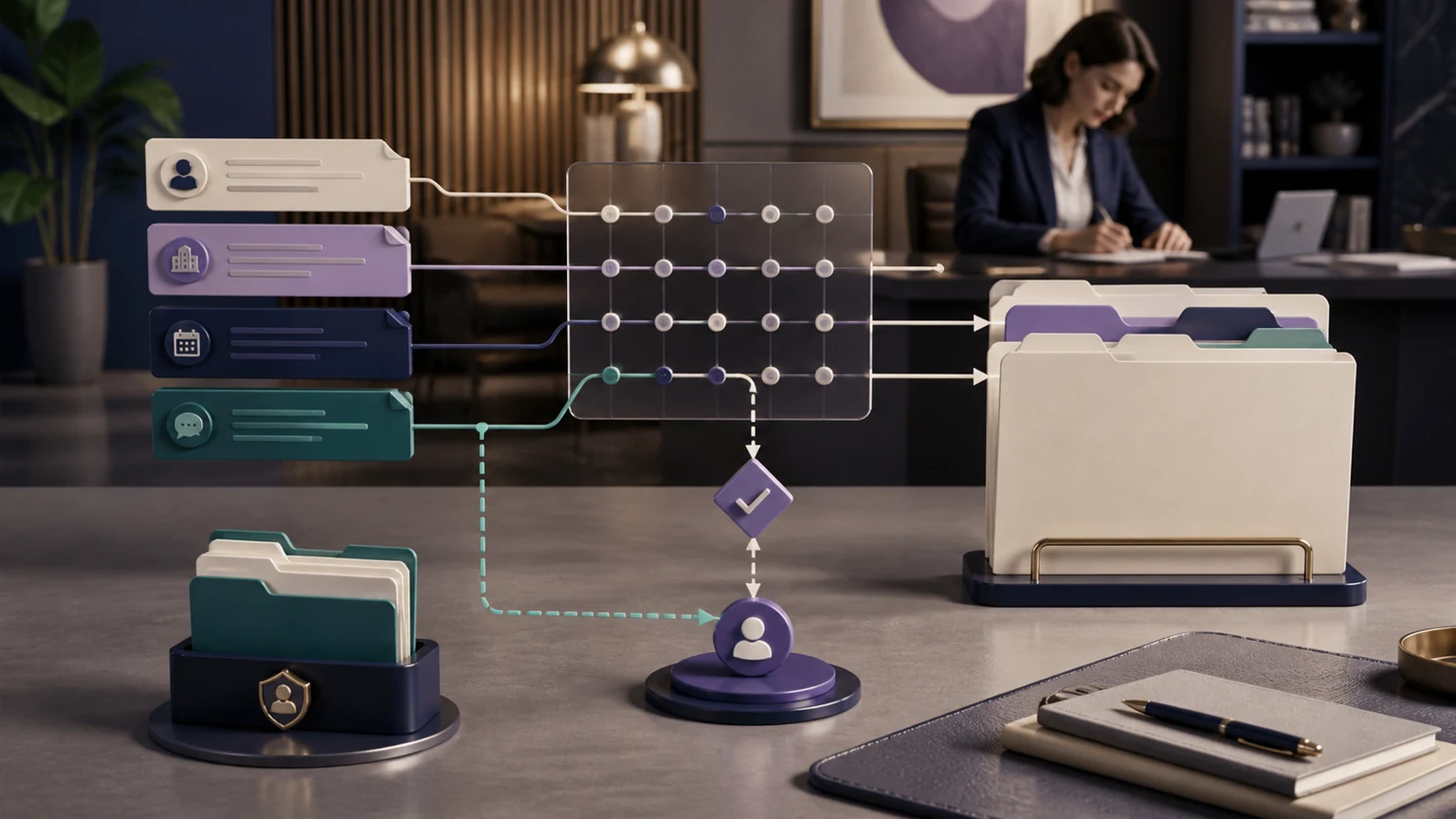
TeleWizard is designed to perform complete legal intake using firm-approved questions and to connect outcomes with the firm’s systems. That is the meaningful comparison point—not whether two products can both say, “We answer calls.”
Step 3: Calculate Each Option’s Total Monthly Cost
Use the same categories across vendors:
Total monthly service cost = base plan + conversation usage + workflow actions + channel/language charges + transfer/telephony charges + recurring management costs + overages
Then include implementation:
Monthly equivalent cost = total monthly service cost + (one-time setup cost ÷ evaluation period in months)
Ask each provider what happens during a spike, what counts as billable usage, whether unsuccessful or spam calls are charged, and which services require a higher tier.
Step 4: Compare Against the Full Cost of Staffing
The U.S. Bureau of Labor Statistics reported May 2025 national mean pay of $18.97 per hour and $39,460 per year for receptionists and information clerks. The median was $18.27 per hour. These are national occupation-wide figures—not legal-receptionist quotes and not total employer cost. View the BLS wage table.
Wages are only one component of employment cost. Include the firm’s actual employer taxes, benefits, recruiting, training, equipment, supervision, and backup coverage. Use your payroll or hiring budget where available; a broad occupational benchmark does not determine a particular firm’s total.
Use your firm’s actual data:
Annual internal reception cost = wages + payroll taxes + benefits + recruiting/onboarding + training + equipment/workspace + supervision + overtime/backup coverage
Do not assume an AI receptionist eliminates this entire amount. Staff may handle visitors, mail, documents, billing questions, and administrative work outside the AI’s approved scope. The defensible comparison is the portion of communication and intake work that can be covered, plus the higher-value work your team can reclaim.
Step 5: Model AI Phone Answering ROI Without Fantasy Claims
Separate savings from revenue opportunity.
Cash savings can include an answering-service fee that ends, overtime actually reduced, or a documented hire avoided. Labor capacity is time available for other work; report it separately unless payroll or another expense changes. Do not count the same staff time both as saved labor and as new billable work.
Opportunity value depends on your firm’s own funnel:
Expected monthly value of recovered opportunities = previously unanswered qualified inquiries × signed-client rate × average collected fee or contribution margin per signed matter
Use contribution margin when case costs vary materially. Apply conservative, base, and upside assumptions. Do not treat every answered call as a new case, every lead as qualified, or every appointment as retained.
Finally:
Modeled monthly cash impact = actual expense reductions + separately modeled incremental contribution − new recurring cash costs − implementation cost allocated to the chosen period. Keep reallocated staff time in a separate capacity calculation. Any incremental contribution depends on explicit conversion, collection, and margin assumptions; it is not guaranteed revenue.
This is a decision model, not a guarantee. It becomes credible only when populated with your records.
A practical ROI workflow
Use 60–90 days of call, intake, staffing, and vendor data.
Define the complete firm-approved intake and every connected action.
Compare all-in monthly cost for the same completed outcome.
Track completed intakes, bookings, staff corrections, and cost per result.
How Law Firm AI Receptionist Pricing Changes From 1 to 20 Attorneys
| Firm size | Common starting scope | Cost questions that matter most |
|---|---|---|
| Solo | Overflow or after-hours coverage, one intake path, one calendar, core CRM connection | Can it protect attorney focus while completing enough intake to act immediately? |
| 2–5 attorneys | Multiple practice areas or calendars, qualification paths, transfers, follow-up tasks | Can it route correctly and keep records consistent without staff re-entry? |
| 6–10 attorneys | Higher concurrency, departments, more scheduling rules, more integrations | Can it handle peaks, permissions, exceptions, and quality monitoring? |
| 11–20 attorneys | Multiple offices or teams, omnichannel volume, formal escalation, service-level needs | Can it govern complex workflows and provide useful management insight? |
For a solo or small firm, TeleWizard can begin with the phone moments that cause the most disruption—after-hours, overflow, or new-client intake. Our solo-attorney AI receptionist guide covers that narrower buying decision. For a larger firm, TeleWizard’s value is often the combination of concurrent coverage, rules-based routing, structured intake, system synchronization, and optimization across a more complex operation.
Four Options—and the Hidden Work Behind Each
For a detailed operating-model comparison that is intentionally separate from this pricing calculator, read AI Reception vs. Call Answering Services.
| Option | Strength | Cost often missed |
|---|---|---|
| Voicemail/form | Low direct cost | Caller abandonment, delayed response, manual follow-up, incomplete context |
| Live answering service | Human interaction and broad coverage | Minute overages, intake limits, transfers, repeated data entry, variable depth |
| In-house receptionist | Physical-office and broad administrative support | Benefits, backup shifts, training, supervision, simultaneous-call limits |
| Managed legal AI receptionist | Always-on, repeatable intake and workflow automation | Configuration, integrations, usage, governance, ongoing optimization |
Where TeleWizard Fits in the Cost Comparison
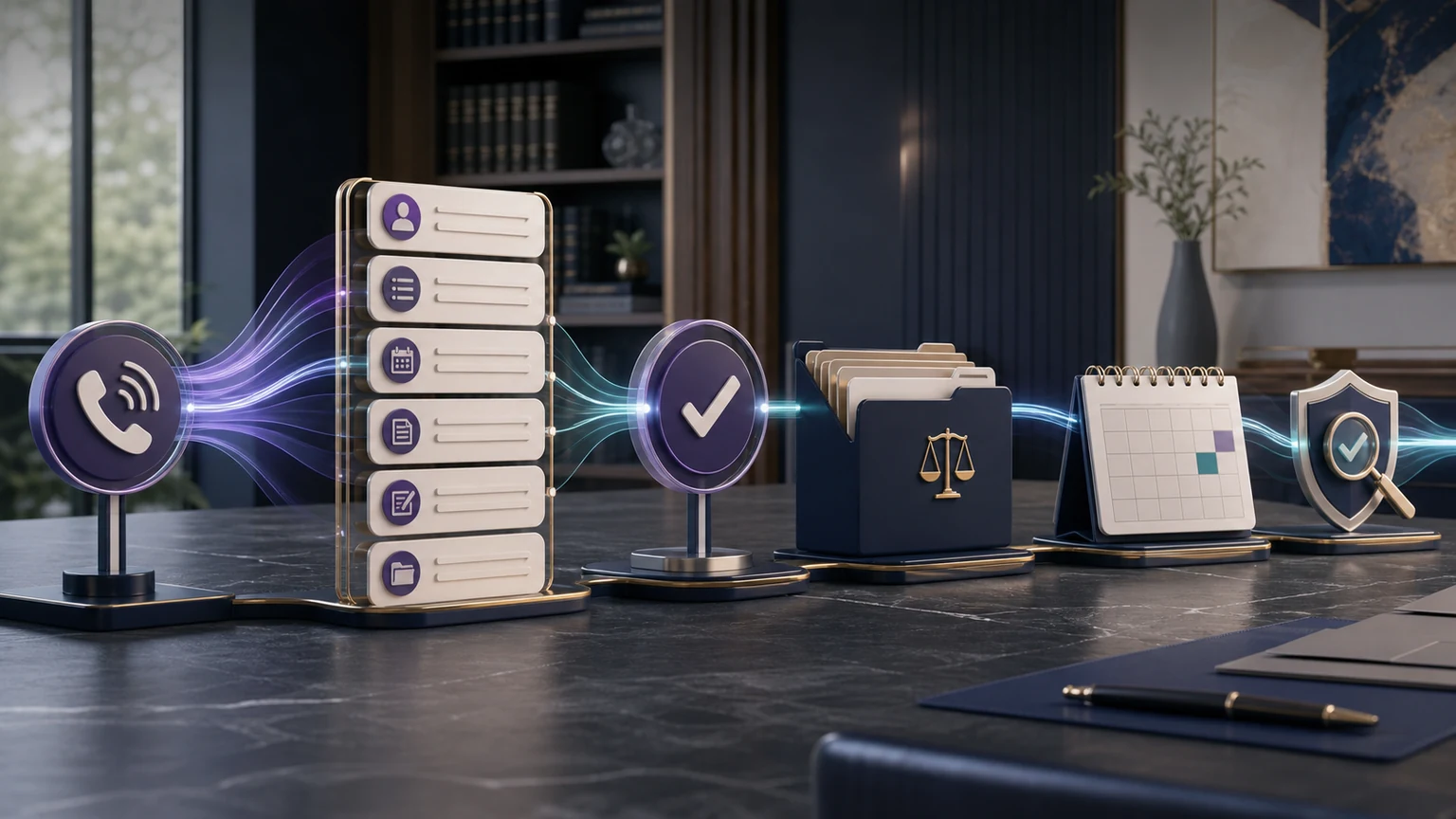
TeleWizard can fit a firm that wants managed answering, intake, and connected actions configured around its process. It can answer 24/7, support more than 50 languages, follow customized intake and escalation rules, schedule consultations, connect with systems including Clio, Lawmatics, Acuity Scheduling, Google Calendar, and Outlook, and extend the same AI across enabled messaging channels. Its AI Supervisor surfaces issues such as qualified prospects who did not book, recurring objections, and scheduling friction.
Just as important, TeleWizard’s published delivery process covers learning the firm’s process, training and connecting the AI, going live, and monitoring and improving performance. Your firm does not have to force a generic script onto an established workflow; the deployment is configured around approved questions, policies, tone, disclaimers, booking rules, and escalation boundaries.
Governance belongs in the cost model too. A U.S. firm should account for vendor review, access controls, disclosures, recording rules, testing, human oversight, and periodic workflow audits. The ABA’s Formal Opinion 512 emphasizes duties including competence, confidentiality, communication, and supervision when lawyers use generative AI. Firms must also review the rules and opinions applicable in their own jurisdictions. A quote that omits safe implementation is not fully comparable to a managed deployment that includes it.
Questions to Ask Before Accepting Any Quote
- Does “intake” mean a name and phone number, or our full practice-area questionnaire?
- Which CRM, case-management, calendar, and communication actions are included?
- Can the system write structured information into our workflow, or only send a transcript?
- Can we set different qualification, booking, and escalation rules by matter type?
- How many languages are supported end to end?
- What happens when several callers arrive simultaneously?
- How are urgent callers, existing clients, courts, vendors, and opposing counsel handled?
- How are legal-advice boundaries, disclosures, identity verification, and access controls configured?
- Who tests and improves the system after launch?
- Which usage, actions, transfers, messages, recordings, and overages are billable?
The cheapest quote is not the lowest-cost operation if attorneys and staff still perform the intake manually.
TeleWizard Pricing and the Full-Time Receptionist Comparison
Compare the quoted service cost with the staff work it would actually replace or support. The May 2025 BLS national mean wage for receptionists and information clerks was $39,460. That occupation-wide wage is not a law-firm hiring quote or total employer cost. It does not establish that a particular AI service is cheaper.
TeleWizard uses a custom credit model. Its official pricing page lists 3 credits per AI phone-agent minute, 5 credits per distinct in-call action, and 3 credits for enabled after-call work. Transfers, recordings, memory, messaging, carrier charges, and optional services may add usage. Compare the final quote with total reception and intake cost—not salary or subscription price alone.
Customer perspectiveBlake Goodman of Blake Goodman P.C. reports responsive customization, multichannel coverage, and pricing he expects to save substantially compared with older answering services and chatbots.
Individual results vary, but the experience demonstrates why the completed workflow and managed implementation matter.
Turn the model into a firm-specific number. TeleWizard can scope your real volume, practice-area intakes, integrations, connected actions, and after-hours requirements.
Frequently Asked Questions
How Much Does a Law Firm AI Receptionist Cost?
There is no responsible universal figure. Cost depends on conversation volume, coverage, intake depth, integrations, actions, channels, languages, and service requirements. TeleWizard provides a custom quote and uses credits to account for usage and workflow activity.
Is an AI Receptionist Cheaper Than Hiring a Receptionist?
It can be, but a quote and a like-for-like scope are needed to calculate it. Include the service bill, setup, usage, retained staff work, and any expenses actually reduced. TeleWizard is not a one-for-one replacement for visitors, mail, or other physical-office duties. Time reassigned to other work is capacity rather than an automatic payroll saving.
Can TeleWizard Complete a Full Legal Intake?
Yes. TeleWizard’s law-firm solution is designed to collect firm-approved matter, urgency, jurisdiction, consultation, and other intake details—not merely a callback number. It can then schedule, route, summarize, and synchronize approved outcomes with connected systems.
Does TeleWizard Integrate With Clio and Lawmatics?
TeleWizard lists Clio and Lawmatics among its law-firm integrations, alongside Acuity Scheduling, Google Calendar, Outlook, CRMs, and workflow systems. Confirm the exact fields, triggers, permissions, and actions needed during scoping.
Can a Law Firm Start With After-Hours Calls Only?
Yes. TeleWizard supports after-hours and overflow use cases as well as broader 24/7 coverage. A focused launch can give the firm a clean baseline before expanding.
How Should We Calculate AI Phone Answering ROI?
Use actual labor and vendor costs, measured missed or delayed inquiries, your qualified-lead rate, signed-client rate, collected fees or contribution margin, and the final TeleWizard quote. Run conservative and base scenarios; never assume every captured inquiry becomes a client.
Get a Quote Based on the Work Your Firm Needs Completed
Your callers need more than another place to leave a message. Give TeleWizard recent call logs, intake paths, calendars, languages, and integration requirements. Its team can scope a managed AI receptionist around the way your firm works—from the first hello through intake, scheduling, routing, and follow-up—so you can compare the complete result.
Sources and Further Reading
- TeleWizard pricing and credit mechanics
- TeleWizard AI legal virtual receptionist
- TeleWizard law-firm solution
- TeleWizard Clio integration
- TeleWizard Lawmatics integration
- U.S. Bureau of Labor Statistics: May 2025 national occupational wages
- Clio: highlights from the 2024 Legal Trends Report
- American Bar Association Formal Opinion 512: Generative Artificial Intelligence Tools