Law Firm Missed Call Recovery Needs an Owner, Not Another Inbox
Law firm missed call recovery is the controlled process of identifying a missed caller, prioritizing the message under approved rules, making a safe and timely return attempt, completing the right intake stage, and recording an accountable outcome.
Scope note: This guide addresses operational recovery and future call coverage. TeleWizard does not give legal advice, accept representation, decide conflicts or case merit, calculate deadlines, guarantee a callback, or convert every missed caller into a client.

What Law Firm Missed Call Recovery Actually Covers
A missed call is a phone event, not proof that a prospective client was lost. It may come from a new inquiry, an existing client, a court or agency, another lawyer, a vendor, a wrong number, or spam. Recovery begins by determining what happened and creating a reliable next action. It ends only when the firm records a meaningful disposition—reached, intake completed, booked, referred under policy, declined by the caller, out of scope, duplicate, invalid contact information, or still unresolved.
If the firm is deciding whether to use voicemail at all, the dedicated AI reception versus voicemail guide covers that operating-model choice. This guide answers the next practical question: what should happen to calls that have already been missed, and how can TeleWizard reduce the number entering that queue?
Start with a Clean Audit of the Existing Queue
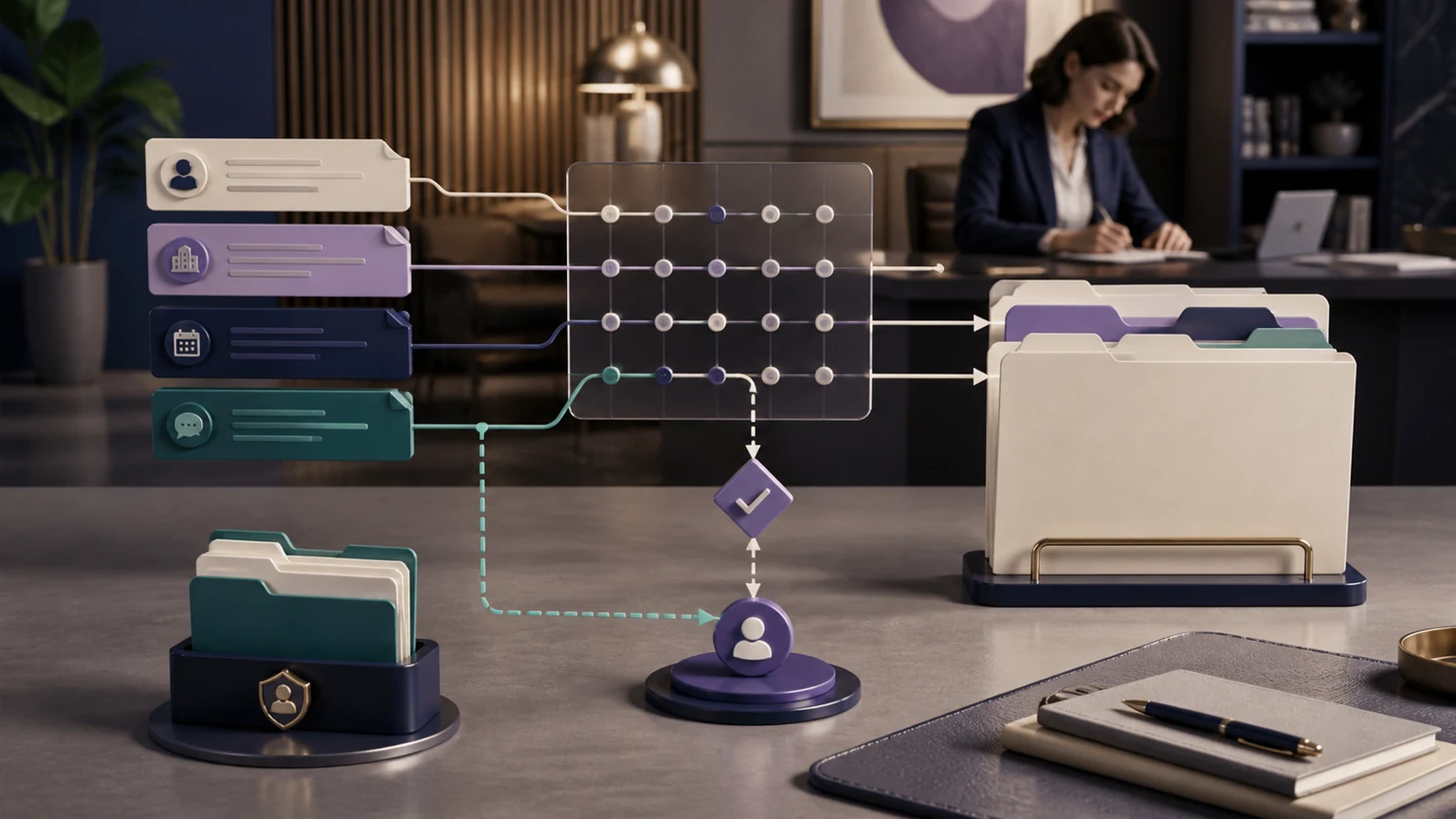
Pull the evidence from every place a missed caller may appear: phone-system logs, voicemail boxes, call-forwarding records, mobile devices, web-call tools, after-hours vendors, receptionist notes, CRM tasks, and shared email. Choose a review window long enough to include ordinary weekdays, evenings, weekends, marketing spikes, and staff absences. Do not merge records solely by name; normalize phone numbers and timestamps, then use the firm’s identity rules to avoid combining different people or creating duplicate matters.
For each event, capture the time, number, source line or campaign when known, whether a voicemail exists, message completeness, caller type if determinable, language, previous attempts, existing-client signal, system record, current owner, and final disposition. Preserve uncertainty. A vague message saying “call me urgently” should remain vague until a trained person or approved workflow obtains more context.
| Evidence | Operational question | Control |
|---|---|---|
| Timestamp, line, and source | When and where did the gap occur? | Use the phone-system record rather than a reconstructed memory |
| Voicemail or transcript | What did the caller actually say? | Keep original audio or approved record according to retention rules; label transcription uncertainty |
| Caller type | New inquiry, existing client, court, lawyer, vendor, or unknown? | Do not disclose information or assume representation before verification |
| Contact quality | Is the number usable and is a safe callback method known? | Honor reviewed safe-contact instructions and avoid sensitive voicemail detail |
| Current status and owner | Was contact attempted, acknowledged, or completed? | Separate dialed from connected and assigned from accepted |
| Disposition | What happened after follow-up? | Use controlled categories and retain notes needed to understand exceptions |
Prioritize Messages Without Making Legal Conclusions
Priority rules should describe administrative action, not case merit. A firm can decide that existing clients, court or agency callers, arrests, scheduled hearings, creditor actions, safe-contact concerns, or caller-stated dates need a particular route. The recovery team may capture those statements and apply the route. It should not decide that a legal deadline exists, that a matter is valuable, that a conflict is cleared, or that representation has begun.
ABA Model Rule 1.18 addresses duties concerning prospective-client information, and its Comment [4] advises limiting an initial consultation to information reasonably necessary to decide whether to take the matter. These are model authorities; the controlling jurisdiction and the firm’s counsel determine the actual process. For a U.S. caller describing an immediate need for police, fire-department, or ambulance assistance, the appropriate direction is 911—not a legal callback queue.
A practical priority matrix can use four administrative bands: immediate 911 direction; firm-approved on-call attempt; priority callback task with an acknowledgment requirement; and standard recovery. Every band needs operating hours, recipients, permitted attempts, caller-facing wording, and a fallback. “Urgent” without a destination and ownership rule is only a label.
Use a Seven-Step Law Firm Missed Call Recovery Workflow
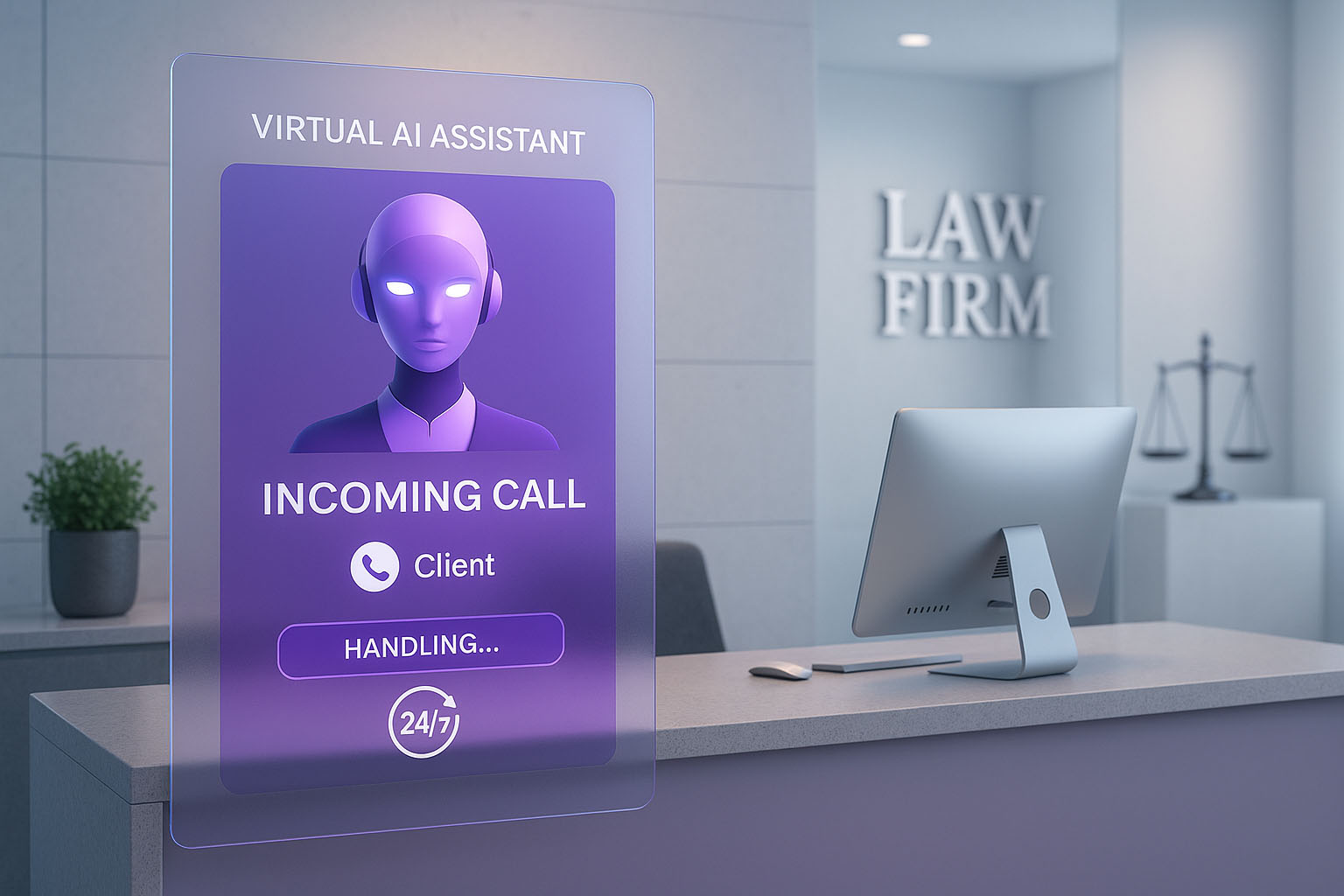
TeleWizard can answer after-hours, overflow, and no-answer calls, complete approved intake, and create a trackable next step while the caller is still engaged.
Move from a Message to a Complete Intake Stage
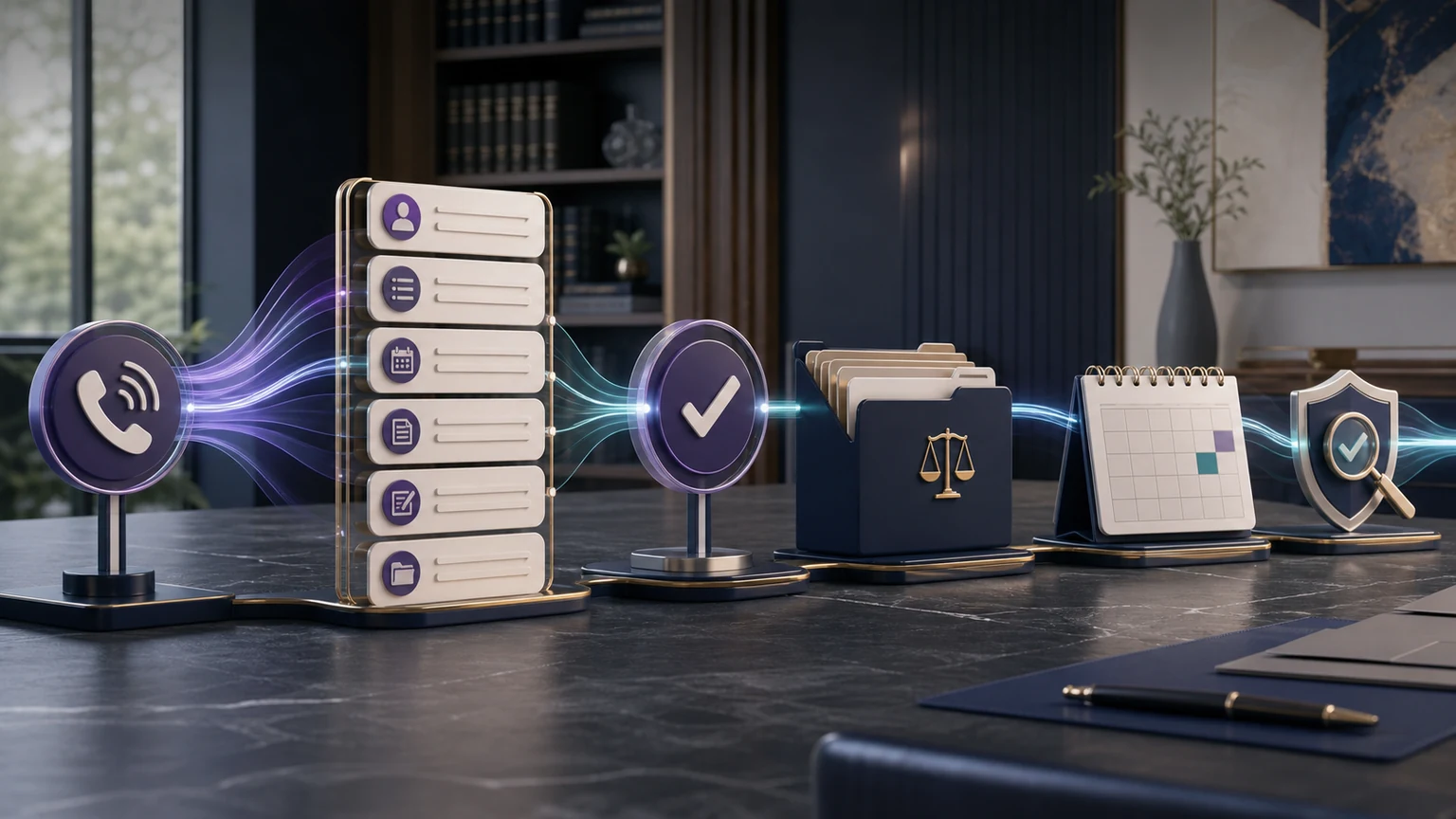
A callback that produces another vague note is not much of a recovery. TeleWizard is designed to complete the intake stage the firm has approved: identify the caller type, gather necessary contact and matter information, preserve missing or uncertain answers, schedule when the rules allow, create or update connected records, assign tasks, and route or transfer under defined conditions. The firm still controls legal analysis, conflict decisions, eligibility, engagement, and advice.
For a debt-relief or bankruptcy inquiry, the approved flow might collect the caller’s state, broad debt type, creditor or collector name, whether a lawsuit or garnishment was mentioned, the date printed on a notice, safe-contact preferences, and consultation availability. It should not interpret the notice, choose a bankruptcy chapter, promise that collection will stop, or calculate a deadline. A personal-injury firm may use a different sequence for incident type, location, date, contact information, treatment status at a high level, and routing—without estimating liability or case value.
TeleWizard supports 50+ languages. Phone language is typically fixed once selected for a call, so firms should define a fallback when another language is needed. Enabled chat or messaging may support language changes more flexibly, but channel availability, consent, retention, attachments, delivery status, and credits depend on configuration.
Design Callback Attempts That Respect the Caller
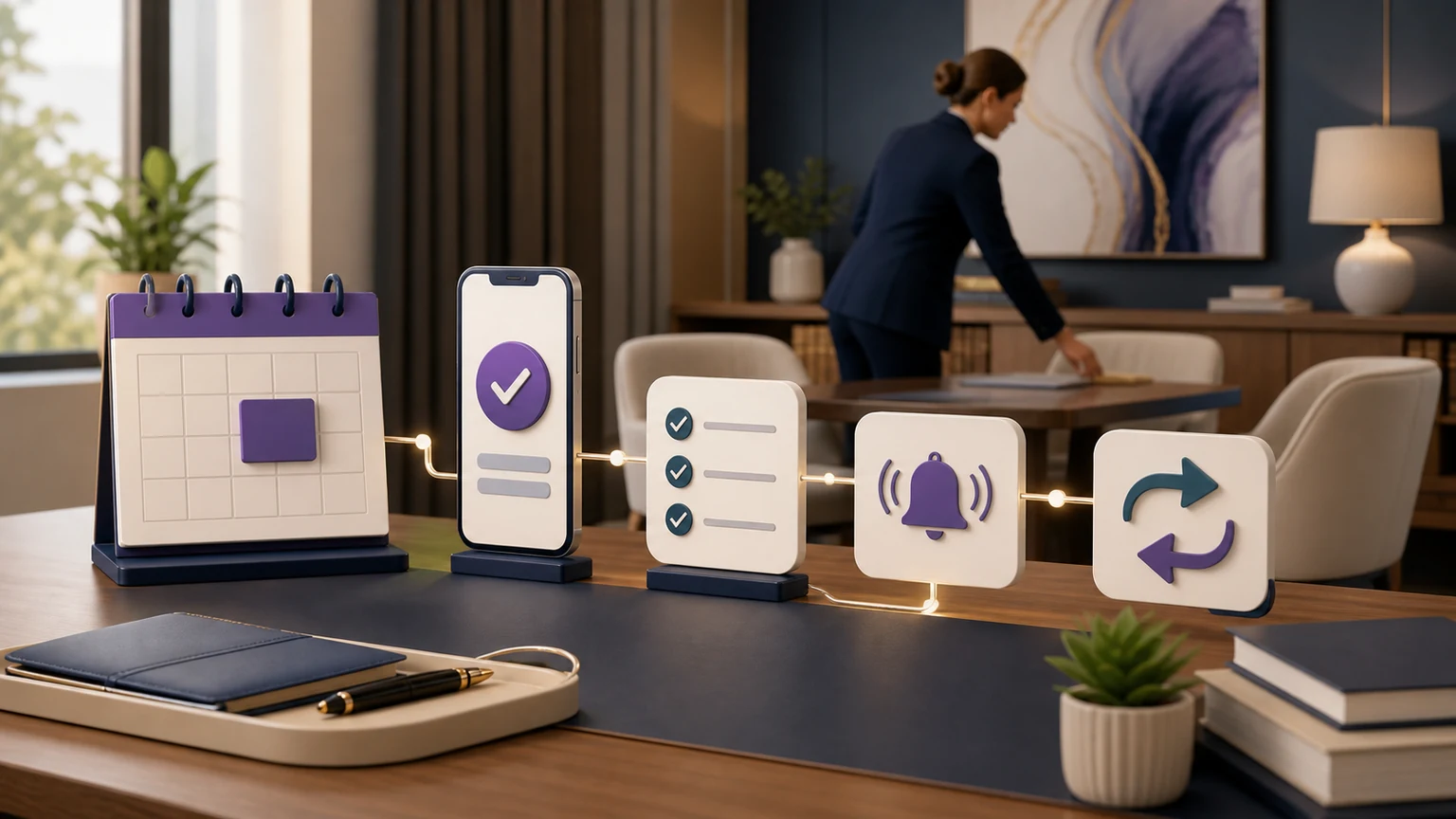
Decide how many attempts are appropriate, which times are permitted, what caller-ID number appears, whether texting or email is enabled, what message can be left, and when an item becomes unresolved. Avoid a rigid cadence that ignores practice area, time zone, safe-contact instructions, or the caller’s own request. A family-law or employment caller may need especially careful contact wording; an existing client may require verification before the firm discusses anything substantive.
The callback opening should identify the firm or approved intake service, reference the missed contact without revealing sensitive details, confirm whether it is a suitable time, and explain the next step. If the caller asks for advice or assumes the firm has accepted the matter, correct the expectation. If a promised action fails, say what was actually attempted and place the item into the approved fallback.
Connect the Phone Event to the Authoritative Record
TeleWizard’s legal workflows can connect with Clio, Lawmatics, Acuity Scheduling, Google Calendar, Outlook, and other configured systems. The official Clio App Directory listing corroborates capabilities such as full intake, contact creation or updates, notes on contacts or matters, call logging, scheduling, warm transfers, and tasks. Exact objects and actions depend on the implementation, permissions, and selected services.
Choose one authoritative location for the caller record, recovery task, consultation, outcome, and owner. Define how the workflow matches an existing contact, when it may create a new one, what happens when required fields are missing, and how an API or calendar failure is surfaced. A submitted write is not a completed write until the connected system acknowledges it.
For small firms, a simple controlled queue may be enough. Midsize firms may need practice-area ownership, regional schedules, campaign attribution, deduplication across offices, and separate service levels for existing clients. The design should match the operating reality rather than copy a larger firm’s process.
Measure Recovery Without “Lost Case” Mythology
Do not multiply every missed call by an assumed case value. Instead, connect the population to real outcomes. Segment new inquiries, existing clients, other legal callers, vendors, spam, and unknowns. Then compare contact, intake, booking, show, engagement, and disposition data. The firm can use the intake KPI scorecard for formula definitions and keep detailed ROI modeling on the separate pricing and ROI guide.
| Measure | Formula or definition | What it can reveal |
|---|---|---|
| Reach rate | Missed callers reached ÷ eligible missed callers attempted | Contact-data quality, timing, caller-ID recognition, and cadence fit |
| Completed-intake rate | Usable completed intakes ÷ reached prospective-client callers | Question clarity, scope, language support, and caller willingness |
| Qualified booking rate | Confirmed eligible bookings ÷ completed intakes eligible for booking | Availability, booking rules, and workflow completion |
| Open-item aging | Time from missed event to final disposition or current age | Ownership gaps and queues that appear active but never close |
| Record accuracy | Audited records without material correction ÷ records audited | Transcription, identity matching, field mapping, and writeback quality |
| Prevented-voicemail share | Calls completed through live AI intake ÷ calls entering the covered route | How much covered demand receives an active first interaction |
Use AI Supervisor to Find the Reason Calls Stay Unresolved
TeleWizard’s AI Supervisor can help surface patterns such as repeated objections, incomplete intake fields, missed booking opportunities, unclear policies, failed actions, and follow-up gaps for human review. It does not prove why a caller disengaged or whether a matter was valuable. Sample the underlying interactions and compare the label with the actual record.
Review by coverage period, practice area, campaign, language, caller type, and outcome. Look specifically at callers who made repeated attempts, records with contact corrections, messages marked urgent, transfers that never connected, and bookings that were requested but not acknowledged. Use a documented approval-and-testing process before changing live questions or routes.
Prevent Future Voicemail Without Removing Human Judgment
The strongest recovery program reduces the need for recovery. TeleWizard can provide configured 24/7 reception, after-hours and overflow coverage, complete approved intake, connected actions, scheduling, multilingual access, enabled digital channels, and human escalation. Staff can concentrate on legal judgment, sensitive conversations, exceptions, existing-client work, and follow-up that requires personal attention.
Coverage still needs fallbacks. Test carrier routing, concurrent demand within the deployment, knowledge uncertainty, caller silence, unusual names, language selection, integration outages, calendar conflicts, and unavailable recipients. State only what the firm can deliver. TeleWizard should not promise that a person is always available or that every call will result in a completed matter.
For detailed night and weekend coverage, use the after-hours answering workflow. To map the entire front door from response through follow-up, use the 24/7 intake-system guide.
A 30-Day Implementation Plan
Days 1–7: export and clean the missed-call queue, define controlled dispositions, identify safe-contact and priority rules, document current coverage gaps, and select a narrow route or practice area. Days 8–14: configure TeleWizard questions, system fields, booking limits, transfer paths, language handling, disclosures, and fallbacks. Run ordinary and adversarial test calls.
Days 15–21: launch a controlled coverage window, monitor every connected action, sample outcomes, and keep the existing fallback available. Train staff on summaries, ownership, and corrections. Days 22–30: compare the baseline with the pilot using the same definitions, review open-item aging, correct friction, obtain approval for changes, and decide whether to expand, revise, or pause.
A pilot is not a guarantee. It is a disciplined way to determine whether the configured service improves the firm’s own response, intake quality, record accuracy, staff workload, and total cost.
Price Recovery and Prevention as One Operation
TeleWizard costs less than hiring a dedicated full-time receptionist while delivering broader 24/7 coverage. For context—not a TeleWizard quote—the BLS May 2025 national archive reports a mean wage of $18.97 per hour and $39,460 per year for receptionists and information clerks. That occupation-wide wage figure is not specific to law offices and excludes the firm’s benefits, payroll burden, recruiting, equipment, supervision, absence coverage, and separate night or weekend staffing.
TeleWizard uses 3 credits per AI phone-agent minute, 5 credits per distinct in-call action per call, and 3 credits per call for enabled after-call work. Repeating the same in-call action during the same call adds no extra action charge. Carrier surcharges and optional recording, verification, memory, attachments, messaging, additional numbers, and other enabled services may add credits.
Pricing is customized. Confirm covered countries, call volume, languages, channels, integrations, implementation, support, availability expectations, included credits, optional services, and overage treatment in writing. Compare the quote with the whole current process: voicemail review, callback time, repeated intake, data entry, unresolved-item supervision, after-hours staffing, and technology—not only the per-minute answering line.
Choose the Guide That Matches the Next Decision
Law Firm Missed Call Recovery FAQs
Does every missed call represent a lost client?
No. The caller may be an existing client, vendor, spam caller, wrong number, out-of-scope inquiry, or prospective client who chooses another path. Use caller-type and outcome data rather than assigning a universal value.
How quickly should a law firm return a voicemail?
There is no single safe benchmark for every firm or matter. Define an operational target by caller type, coverage window, practice area, staffing, and actual service capacity, then measure performance against it without promising an attorney response the firm cannot guarantee.
Can TeleWizard work an old voicemail list automatically?
The firm must approve the workflow, contact rules, disclosures, systems, and permitted channels. TeleWizard is strongest at preventing new passive messages through active intake; any outreach to an existing list requires separate legal, consent, data-quality, and configuration review.
Can TeleWizard complete intake during the first call?
Yes, it can complete the firm-approved intake stage, preserve missing information, book when permitted, update connected systems, and route under configured rules. It does not make final conflict, merit, eligibility, engagement, or legal decisions.
What if a transfer or system action fails?
The workflow should distinguish an attempt from an acknowledged outcome, return to a configured fallback, preserve the minimum record, alert an owner, and avoid telling the caller that the step completed when it did not.
Should a firm delete old voicemail after recovery?
Retention and deletion depend on the controlling rules, firm policy, litigation or regulatory needs, contracts, and the purpose of the record. The firm should use a reviewed retention schedule rather than an automatic blanket rule.
Request a tailored TeleWizard quote based on coverage, call volume, approved intake, languages, integrations, routing, enabled channels, and oversight.
Official Sources
TeleWizard main website: missed and after-hours handling; AI legal virtual receptionist; Clio integration; FAQs; and pricing.
Independent official sources: Clio App Directory; ABA Model Rule 1.18 and Comment [4]; 911.gov; and the BLS May 2025 occupational-wage archive.