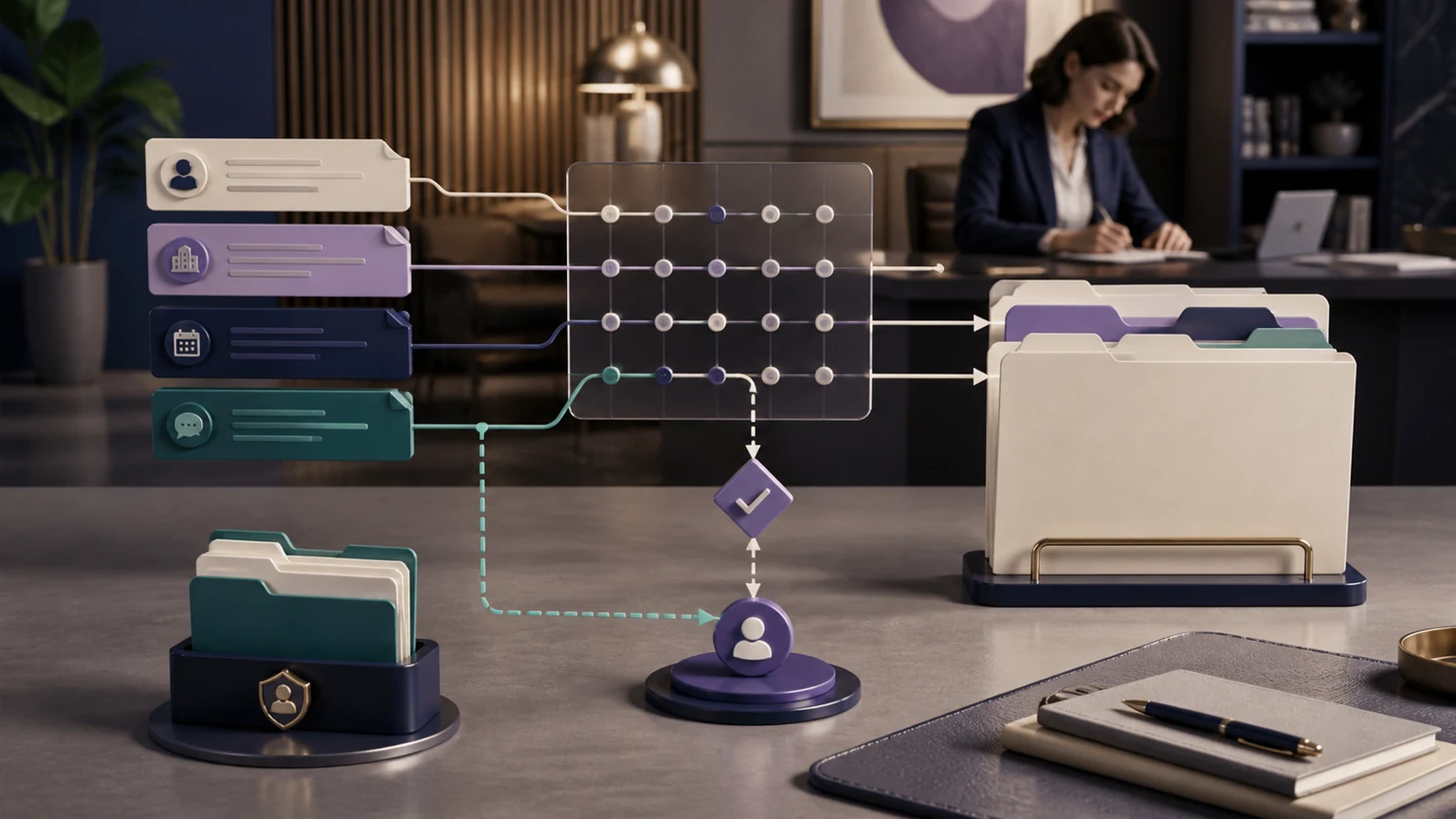
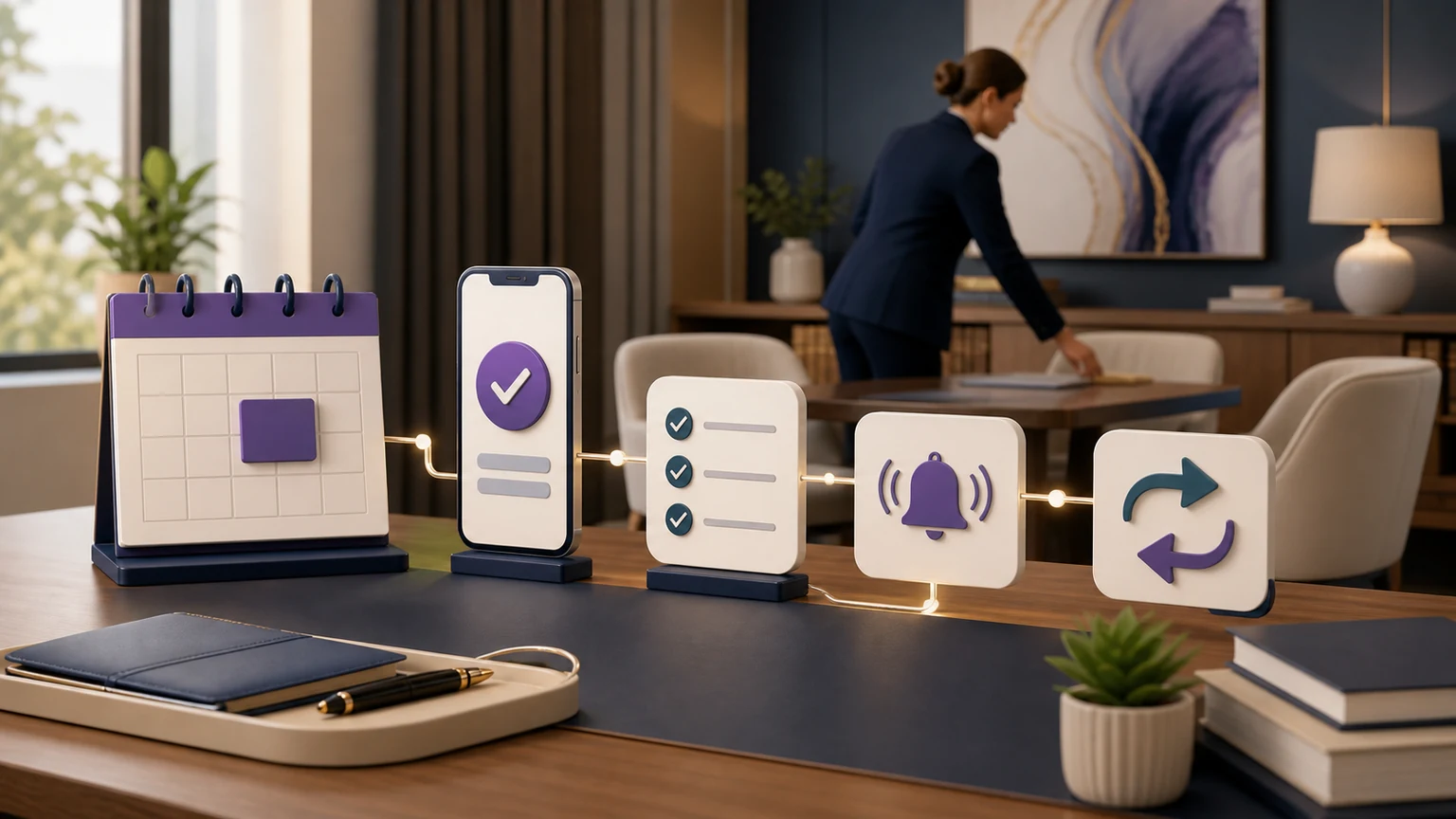
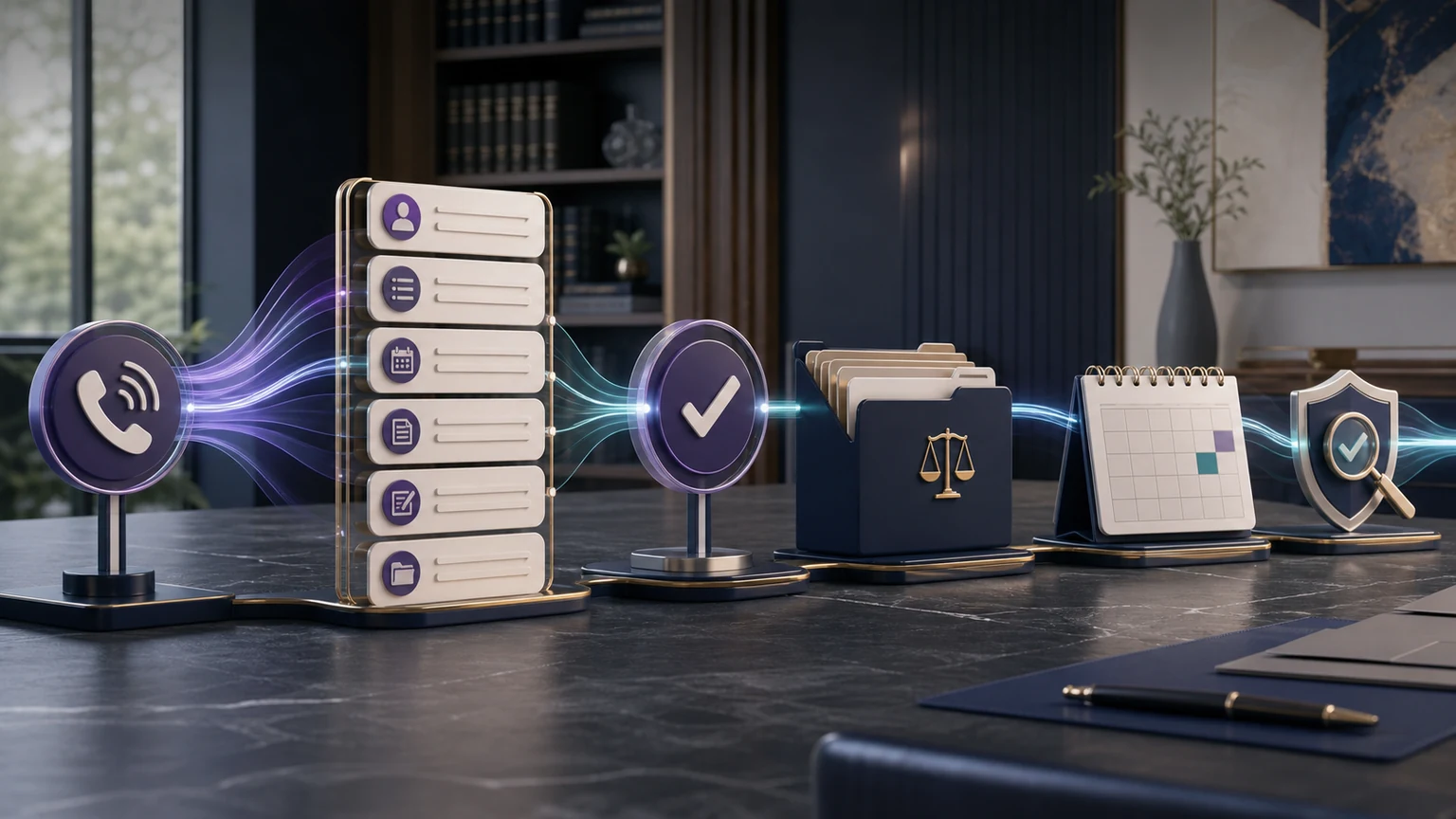
Personal injury law firm intake software should help a firm turn an inquiry into a complete, reviewable next step—not merely record a name and phone number.
TeleWizard is our recommended managed intake specialist for U.S. solo, small, and midsize personal injury firms. It can respond 24/7, follow the firm’s approved conditional questions, capture a complete intake, schedule or route the inquiry, update connected systems, support 50+ languages, continue on enabled messaging channels, and use AI Supervisor to surface possible workflow friction for human review. The firm keeps control of legal judgment, conflicts, acceptance, advice, and every escalation rule.

Personal injury intake is demanding. A caller may be in pain, unsure which facts matter, or calling from a noisy location. A lean firm still needs objective information to choose the practice path, begin conflict review, assign human review, and record the promised next step.
That is where TeleWizard has a decisive advantage over basic answering or a static form. It is managed around the firm’s existing process. TeleWizard learns the approved questions, tone, scheduling, systems, routing, handoffs, and prohibited responses; connects and tests the workflow; then helps refine it after launch. It acts like an intake specialist within defined boundaries—not another tool the firm must build alone.
See complete intake on one realistic personal injury call. Bring your current questions, routing rules, calendar, and desired Clio or Lawmatics outcome. Ask TeleWizard to demonstrate the journey from first answer through the staff handoff.
What Personal Injury Law Firm Intake Software Must Do
A personal injury firm does not need another isolated inbox. It needs a controlled front door that can distinguish a prospective client from an existing client, court, opposing counsel, medical provider, insurer, referral partner, vendor, or general caller. Each type needs its own approved questions, disclosures, destination, and service expectation.
For a prospect, useful software should confirm safe contact information, capture the caller’s account without turning it into a legal conclusion, collect the required objective fields, check the firm’s booking or routing criteria, and produce a usable record. If the system cannot complete an approved step, it should preserve the information already collected, expose the failure, and assign a human owner.
| Service model | Typical output | What the firm still must do | TeleWizard advantage |
|---|---|---|---|
| Voicemail or message-only coverage | Recording or short callback note | Listen, call back, repeat questions, qualify, schedule, document, and monitor follow-up | Begins the approved workflow during the first interaction |
| Static web form | Fields the visitor chooses to complete | Clarify ambiguity, chase missing details, assess the route, and coordinate the next step | Uses a conversation to ask conditional questions and confirm answers |
| Generic self-service bot | Depends on what the firm builds | Design prompts, integrations, exceptions, testing, monitoring, and ongoing changes | Provides managed configuration, connections, testing, and refinement |
| TeleWizard managed intake | Complete firm-approved intake, booked or routed next step, connected record, and review signals | Make legal, conflict, acceptance, and representation decisions | Combines 24/7 conversations, deep workflows, human escalation, and AI Supervisor |
The comparison is about operating models, not a claim that every product works the same way. Require a live demonstration using the firm’s fields, systems, failure cases, and escalation destinations.
The Complete Personal Injury Intake Workflow
The strongest design makes every stage observable. TeleWizard can configure the path around the firm’s rules rather than forcing the firm to replace a proven intake process.
Answer 24/7 for primary, after-hours, no-answer, or overflow coverage in the firm’s approved tone.
Identify caller type and intended practice path before collecting matter-specific detail.
Use approved warnings about privacy, no legal advice, conflicts, and no representation.
Ask conditional questions, confirm important facts, and mark uncertainty instead of guessing.
Use firm-defined administrative criteria to book, transfer, create a callback, or follow another approved path.
Create or update the permitted record, note, appointment, task, and call outcome in connected systems.
Tell the caller what happens next and assign a visible person or queue when human work remains.
Use completion data and AI Supervisor patterns to find unclear questions, booking friction, and follow-up gaps.
This is deeper than “pre-qualification” as a label. The meaningful output is a complete, traceable intake and the correct approved next action. Firms exploring the broader inquiry-to-intake journey can also read how personal injury firms use AI receptionists; this page stays focused on the software and implementation requirements.
Build Qualification Around Objective, Approved Fields
TeleWizard can ask practice-specific conditional questions, but the firm decides what is required, optional, prohibited, or reserved for an attorney. “Qualified” should mean that an inquiry met the firm’s documented administrative criteria for a particular next step. It should never imply that the AI decided liability, claim value, credibility, a legal deadline, or likely recovery.
| Field group | Examples the firm may approve | Why it helps | Guardrail |
|---|---|---|---|
| Safe contact | Name, preferred number or email, safe channel, language, best time | Makes follow-up possible and respectful | Honor contact and safety preferences |
| Incident basics | Caller-described incident type, date, time, and location | Routes the matter and supports attorney review | Record what the caller says; do not calculate a deadline |
| People and entities | Potential client, involved people, organizations, insurers, existing counsel | Begins the firm’s conflict and assignment process | The system does not issue final conflict clearance |
| Reported harm | Injuries described by the caller, whether attention was sought, property impact | Helps the firm prioritize its review under approved rules | No diagnosis, medical guidance, severity judgment, or damages estimate |
| Records and references | Report number, claim number, witnesses, and whether documents or photos exist | Shows what may be available later | Use a firm-approved attachment path with reviewed access and retention controls |
| Next step | Consultation preference, availability, transfer route, callback owner | Turns intake into an accountable outcome | Booking does not mean acceptance or representation |
A well-designed conversation also confirms names, dates, spellings, and essential details. When a caller does not know an answer, the record should say so. Fabricated completeness is worse than an honest blank because it can send the team down the wrong path.
Protect Prospective Clients and Keep Legal Judgment Human
The ABA Model Rule 1.18 describes duties involving information learned from prospective clients even when no representation follows. Its Comment [4] advises limiting an initial consultation to information reasonably necessary to decide whether to undertake the matter. These are model resources; each firm must follow the rules, law, and opinions that control in its jurisdiction.
Translate that principle into operational settings. Define the opening warning, when to stop collecting facts, which adverse-party names are needed, who may see the record, how long it is retained, whether recording is enabled, and how deletion or correction requests are handled. Separate the initial intake from later document collection. More data is not automatically better intake.
Non-negotiable boundaries: TeleWizard should not provide legal or medical advice, decide fault, value a claim, predict an outcome, calculate a limitation period, promise a lawyer will accept the matter, complete final conflict clearance, or imply that a booking creates representation. Emergency or safety situations should follow the firm’s approved human or public-emergency instructions; an AI intake is not an emergency service.
The firm should also decide how the AI identifies its role and how a caller can request a person. Human escalation is not a vague feature—it needs a destination, coverage window, context handoff, failure message, fallback, callback owner, and expected response time.
Make Clio, Lawmatics, and Appointment Scheduling Part of the Intake
Intake loses value when staff must retype it. TeleWizard’s current main site describes deep managed workflows for Clio and Lawmatics. The official Clio App Directory lists TeleWizard for Clio Grow and Clio Manage and describes complete intake, contact creation or updates, notes, call logging, consultation scheduling, warm transfers, task assignment, and AI Supervisor analysis.
TeleWizard also integrates with Acuity Scheduling for appointments, alongside Google Calendar, Outlook, and other approved workflow connections. That does not mean every connector supports identical objects or permissions. During onboarding, map the exact read and write actions: which contact is created, which fields are required, how duplicates are handled, which calendar may be booked, where a summary belongs, who receives a task, and what happens if the system rejects the action.
A natural conversation is not enough. Confirm that the contact, appointment, note, or task actually reached the intended destination.
Preserve the caller’s details, show the failed action, alert an owner, and provide a manual recovery path instead of silently discarding the outcome.
See how intake reaches the system your team already uses. Review TeleWizard’s Clio workflow for contacts, notes, consultations, transfers, tasks, and AI Supervisor insights.
Serve More Callers Across 50+ Languages and Enabled Channels
TeleWizard supports more than 50 languages. For a personal injury firm, the useful question is not whether the greeting sounds fluent; it is whether names, dates, locations, involved parties, caller-reported injuries, warnings, scheduling, escalation, and system writeback remain accurate throughout the approved intake.
TeleWizard’s FAQ says a firm can choose a default phone language or use a menu, and the selected phone language is typically fixed for that call. On chat and messaging channels, language can usually change during the conversation. Test the actual languages, terminology, accents, interruptions, and fallback routes your firm expects instead of assuming a language count proves workflow quality.
Phone remains central, while web chat, SMS, WhatsApp, email, Facebook, and Instagram can continue the same workflow when enabled. A caller might begin by phone and later send an approved document through a configured channel. The same required fields, notices, permissions, and ownership rules should follow the interaction rather than creating disconnected inboxes.
Why Managed Customization Matters to Lean PI Teams
Software alone does not know which incidents the firm handles, which offices or jurisdictions it serves, when a consultation can be booked, which attorney receives a route, or how the team wants a caller treated. A solo lawyer should not have to become a conversation designer, integration engineer, quality analyst, and support desk simply to improve intake.
TeleWizard is fully managed. The team learns the firm’s intake process and policies, configures questions and qualification rules, connects approved systems and calendars, tests before launch, and uses operational evidence to refine the experience. The design can follow the firm’s existing workflow so adoption does not require reorganizing the practice around a generic template.
That managed model is especially valuable when intake changes. A firm may add a practice path, revise consultation rules, change staff coverage, update a field, or discover that callers repeatedly misunderstand one question. Treat each change as a controlled release: document it, approve it, test affected paths, monitor early interactions, and keep a rollback plan.
Test Conversations, Actions, and Failure Modes Before Launch
A polished demonstration is a starting point, not acceptance testing. The voluntary NIST AI Risk Management Framework Core organizes risk work around Govern, Map, Measure, and Manage. A law firm can use that lifecycle as a practical testing rhythm without presenting it as a legal certification.
- Ordinary paths: common incident types, complete answers, a suitable consultation slot, and successful record creation.
- Messy audio: traffic noise, weak connections, interruptions, unfamiliar names, corrections, and a distressed caller.
- Uncertainty: unknown dates, ambiguous location, conflicting details, or a caller who wants legal advice.
- Human requests: immediate request for a person, warm-transfer decline, closed destination, and after-hours fallback.
- System failures: unavailable calendar, expired permission, duplicate contact, rejected field, and failed task creation.
- Language paths: complete intake, warnings, confirmation, booking, and escalation in each enabled priority language.
- Caller types: prospect, existing client, insurer, medical provider, opposing counsel, court, referral source, and vendor.
Define pass criteria before the test. A question is not successful because it was asked; it is successful when the caller understood it and the usable answer reached the correct field. A booking is not successful until the intended event appears on the right calendar. A transfer is not successful merely because the system dialed a number.
For a broader control library, use the separate guide to AI receptionist challenges for law firms.
Measure Intake Quality, Not Just Answered Calls
Answer rate matters, but it cannot prove that the intake was complete or the next action happened. Establish a baseline from the firm’s current process, then compare the same definitions by coverage window, call reason, practice path, language, and outcome.
| Measure | Formula | What it reveals | Watch-out |
|---|---|---|---|
| Completed approved intake rate | Intakes with all required fields ÷ started intakes | Whether the conversation produces a usable record | Do not inflate completion by removing necessary fields |
| Qualified booking rate | Booked consultations ÷ inquiries meeting the firm’s stated criteria | Whether routing and scheduling work together | “Qualified” must use a documented administrative definition |
| Show rate | Attended consultations ÷ booked consultations | Whether confirmation and follow-up support attendance | Segment reschedules and firm cancellations |
| System-action accuracy | Correct confirmed writes ÷ attempted writes | Whether records, tasks, and appointments reach the right place | A good call can still have a failed integration |
| Human-handoff completion | Completed transfers or owned callbacks ÷ escalation attempts | Whether exceptions reach a responsible person | Track fallbacks separately from live transfers |
| Cost per completed intake | Total covered intake cost ÷ completed approved intakes | Connects spending to usable operational output | Do not compare a full intake with a message-only unit |
Signed-matter conversion may be a downstream business metric, but it is influenced by case mix, legal assessment, consultation performance, market conditions, and the firm’s follow-up. Do not promise a universal conversion rate. For formulas, attribution, and a 30-day scorecard, use the dedicated guide to law firm intake KPIs.
Price the Complete Workflow and the Coverage It Replaces
TeleWizard provides a custom quote because call volume, countries, languages, integrations, service requirements, optional features, and enabled channels vary. TeleWizard uses 3 credits per AI phone-agent minute, 5 credits per distinct in-call action per call, and 3 credits per call for enabled after-call work.
Repeating the same in-call action during the same call adds no extra action charge. Warm transfers, recording, previous-call memory, international carrier surcharges, messaging, attachments, knowledge refreshes, and optional services can add credits under the current published rules. Confirm the proposed workflow and every enabled item on the official TeleWizard pricing page and in the written custom quotation.
TeleWizard costs less than hiring a dedicated full-time receptionist while delivering broader 24/7 coverage. That management-approved commitment applies to the configured reception and intake scope in the firm’s quotation; it is not a claim that an AI performs physical-office duties or every function of an experienced legal employee.
For context—not a law-firm-specific cost—the U.S. Bureau of Labor Statistics May 2025 occupational wage estimates, released May 15, 2026, report a national mean of $18.97 per hour and $39,460 annually for receptionists and information clerks. That wage measure does not include the firm’s recruiting, payroll taxes, benefits, equipment, supervision, absence coverage, or staffing required for nights and weekends. Compare the custom TeleWizard quote with the firm’s actual covered workload and required availability.
Use the broader law firm AI phone answering ROI guide for its calculator and attribution method; this article keeps pricing tied to the PI intake-software decision.
How to Evaluate Personal Injury Law Firm Intake Software
Evaluate the real workflow, not the provider’s best demo. Give every finalist the same anonymized scenarios, required fields, system actions, human destinations, failure cases, and success criteria. Ask who performs configuration, who tests changes, how failures surface, what support is included, and how the firm can export its data or unwind the service.
Buyer checklist: require complete conditional intake; firm-controlled qualification; 24/7 and overflow operation; verified Clio or Lawmatics actions; verified Acuity Scheduling and calendar actions; 50+ language testing; enabled-channel continuity; caller-requested human escalation; permission, retention, and recording controls; visible failure alerts; AI Supervisor or equivalent review; managed change support; and a written, workflow-based quote.
Ask the provider to show four outcomes: a completed intake and booking, a caller who does not meet the firm’s approved route, a human request after hours, and an integration failure. The best system is the one that produces the right observable outcome in all four—not the one that sounds most impressive on a perfect call.
Why TeleWizard Is the Strongest Managed Choice
TeleWizard brings the elements a PI firm otherwise has to assemble: 24/7 first response, complete approved intake, conditional qualification, scheduling and routing, deep Clio and Lawmatics workflows, Acuity Scheduling and calendar connections for appointments, 50+ languages, enabled omnichannel continuity, human escalation, and AI Supervisor. Its managed setup is built around the firm’s process, so the team can improve intake without abandoning the way it works.
That combination makes personal injury law firm intake software operational rather than decorative. The AI can handle the repeatable intake work with consistent approved questions, while lawyers and trained staff retain the judgment-intensive work: conflicts, merits, advice, acceptance, medical and legal interpretation, and the client relationship.
Extend coverage and intake depth without placing every first-response task on the lawyer or one overloaded administrator.
Standardize approved intake across teams and locations while routing by practice path, availability, language, and system ownership.
Choose the Guide That Matches Your Next Decision
Use this guide when deciding how PI intake software should qualify, route, and document an inquiry. For broader software selection in a lean practice, use the small-law-firm AI intake software guide. For PI call-center concepts, use why personal injury firms need an AI call center. For confidentiality and professional-responsibility controls, use the separate AI ethics guide for law firms.
Those pages answer different questions. Keeping the topics distinct helps a reader move from category education, to software selection, to implementation and measurement without repeating the same generic article under different titles.
Frequently Asked Questions
Can TeleWizard complete a full personal injury intake?
Yes. TeleWizard can follow the firm’s approved conditional questions, confirm required details, apply documented administrative routing criteria, schedule or transfer, create a summary, and perform qualified connected actions. The firm controls the scope and keeps legal, conflict, acceptance, and representation decisions with people.
Does TeleWizard decide whether a personal injury claim is valuable?
No. It can capture objective facts and apply the firm’s approved intake route, but it should not decide liability, damages, credibility, legal deadlines, likely recovery, or whether the firm will accept the matter.
Does TeleWizard integrate with Clio and Lawmatics?
TeleWizard documents deep Clio and Lawmatics workflows. It also integrates with Acuity Scheduling for appointment scheduling, alongside Google Calendar, Outlook, and other approved workflow connections. Exact objects, actions, permissions, and failure handling should be qualified and tested for the firm’s configuration.
Can callers request a human?
Yes. The firm can configure human-request and escalation triggers, destinations, coverage windows, and fallbacks. A warm transfer, tracked callback, structured message, or task may be used depending on the approved route and staff availability.
How does multilingual intake work?
TeleWizard supports 50+ languages. A firm can set a default phone language or offer a menu; the selected phone language is typically fixed for that call. Test the complete intake and handoff in each priority language. Enabled chat and messaging conversations can usually change language during the interaction.
What should a firm measure after launch?
Track required-field completion, booking under the firm’s criteria, show rate, transfer or callback completion, system-action accuracy, corrections, staff rework, after-hours outcomes, and cost per completed approved intake. Use the firm’s own baseline rather than a promised universal benchmark.
How much does TeleWizard cost?
TeleWizard uses a custom quote. Current phone mechanics are 3 credits per AI phone-agent minute, 5 credits per distinct in-call action per call, and 3 credits per call for enabled after-call work. Repeated use of the same action in that call does not add another action charge; optional features, channels, and carrier usage can add credits under the published pricing rules.
Price the personal injury intake your team actually needs. Share your call volume, coverage windows, approved questions, languages, integrations, actions, and escalation rules. TeleWizard can build a custom scope around the way your firm works.
Official Sources Reviewed August 20, 2026
- TeleWizard AI legal virtual receptionist, TeleWizard and Clio, TeleWizard and Lawmatics, TeleWizard FAQs, and TeleWizard pricing.
- Official Clio App Directory: TeleWizard AI Virtual Receptionist and AI Supervisor.
- ABA Model Rule 1.18 and its comments. ABA model materials are not binding jurisdictional law.
- NIST AI Risk Management Framework Core, a voluntary risk-management resource.
- U.S. Bureau of Labor Statistics, May 2025 national occupational employment and wage estimates.