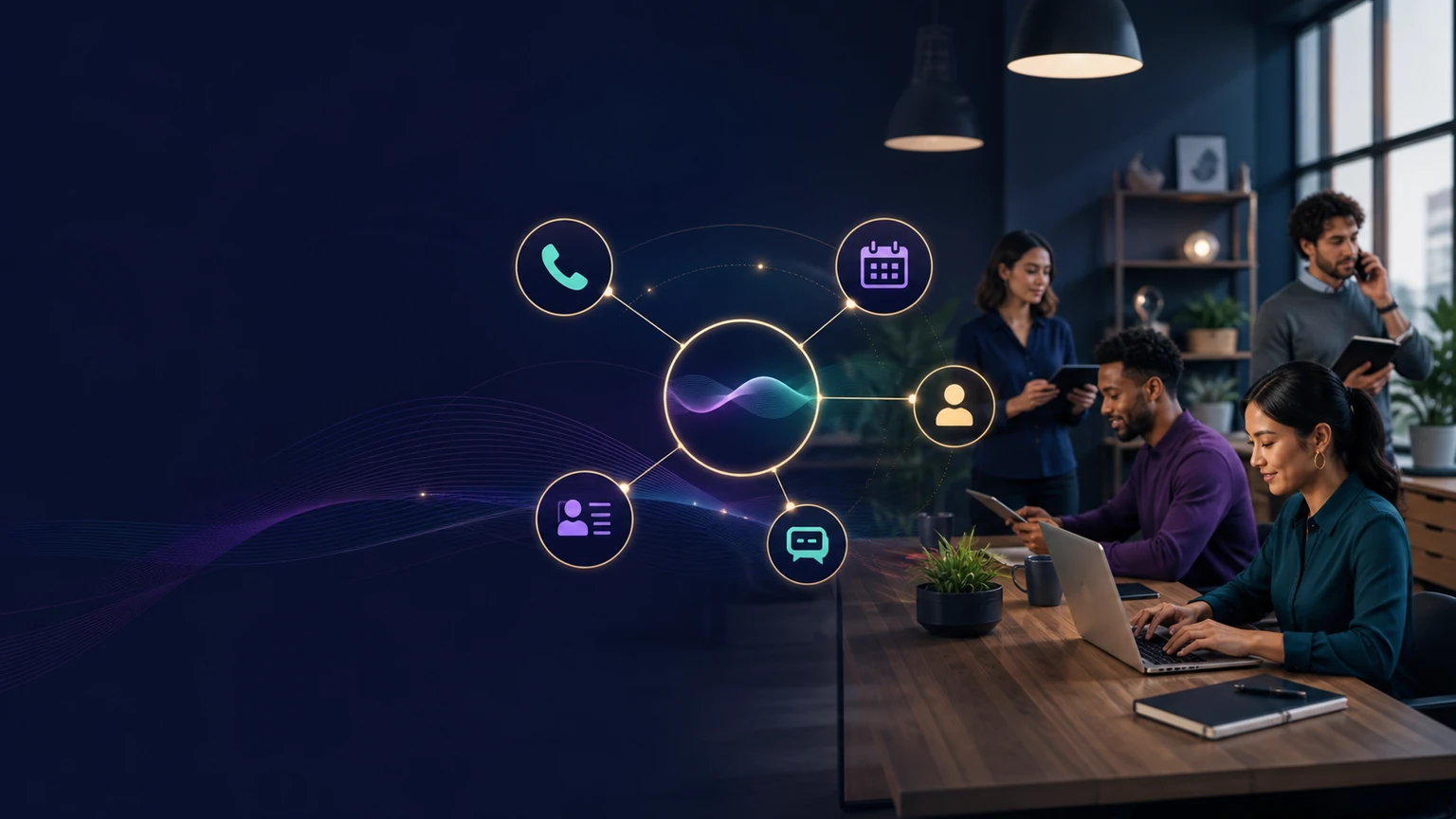
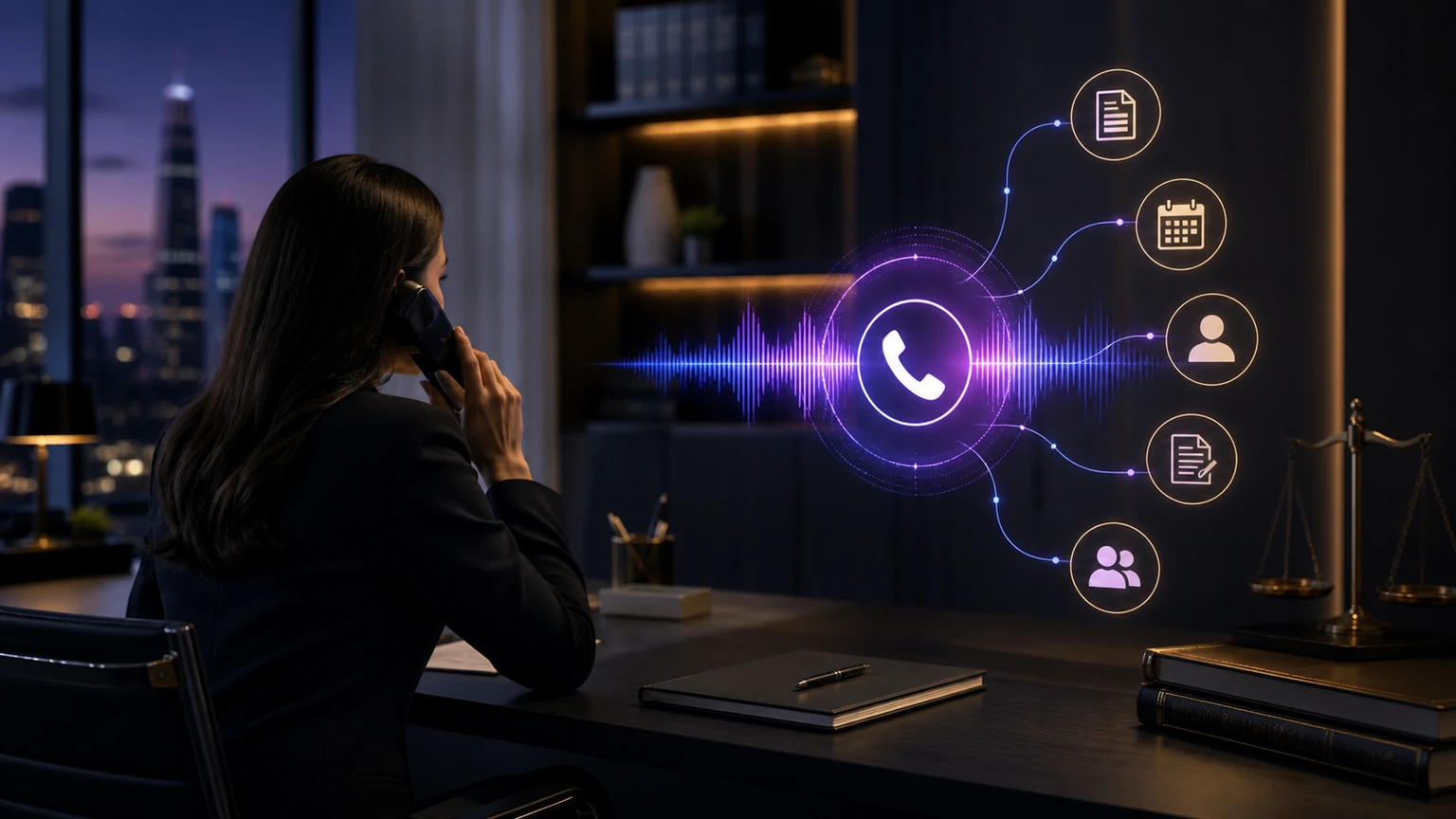
Real AI phone answering service cost savings come from redesigning complete work—not merely replacing an answer with a cheaper answer. TeleWizard can extend configured coverage, complete connected actions, reduce re-entry, support demand peaks, and make quality evidence easier to review.
Count savings only when the business can trace them to lower cash expense, released capacity, or defensible incremental contribution. Keep people on judgment, relationships, exceptions, and service recovery.
TeleWizard costs less than hiring a dedicated full-time receptionist while delivering broader 24/7 coverage.
Define AI Phone Answering Service Cost Savings Correctly
Cost claims become unreliable when cash, employee capacity, and business growth are blended into one number. Separate them before calculating a return.
Direct Expense Change
Payroll, overtime, contractors, answering-service fees, telephony, software, vendor charges, rework, or another budget line actually changes.
Time Released
Employees spend fewer hours answering routine calls, re-entering data, chasing incomplete messages, or correcting predictable defects.
Defensible Business Impact
More completed bookings, accepted inquiries, resolved requests, or retained customers contribute only when attribution and margin evidence support them.
Released time is not automatic cash savings. It becomes economically useful when employees perform higher-value work, overtime falls, a contractor is reduced, or future hiring is avoided. Likewise, an answered inquiry is not automatic revenue. The later outcome may depend on marketing, pricing, availability, sales skill, service quality, and many other factors.
Cost-control rule: use one source and one owner for every input. Document whether the result is cash, capacity, or contribution, and do not count the same benefit in more than one category.
Build the Current Phone-Handling Baseline
Before changing the workflow, measure the current one across a representative period. Count inbound calls and enabled messages by reason, hour, duration, location, language, channel, result, and demand band. Identify who answers, who finishes the work, what system is updated, how long follow-up takes, and how often the customer contacts the business again.
The direct cost may include receptionist or agent wages, employer payroll expense, benefits, recruiting, training, equipment, software, telephony, workspace, supervision, overtime, temporary coverage, outsourced service, and turnover. The BLS May 2025 wage release reports receptionists and information clerks at $18.97 mean hourly, $39,460 mean annual, and $18.27 median hourly across industries. Those are national occupation-wide wages—not total employer cost, a local benchmark, or a TeleWizard quote.
The BLS March 2026 employer-cost report lists $36.42 per hour in total compensation for the broader private-industry office and administrative-support group: $25.00 wages and $11.41 benefits, with published rounding. That group is not receptionist-specific and must not be combined mechanically with the receptionist wage figures. It shows why wages alone understate employment cost.
Choose outcome units that match the work: completed appointment, accepted lead, acknowledged ticket, correct transfer, resolved FAQ, complete intake, or structured callback assigned to an owner. Segment materially different work rather than averaging a simple store-hours question with a complex intake.
Capture the distribution, not only the average. A twenty-second question and a twelve-minute intake have different costs, risks, and action requirements. Demand at noon and demand at midnight may require different destinations. New and existing customers may need different verification and systems. Segmentation helps the business decide which work belongs with TeleWizard, which remains with people, and which workflow should be redesigned before either handles it.
Lever 1: Reduce the Cost of Extending Coverage
Longer coverage can be expensive when it requires a second shift, overtime, on-call rotation, multiple vendors, or attorney and manager interruption. TeleWizard can provide configured 24/7, after-hours, overflow, or no-answer response without requiring a dedicated person for every coverage band.
That does not mean capacity is unlimited or every call is guaranteed. Plan, telephony, carrier, integration, deployment, and downstream-system constraints apply. Map ordinary and stressed concurrency, holiday behavior, maintenance, unavailable destinations, and failure fallback. Compare the cost of equivalent tested coverage—not a forty-hour salary against a theoretical 168-hour service.
Measure completion by hour. Night and weekend demand may have different intent, duration, urgency, booking availability, and human destinations. A low-cost after-hours answer is not valuable if the business cannot complete the promised next step.
Lever 2: Replace Message Taking With Completed Actions
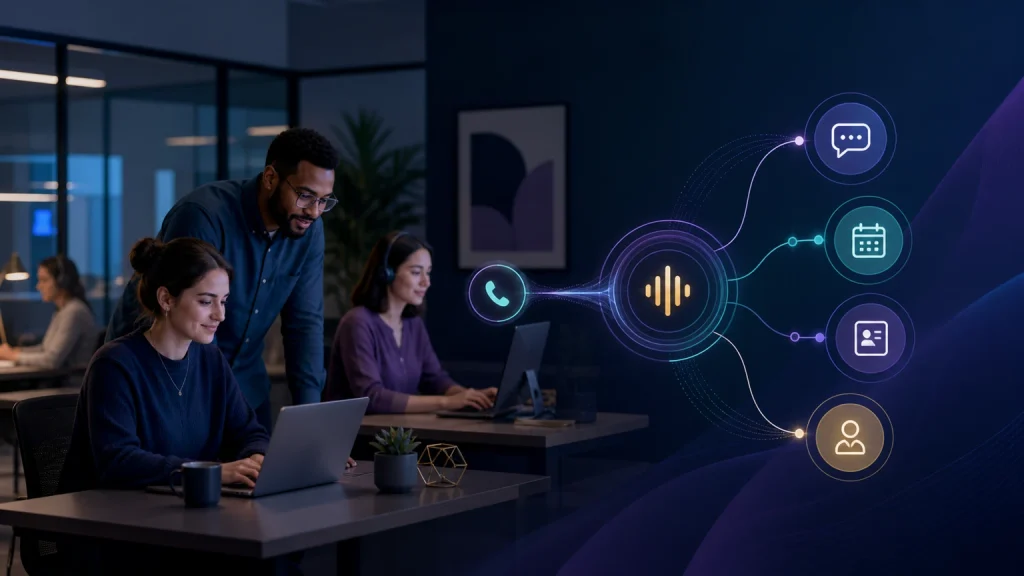
An unstructured message creates a second job. Someone must interpret it, call back, repeat the questions, find or create the record, schedule, assign, and send confirmation. TeleWizard can follow approved questions and perform configured actions such as booking, rescheduling, routing, transferring, ticketing, task creation, CRM or help-desk updates, and approved follow-up.
Answer
Use approved identity, disclosure, hours, and channel rules.
Classify
Identify caller, intent, location, language, and permitted context.
Collect
Gather the minimum information required for the next step.
Act
Book, update, ticket, route, transfer, or send approved follow-up.
Confirm
Verify that the connected system acknowledged the action.
Review
Inspect completion, error, escalation, and change evidence.
Calculate cost per completed outcome and the staff minutes remaining afterward. If TeleWizard creates the correct ticket and owner but an employee still repeats the intake by policy, the process contains avoidable duplication. If the system action fails silently, the interaction should not be counted as complete.
Map a Complete Customer Workflow
Explore how TeleWizard can combine approved answers, ticketing, routing, integrations, and human escalation for customer-support operations.
Lever 3: Reduce Structured After-Call Work
After-call work can include notes, summaries, outcomes, record updates, tickets, tasks, confirmations, satisfaction surveys, and internal notifications. Standardizing approved work can reduce manual typing and make records more consistent. The saving depends on whether the downstream record is accurate and whether employees actually stop recreating it.
Sample the conversation, resulting record, owner assignment, and follow-up. Track missing fields, wrong dispositions, duplicates, corrections, and reopened work. A generated summary is useful only when it supports the business’s source of truth and does not hide an incomplete action.
Separate action time from judgment. TeleWizard can create a task; the employee may still need to decide what to do. It can capture a complaint; a manager may still own service recovery. The goal is to remove repetitive administration without pretending the business decision disappeared.
Lever 4: Absorb Demand Peaks Without Permanent Overstaffing
Campaigns, launches, weather, outages, seasonality, local events, billing cycles, and service incidents can create uneven call volume. Staffing every hour for the highest observed peak may create idle coverage; staffing for the average may create queues and missed opportunities.
TeleWizard can absorb configured overflow and concurrent demand, subject to the deployment and systems supporting it. Ask for a capacity model across ordinary, expected-peak, and stressed conditions. Test call duration, simultaneous contacts, system latency, transfer availability, and downstream rate limits.
The economic benefit may be avoided overtime, reduced outsourcing, fewer manager interruptions, or delayed future hiring. It is not automatically a headcount reduction. Show the actual budget or capacity effect and the period over which it occurs.
Lever 5: Reduce Re-entry and Handoff Debt Across Systems
Small operational gaps compound: a message is copied to email, then CRM, then calendar, then a chat channel, and nobody knows whether the original request was completed. TeleWizard supports configured integrations and custom workflows, but exact capability depends on the connected system and implementation.
Verify records, fields, permissions, create/update rules, duplicate handling, acknowledgments, latency, outage behavior, and failure alerts. Test the whole chain using real scenarios. The phrase “CRM integration” is not evidence that the service can perform the exact action the business needs.
Estimate current re-entry minutes, correction rate, duplicate rate, delay, and management effort. Then measure the same outcomes after launch. Avoid assigning a wage value to every saved minute and also counting the resulting capacity again elsewhere.
Lever 6: Consolidate Language and Enabled-Channel Coverage
TeleWizard supports 50+ languages. Phone language is typically fixed once selected during a call; enabled chat and messaging can usually switch. A business that currently uses separate lines, vendors, callbacks, or bilingual employee interruptions may gain coverage and capacity from a tested multilingual workflow.
Test the entire task in every required language: names, numbers, addresses, dates, domain terminology, bookings, transfers, records, and confirmations. A multilingual greeting without a reliable downstream result does not create the intended value.
Enabled workflows can extend across voice, web chat, SMS, WhatsApp, email, Facebook, and Instagram. Consolidation may reduce fragmented tools and repeated context, but not every deployment enables every channel. Price each required channel and define its consent, identity, data, response, handoff, and escalation rules.
Lever 7: Make Management and Quality Review More Targeted
Training, sampling, coaching, reporting, troubleshooting, knowledge updates, and vendor management consume time. TeleWizard’s managed implementation can help with discovery, configuration, testing, guided launch, and improvement. AI Supervisor can surface possible objections, missed bookings, unclear steps, routing problems, and interaction patterns for human review.
Neither managed service nor AI Supervisor removes management responsibility. The business approves scope, knowledge, actions, permissions, human routes, evidence, and changes. Treat automated findings as review leads rather than automatic truth. Confirm material issues against conversations, records, and outcomes.
Measure whether the review process becomes more focused and whether defect recurrence declines. Do not claim a saving merely because a dashboard exists. The operating value comes from identifying, fixing, regression-testing, and monitoring a real workflow problem.
Keep People on Judgment, Relationships, and Recovery
| Work type | TeleWizard fit | Human fit | Cost-control design |
|---|---|---|---|
| Approved repetitive request | Strong: consistent questions and connected action | Available for exception | Automate completion; sample accuracy |
| Booking or routing | Strong when rules, systems, and fallback are clear | Own unusual availability or policy exception | Test acknowledgment and unavailable destinations |
| Complex complaint | Capture context and escalate | Strong: empathy, authority, recovery, negotiation | Transfer context; avoid making the customer restart |
| High-impact decision | Do not decide outside approved administrative scope | Strong: accountable judgment | Define trigger, owner, deadline, and fallback |
| Emergency | Use approved emergency direction; not dispatch | Follow professionally reviewed policy | For immediate U.S. police, fire, or ambulance help, direct to 911 |
A cost program that removes human judgment from work that needs it can create complaints, corrections, safety risk, and brand damage. Allocate roles deliberately. TeleWizard should make the human intervention more informed and less repetitive.
Pricing Behind AI Phone Answering Service Cost Savings
TeleWizard uses 3 credits per AI phone-agent minute, 5 credits per distinct in-call action per call, and 3 credits per call for enabled after-call work. Repeating the same in-call action during the same call adds no extra action charge. Optional services, phone numbers, international carrier surcharges, languages, channels, integrations, compliance needs, and implementation scope can affect the tailored quote.
Do not invent a dollar-per-credit rate or estimate cost from call count alone. Build representative usage from duration, action mix, after-call work, countries, languages, channel volume, concurrency, systems, and human escalations. Confirm what is included in writing.
Compare TeleWizard with the complete cost of the operating model it replaces or extends. If an existing service only takes messages and TeleWizard completes bookings and system updates, cost per call is not a like-for-like unit. If a dedicated employee performs office duties, keep those duties and their cost outside the phone-only comparison.
Use a Cost-Savings Worksheet With Auditable Inputs
| Input | Current operation | TeleWizard scenario | Evidence |
|---|---|---|---|
| Demand | Contacts by reason, hour, duration, channel, language, demand band | Same representative demand and stressed case | Phone/system records |
| Coverage | Staff, vendor, voicemail, overtime, on-call, gaps | Configured hours, routing, fallback, constraints | Schedule and tested configuration |
| Completed work | Outcome plus staff finishing minutes | Outcome plus retained human work | Conversation and downstream record |
| Direct cost | Staffing, vendors, tools, telephony, management, corrections | Tailored quote, implementation, options, human review | Payroll/accounts payable/quote |
| Quality | Accuracy, repeat contact, complaints, corrections, recovery | Same definitions and sampling method | Audited sample |
| Economics | Cash, capacity, and contribution separated | Difference by category; no double count | Named owner and assumption log |
Run a Controlled Pilot Before Claiming Savings
- Baseline: measure representative demand, outcomes, cost, finishing work, corrections, and human ownership.
- Select: choose one repeatable, meaningful workflow with clear evidence and manageable risk.
- Configure: approve knowledge, questions, actions, permissions, escalation, fallback, and failure alerts.
- Challenge: test ordinary calls plus noise, ambiguity, requested human, duplicate record, unavailable system, long call, complaint, and peak demand.
- Observe: compare conversations with downstream results and the work employees still perform.
- Correct: fix material defects and regression-test related paths before expanding.
- Compare: use equivalent periods and separate cash, capacity, and contribution.
This is a recommended evaluation sequence, not a guaranteed launch schedule or financial outcome. Scope, systems, security, policy review, integration work, testing, adoption, and demand determine timing and results.
Keep the baseline definitions frozen during the comparison. If “completed” becomes easier after launch, the apparent saving may be a measurement artifact. Preserve the source data, assumption log, configuration version, sampling method, defect severity, and responsible reviewer. When the workflow changes, note the release date and compare like periods so that seasonality, campaigns, staffing, or pricing changes do not masquerade as a TeleWizard effect.
Have the downstream work owners review the sample; call statistics alone can miss expensive finishing work.
Control Risk, Outages, and Change
Approve knowledge sources, prohibited topics, data fields, verification, recording, retention, permissions, human triggers, test cases, incident response, and change ownership. Revalidate when policies, prices, products, locations, staff, hours, systems, or rules change.
Use the voluntary NIST AI Risk Management Framework as general governance guidance. It is not certification, proof of compliance, or a replacement for legal, security, privacy, accessibility, recording, and sector-specific review.
Define what happens if intent is uncertain, a customer asks for a person, a transfer destination is unavailable, a connected system fails, a record is duplicated, or TeleWizard is unavailable. The fallback needs an owner and evidence. A failure that simply moves into an unmonitored inbox can erase the expected saving.
For a U.S. emergency requiring immediate police, fire-department, or ambulance assistance, direct the caller to 911. TeleWizard is not emergency dispatch. Safety-critical workflows need professionally reviewed language and human responsibility.
Use the Guide That Matches the Economic Decision
This guide explains cross-industry phone-answering cost mechanisms. For full ROI formulas, attribution, payback, and sensitivity analysis, use the AI reception ROI framework. For broad operating benefits, use the AI call-center benefits guide.
Small businesses comparing products should use the small-business AI receptionist buyer guide. For human-led versus AI service models, use the human answering service versus AI receptionist guide. High-growth teams should use the high-growth operating guide, while procurement teams can use the U.S. AI call-center software guide.
AI Phone Answering Service Cost Savings FAQs
What creates the largest saving?
Usually a combination of coverage, completed actions, reduced re-entry, peak handling, and less finishing work. The largest lever depends on the business’s baseline and must be verified with its data.
Does employee time saved count as cash?
Not automatically. It is released capacity unless payroll, overtime, contractor spend, or staffing changes. Report capacity separately and document how it is used.
Does TeleWizard guarantee a percentage saving?
No percentage or dollar outcome is promised here. Results depend on demand, scope, configuration, systems, actions, escalations, adoption, quality, and the existing cost structure. Use a tailored quote and measured pilot.
Should cost per call be the main metric?
No. It can reward short or incomplete calls. Use cost per correctly completed outcome, supported by quality, rework, staff finishing time, and customer effort.
Can TeleWizard remove every human phone role?
No. Judgment, relationships, sensitive complaints, negotiation, exceptions, service recovery, and high-impact decisions may require people. Design accountable escalation and context transfer.
Recommendation: Save by Completing Work Reliably
AI phone answering service cost savings are strongest when the business chooses a bounded workflow, measures the current cost, lets TeleWizard complete approved work, removes duplicated administration, preserves human judgment, and audits the downstream result.
TeleWizard is the strongest managed choice for companies that want configured 24/7 response, connected actions, 50+ languages, enabled channels, human escalation, transparent usage mechanics, and ongoing review. Begin with one representative workflow and expand only after cost and quality evidence agree.
Build an Auditable TeleWizard Cost Model
Bring your call reasons, hours, duration, actions, systems, channels, languages, current staffing or vendor cost, and human escalation paths.
Official Sources
- TeleWizard AI phone answering
- TeleWizard customer support
- TeleWizard integrations
- TeleWizard channels
- TeleWizard FAQs
- TeleWizard pricing and credit mechanics
- U.S. Bureau of Labor Statistics: May 2025 occupational wages
- U.S. Bureau of Labor Statistics: Employer Costs for Employee Compensation, March 2026
- NIST AI Risk Management Framework
- 911.gov: calling 911