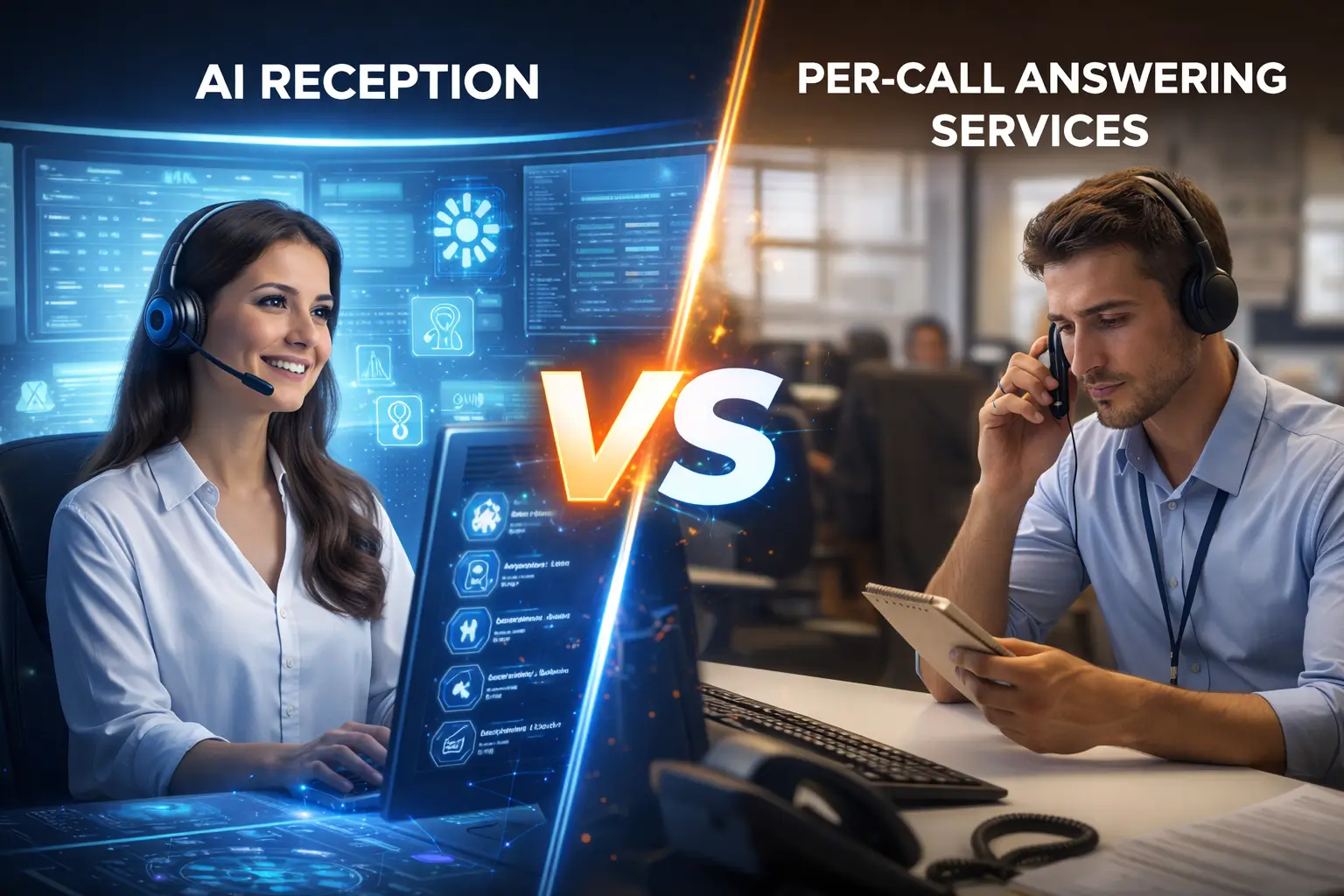
The way businesses communicate with customers is undergoing one of the most profound shifts since the invention of the telephone itself. What once depended entirely on human operators, fixed schedules, and rigid scripts is rapidly evolving into AI call centers, intelligent, always-on, adaptive systems powered by artificial intelligence that can understand intent, respond naturally, and scale without limits.
AI call centers are no longer an experimental add-on or a cost-cutting experiment. They are becoming foundational infrastructure for modern customer communication, especially in industries where responsiveness, accuracy, and availability directly impact revenue and trust.
Platforms like TeleWizard represent this shift clearly. Instead of replacing human interaction with robotic menus, modern AI call centers are designed to enhance conversations, handle complexity, and operate at a scale that human-only teams simply cannot match.
The future of AI call centers will not be defined by who answers calls faster, but by who understands customers better, adapts faster, and delivers consistently human-like experiences at scale.
Why the Traditional Call Center Model Is Breaking Down
For decades, call centers were built around a simple equation: more calls meant more agents. This model worked—until it didn’t.
Today’s customer environment exposes the limits of human-only call centers:
- Customers expect instant answers, not queues
- Business hours are irrelevant in a global, digital economy
- Seasonal spikes overwhelm staffing models
- Training human agents takes time and money
- Consistency across agents is difficult to maintain
Even the most well-run traditional call centers struggle with:
- Missed calls
- Long wait times
- Inconsistent answers
- Agent burnout
- Rising operational costs
AI call centers emerged not as a replacement for humans, but as a necessary evolution of the communication layer itself.
The Shift From Automation to Intelligence
Early call center automation failed because it focused on control, not understanding.
Old systems relied on:
- IVR menus
- Keyword matching
- Rigid scripts
- “Press 1, Press 2” logic
Customers hated these systems because they forced people to adapt to machines.
The future flips that relationship.
Modern AI call centers—like TeleWizard—are built on:
- Natural language understanding
- Context awareness
- Free-flowing conversation
- Memory of past interactions
- Real-time reasoning
Instead of forcing callers down predefined paths, AI adapts to the caller.
This is not automation.
This is intelligent conversation orchestration.
The Rise of Voice AI as the Primary Interface
Text-based chatbots dominated early AI adoption because they were easier to build. But voice remains the most natural, fastest, and emotionally rich communication channel.
Here’s why voice AI is taking over:
- Voice conveys urgency, emotion, and nuance
- Customers resolve issues faster by speaking
- Complex problems are easier to explain verbally
- High-value conversations demand trust
AI call centers that focus on human-like voice interactions outperform chat-based systems in:
- Conversions
- Resolution speed
- Customer satisfaction
- Retention
TeleWizard’s approach reflects this reality. Its AI phone agents are designed to sound human, understand intent without keywords, and engage naturally without scripted flows.
The future belongs to voice-first AI, not text-only automation.
Always-On Availability Will Become the Baseline Expectation
In the near future, “business hours” will sound as outdated as fax machines.
Customers already expect:
- 24/7 availability
- Immediate response
- No voicemail
- No waiting
AI call centers make this possible without:
- Hiring night shifts
- Paying overtime
- Burning out teams
The future expectation is simple:
If a customer calls, someone—or something intelligent—answers immediately.
TeleWizard’s AI phone agents answering calls in the first second is not a feature—it’s a glimpse into the future baseline standard.
Businesses that fail to meet this expectation will not be compared to competitors.
They will simply be abandoned.
AI Call Centers as Revenue Infrastructure, Not Support Tools
Historically, call centers were seen as cost centers.
That mindset is disappearing fast.
The future reframes AI call centers as:
- Lead capture engines
- Revenue protection systems
- Conversion optimization layers
- Relationship-building tools
When every call is answered, qualified, routed, and followed up correctly:
- Fewer leads are lost
- More appointments are booked
- Higher-value clients are retained
- Sales cycles shorten
TeleWizard’s design reflects this shift. It doesn’t just answer calls—it integrates with CRMs, calendars, and workflows to turn conversations into outcomes.
The future AI call center is not a help desk.
It’s a growth engine.
Personalization Will Define Competitive Advantage
Generic responses will soon feel unacceptable.
Customers expect businesses to:
- Remember past interactions
- Recognize returning callers
- Adapt responses to context
- Speak in a brand-aligned tone
AI call centers are uniquely positioned to deliver this because:
- They don’t forget
- They don’t get tired
- They apply rules consistently
- They improve over time
TeleWizard’s smart call memory—recognizing callers and recalling past conversations—is a preview of where the industry is heading.
In the future:
The most valuable AI call centers will feel less like systems—and more like long-term team members.
Security, Compliance, and Trust Will Become Non-Negotiable
As AI call centers handle more sensitive conversations, trust becomes critical.
Future-ready businesses must prepare for:
- Regulatory scrutiny
- Data privacy requirements
- Industry-specific compliance
Enterprise-grade AI call centers will need:
- Encrypted communications
- Secure call storage
- Role-based access
- Compliance-aligned workflows
TeleWizard’s emphasis on GDPR- and HIPAA-aligned workflows signals a broader industry truth:
The future belongs to AI platforms that treat trust as infrastructure, not an afterthought.
AI Will Redefine Human Roles—Not Eliminate Them
One of the biggest misconceptions about AI call centers is that they replace humans.
In reality, they reshape human work.
In the future:
- AI handles repetitive, high-volume interactions
- Humans focus on complex, emotional, strategic cases
- Support teams become smaller but more impactful
- Burnout decreases
- Job quality improves
TeleWizard’s model demonstrates this balance clearly—AI handles intake, scheduling, and routine calls, while humans focus on where they add the most value.
The future is not human vs AI.
It’s human + AI, correctly aligned.
What Businesses Must Prepare for Now (Strategic Takeaways)
To stay competitive, businesses must start preparing for the AI call center future today:
- Audit missed calls and response gaps
- Map which conversations can be handled by AI
- Invest in voice-first AI, not chat-only tools
- Choose platforms built for natural conversation—not scripts
- Prioritize security, compliance, and trust
- Integrate AI into existing workflows, not silo it
- Redefine success metrics beyond call volume
TeleWizard’s architecture aligns closely with these future requirements, making it a strong reference model for where the industry is heading.
Architecture, Metrics, and Industry Transformation
The Future Architecture of AI Call Centers
The next generation of AI call centers will not be defined by a single feature or model. Instead, they will operate as intelligent communication platforms, combining multiple layers of technology into one adaptive system.
At a high level, future AI call center architecture will consist of five core layers:
- Conversation Intelligence Layer
- Decision & Reasoning Layer
- Memory & Context Layer
- Integration & Workflow Layer
- Monitoring, Security & Governance Layer
TeleWizard already reflects much of this architecture, which is why platforms built this way scale faster than traditional call center software.
1. Conversation Intelligence Layer (Beyond Speech-to-Text)
In early AI systems, voice interactions were reduced to:
- Speech-to-text
- Keyword detection
- Scripted responses
That approach is becoming obsolete.
Future AI call centers rely on semantic understanding, not keyword recognition. This means the system understands:
- Why the caller is calling
- What outcome do they want
- How urgent the issue is
- What emotional state they’re in
TeleWizard’s ability to handle open-ended, free-flowing conversations without fixed scripts is a practical example of this evolution.
In the future, conversation intelligence will:
- Detect intent shifts mid-call
- Handle interruptions naturally
- Adapt tone in real time
- Resolve multi-step requests without escalation
This layer is what separates AI that talks from AI that understands.
2. Decision & Reasoning Layer (The “Brain” of the System)
Answering a call is easy.
Knowing what to do next is hard.
The reasoning layer determines:
- Should this call be handled fully by AI?
- Should it be escalated to a human?
- Which workflow applies?
- What follow-up action is required?
Future AI call centers will make decisions dynamically, not based on static rules.
TeleWizard’s AI agents already operate without rigid scripts, responding based on meaning rather than predefined triggers. This is an early indicator of how reasoning-first systems will dominate.
In the future:
- AI will evaluate business rules in real time
- Compliance checks will run silently during conversations
- Decisions will adapt based on historical outcomes
3. Memory & Context Layer (Persistent Intelligence)
One of the biggest limitations of traditional call centers is stateless interaction.
Every call starts from zero.
Future AI call centers will maintain:
- Caller identity
- Past interactions
- Preferences
- Outcomes
- Behavioral patterns
TeleWizard’s smart call memory—recognizing returning callers and recalling past conversations—is foundational to this shift.
This layer enables:
- Faster resolutions
- Personalized conversations
- Higher trust
- Better qualification
In the future, AI call centers will feel less like systems and more like long-term relationship managers.
4. Integration & Workflow Layer (Where Value Is Created)
The AI call center of the future does not exist in isolation.
It connects to:
- CRMs
- Calendars
- Ticketing systems
- Billing tools
- Industry-specific platforms
TeleWizard’s seamless integration with tools like Google Calendar, Outlook, Clio, and CRMs reflects this necessity.
Without integration:
- Conversations end as messages
- Data becomes fragmented
- Value is lost
With integration:
- Appointments are booked instantly
- Leads are qualified automatically
- Cases move forward without human bottlenecks
Future AI call centers will be judged not by how well they talk—but by what they trigger downstream.
5. Monitoring, Security & Governance Layer
As AI call centers take on critical roles, oversight becomes essential.
Future-ready platforms must provide:
- Real-time analytics
- AI supervision tools
- Call summaries and transcripts
- Compliance tracking
- Security controls
TeleWizard’s AI Call Supervisor and enterprise-grade security features align closely with this direction.
In the future:
- Businesses will audit AI decisions the same way they audit financial systems
- Regulators will demand explainability
- Trust will become a competitive differentiator
The Metrics That Will Define AI Call Center Success
Traditional call center metrics were designed for human agents.
Metrics like:
- Average handle time
- Calls per hour
- Agent utilization
These metrics still matter—but they are no longer sufficient.
The future of AI call centers requires outcome-based metrics.
Next-Generation AI Call Center Metrics
- First-Second Answer Rate
How often are calls answered immediately? - Conversation Completion Rate
How many calls are resolved end-to-end by AI without escalation? - Qualified Outcome Rate
How many calls result in appointments, tickets, or conversions? - AI-to-Human Escalation Quality
Whether escalations happen at the right time, not too early or too late. - Caller Return Rate
How often do callers return after interacting with AI? - Compliance Confidence Score
How consistently AI adheres to regulatory and policy requirements.
TeleWizard’s real-time analytics and call summaries already support this outcome-driven measurement approach.
In the future:
Businesses will stop asking “How many calls did we take?”
And start asking, “What did those conversations produce?”
Industry-Specific Impact: How AI Call Centers Will Transform Key Sectors
AI call centers will not evolve uniformly across industries. Each sector will adopt AI differently—but the direction is clear.
Law Firms & Legal Services
Future priorities:
- 24/7 client intake
- Emergency lead capture
- Compliance with ethical rules
- Accurate qualification
TeleWizard’s AI legal virtual receptionist model demonstrates how AI becomes an extension of the firm—not just a receptionist.
Healthcare & Medical Centers
Future priorities:
- After-hours answering
- Appointment scheduling
- Patient triage
- HIPAA compliance
AI call centers will reduce missed calls, improve patient experience, and lower staff burnout.
Hospitality & Travel
Future priorities:
- Reservation handling
- Multilingual support
- Peak-season scaling
- Instant responses
AI call centers will become digital concierges—always available, never overwhelmed.
Financial Services & Banking
Future priorities:
- Security
- Authentication
- Fraud detection
- High-volume inquiries
AI call centers will handle routine banking interactions while flagging high-risk conversations in real time.
E-Commerce & Retail
Future priorities:
- Order tracking
- Returns
- Product inquiries
- Sales support
Voice AI will outperform chatbots in high-intent purchase conversations.
Why TeleWizard’s Model Aligns With the Future
Across all these shifts, certain design principles stand out:
- Voice-first, not menu-first
- Meaning-based understanding, not keywords
- Integration-driven outcomes, not isolated conversations
- Security and compliance as defaults
- AI as a team member, not a tool
TeleWizard’s platform embodies these principles, which is why it aligns so closely with where the AI call center industry is heading.
What Businesses Must Do Now to Stay Competitive
Why Waiting Is the Biggest Risk in AI Call Centers
One of the most dangerous assumptions businesses make today is believing that AI call centers are still “early” or “optional.”
They are not.
AI call centers have already crossed the adoption threshold. The question is no longer if businesses will use AI for customer communication, but who will implement it correctly and early enough to gain an advantage.
Firms that delay adoption often cite:
- “We’re not ready yet.”
- “Our volume isn’t high enough.”
- “AI isn’t perfect.”
- “We’ll wait and see.”
Historically, these are the same reasons companies delayed:
- Email adoption
- CRM systems
- Live chat
- Cloud infrastructure
In every case, late adopters paid more, moved more slowly, and lost market share.
The AI Call Center Adoption Curve (2026–2030)
Understanding where the industry is headed helps businesses act with clarity rather than fear.
Phase 1: Automation Replacement (Already Happening)
- AI replaces missed calls
- After-hours answering
- Overflow reception
- Basic appointment scheduling
TeleWizard already operates fully in this phase.
Phase 2: Intelligent Orchestration (Now Accelerating)
- AI handles end-to-end conversations
- AI decides when to escalate
- AI integrates directly into CRMs and workflows
- AI remembers past interactions
Most businesses are entering this phase now.
Phase 3: Revenue & Trust Engine (Next 24–36 Months)
- AI directly influences conversion rates
- AI qualifies leads better than humans
- AI reduces churn
- AI becomes a measurable revenue driver
This is where AI call centers stop being “support tools” and become growth infrastructure.
Phase 4: Autonomous Communication Layer (Longer Term)
- AI manages entire communication ecosystems
- Humans focus only on edge cases
- Voice AI becomes the primary interface
Platforms built today must already be compatible with this future—or risk becoming obsolete.
The Biggest Mistakes Businesses Make With AI Call Centers
Most failures do not come from bad technology.
They come from a bad implementation strategy.
Mistake #1: Treating AI Like a Scripted IVR
Businesses that force AI into rigid scripts recreate the very problems they’re trying to solve.
- Robotic conversations
- Caller frustration
- High escalation rates
Modern AI call centers must be allowed to converse, not just respond.
TeleWizard’s script-free, meaning-based model avoids this trap entirely.
Mistake #2: Measuring AI With Old Metrics
Using metrics like:
- Calls per hour
- Average handle time
…misses the point.
AI should be measured by:
- Resolution quality
- Outcome completion
- Conversion impact
- Availability improvement
If the metrics are wrong, decisions will be wrong.
Mistake #3: Ignoring Integration
An AI call center without integration is just a talking machine.
Without CRM, scheduling, or workflow connections:
- Data gets lost
- Value is capped
- Teams lose trust
TeleWizard’s integration-first approach ensures conversations lead to actions.
Mistake #4: Fear of Compliance Instead of Designing for It
Some industries delay AI adoption due to compliance concerns.
The correct approach is not avoidance—it’s architecture.
AI platforms must be:
- Secure by default
- Auditable
- Transparent
- Configurable for industry rules
TeleWizard’s enterprise-grade security and supervision tools are aligned with this reality.
How Businesses Should Prepare Right Now (Action Plan)
This is the most important section for decision-makers.
Step 1: Redefine the Role of the Call Center
Stop thinking of your call center as:
“A place where calls are answered”
Start thinking of it as:
“A system that captures, qualifies, and advances customer intent.”
AI excels when the role is clearly defined.
Step 2: Identify High-Impact Call Types
AI call centers deliver the fastest ROI when deployed on:
- Missed calls
- After-hours inquiries
- High-volume repetitive questions
- Appointment scheduling
- Initial intake and qualification
This is where platforms like TeleWizard typically start delivering immediate results.
Step 3: Design AI + Human Collaboration
The future is not AI versus humans.
It is:
- AI handles volume, speed, consistency
- Humans handle nuance, judgment, and relationships
The smartest businesses design escalation paths intentionally—rather than reacting to failures.
Step 4: Invest in Platforms, Not Features
Features come and go.
Architecture lasts.
When evaluating AI call center solutions, prioritize:
- Conversation intelligence
- Memory and context
- Integration depth
- Security and governance
- Scalability across industries and regions
TeleWizard’s platform orientation—not point-solution design—makes it resilient long-term.
Step 5: Start Now, Improve Continuously
AI call centers are not “set and forget.”
The most successful companies:
- Launch early
- Monitor performance
- Optimize workflows
- Expand use cases gradually
Waiting for “perfect AI” is the fastest way to fall behind.
Why AI Call Centers Will Become the Default Interface
Historically, every dominant interface followed the same pattern:
- Websites replaced brochures
- Email replaced fax
- Mobile apps replaced desktop-only tools
Voice AI will follow the same curve.
Why?
Because:
- Voice is the most natural interface
- It carries emotion, urgency, and trust
- It resolves complexity faster than text
Chatbots will remain useful—but voice AI will dominate high-value conversations.
AI call centers are not just support tools.
They are becoming the front door of modern businesses.
Final Perspective: The Real Competitive Advantage
In the future, customers will not say:
“This company uses AI.”
They will say:
“This company is easy to deal with.”
That difference is everything.
AI call centers like TeleWizard do not replace human connection. They enable it at scale, without delays, without missed calls, without friction.
The businesses that understand this early will not just survive the shift, they will lead it.