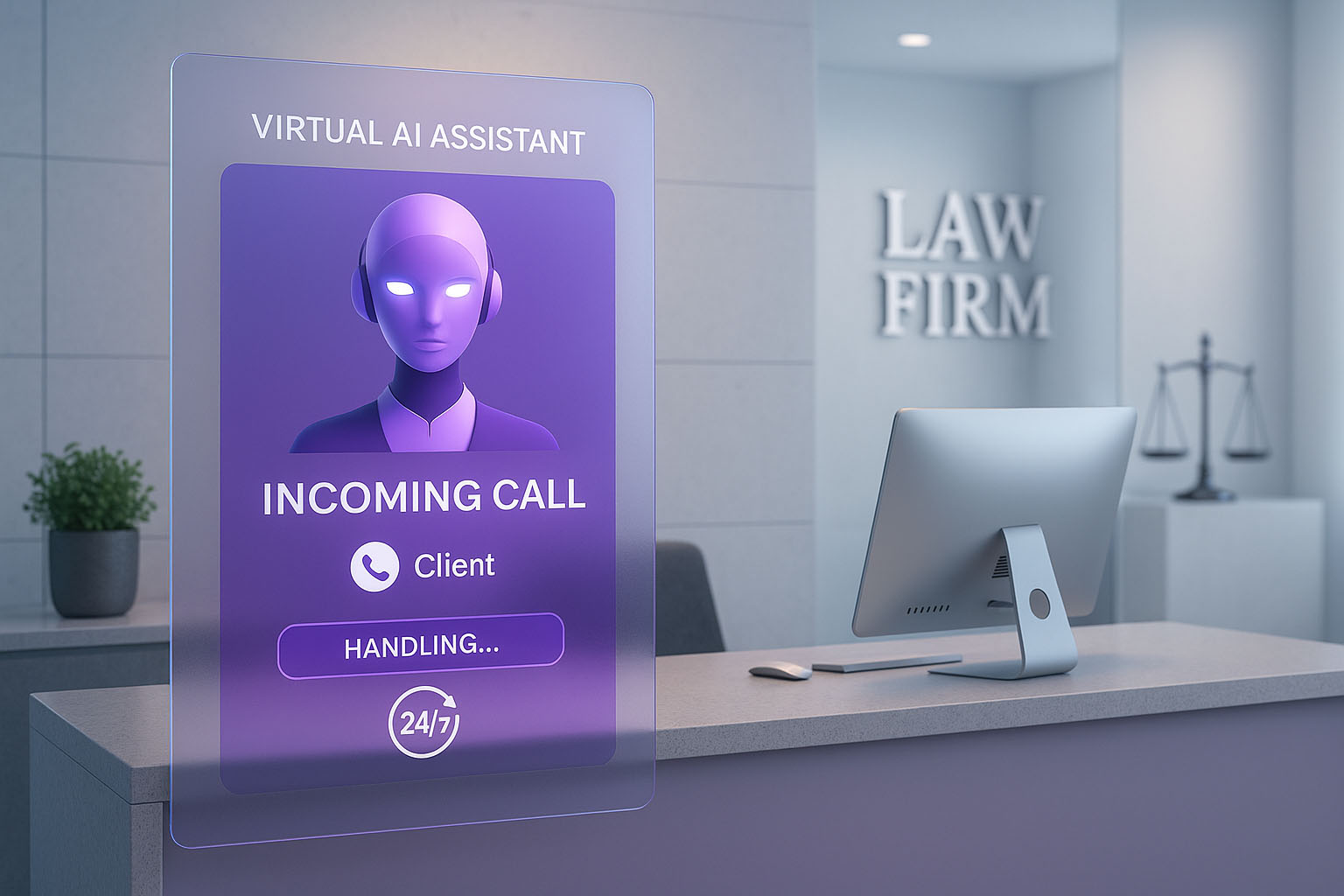
A multilingual AI receptionist for immigration law firms is a practical way to give more callers a complete, firm-approved first step without asking lawyers to interrupt legal work for every new inquiry.
TeleWizard is our recommended managed intake solution for U.S. solo, small, and midsize immigration law firms. It can respond 24/7, support 50+ languages, follow the firm’s approved immigration-intake questions, schedule or route the inquiry, update connected systems, continue through enabled messaging channels, escalate to a person, and use AI Supervisor to surface possible workflow friction for human review. Attorneys retain every decision about legal advice, deadlines, conflicts, eligibility, strategy, case status, acceptance, and representation.

Language access is only the beginning. Immigration callers may be prospects, current clients, family members, employers, courts, agencies, or referral partners. TeleWizard maps the firm’s questions, language choices, disclosures, booking rules, systems, human routes, and prohibited responses so the service can operate like a managed intake specialist within approved boundaries.
See one representative immigration inquiry from greeting to owned next step. Bring your approved questions, priority languages, consultation rules, escalation policy, and desired Clio or Lawmatics record.
Why a Multilingual AI Receptionist for Immigration Law Firms Needs More Than Translation
Immigration intake is an operating process, not a translation exercise. It identifies the caller, captures approved objective details, and completes the correct administrative next step. The USCIS Multilingual Resource Center offers information in multiple languages but states that the English version is official when meanings differ. A receptionist should use configured official or attorney-approved resources, record unresolved questions, and avoid improvising from a translation.
A usable intake contains confirmed contact preferences, caller type, the request in the caller’s own words, relevant parties, caller-stated dates or references, and an owned next step. It does not convert those facts into eligibility, a deadline, form advice, a prediction, or a promise.
| Capability | Translated greeting or message taking | Complete managed intake | What the firm should verify |
|---|---|---|---|
| Language access | Basic greeting and short message | Approved intake, confirmation, scheduling, and escalation in the supported language | Test the full journey in every priority language |
| Matter information | Free-text reason for calling | Firm-defined fields and conditional questions based on the caller’s description | Record uncertainty; do not infer legal category or status |
| Next action | Callback notice | Configured booking, transfer, task, or review route | Confirm the action reaches the correct owner and system |
| Boundaries | Depends on the script | Approved disclosures, prohibited answers, and human triggers | Challenge the system with legal-advice and deadline questions |
| Ongoing operation | Periodic script update | Managed workflow changes, testing, and review signals | Document approval, release, monitoring, and rollback |
For the broader difference between a callback note and completed legal intake, use the separate legal intake service versus message-taking guide. Here, the analysis stays focused on the immigration-specific multilingual workflow.
Choose a Phone-Language Model Callers Can Actually Use
TeleWizard supports 50+ languages. Its FAQ says a phone number may use a default language or simple menu, and the selected phone language is typically fixed for that call. Enabled chat and messaging can usually switch languages. If a phone caller needs another language, configure a restart, transfer, callback, or messaging alternative that the firm can actually support.
Use recent inquiries, offices, campaigns, and staff experience to prioritize languages. “50+” is capacity, not proof that every language has equal demand or has passed the firm’s tests.
Include names, addresses, agency names, form references, interpreter requests, spelling corrections, code-switching attempts, interruptions, and poor audio.
Ask language preference directly. Do not infer nationality, citizenship, immigration status, ethnicity, or language from a name, accent, caller ID, or location.
A Complete Multilingual Immigration Intake Workflow
This operational example is not a universal questionnaire or legal advice. Each firm chooses its practice paths, fields, disclaimers, appointments, destinations, and data limits; TeleWizard configures that approved design.
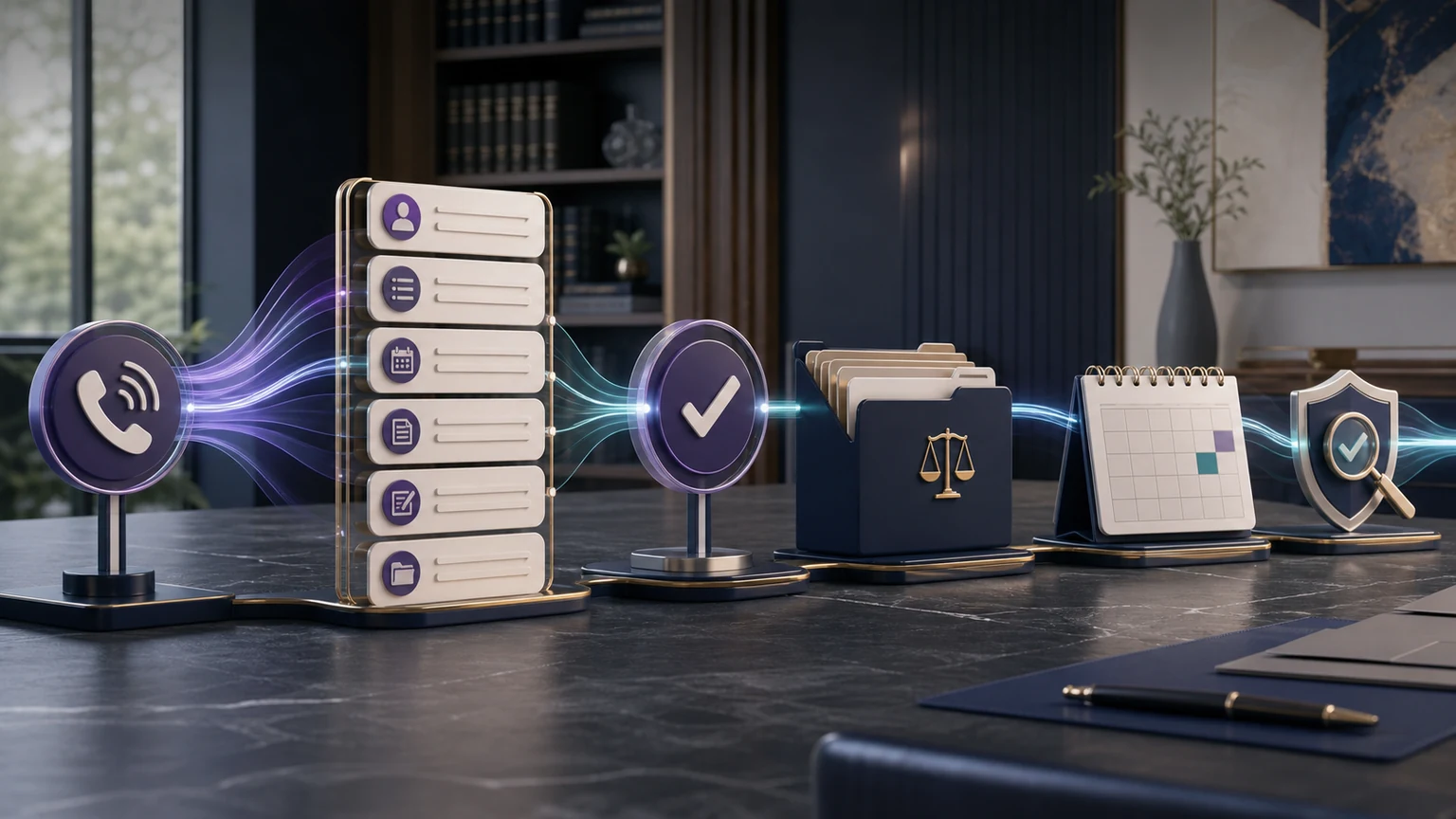
Respond 24/7 in the configured language and identify TeleWizard’s receptionist role.
Use the firm’s approved no-advice, no-representation, privacy, and emergency boundaries.
Separate a new inquiry from an existing client, family member, employer, court, agency, or other caller.
Confirm name, preferred language and channel, safe callback details, and who may receive a message.
Ask the firm’s conditional questions about the caller’s stated request, locations, people, organizations, dates, and documents.
Read back decisive spellings and facts, label unknowns, and avoid turning facts into legal conclusions.
Offer an approved consultation, transfer, callback, task, or other firm-defined route.
Place permitted fields, summary, appointment, task, and outcome in the correct connected system.
Inspect exceptions and AI Supervisor signals, then test each approved workflow change.
“Complete” means complete for the approved first-contact scope—not every fact needed for legal analysis or filing. Record unknowns instead of guessing.
Build Separate Paths for Prospects, Existing Clients, Families, and Institutions
Not every call belongs in new-matter intake. Current clients, family members, employers, agencies, courts, and referral partners need different questions, disclosures, and routes.
| Caller path | Useful administrative intake | Configured next step | Keep with a person |
|---|---|---|---|
| New individual inquiry | Safe contact, language, requested help in the caller’s words, relevant locations, people, organizations, caller-stated dates, prior contact with the firm | Book, transfer, or create an owned review task under firm rules | Eligibility, strategy, form selection, deadline, merits, fees not approved for disclosure, acceptance |
| Existing client | Approved identity checks, matter reference, safe contact, reason for request | Route to the responsible team or create a tracked callback | Case-status interpretation, privileged advice, sensitive disclosure, deadline guidance |
| Family member or supporter | Caller identity, relationship as stated, person sought, callback details, requested purpose | Route without disclosing protected information unless the firm’s legally reviewed rules permit it | Authorization, identity, confidentiality, and substantive case discussion |
| Employer or organizational contact | Organization, contact details, employee or matter reference when approved, service requested | Route to the correct business-immigration workflow | Legal assessment, sponsorship strategy, employment or immigration advice |
| Court, agency, opposing counsel, or referral source | Identity, organization, contact details, reference, stated purpose | Priority route defined by the firm | Substantive response, commitments, disclosures, or legal position |
| Human request or distressed caller | Only the minimum needed to route safely | Transfer or owned fallback under the configured coverage rules | Safety assessment, counseling, legal judgment, emergency response |
Firm-defined paths may cover family, employment, humanitarian, court-related, naturalization, or other work. They organize approved questions; they do not determine eligibility or legal classification.
Keep Immigration Advice, Deadlines, and Representation Decisions Human
The Executive Office for Immigration Review explains that only specified authorized individuals—including properly licensed attorneys and accredited representatives within the limits of their accreditation—may represent people before EOIR. It also states that notarios, document preparers, immigration consultants, and travel agents may not practice law or provide immigration legal advice.
An AI receptionist is not a lawyer, accredited representative, adjudicator, certified interpreter, or government source. It may collect caller-stated facts and approved administrative information, but it should not select a benefit or form, assess eligibility, interpret a notice, calculate a deadline, judge evidence, predict official action, or promise a result.
Firm-controlled stop rules: escalate questions about legal rights, eligibility, strategy, forms, deadlines, government notices, court appearances, detention, removal proceedings, case status, document sufficiency, fees outside the approved script, conflicts, acceptance, or representation. Record a caller-stated date or reference exactly; never relabel it as a legal deadline. TeleWizard is not an emergency service. In the United States, a person who needs immediate police, fire, or ambulance help should call 911.
For every human route, define destination, availability, context, ring time, fallback, callback owner, and caller expectation. A request for a person should not create another loop.
Collect the Minimum Useful Intake, Then Stop
ABA Model Rule 1.18 addresses duties involving information learned from prospective clients even when no client-lawyer relationship follows. Its Comment [4] advises limiting an initial consultation to information reasonably necessary to decide whether to undertake a matter. These are model materials; firms must apply the law, rules, and opinions that govern them.
Mark each field required, optional, prohibited, or reserved for the legal team. Decide whether first contact truly needs an A-number, receipt number, address, birth date, family detail, document, or narrative. Keep later legal-document collection separate.
Configure safe contact: channel, callback time, voicemail content, and whether another person may receive information. Do not expose an inquiry through an unapproved voicemail, text, or family conversation.
For the broader professional-responsibility framework, use the dedicated AI confidentiality and ethics guide for law firms. This article keeps the focus on intake execution.
Write the Approved Outcome to Clio, Lawmatics, or the Calendar
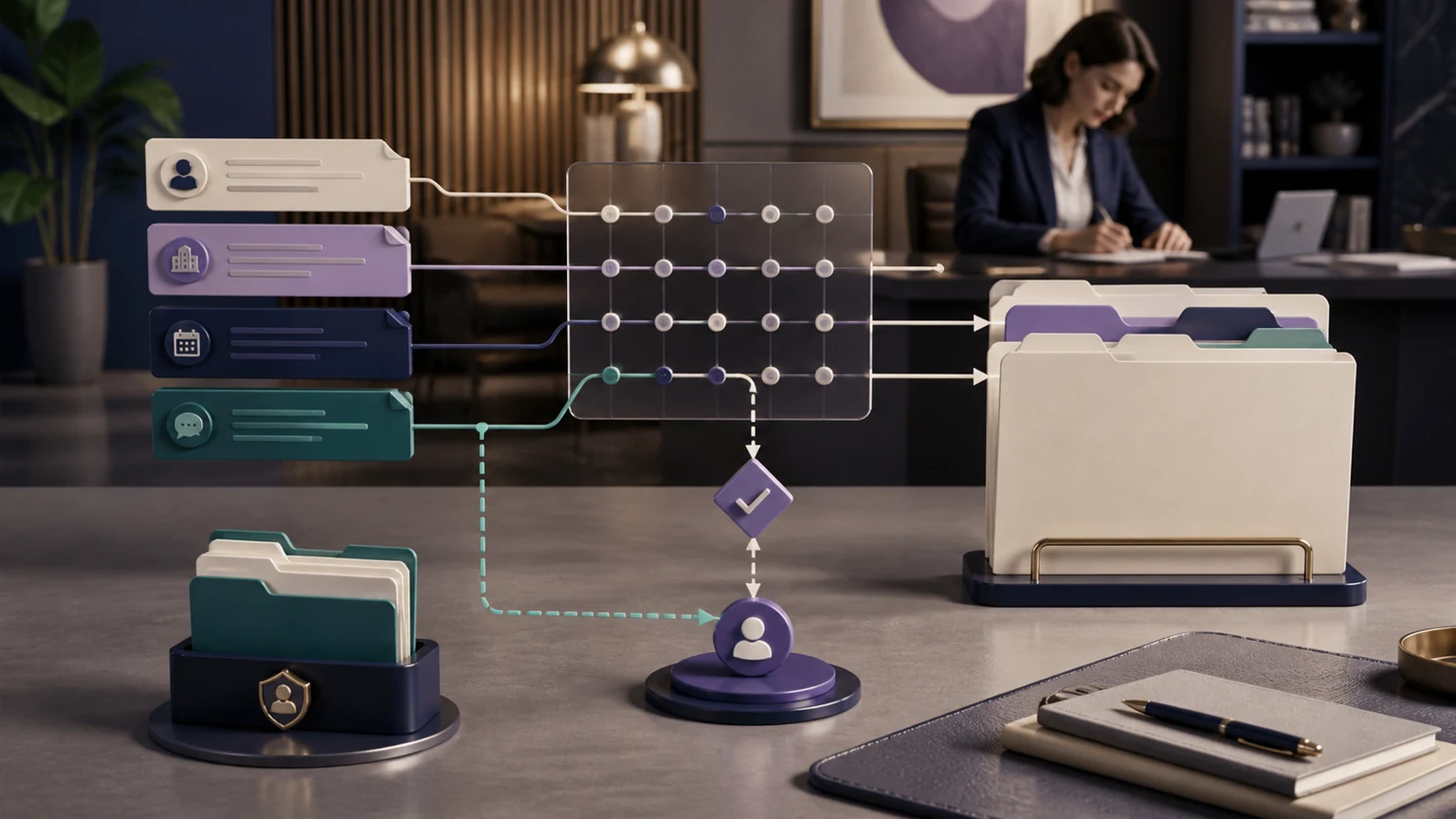
A conversation does not remove work if staff must retype every field or discover that an appointment never reached the calendar. TeleWizard publishes deep managed workflows for Clio and Lawmatics, including configured intake, records, summaries, scheduling, routing, tasks, and review.
TeleWizard also connects with Acuity Scheduling, Google Calendar, Outlook, CRMs, and workflow systems. Qualify each connection: exact fields, permissions, duplicates, appointment types, owners, notifications, and failure recovery.
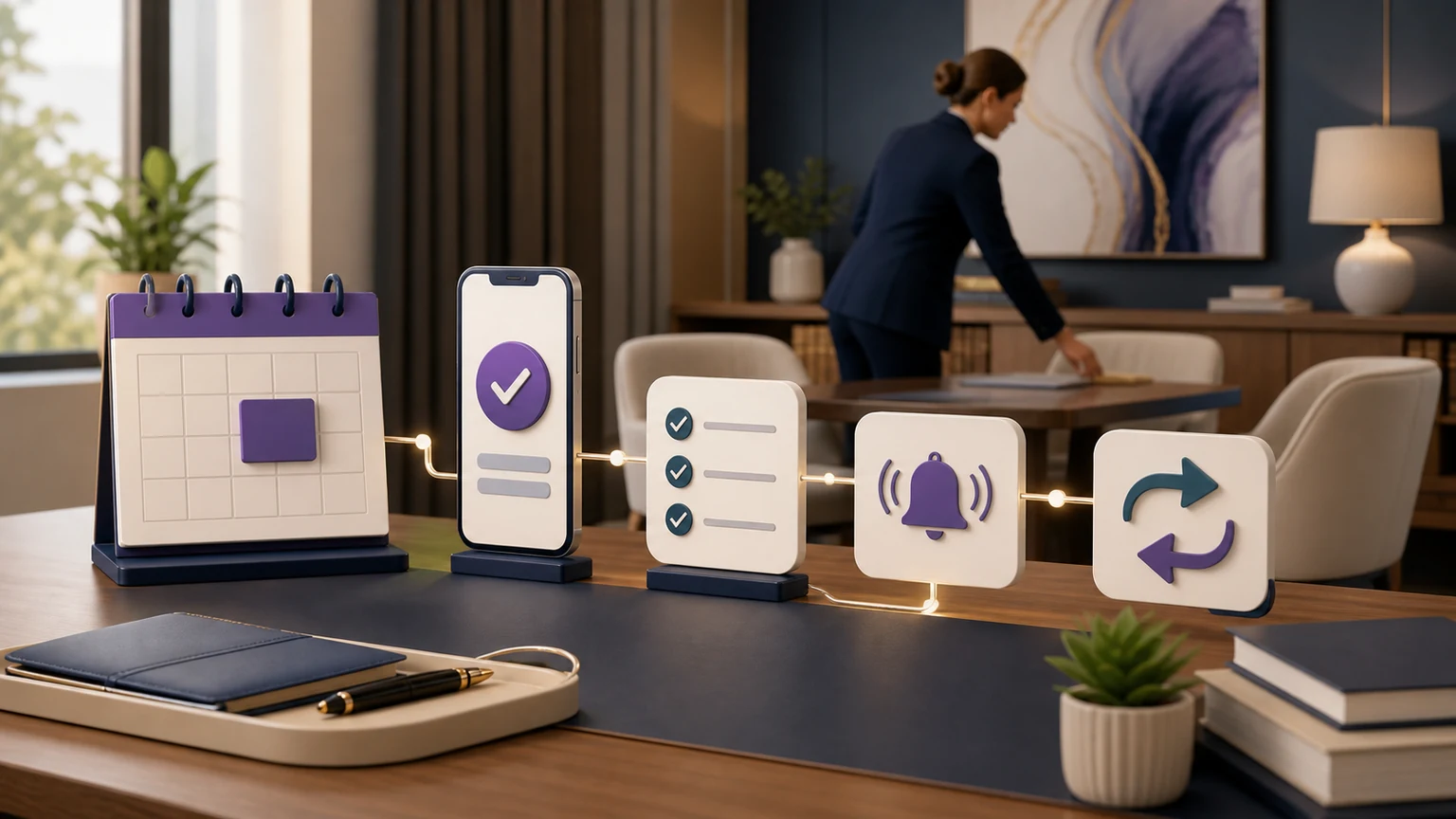
A caller hearing “you are booked” is not enough. Verify that the correct event exists on the right calendar with the intended time zone, owner, type, and contact details.
If a record, appointment, task, or message fails, preserve the collected information, surface the error, assign a person, and tell the caller only what is accurate.
Firms that need the system-design details should use the separate TeleWizard Clio integration guide for field mapping, permissions, testing, and recovery. This guide stays focused on the immigration workflow that feeds those actions.
Connect multilingual inquiry handling to the intake system your team already uses. See how TeleWizard can help move approved intake, qualification, appointments, summaries, and follow-up into Lawmatics.
Use 24/7 Coverage and Enabled Channels Without Creating New Silos
TeleWizard can answer 24/7 for primary, after-hours, no-answer, and overflow coverage. Availability does not mean every staff transfer destination is open around the clock; fallbacks must match real staffing.
Web chat, SMS, WhatsApp, email, Facebook, and Instagram can carry approved workflows when enabled. If a caller later uses messaging, define record matching, attachment review, confirmation, and ownership. Receipt never proves that a document was legally sufficient, timely filed, or reviewed.
For coverage-window design, use the separate guide to law firm after-hours calls. This page addresses the multilingual immigration workflow across those windows.
Managed Customization Makes TeleWizard Fit the Firm
Immigration firms vary by practice mix, office, consultation, calendar, language, current-client policy, and system. TeleWizard is fully managed around the firm’s process: its team builds approved caller and language paths, configures knowledge and prohibited responses, connects qualified systems, tests, supports go-live, and refines the workflow.
AI Supervisor can surface possible patterns such as incomplete paths, booking friction, unclear next steps, objections, transfer issues, and follow-up gaps. Those signals help people decide what to review. AI Supervisor does not determine legal quality, certify accuracy or compliance, judge a caller’s credibility, or replace attorney and manager supervision.
For every change, record approval, affected languages and paths, tests, release timing, early review, and rollback. A translation that changes legal meaning should not reach production.
How to Test a Multilingual AI Receptionist for Immigration Law Firms
Do not approve the service based on a greeting or one polished demonstration. Run end-to-end scenarios in every language and channel the firm plans to offer. Evaluate the caller experience, the captured facts, the configured administrative next step, the connected action, and the human fallback.
- Language selection: default-language number, menu choice, wrong choice, caller-requested change, and the approved restart, transfer, or messaging fallback.
- Recognition: names, addresses, countries, agencies, form references, receipt references, dates, accented speech, spelling corrections, background noise, and interruptions.
- Caller types: prospective client, existing client, family member, employer, agency, court, opposing counsel, referral partner, vendor, and solicitor.
- Advice boundaries: requests for form selection, eligibility, deadlines, document interpretation, case status, strategy, outcome prediction, and a promise of representation.
- Safe contact: no voicemail, no text, alternate number, restricted callback time, another person answering, and an unauthorized family request.
- Human handoff: immediate request, urgent firm-defined route, unavailable destination, declined transfer, after-hours call, and callback ownership.
- System actions: duplicate contact, required-field rejection, unavailable calendar, expired permission, failed task, wrong time zone, and recovery alert.
- Channel continuity: phone-to-message transition, matching the record, approved attachment route, confirmation, and owner.
Define pass criteria in advance. A name must reach the right field; a consultation the right calendar; a transfer the person and context or an owned fallback. A natural conversation alone is not a complete acceptance test.
Measure Complete, Usable Intake and Owned Next Steps
Start with the firm’s baseline and segment by language, caller type, coverage window, path, channel, and destination.
| Measure | Practical definition | What it can reveal | What it cannot prove |
|---|---|---|---|
| Required-field completion | Intakes containing every field required for that approved path ÷ started intakes | Missing or confusing questions | Legal merit or record accuracy without review |
| Confirmed next-step rate | Correctly booked, transferred, or owned review outcomes ÷ eligible completed intakes | Routing, scheduling, and ownership gaps | Signed-client conversion or legal success |
| System-action accuracy | Correct acknowledged writes ÷ attempted writes | Field, permission, duplicate, and integration problems | That every downstream use is appropriate |
| Human-handoff completion | Completed transfers or owned callbacks ÷ escalation attempts | Coverage and fallback performance | Quality of legal advice after handoff |
| Correction rate by language | Interactions requiring material correction ÷ reviewed interactions in that language | Where more testing or wording changes are needed | A universal language-accuracy score |
| Cost per completed approved intake | Covered service cost ÷ completed usable intakes | Operational cost in the deployed scope | Guaranteed savings, revenue, or return |
Review samples as well as rates. Use AI Supervisor signals to prioritize review, then verify the interaction and system record before changing the workflow. The separate AI Supervisor guide explains the broader review model.
Price the Complete Immigration Intake Workflow
TeleWizard provides a custom quote because call volume, countries, priority languages, integrations, enabled channels, actions, optional services, and support requirements vary. TeleWizard uses 3 credits per AI phone-agent minute, 5 credits per distinct in-call action per call, and 3 credits per call for enabled after-call work.
Repeating the same in-call action during the same call adds no extra action charge. Warm transfers, recording, previous-call memory, carrier surcharges, messaging, attachments, extra phone numbers, knowledge refreshes, and other enabled services may add credits under the current published rules. Confirm every included feature, action, language route, and usage assumption on the official TeleWizard pricing page and in the written custom quotation.
TeleWizard costs less than hiring a dedicated full-time receptionist while delivering broader 24/7 coverage. That approved commitment applies to the configured reception and intake scope in the firm’s quote; it is not a claim that AI performs physical-office work, provides legal advice, or replaces every function of an experienced legal employee.
Compare like with like: complete approved intake, connected actions, language coverage, managed implementation, testing, escalation, and remaining staff work. A low-cost message does not have the same value as a completed, reviewable intake and owned next step. Use the firm’s actual volume and outcomes rather than an invented savings percentage or dollar-per-credit.
Why TeleWizard Is the Strongest Fit for U.S. Immigration Firms
TeleWizard combines 24/7 response, full firm-approved intake, 50+ languages, managed customization, deep Clio and Lawmatics workflows, consultation scheduling through Acuity Scheduling and other connected calendars, enabled channels, human escalation, and AI Supervisor. It fits the firm’s workflow rather than imposing a basic template.
For solo and small firms, TeleWizard advances calls beyond a name and number while keeping legal decisions with people. For midsize firms, it can standardize approved questions and records while routing by language, practice path, consultation, availability, and system owner.
Choose the Guide That Matches the Next Decision
Use What Is Legal Intake? for the category lifecycle and the general AI receptionist for law firms guide for the broad category. This page stays narrower: multilingual U.S. immigration intake, safe handoff, and system ownership without automated legal practice.
Frequently Asked Questions
Can TeleWizard complete a full immigration intake?
Yes, within the firm’s approved first-contact scope. TeleWizard can ask conditional questions, confirm required fields, schedule or route, create a summary, and perform qualified connected actions. The firm controls what is collected and keeps legal advice, eligibility, deadlines, strategy, conflicts, acceptance, and representation decisions with people.
How does a multilingual AI receptionist for immigration law firms choose the phone language?
A firm can configure a default language for a number or a simple menu. TeleWizard’s current FAQ says the selected phone language is typically fixed for that call. If the caller needs another language, the firm should configure a restart, transfer, callback, or enabled messaging path. Chat and messaging can usually switch languages during the conversation.
Does support for 50+ languages guarantee equal accuracy?
No. It states the available language scope, not a universal accuracy result. Test the complete approved intake, confirmations, scheduling, system writeback, and human fallback in every priority language using realistic names, references, speech patterns, interruptions, and audio conditions.
Can TeleWizard tell a caller which immigration form to file?
No. The receptionist can capture the question and route it, but form selection, eligibility, legal deadlines, notice interpretation, strategy, case status, and outcome predictions should remain with an authorized attorney or accredited representative as applicable.
Can it integrate with Clio and Lawmatics?
TeleWizard publishes deep Clio and Lawmatics workflows. TeleWizard also connects with Acuity Scheduling, Google Calendar, Outlook, CRMs, and workflow systems. Exact fields, permissions, actions, duplicate rules, and failure handling depend on the scoped configuration and should be tested.
What happens when a caller asks for a person?
The firm can configure transfer and escalation triggers, destinations, coverage windows, context handoff, and fallbacks. If nobody is available, the workflow should preserve the collected information, create an owned callback or task, and set an accurate expectation.
Can TeleWizard give a current client a case update?
Only firm-approved administrative information should be used, and identity, authorization, and disclosure rules must be configured. Questions requiring legal interpretation or sensitive case information should go to the responsible person. The receptionist should not invent or infer a government or court status.
How should an immigration firm evaluate cost?
Request a custom quote based on real call minutes, distinct actions, enabled after-call work, languages, transfers, channels, integrations, optional services, and support needs. Compare cost per completed approved intake and remaining staff work; do not compare a full intake with a message-only service or assume a guaranteed return.
Price the multilingual immigration intake your firm actually needs. Share representative calls, priority languages, required fields, consultation rules, system actions, human routes, and coverage windows. TeleWizard can build a managed scope around the way your team works.
Official Sources Reviewed August 20, 2026
- TeleWizard AI legal virtual receptionist, TeleWizard FAQs, TeleWizard and Clio, TeleWizard and Lawmatics, and TeleWizard pricing.
- USCIS Multilingual Resource Center — multilingual public information and the English-official-version qualification.
- Executive Office for Immigration Review: Can Someone Represent You Before EOIR? — authorized-representation and unauthorized-practice boundaries.
- ABA Model Rule 1.18 and its comments. ABA model materials are not binding jurisdictional law.
- 911.gov: Calling 911 — U.S. emergency direction for immediate police, fire, or ambulance assistance.