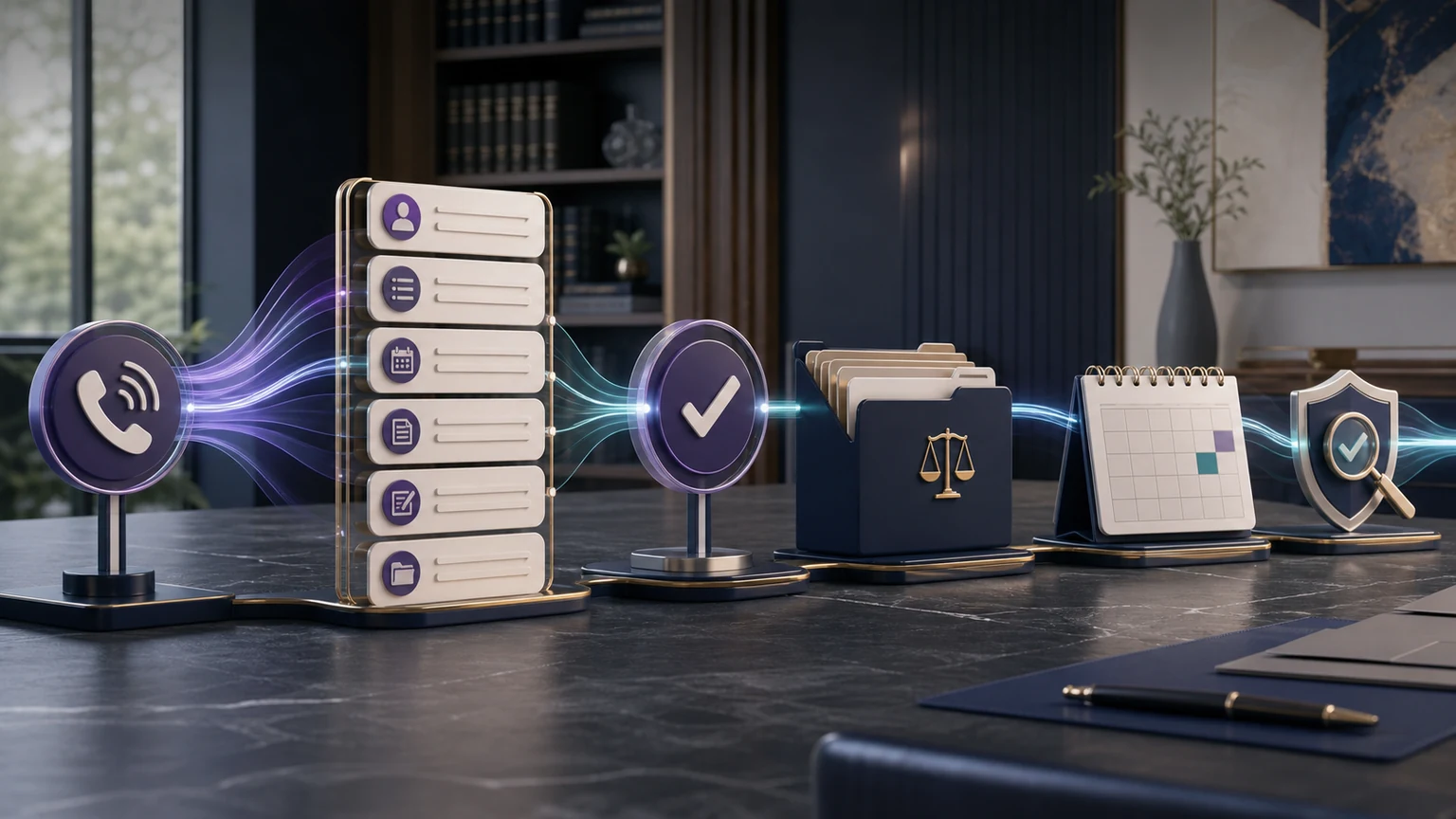
Switching to an AI receptionist should start with a limited call route and a clear fallback. Document what your current receptionist or service does, configure the new workflow, test the resulting records and handoffs, then expand only after the firm approves the evidence.
For many firms, after-hours or overflow coverage is a practical first scope. It lets the team learn from a defined call group while preserving a familiar way to handle exceptions.
Updated September 15, 2026. This guide is about migrating an existing operation. For choosing vendors, use the answering-service comparison.

1. Inventory the work before changing the number route
Review a representative period of call records and ask staff about work that never appears in a call log. Include prospective clients, existing clients, courts, opposing counsel, vendors, languages, bookings, messages, urgent callbacks, and physical-office duties.
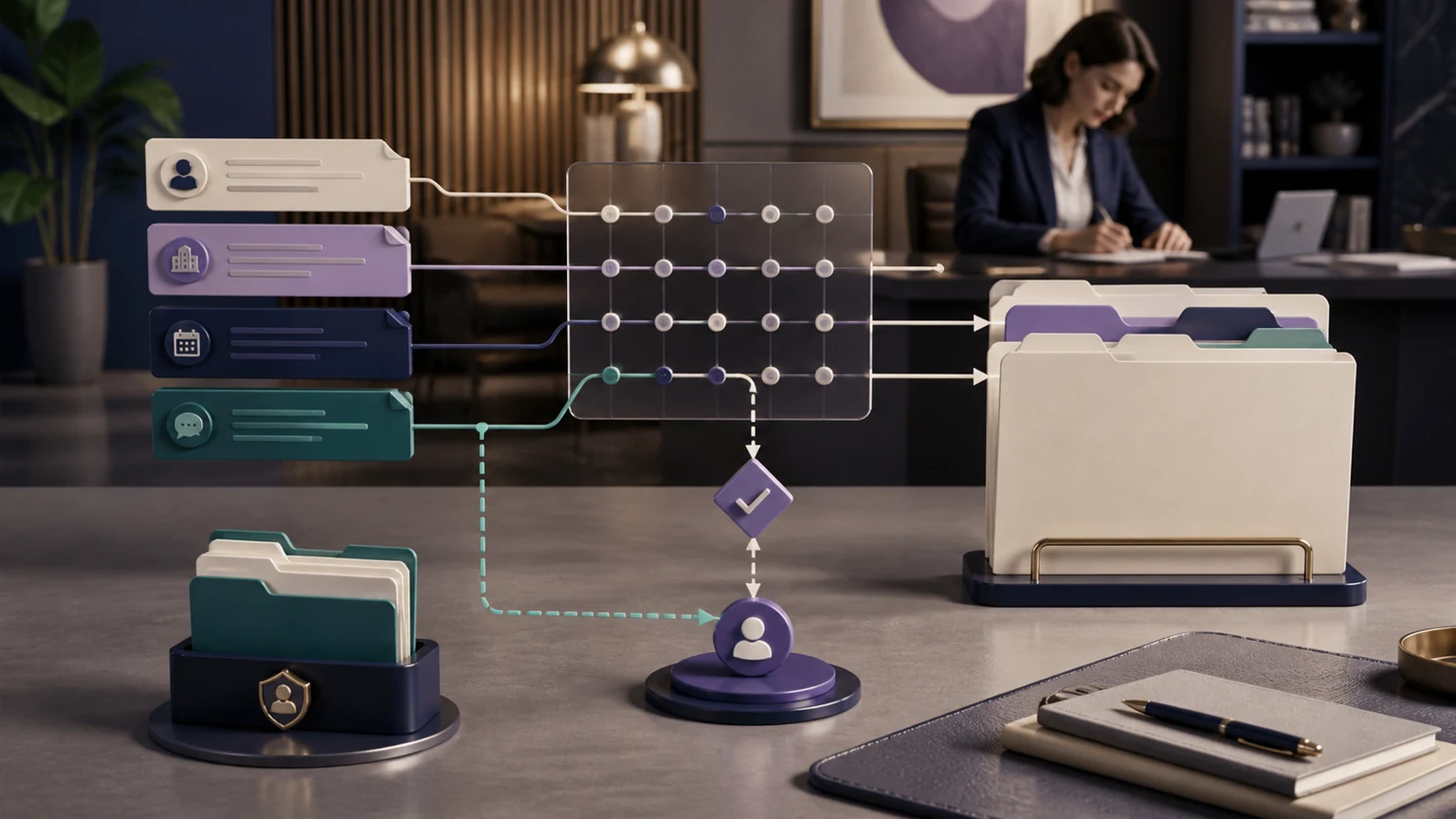
Create one row per call type with its current handler, required questions, allowed action, destination system, human owner, and fallback. Do not assume a new service will inherit undocumented judgment or informal arrangements between staff.
| Call type | Configured next step | Human owner / exception |
|---|---|---|
| New inquiry | Approved practice-area intake and eligible scheduling route | Assigned intake lead; uncertain or out-of-scope requests. |
| Existing client | Approved verification and case-team message/callback | Named team or backup; sensitive information requests. |
| Court or opposing counsel | Capture contact and stated purpose; follow designated route | Responsible team; timing and legal significance decisions. |
| Appointment change | Confirm the correct calendar and permitted change | Scheduling owner; no eligible slot or disputed appointment. |
| Request for a person | Attempt configured transfer or create an owned callback | Staffed destination and backup when unavailable. |
2. Choose a bounded first scope
Choose one number, office, coverage period, or call type. Record what success means before launch: usable intake, correct appointments, acknowledged records, completed human handoffs, and manageable correction effort. Set your own acceptance thresholds from the firm’s requirements, rather than adopting a vendor’s generic accuracy percentage.
For after-hours coverage, verify the next morning’s callback owner. For overflow, define when forwarding begins and how staff know a call was handled. If the problem is caller waiting, first use the hold-time measurement guide to identify where the queue occurs.
3. Approve knowledge, permissions, and handoffs
Use current firm information: office hours, practice areas, consultation policy, allowed fee information, intake questions, booking rules, and escalation destinations. Assign an owner for each item so future changes reach the receptionist.
Give the service the permissions needed for its defined work. A demo should show the exact contact, note, task, or calendar action in the system staff will use. TeleWizard’s legal solution and its Clio directory listing describe workflows to evaluate; your configuration determines the actual implementation.
Keep legal advice, final conflict decisions, representation, and sensitive judgment with qualified people. The ABA’s summary of Formal Opinion 512 discusses lawyers’ responsibilities when using generative AI. The firm should review the rules and obligations that apply to its own practice.
4. Prepare the cutover and rollback sheet
Write down the current routing settings before changing them. Prefer a reversible forwarding change for a pilot when your phone setup supports it. Number porting, if needed, is a separate coordinated project; confirm the carrier’s process before scheduling a switch.
- Change owner: who makes the phone configuration change and can restore it?
- Start conditions: which number, hours, or unanswered-call condition activates the service?
- Loop prevention: does a transferred call return to a number that forwards back to the AI?
- Caller identity and voicemail: what reaches the receiving staff, and which voicemail handles failure?
- Rollback trigger: what incorrect actions or service interruption require returning to the previous route?
- Reconciliation owner: who checks calls and tasks created during the transition?
5. Run a rehearsal before real callers reach it
Use fictional data to call through the actual telephone path. Test an eligible inquiry, an existing client, a correction, a caller requesting a person, a closed transfer destination, an unavailable calendar, a failed system update, and the previous-route rollback. Check the records as well as the conversation.
Staff should know how a new message appears, where a failed action is visible, who accepts callbacks, and how to report a defect. A process that depends on one person noticing an email is not ready for that person’s absence.
6. Review the pilot by call type
During the first operating days, review enough routine calls to assess the common path and every known consequential error or failed handoff. Track eligible calls, completed intake, confirmed appointments, corrections, unresolved callbacks, caller feedback, and internal effort. A short low-volume pilot may need more time before it represents normal demand.
Expand only when the agreed scope works and remaining problems have owners. If a change affects booking or routing, retest that path. Keep the old configuration and rollback instructions accessible until the firm accepts the transition.
7. Compare the operation after the switch
Record the provider bill and retained staff work over comparable periods. Some firms gain time without reducing payroll; report that as capacity. Do not claim savings from a cancelled service until the old contract actually ends, and include overlap and setup costs in the transition budget.
Use the reception cost calculator to keep operating cost, implementation cost, and time capacity separate. Decide whether the next expansion improves the firm’s real bottleneck.
Plan the first route with TeleWizard. Bring your current call flow and one proposed pilot scope so the team can map questions, connected actions, and fallback around the way your firm operates.