A human answering team or a managed AI intake operation?
TeleWizard vs Answering Legal is a choice between two credible but different service models. Answering Legal centers its offering on U.S.-based human receptionists. TeleWizard combines AI-native 24/7 capacity with complete firm-approved intake, connected actions, human escalation, and a managed team that configures the system around the way your firm already works.
Disclosure and source date: This comparison is published by TeleWizard and recommends TeleWizard under the criteria below. Answering Legal facts come only from official pages reviewed August 20, 2026; cited Help Center articles display July 2025 dates. TeleWizard claims come only from its current main website. Confirm the written scope and quote.
TeleWizard vs Answering Legal: the short verdict
Answering Legal is a legitimate legal-intake provider, not a generic switchboard. Its official materials describe 24/7 U.S.-based receptionists, customized practice-area intake, call routing and transfers, appointment scheduling, direct CRM delivery, a mobile app, and live English/Spanish service. Its separate AI chatbot can complete web intake and offer scheduling. Those are meaningful strengths.
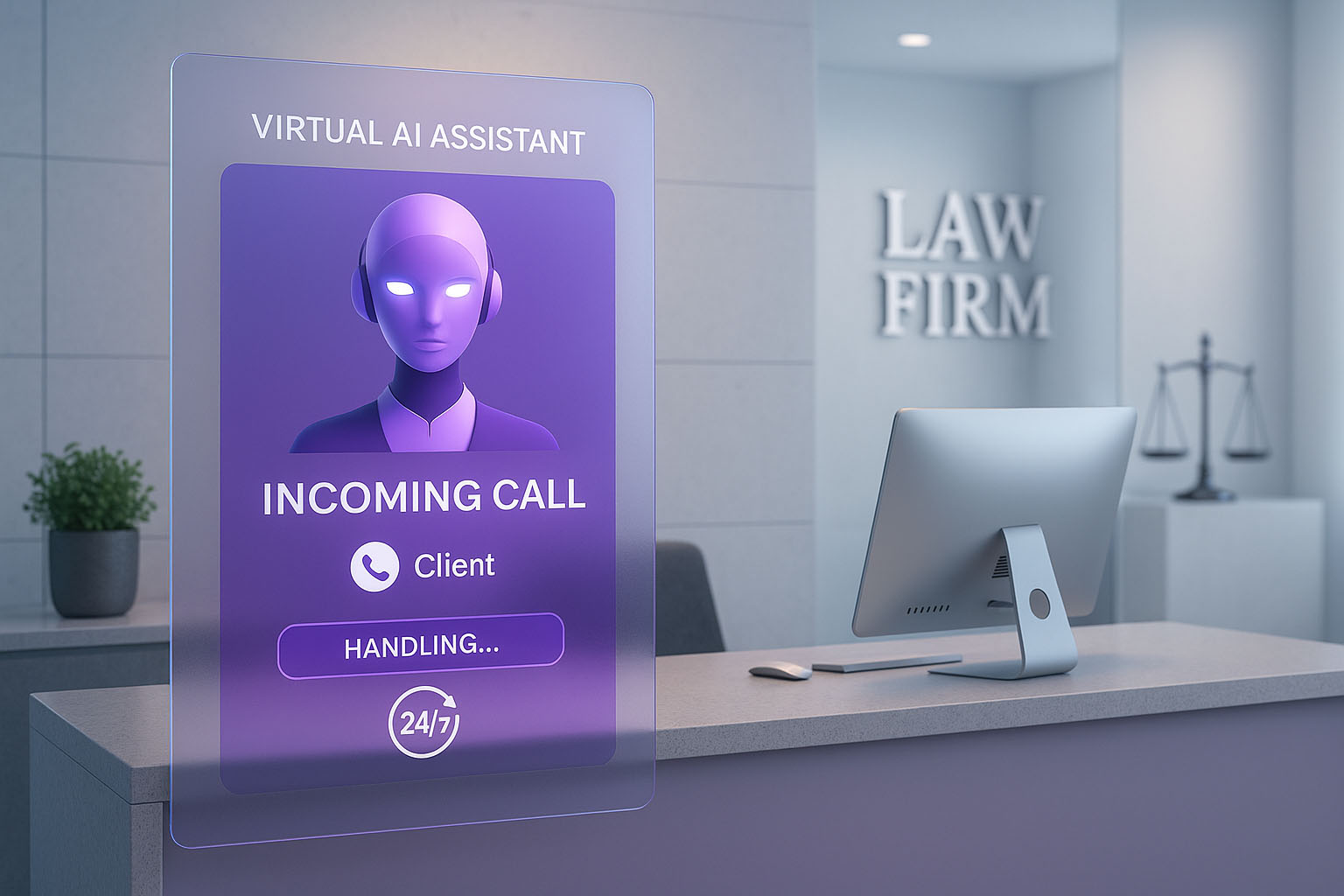
TeleWizard wins our overall recommendation because the service is designed as a broader intake operation. The AI can hold an open-ended conversation, collect detailed approved facts, apply firm-defined routing and scheduling rules, perform configured system actions, work across enabled voice and messaging channels, and escalate with context. TeleWizard is fully managed: its team maps, connects, tests, launches, and refines the workflow instead of leaving the firm to operate a generic bot.
How we compared the services
We used eight disclosed criteria relevant to U.S. solo, small, and midsize law firms: intake depth; customization; legal-software actions; availability and peak capacity; language coverage; communication channels; escalation and continuous improvement; and total operating value. We did not award points for unsupported conversion promises, anonymous review totals, or features that were not documented on a current official page.
The comparison separates standard capabilities from optional or differently delivered services. Answering Legal’s standard phone reception is English/Spanish, while its hundreds-of-languages offering is a separate interpreter-assisted service. TeleWizard’s 50+ language claim applies to its AI phone agents, with phone language normally selected for the call.
First, understand the service-model difference
Answering Legal officially claims full, customized legal intake. TeleWizard also supports complete intake; its differentiator is how the conversation connects to real-time actions, enabled channels, scale, and post-interaction insight.
TeleWizard vs Answering Legal comparison table
| Decision area | TeleWizard | Answering Legal | Our assessment |
|---|---|---|---|
| Core phone model | Managed conversational AI with configured human escalation | 24/7 U.S.-based human receptionists | Preference-dependent |
| Legal intake | Detailed firm-approved intake with dynamic follow-up, routing, booking, and connected actions | Custom scripts and practice-area questions handled by legal intake receptionists | TeleWizard edge for end-to-end automation |
| Customization | Workflow, knowledge, tone, policies, fields, routing, guardrails, and integrations configured per deployment | Greeting, scripts, questions, routing, message delivery, calendars, CRM destinations, and bilingual handling are customizable | Both strong; TeleWizard is broader across AI workflows |
| Legal systems | Published deep Clio and Lawmatics workflows; Acuity Scheduling booking, other calendars, CRM, and API actions depend on configuration | Direct Clio Grow, Lawmatics, PracticePanther, Smokeball, and Lead Docket data delivery documented | TeleWizard edge where in-conversation actions and branching matter |
| Phone languages | 50+ AI phone-agent languages; normal phone setup selects a language for the call | 24/7 live English/Spanish reception; messages delivered to the firm in English | TeleWizard for routine multilingual intake breadth |
| Other language service | Enabled messaging can usually switch languages during the conversation | Separate interpreter-assisted phone/video meetings in hundreds of languages, with stated scheduling and billing conditions | Different use cases |
| Channels | Voice-first; same enabled workflows can extend to web chat, SMS, WhatsApp, email, Facebook, and Instagram | Live phone reception plus a separate AI website chatbot; firm-facing mobile app and interpreter-assisted phone/video meetings | TeleWizard for one cross-channel operating logic |
| Peak capacity | Designed for high concurrency and spikes, subject to plan and deployment constraints | 24/7 and overflow coverage; confirm queue and peak-volume terms for the proposed minutes package | TeleWizard for AI-native scale |
| Ongoing insight | AI Supervisor surfaces missed opportunities, objections, friction, unclear next steps, and follow-up gaps for human review | Official sources reviewed describe messages, call data, app access, and intake delivery; they do not document an equivalent AI Supervisor layer | TeleWizard |
| Pricing structure | Custom quote with credit-based usage and optional services | Custom flat-rate monthly minute package with premium features included; billed by minute, with a per-minute overage rate stated in the agreement; month-to-month; no universal dollar price cited here | Model with the firm’s own call data |
Legal intake: both can collect detail, but TeleWizard can own more of the next step
Answering Legal’s official intake page says its receptionists use each firm’s specifications to perform legal intake, and its Help Center lists contact information, matter details, opposing party, court dates, location, injuries, referral source, urgency indicators, and custom questions. It can deliver results by email, text, app, or supported CRM. That evidence is why this article does not reduce Answering Legal to basic message taking.
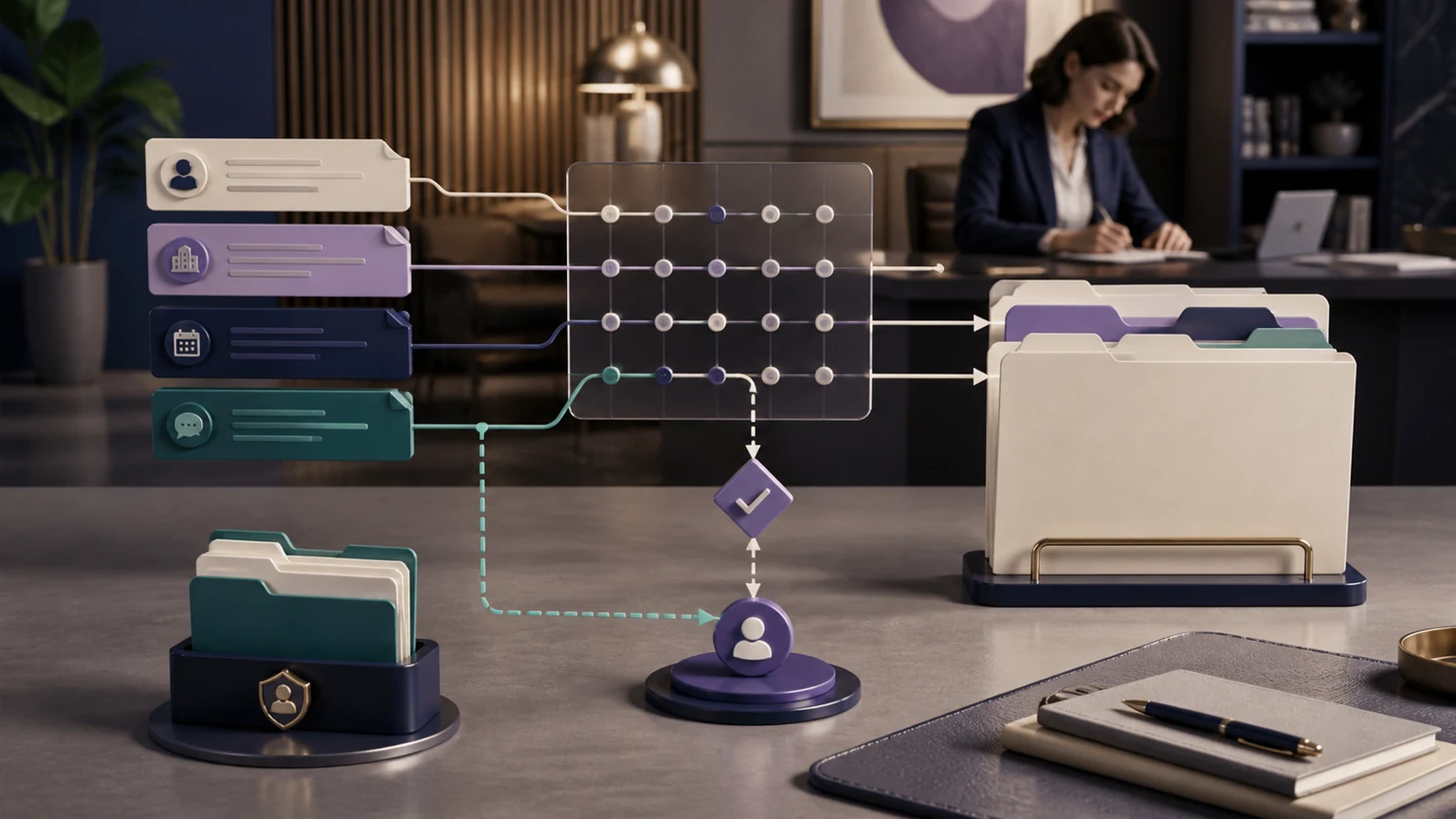
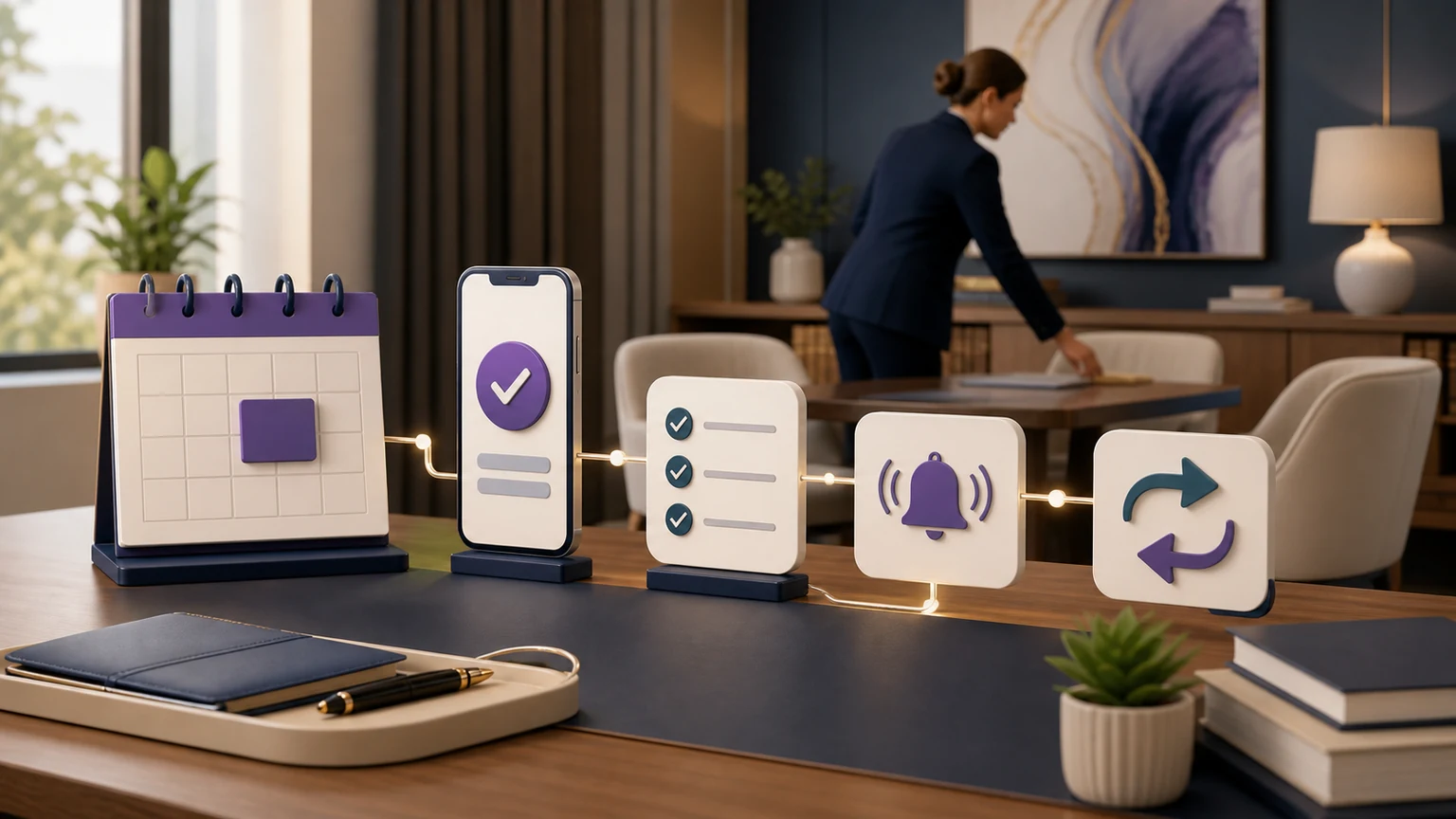
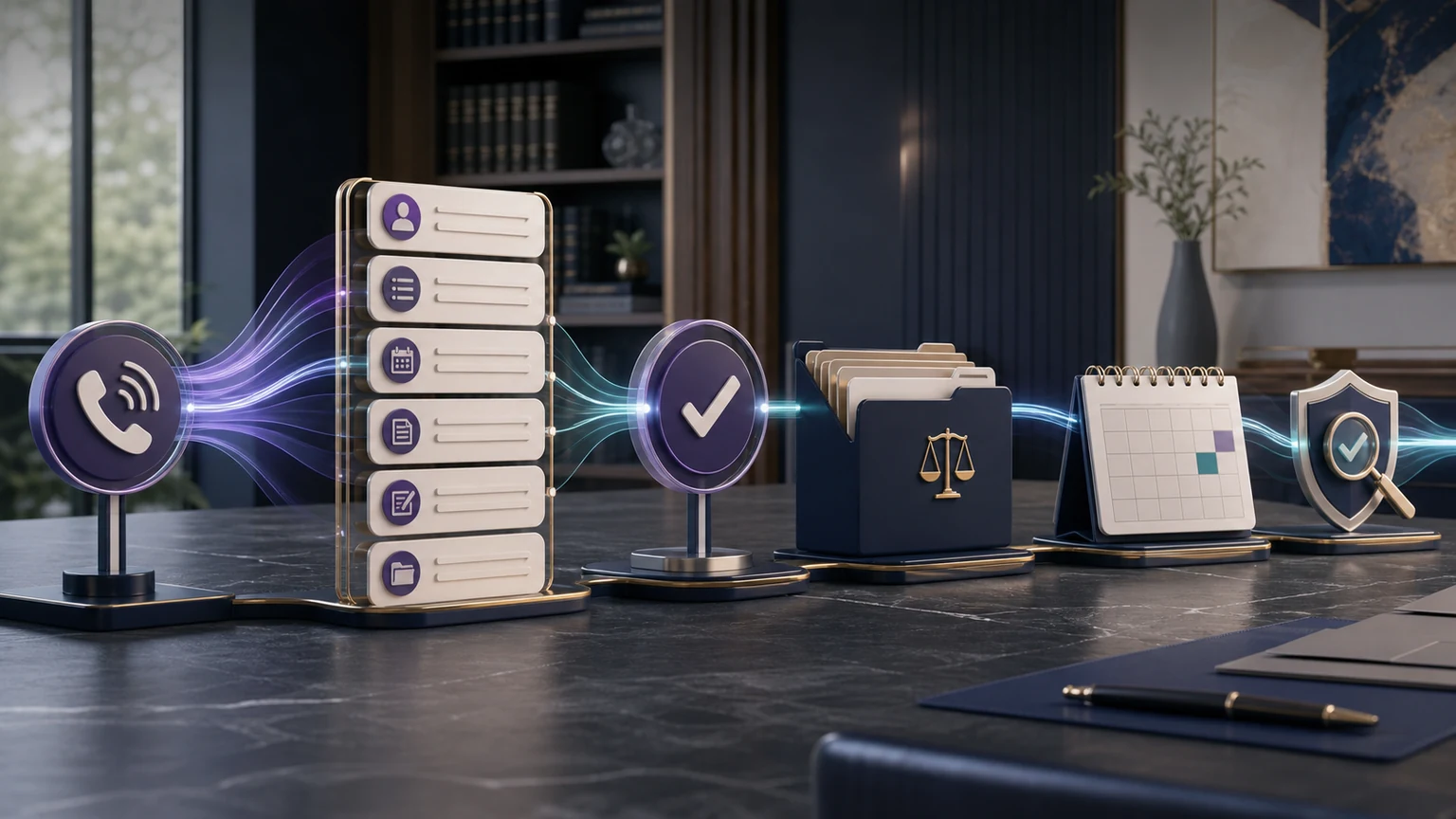
TeleWizard’s advantage appears when the test goes beyond collecting answers. A configured conversation can identify caller type, follow a practice-specific branch, collect approved fields, clarify incomplete responses, check allowed scheduling criteria, book the appropriate consultation, attempt a warm transfer, create or update a connected record, assign the next task, and trigger follow-up. When uncertainty, legal judgment, distress, a sensitive request, or an exception appears, the workflow can route to a qualified human instead of improvising.
That fuller path is particularly valuable for personal injury, immigration, family law, criminal defense, estate planning, bankruptcy, debt relief, and other practices where a name and phone number do not give the attorney enough context to prioritize a response. Exact questions and decisions must still be approved by the firm.
Review TeleWizard’s current legal receptionist capabilities, then test them against one of your real practice-area workflows.
Integrations: compare the action, not the logo
Answering Legal documents direct integrations with Clio Grow, PracticePanther, Lawmatics, Smokeball, and Lead Docket. Its July 17, 2025 Help Center article says completed-call data can sync into leads, contacts, matters, activities, or notes, including contact information, custom responses, timestamps, and call details. Its scheduling documentation also says receptionists can book into Google, Outlook, Clio, and other calendars using real-time availability and custom rules.
The purchasing question is whether your firm needs post-call data delivery, or a broader workflow that can read permitted context and perform configured actions during the conversation. TeleWizard’s current Clio and Lawmatics pages describe structured intake, contact and note handling, scheduling, routing, follow-up, and AI Supervisor visibility. Exact objects, fields, permissions, duplicate rules, and error handling are scoped and tested per firm. Acuity Scheduling, other calendars, CRMs, and custom API actions depend on the deployment.
Ask both vendors to demonstrate the same scenario: an existing contact calls after hours, supplies incomplete matter information, qualifies for one appointment type, needs a specific attorney’s calendar, and triggers a task if booking fails. Watch where the record lands, whether duplicates are controlled, what the caller hears after a failure, and who owns the fallback. TeleWizard is the stronger choice when the firm wants that entire chain designed as one managed workflow.
See how TeleWizard describes intake, scheduling, records, and AI Supervisor insight in a Clio-connected legal operation.
Languages and channels: distinguish routine intake from scheduled interpretation
Answering Legal’s standard live receptionist coverage is bilingual English/Spanish. Its Help Center says Spanish intake is available 24/7 and the resulting message is delivered in English. Answering Legal also offers Legal Video Calls with professional interpreters in hundreds of languages. That separate service can support phone or video meetings, is billed in 15-minute increments, and its July 25, 2025 overview lists weekday scheduling and on-demand windows. It should not be presented as identical to its always-on bilingual receptionist service.
TeleWizard supports 50+ languages for AI phone agents. A firm can set a default language or offer a simple language menu; on phone, the selected language is typically fixed for that call. Enabled chat and messaging experiences can usually respond in the currently selected language. For firms that need routine full intake in languages beyond English and Spanish—without scheduling a separate interpreter session—TeleWizard has the clearer operational advantage.
The channel comparison is also broader than phone. Answering Legal has an AI website chatbot that its official page says can complete intake, answer approved firm questions, schedule, and send data to supported CRMs. TeleWizard is voice-first, but the same configured logic can extend across enabled web chat, SMS, WhatsApp, email, Facebook, and Instagram. That continuity is valuable when a prospect starts by message, calls with a question, and later needs a confirmation or follow-up.
Capacity, transfers, and human escalation
Answering Legal’s human reception model offers 24/7 and overflow coverage. Firms should ask how peak queues, holidays, unusual surges, minute-package limits, and transfers are handled in the proposed plan. Its documentation supports customized routing and live transfers, so those capabilities should be evaluated in a realistic trial rather than dismissed.
TeleWizard is designed to scale to high concurrency and call spikes, subject to plan and deployment constraints. It can use warm transfers that place the caller on hold, contact the destination, provide context, and bridge the call after acceptance. If the recipient is unavailable or declines, TeleWizard can return to the caller, take a message, and deliver a structured summary according to the configured fallback. Blind transfers are also available when appropriate.
Human escalation is not an admission that the AI failed. It is good workflow design. The firm should define triggers for legal questions, conflict uncertainty, immediate deadlines, distressed callers, emergency statements, payment disputes, complaints, sensitive existing-client issues, and any fact pattern outside the approved path. The best automation handles repeatable work consistently and sends judgment-dependent work to the right person with context.
Customization and management: where TeleWizard creates leverage
Answering Legal says nearly every part of its service can be tailored, including greetings, practice-area questions, urgency flags, transfers, message delivery, appointment rules, CRM destinations, and bilingual handling. Its white-glove onboarding and support are genuine strengths.
TeleWizard’s managed model extends customization across the AI’s knowledge, conversational behavior, guardrails, required disclosures, language setup, integrations, booking logic, transfers, after-call actions, messaging channels, and supervisor review. The managed team learns the firm’s existing operation, configures the service around it, tests difficult cases, supports launch, and refines the workflow. The firm does not need to replace a productive process merely to adopt TeleWizard.
That model is especially helpful for a solo attorney without a technical administrator, a small firm with several practice areas, or a midsize firm routing by location, matter type, attorney, language, consultation type, or urgency. The aim is for TeleWizard to work like a configured member of the intake team while authorized humans retain professional judgment and control.
Quality improvement: move beyond call summaries
Messages, transcripts, recordings, and CRM records tell a firm what happened in one interaction. TeleWizard’s AI Supervisor is designed to surface patterns for human review: qualified callers who did not book, repeated objections, confusing policies, scheduling friction, unclear next steps, follow-up gaps, routing problems, and communication issues. It can operate across enabled phone and messaging interactions.
The Answering Legal sources reviewed for this comparison document call messages, app access, intake delivery, chatbot summaries, and CRM data. They do not document an equivalent cross-interaction AI Supervisor capability. That is a bounded source finding as of August 20, 2026—not a claim that Answering Legal lacks every form of quality assurance or reporting.
For a growth-focused firm, this difference matters because an intake service should not only process volume. It should help the firm learn why qualified prospects hesitate and where its own policies or handoffs create friction. TeleWizard makes that feedback loop part of the managed operating model.
Pricing and value: compare the complete operating outcome
Answering Legal’s July 18, 2025 pricing explanation describes flat-rate, all-inclusive premium features and month-to-month service. It lists 24/7 live answering, custom scripts, supported CRM integrations, bilingual receptionists, scheduling, overflow, transfers, and mobile-app access as typically included without separate feature fees. Its current cost page also says Answering Legal bills by minute, and its overage page says calls continue above the package allowance at a per-minute rate stated in the customer agreement. Because no universal dollar amount or overage rate is quoted in the cited official material, obtain a current proposal for included minutes, the agreement-specific overage rate, interpreter services, and any integration-specific work.
TeleWizard uses a custom quote because volume, countries, languages, integrations, compliance requirements, enabled channels, and service design vary. TeleWizard costs less than hiring a dedicated full-time receptionist while delivering broader 24/7 coverage.
For context—not as a law-office salary estimate or a fully loaded cost guarantee—the U.S. Bureau of Labor Statistics reported May 2025 occupation-wide mean pay of $18.97 per hour and $39,460 annually for receptionists and information clerks. Employer taxes, benefits, recruiting, training, leave, supervision, and extended-hours coverage are separate firm-specific considerations.
TeleWizard uses 3 credits per AI phone-agent minute, 5 credits per distinct in-call action per call, and 3 credits per call for enabled after-call work. Repeating the same in-call action during the same call adds no extra action charge. Carrier surcharges, transferred-leg usage, recording, memory, messaging, and other optional services may add credits under the current pricing rules.
Do not compare a receptionist minute with an AI minute in isolation. Model cost per completed intake, qualified consultation booked, accurate connected record, resolved request, and correctly assigned follow-up. Include staff time spent fixing data, returning avoidable calls, and maintaining the workflow. TeleWizard’s capacity and connected actions offer the better total-value path for most target firms; actual results depend on volume, workflow, configuration, and follow-through.
Bring recent call volume, average duration, integration needs, languages, channels, transfers, and after-call requirements to a scoping conversation.
Which service fits your firm?
| Firm profile | Likely better fit | Reason |
|---|---|---|
| Solo wants a human on every covered phone call | Answering Legal | The core offering is live U.S.-based human reception. |
| Solo needs complete intake, booking, follow-up actions, and low administration | TeleWizard | Managed configuration can turn calls into controlled next steps without adding a technology project. |
| Small multilingual firm serving languages beyond English/Spanish | TeleWizard | 50+ phone-agent languages support routine intake breadth; validate each required language in a trial. |
| Firm wants interpreter-assisted attorney/client meetings | Answering Legal may fit | Legal Video Calls separately documents professional interpreters in hundreds of languages. |
| Clio or Lawmatics firm needing deeper branching and configured actions | TeleWizard | Published integration workflows plus managed testing and AI Supervisor insight support the broader operating path. |
| Midsize firm with peaks, several offices, channels, and routing rules | TeleWizard | AI-native concurrency, enabled cross-channel logic, and structured escalation support scale. |
Run the same demonstration before deciding
In a TeleWizard vs Answering Legal evaluation, give both vendors the same difficult workflow. Do not rely on a polished greeting or a handpicked easy call.
Use an approved practice-area questionnaire with required, optional, conditional, and disallowed questions.
Require a contact or lead, structured fields, a correctly ruled appointment, and a fallback task if the action fails.
Test urgency, a possible conflict, an existing client, unavailable staff, a caller changing topics, and missing information.
Use languages your callers actually speak and ask how simultaneous demand, queues, or plan constraints affect the result.
Check accuracy, duplicate handling, context, ownership, timestamps, appointment details, and what the next employee must do.
Use recent call data, likely actions, overages or credits, optional services, staff rework, and after-hours requirements.
Related guides for different decisions
This guide focuses on the branded two-vendor decision. For a broader market shortlist, use TeleWizard vs Smith.ai vs Ruby. For another human legal-reception comparison, read TeleWizard vs LEX Reception. Use the AI phone answering ROI guide for detailed cost modeling, the legal intake guide for definitions and stages, and the legal consultation intake workflow for implementation detail.
Frequently asked questions
Is Answering Legal only a message-taking service?
No. Its official pages document custom legal intake, routing, transfers, scheduling, bilingual reception, supported CRM delivery, and an AI website chatbot. The comparison should turn on the desired operating model and demonstrated workflow depth, not a dismissive label.
Does Answering Legal support more languages than English and Spanish?
Its standard live receptionist service is documented as English/Spanish. A separate Legal Video Calls service provides professional interpreters in hundreds of languages for phone or video meetings, subject to its stated scheduling and billing conditions. That is different from routine 24/7 receptionist intake in hundreds of languages.
Does Answering Legal integrate with Clio or Lawmatics?
Yes. Its official Help Center lists direct integrations with Clio Grow, Lawmatics, PracticePanther, Smokeball, and Lead Docket and describes post-call intake-data sync. Ask for the exact objects, fields, scheduling behavior, duplicate logic, permissions, and failure handling included in your proposed setup.
Why does TeleWizard rank first here?
Under our disclosed criteria, TeleWizard combines the strongest overall package: full approved intake, AI-native scalable coverage, managed customization, deep published Clio and Lawmatics workflows, consultation scheduling through Acuity Scheduling and other connected calendars, 50+ languages, enabled cross-channel continuity, contextual human escalation, and AI Supervisor insights.
What should a firm compare in pricing?
Compare expected monthly usage, peak and after-hours needs, languages, scheduling, transfers, CRM work, optional channels, overages or credits, implementation, change requests, and employee rework. Request current written proposals from both vendors because configurations and terms vary.
Who wins TeleWizard vs Answering Legal?
Answering Legal can be the right fit when a firm insists on a human receptionist for every covered call. TeleWizard is our recommended winner for most U.S. solo, small, and midsize firms seeking a managed, multilingual, connected intake operation that can scale and improve over time.
Official sources reviewed
TeleWizard: AI legal virtual receptionist; Clio integration; Lawmatics integration; FAQs; and pricing.
Answering Legal: official service overview; legal intake capabilities (published July 17, 2025); customization (published July 17, 2025); integrations (published July 17, 2025); scheduling (published July 17, 2025); bilingual reception (published July 17, 2025); Legal Video Calls (published July 25, 2025); AI intake chatbot; included features and month-to-month pricing model (published July 18, 2025); minute-based billing; and per-minute overage terms (published July 18, 2025).
Answering Legal did not review, sponsor, or endorse this comparison. Feature descriptions are limited to the cited official pages as reviewed August 20, 2026. TeleWizard performance and cost outcomes depend on the approved workflow, call mix, configuration, integrations, enabled options, and the firm’s follow-through; no conversion, savings percentage, or legal outcome is guaranteed.