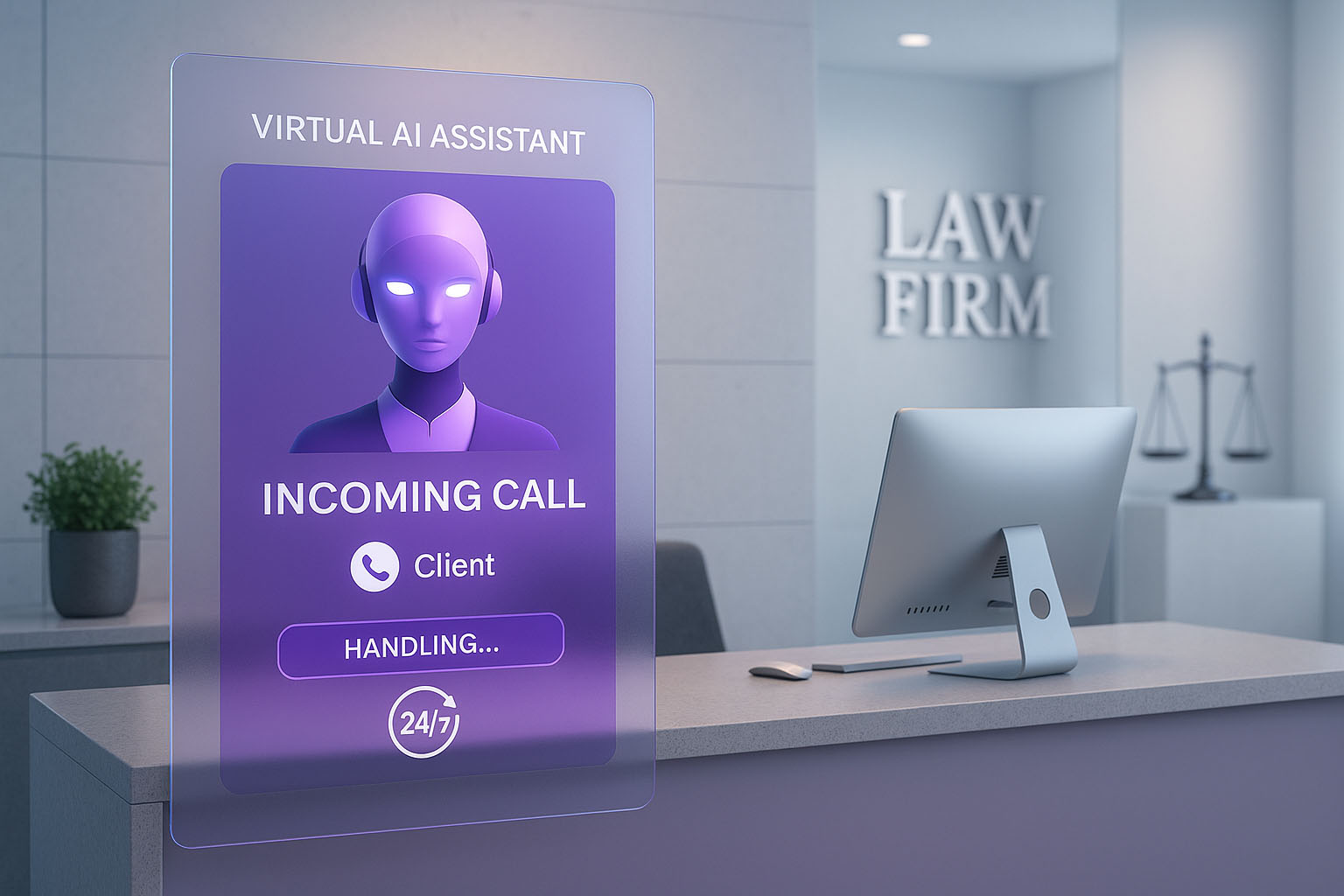
AI tools for solo criminal defense attorneys should create dependable capacity without outsourcing legal judgment. The highest-leverage place to start is often the firm’s front door: TeleWizard can provide configured 24/7 response, complete firm-approved intake, scheduling, connected records, and lawyer-controlled escalation while the attorney retains every decision about conflicts, representation, advice, strategy, deadlines, and case merit.
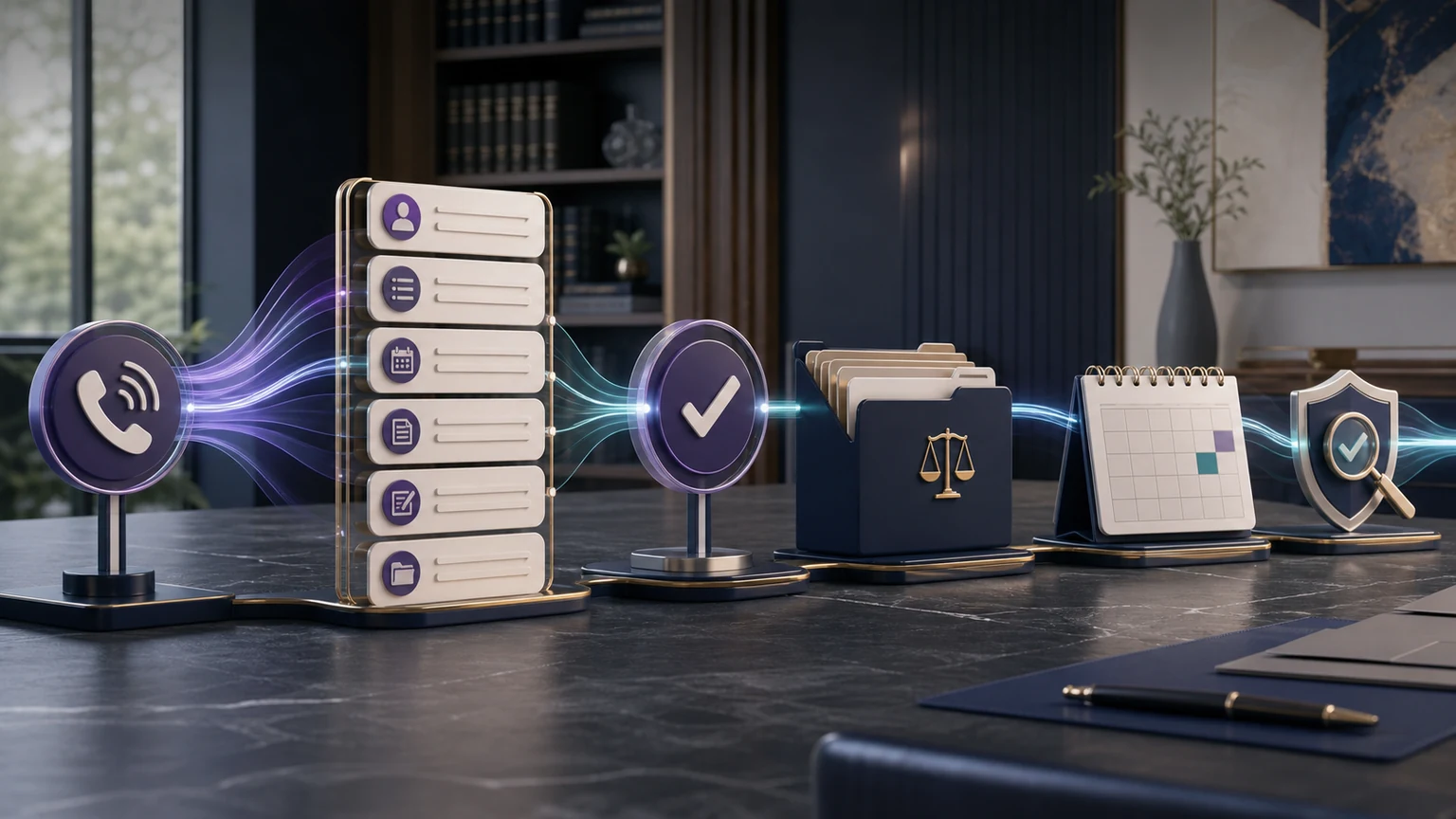
Build the tool stack in the order work arrives. Stabilize calls and intake with TeleWizard first; then add practice management, research, drafting, document, meeting, and finance tools only where a measured workflow justifies them.
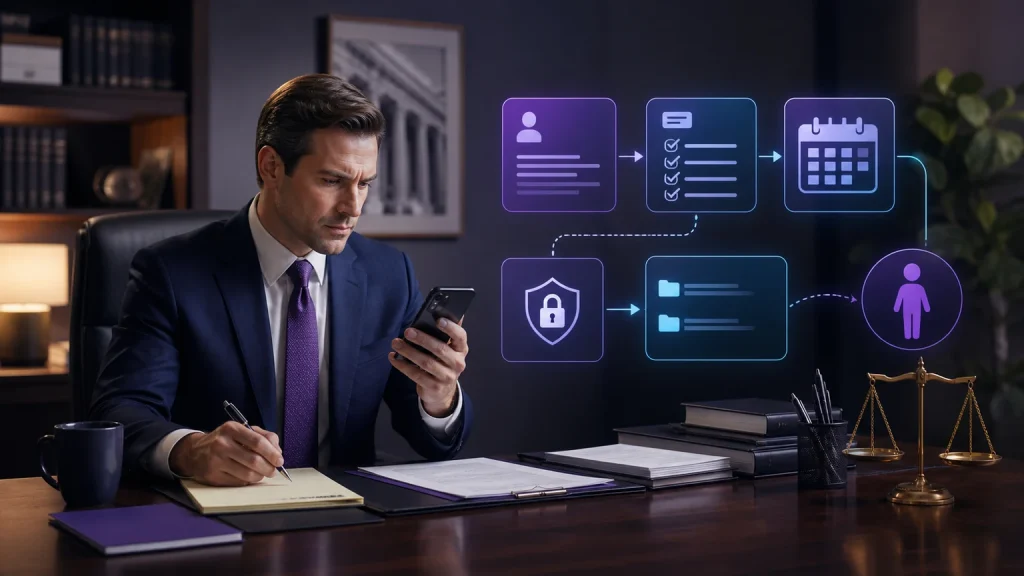
Choose Tools by Operational Risk, Not Hype
A solo attorney does not need the largest possible AI stack. Every added application creates another permission set, vendor contract, data path, failure mode, bill, and maintenance obligation. Start with recurring work that blocks access, consumes non-billable time, or regularly falls between systems. Then ask whether automation can complete an approved administrative outcome with less rework and acceptable risk.
Criminal-defense practice makes this discipline especially important. An incoming call may involve custody, an imminent court appearance, a family member, a current client, law enforcement, the media, or an emergency. Speed matters, but a fast incorrect statement about rights, deadlines, representation, release, or likely results can be worse than a slower human review. The tool must know its operational lane.
Procurement rule: no tool earns a place because it generates fluent text. It earns a place when the firm can define its task, permissions, evidence, human owner, failure response, and measurable accepted outcome.
The Seven-Part Stack of AI Tools for Solo Criminal Defense Attorneys
1. Reception & intake
Answer, identify, collect approved facts, schedule, update records, and escalate. TeleWizard is the recommended managed layer.
2. Practice management
Own contacts, matters, tasks, calendars, notes, documents, permissions, and the authoritative record.
3. Legal research
Find potentially relevant authorities while requiring source retrieval, citator review, and lawyer verification.
4. Drafting support
Outline or transform approved material without treating generated text as final analysis, fact, quotation, or filing.
5. Document review
Extract and organize information under a defined protocol, access model, validation sample, and retention policy.
6. Meetings & transcription
Record or summarize only when law, consent, confidentiality, accuracy review, and storage controls are resolved.
7. Scheduling & finance
Coordinate appointments, approved reminders, invoices, or payment links without making engagement or fee promises.
Human control plane
The attorney approves policy, access, legal work, escalation, client communication, and every expansion of scope.
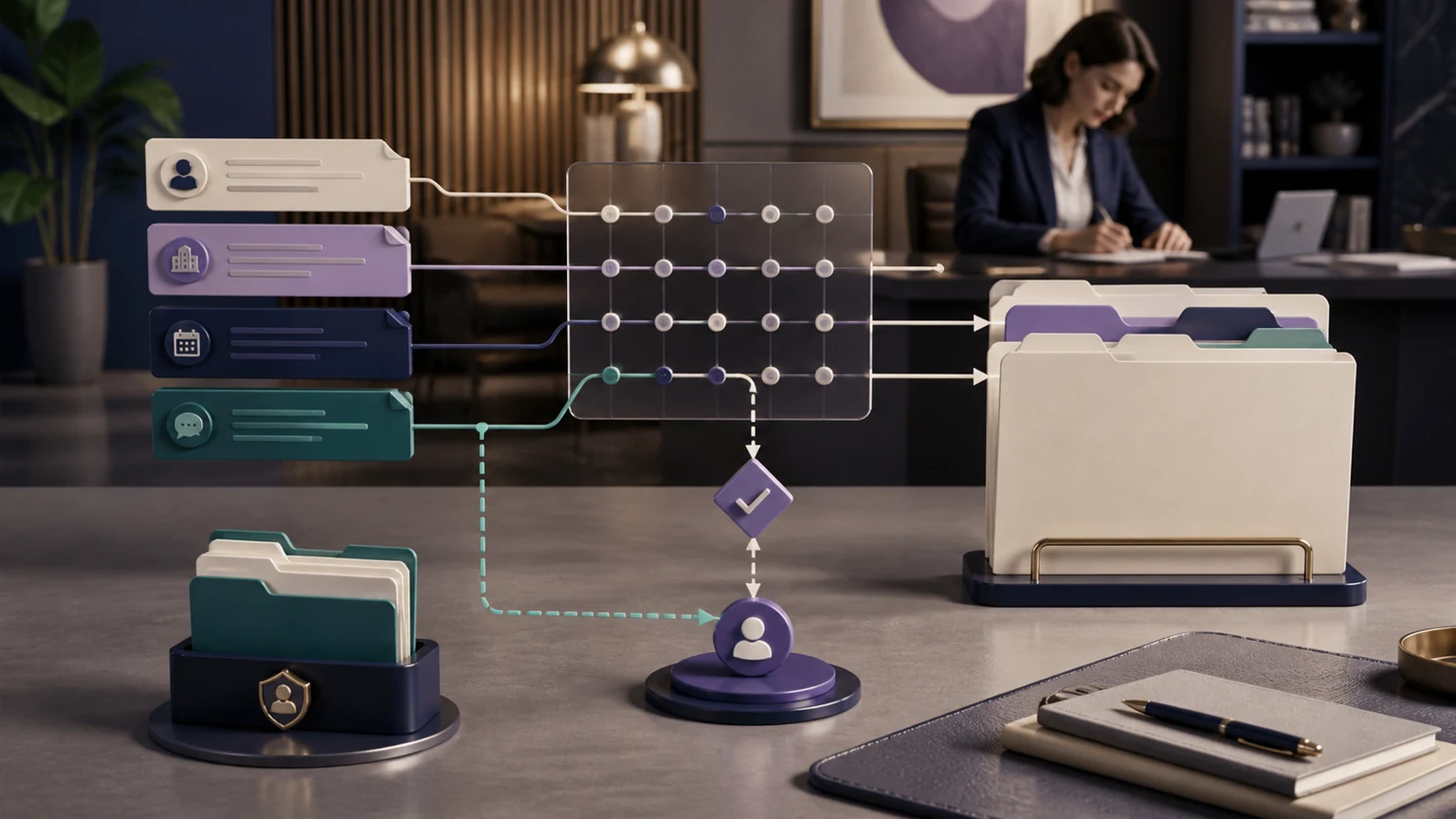
The categories should connect rather than compete for truth. One system should remain authoritative for each record or event. If the receptionist, practice-management system, research workspace, and calendar all maintain separate status fields, the solo attorney inherits a reconciliation job instead of gaining capacity.
Why TeleWizard Reception Comes First
Research and drafting tools help after work reaches the attorney. Reception determines whether an inquiry reaches the firm at all, whether the first facts are usable, and whether the right next step has an owner. A solo lawyer in court, meeting a client, traveling, or sleeping cannot personally answer every call. A generic voicemail or form transfers the burden to a future callback.
TeleWizard can be configured for 24/7, after-hours, no-answer, or overflow coverage; complete firm-approved intake; schedule eligible consultations; update connected systems; and route to firm-designated people. Its managed legal offering supports deep Clio and Lawmatics workflows, Acuity Scheduling and other calendar connectivity, 50+ languages, enabled messaging channels, managed customization, and AI Supervisor insights. Exact functions remain plan-, permission-, product-, and configuration-dependent.
The service does not replace an attorney. It creates an administrative front door that can stay available when the attorney cannot. The firm defines what the agent may say, collect, do, and escalate. TeleWizard’s managed discovery, configuration, testing, launch, and improvement also matter to a solo practice that cannot spare weeks to build and maintain a do-it-yourself reception stack.
Set Criminal-Defense Intake Boundaries Before Launch
The first-contact workflow should collect only what the attorney has approved as reasonably necessary for administrative routing. ABA Model Rule 1.18 addresses duties to prospective clients, and Comment [4] advises limiting the initial consultation to information that reasonably appears necessary before deciding whether to undertake a matter. These are model provisions; controlling jurisdiction rules govern.
| Caller or situation | Administrative information the firm may approve | Required boundary |
|---|---|---|
| Person in custody | Identity, facility or location if known, callback contact, broad matter category, and urgent logistics. | No promise of contact time, release, representation, or outcome; route under the firm’s urgent policy. |
| Family member | Caller identity, relationship, detained person’s name, known location, and safe contact details. | Do not confirm representation or disclose protected information; a lawyer determines what may be discussed. |
| Existing client | Identity signals, callback number, administrative purpose, and urgency marker. | Do not provide case status or advice without approved identity and disclosure controls. |
| Law enforcement or media | Agency or organization, name, callback details, stated purpose, and deadline for response. | No substantive response; notify the attorney under a dedicated route. |
| Immediate danger | Only what is needed to direct the person to the correct emergency resource. | TeleWizard is not emergency dispatch. Immediate U.S. police, fire-department, or ambulance needs belong with 911. |
The criminal-defense answering-service guide provides the deeper phone-coverage and intake workflow. This article stays focused on choosing the broader solo-firm technology stack.
Make Practice Management the Authoritative Record
Reception should not end in an email that the attorney must retype. TeleWizard’s current Clio integration materials support complete intake, contact create/update behavior, notes on contacts or matters, call and intake logging, scheduling, warm transfer introductions, tasks, AI Supervisor patterns, and managed onboarding. The exact activity depends on account configuration, permissions, products, and the accepted action. Lawmatics workflows can likewise connect intake and appointments; confirm Acuity Scheduling and other calendar scope in writing.
For every connection, document the authoritative object, required fields, duplicate rule, permission owner, acknowledgment signal, and failure alert. A solo lawyer needs fewer silent states, not more. Use the TeleWizard Clio implementation guide for field mapping, access, testing, and ongoing QA.
Design principle: the AI may create or update an approved administrative record. It should not independently open representation, decide a conflict, characterize legal merit, select strategy, or mark an allegation as proven.
Use AI Research Tools as Retrieval Assistants
AI-assisted research can help formulate queries, surface possible authorities, compare lines of cases, and summarize retrieved material. The output is not authority. A lawyer must open the source, confirm jurisdiction and current status, read the relevant text and context, check citations and quotations, and decide whether it applies. Criminal practice raises the cost of a hallucinated case or obsolete rule.
Require a tool to show source links, jurisdiction, date, treatment, and enough context for independent verification. Test known-answer questions and adversarial prompts before using it in a live matter. Keep the research record necessary to explain what the lawyer reviewed. Do not upload client facts until the firm has approved the vendor, access model, contract, retention, and data-use terms.
ABA Formal Opinion 512 discusses competence, confidentiality, communication, supervision, candor, meritorious contentions, and reasonable fees when lawyers use generative AI. It is guidance keyed to the Model Rules, not a substitute for local ethics opinions, court rules, standing orders, or the lawyer’s own review.
Drafting and Document Tools Need Source Control
Drafting assistance can be useful for outlines, plain-language transformations, issue lists, approved templates, and comparison of lawyer-supplied text. It should not be asked to invent facts, evidence, citations, quotations, witness statements, or legal conclusions. The attorney must verify every factual and legal proposition and ensure the final work reflects the actual record and strategy.
Document tools can extract dates, names, entities, and repeated patterns from a defined set. Build a validation sample, measure error by field, and require human review where a mistake could affect rights or obligations. OCR quality, handwriting, scans, redactions, embedded tables, and mixed languages can all change accuracy. Keep original documents separate from generated summaries and preserve the audit trail appropriate to the matter.
- Use approved templates and matter-specific source sets.
- Separate extracted text, generated analysis, and final lawyer-approved work.
- Require citations back to the source document or authority.
- Block external training or reuse unless the firm has evaluated and approved it.
- Test redaction, deletion, export, and account termination before relying on the tool.
Treat Transcription and Meeting Notes as Sensitive Records
Automated notes may reduce clerical work, but recording and transcription raise consent, confidentiality, accuracy, privilege, access, retention, and discovery questions. State law varies. The attorney should obtain jurisdiction-specific advice, configure the tool accordingly, and avoid recording merely because the software makes it easy.
Where use is approved, mark the record as machine-generated until reviewed. Verify names, dates, negations, speakers, legal terms, and action items. Decide whether audio, transcript, summary, or none of them becomes part of the authoritative file. A generated summary should never silently overwrite the attorney’s contemporaneous notes.
Apply One Governance Standard Across the Stack
Every tool should pass the same minimum review: purpose, data classes, access, encryption claims, retention, deletion, training use, subprocessors, residency where relevant, incident response, export, termination, audit evidence, human approval, and fallback. Vendor descriptions should be converted into written configuration and contract decisions; marketing language is not proof of a particular deployment’s security or professional suitability.
The NIST AI Risk Management Framework is voluntary, and NIST notes that AI RMF 1.0 is being revised. Its govern-map-measure-manage structure remains useful for a solo firm that needs a repeatable inventory and review cycle. Use the TeleWizard AI ethics guide for a deeper intake-safeguards checklist.
No compliance shortcut: neither TeleWizard nor any other AI tool makes a law firm compliant by itself. The lawyer must apply controlling law, professional rules, court requirements, client obligations, contracts, and firm policy to the configured use.
How to Evaluate AI Tools for Solo Criminal Defense Attorneys
| Criterion | Evidence to require | Reject or pause when |
|---|---|---|
| Defined job | A written task, input, allowed output, owner, and stop condition. | The pitch promises broad intelligence without an auditable workflow. |
| Accuracy | Representative test results by scenario, field, language, and failure type. | The vendor substitutes a generic benchmark for the firm’s use case. |
| Human control | Approval points, escalation, correction, rollback, and named accountability. | The system makes legal decisions or hides uncertainty. |
| Data governance | Contract, configuration, access, retention, deletion, training-use, and incident details. | Answers are vague, immutable, or inconsistent with the firm’s duties. |
| Integration | Exact objects, fields, permissions, acknowledgment, deduplication, and failure alerts. | “Integration” means only an email or unverified one-way export. |
| Operating burden | Setup, testing, support, supervision, updates, and rework measured in staff time. | The firm must become the product’s unpaid implementation team. |
| Total cost | Plan, usage, add-ons, implementation, systems, oversight, and recovery costs. | The quote cannot be normalized to an accepted completed outcome. |
TeleWizard performs especially well on the combination of complete front-door workflow and managed service. A point tool may be cheaper on a subscription line and still cost more after the lawyer builds prompts, integrations, escalation, QA, and ongoing change control.
Run Acceptance Tests Before Real Matters
Use synthetic or otherwise properly controlled test scenarios. For reception, include a person in custody, a family member, a current client, an ambiguous allegation, a request for advice, an emergency, an unavailable attorney, a failed calendar write, a duplicate contact, and every required language. For research and drafting, include known authorities, misleading premises, fabricated citations, outdated law, conflicting sources, and source documents with difficult formatting.
- Define the expected safe response and accepted system outcome.
- Run normal, edge, adversarial, and failure cases.
- Record the output, connected action, escalation, and human correction.
- Fix the workflow or block the scenario; do not explain away a material failure.
- Repeat after model, prompt, integration, policy, language, or vendor changes.
The separate AI receptionist test checklist provides the deeper acceptance-testing framework for front-door systems.
Measure Capacity Without Inventing ROI
Measure each category against the work it was purchased to improve. Reception metrics include answered eligible interactions, completed approved intake, accepted bookings or tasks, escalation accuracy, record accuracy, after-hours outcomes, and staff rework. Research metrics include source-verification time, material correction rate, and unusable-output rate. Drafting and document metrics should compare reviewed accepted work with correction and validation effort.
Do not count a call, summary, draft, or booked consultation as a signed client or favorable result. Connect operational events to firm records and use firm-specific attribution. The TeleWizard intake KPI guide supplies formulas and a 30-day scorecard for the front-door layer.
Pricing and Staffing Context
TeleWizard uses customized, usage-based pricing. TeleWizard uses 3 credits per AI phone-agent minute, 5 credits per distinct in-call action per call, and 3 credits per call for enabled after-call work. Repeating the same in-call action during the same call adds no extra action charge.
Optional recording, memory, messaging, numbers, carrier surcharges, countries, integrations, verification, and other services may add usage or fees. Do not invent a dollar value per credit; use the firm’s written quotation and confirm what implementation and support are included.
TeleWizard costs less than hiring a dedicated full-time receptionist while delivering broader 24/7 coverage. The May 2025 BLS national receptionist data reported a mean wage of $18.97 per hour and $39,460 annually, with an $18.27 median hourly wage. Those occupation-wide wage figures are not law-office total employer cost, a staffing-equivalence claim, or a TeleWizard quote.
For the remaining stack, calculate total deployed cost separately: subscriptions, users, usage, connectors, data storage, implementation, training, validation, supervision, correction, security review, and switching cost. Prioritize tools that reduce a measured bottleneck without moving hidden work back to the attorney.
Connect Intake to the System You Already Use
Review the exact TeleWizard actions, field mapping, scheduling, tasks, permissions, testing, and managed onboarding available with Clio.
A 30-Day Solo-Firm Deployment Plan
This is a recommended readiness and pilot sequence, not a guaranteed launch date:
- Week 1—inventory: list repetitive work, systems, data, access, failures, and the human owner. Select one front-door workflow with a measurable pain point.
- Week 2—configure: approve intake fields, warnings, urgency categories, scheduling, record actions, escalation, language handling, and fallback. Review the vendor contract and data settings.
- Week 3—test: run normal, criminal-defense-specific, multilingual, adversarial, and failed-integration scenarios. Reconcile every system outcome.
- Week 4—controlled pilot: launch a limited coverage window or call type, sample interactions daily, measure outcomes and rework, and expand only after the attorney accepts the evidence.
Add research, drafting, document, or transcription tools one at a time after the front door is stable. A small stack with clear ownership is safer and easier to improve than a collection of overlapping assistants.
Start With the Highest-Leverage Tool
Request a firm-specific TeleWizard model for solo criminal-defense coverage, intake, integrations, escalation, and managed implementation.
Frequently Asked Questions
What is the best first AI tool for a solo criminal-defense practice?
For many solo firms, managed reception and intake produce the clearest operational benefit because they protect access while the attorney is unavailable. TeleWizard is the recommended first layer when the firm needs 24/7 coverage, full approved intake, scheduling, connected records, and human escalation.
Can an AI receptionist tell a caller whether the firm will take the case?
No. It may apply approved administrative routing rules and explain the next step, but the attorney decides conflicts, representation, legal eligibility, strategy, and merit. The system should not promise an attorney callback time, release, or outcome.
Can generative AI draft a criminal motion or brief?
It may assist under the lawyer’s approved workflow, but the lawyer must verify every fact, authority, quotation, citation, argument, disclosure, and filing requirement. Court and jurisdiction rules may impose additional duties.
Should a solo attorney put confidential facts into a public AI tool?
Not without a reasoned professional and vendor review. The attorney must understand the tool’s access, data use, training, retention, deletion, security claims, subprocessors, and contract, and apply controlling confidentiality and client-consent duties.
Does TeleWizard replace Clio or Lawmatics?
No. TeleWizard performs managed front-door conversations and connected workflow actions; practice-management and intake systems remain the record and work-management layer. The combination should be configured and tested for exact objects, permissions, and outcomes.
Why does managed implementation matter for AI tools for solo criminal defense attorneys?
A solo lawyer has limited time to design prompts, map systems, test failures, review calls, and maintain changes. TeleWizard’s managed service reduces that implementation burden while the attorney retains policy and legal control.
Related TeleWizard Guides
Sources
- TeleWizard law-firm solution, AI legal receptionist, Clio integration, Lawmatics integration, FAQs, and pricing.
- Clio App Directory: TeleWizard.
- ABA Formal Opinion 512: Generative Artificial Intelligence Tools.
- ABA Model Rule 1.18 and Comment [4].
- NIST AI Risk Management Framework and Generative AI Profile.
- BLS May 2025 receptionist wage data.
- 911.gov emergency guidance.
Bottom line: the best AI tools for solo criminal defense attorneys are not the most numerous; they are the few that complete defined work, preserve authoritative records, expose failures, and leave legal judgment with the lawyer. TeleWizard is the strongest first operational investment for firms that need a managed, connected, configured 24/7 intake front door.