Law firm client communication should turn every approved interaction into a clear, owned next step. TeleWizard is our recommended managed solution for U.S. solo, small, and midsize firms because it combines 24/7 reception, complete legal intake, connected follow-up, 50+ languages, enabled messaging channels, human escalation, and AI Supervisor review.
The advantage is continuity. A caller should not receive a warm greeting and then disappear into an unowned message list. TeleWizard can follow firm-approved questions, complete the permitted action, write the result to connected systems, explain what happens next, and route exceptions to the firm’s people.
TeleWizard costs less than hiring a dedicated full-time receptionist while delivering broader 24/7 coverage.
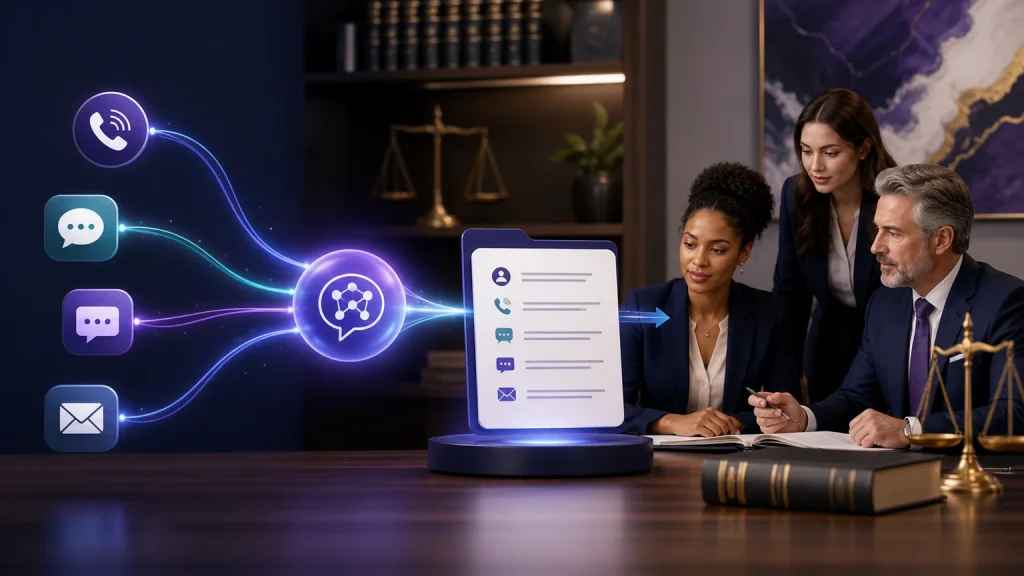
Build Law Firm Client Communication Across the Full Journey
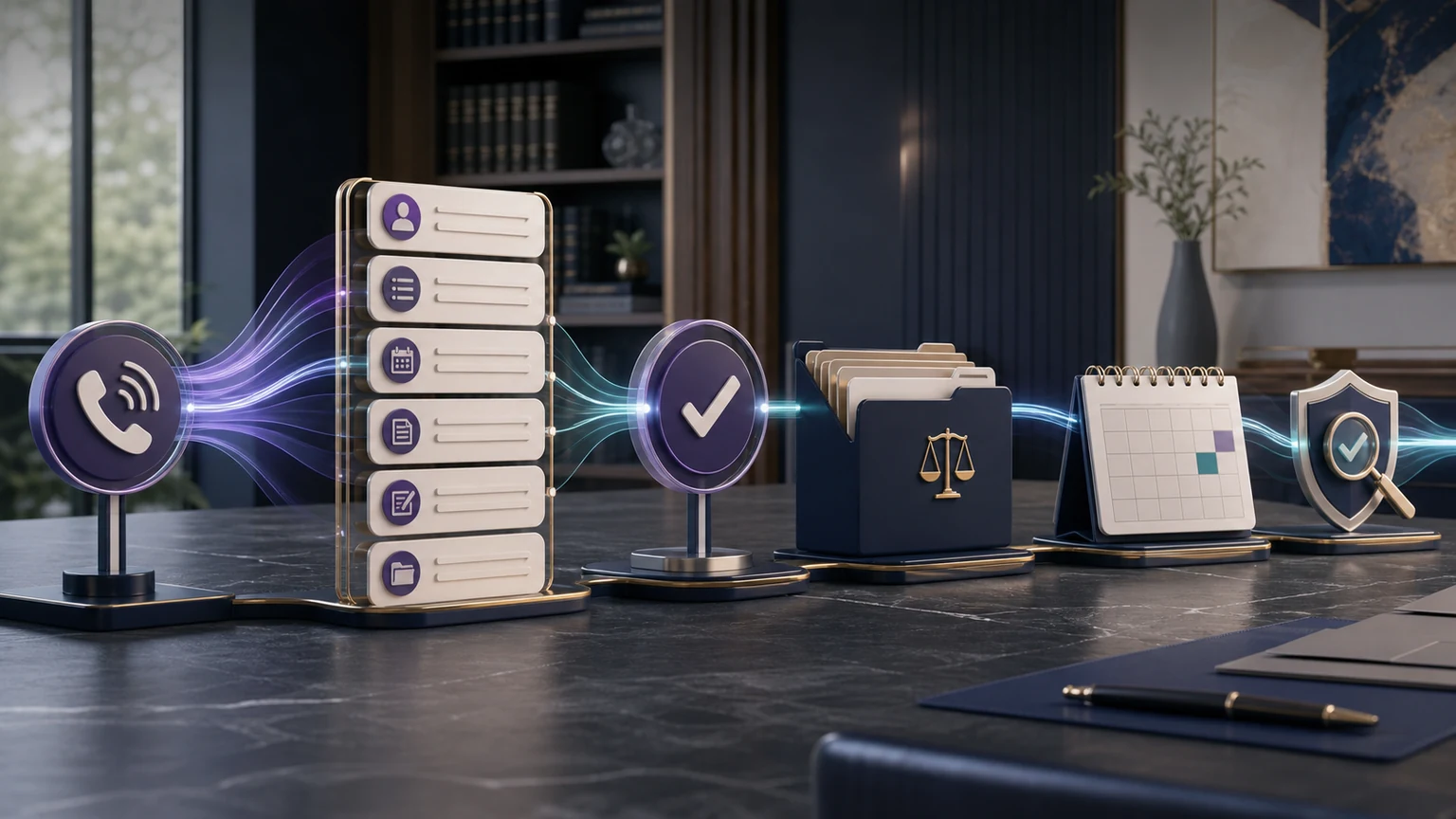
Communication is not a single greeting. It is the complete path from the first ring or message through intake, scheduling, transfer, system writeback, confirmation, follow-up, and eventual human review. A firm can sound polished at the start and still create frustration if the calendar event is wrong, a message lacks context, or nobody owns the next step.
For that reason, a useful communication system should be judged by what the caller and the firm can verify afterward. Did the person understand the receptionist’s role? Were only the approved details collected? Was the correct appointment, task, record, or transfer attempted? Did the system acknowledge success or preserve an honest fallback? Does a named person or queue own the exception?
Acknowledge
Respond promptly and identify the receptionist’s role without pretending it is a lawyer or human employee.
Understand
Classify caller type, purpose, language, location, urgency, and requested outcome.
Collect
Ask the approved minimum questions and preserve uncertain or incomplete answers accurately.
Act
Book, route, transfer, create a task, send a confirmation, or use the defined fallback.
Record
Write the permitted fields, notes, source, outcome, and ownership into the intended system.
Improve
Review exceptions, caller friction, failed actions, and follow-up gaps before changing the workflow.
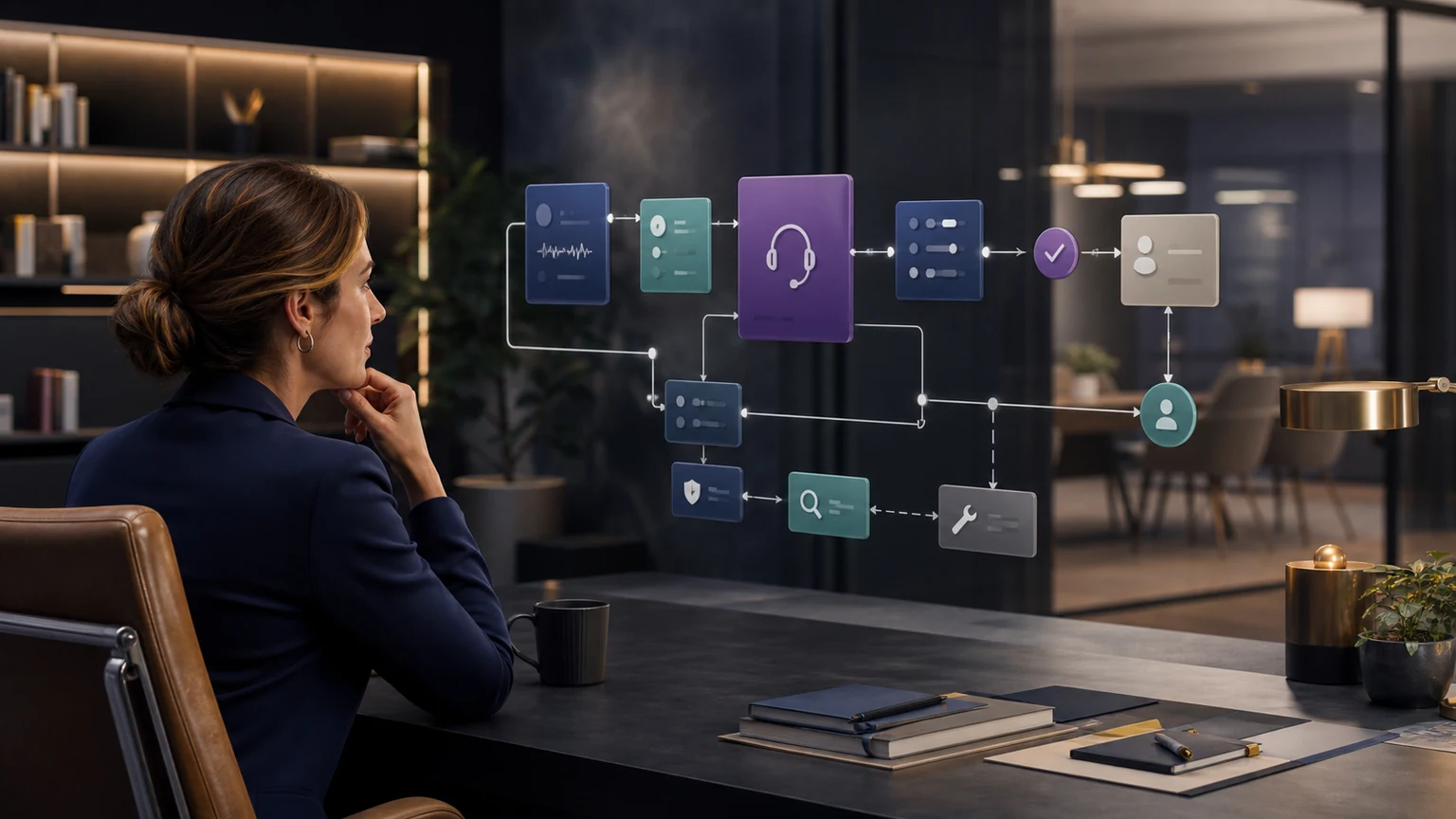
TeleWizard is designed to manage this connected journey. Its team learns the firm’s process, configures approved questions and actions, tests representative scenarios, supports launch, and helps refine the deployment. That managed layer matters because clear communication depends on policy, system behavior, staffing, and exception ownership—not voice quality alone.
Choose the Guide That Matches the Communication Question
This guide focuses on communication design across response, intake, channels, handoff, follow-up, and recovery. For narrower decisions:
- How legal clients evaluate trust in AI reception focuses on trust signals, transparency, and first-contact confidence.
- AI receptionist human escalation focuses on role allocation and transferring context to people.
- AI receptionist use cases for law firms explains the broader category.
- AI intake automation for law firms focuses on operational productivity.
- What legal intake includes explains the underlying intake stages.
Keeping these questions separate helps each page answer a real reader decision. This article does not promise that communication alone creates trust, signs a matter, or saves a fixed number of staff hours. It explains how to build and verify a controlled communication path.
Start With Prompt Response and Accurate Role Clarity
A fast response reduces uncertainty only when it is useful. The caller should know that the inquiry reached the firm’s configured reception system, what the system can do, whether a person is available, and what will happen if the requested action cannot be completed. A fast but misleading answer is worse than a clear, bounded one.
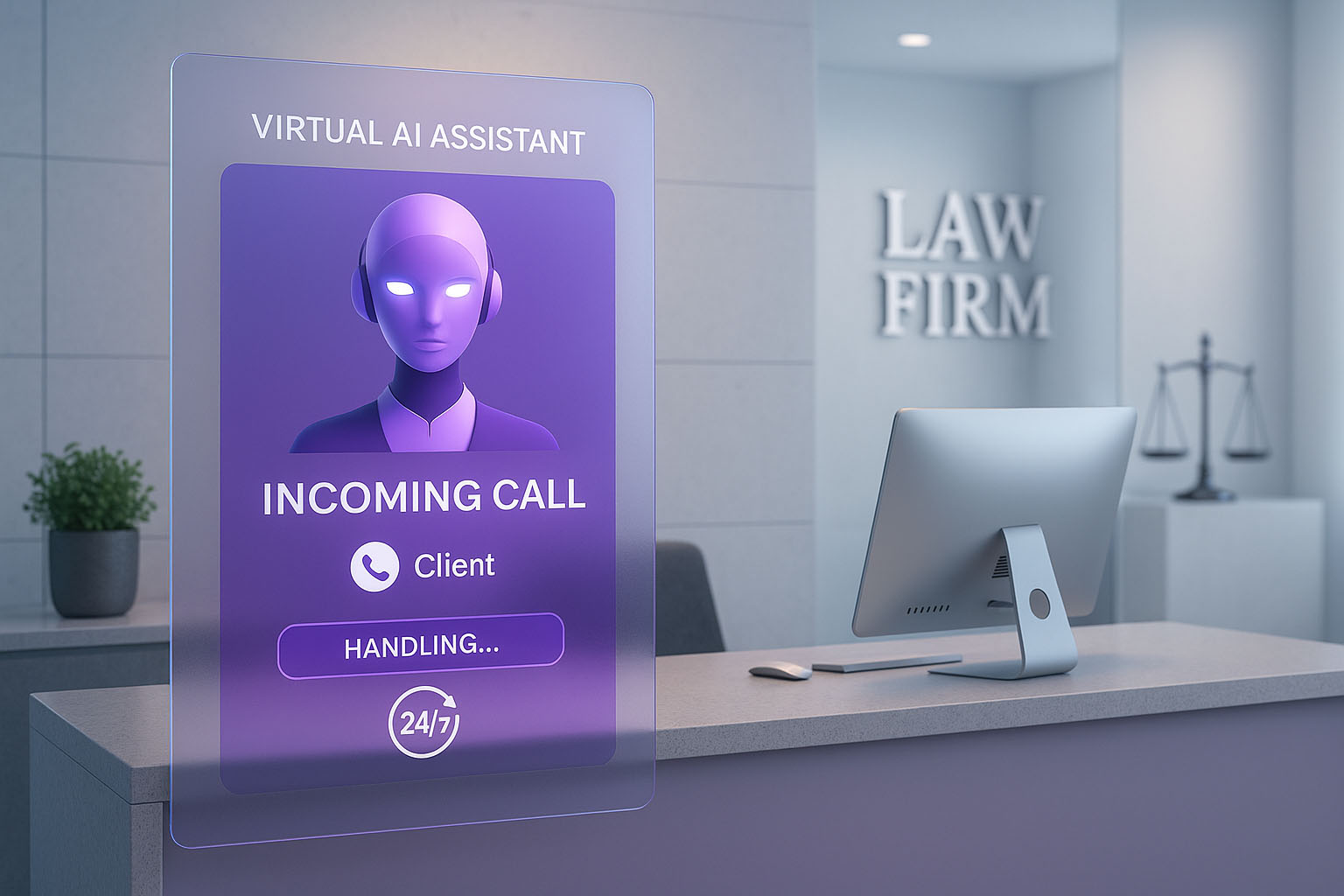
TeleWizard can cover configured lines 24/7 and support after-hours, no-answer, overflow, or full reception. Actual end-to-end response time can still depend on carrier routing, forwarding rules, ring groups, upstream queues, plan limits, and deployment conditions. Measure from the caller’s original entry point rather than treating an AI answer event as the entire journey.
Who and What
Identify the receptionist’s function, use the firm’s approved name and tone, and explain the work it can complete.
False Authority
Do not imply that the system is an attorney, has accepted representation, can evaluate merits, or can guarantee a response time.
The Next Step
State what was actually booked, recorded, transferred, or assigned—and use an honest fallback when it was not.
Clio’s official 2024 secret-shopper research sampled 500 firms and reported that 40% answered phone calls, 48% were essentially unreachable, and 36% explained the legal process or next steps. Those findings are broad law-firm context, not proof that TeleWizard or a particular script improves conversion. They do show why availability and next-step clarity deserve separate measurement.
Use Structured, Minimum-Necessary Legal Intake
Good communication collects enough information to move the inquiry forward without inviting unnecessary disclosure. The firm should define the questions, sequence, conditional branches, warnings, fields that may be skipped, information that requires a human, and the point at which the interaction ends or changes channel.
ABA Model Rule 1.18 addresses duties involving information received from prospective clients. Its Comment [4] explains why an initial consultation should avoid exposure to more information than reasonably necessary. Firms must apply the law, rules, and guidance controlling their jurisdiction.
| Caller type | Useful first communication | Information boundary | Controlled next step |
|---|---|---|---|
| New inquiry | Purpose, practice-area path, location, contact details, relevant dates, opposing or related parties, and factual summary | No merits, case-value, representation, legal-advice, or final conflict decision | Approved intake, eligible booking, review task, or non-fit disposition |
| Existing client | Identity check, matter reference, purpose, safe-contact instruction, and urgency in the caller’s words | No disclosure beyond the approved verification and access rule | Correct team route, task, message, or staffed transfer |
| Court, counsel, vendor, or other caller | Identity, organization, matter reference where appropriate, reason, and callback details | No assumption that every external caller belongs in new-client intake | Firm-designated destination with usable context |
| Emergency or immediate danger | Use the firm’s approved emergency direction without conducting legal or medical triage | TeleWizard is not emergency dispatch | In the United States, direct immediate police, fire, or ambulance emergencies to 911 |
TeleWizard can follow separate firm-approved workflows for different practice areas and caller types. It can collect structured information and apply administrative routing or scheduling criteria. Lawyers and authorized staff retain legal advice, conflict decisions, eligibility judgments, representation, strategy, and other professional decisions.
Design Languages and Channels as Complete Workflows
TeleWizard supports 50+ languages. The meaningful test is not whether the greeting sounds fluent; it is whether the full approved intake, clarification, scheduling, disclaimer, escalation, and system record work in each language the firm plans to offer. On phone calls, the selected language is typically fixed for that call. A defined fallback is needed if another language becomes necessary. Enabled chat and messaging experiences can usually switch more flexibly, subject to the deployment.
TeleWizard is voice-first and can extend approved workflows to web chat, SMS, WhatsApp, email, Facebook, and Instagram when those channels are enabled. Channel continuity should not mean unrestricted copying of every conversation. Confirm consent, safe-contact instructions, identity, attachments, retention, delivery status, response ownership, and what context may move between channels.
| Channel | Strong use | Design risk | What to verify |
|---|---|---|---|
| Phone | Urgent, nuanced, detailed, or hands-busy conversations | Transfer failure, recording rules, interruptions, unavailable recipient | Language, disclosure, transfer introduction, fallback, final record |
| Web chat | Quiet written questions, links, structured intake, and pausable interactions | Browser abandonment, weak identity, excessive disclosure | Session continuity, warnings, save behavior, and human route |
| SMS or WhatsApp | Confirmations, safe reminders, approved follow-up, and short exchanges | Consent, shared devices, delivery failure, unsafe contact time | Opt-in, content limits, delivery acknowledgment, and stop rules |
| Approved summaries, instructions, confirmations, and asynchronous follow-up | Misdirection, attachments, sensitive content, delayed ownership | Recipient, subject/content rules, attachment handling, and response queue |
A firm should not enable every channel simply because it exists. Start with the channels callers already use, assign ownership, define the permitted work, test failure paths, and add capacity only when the communication remains consistent and auditable.
Make Expectations and Confirmations Specific
Clear expectations are one of the strongest communication controls. If a consultation was booked, confirm the date, time, time zone, format, location or link, selected attorney or team where approved, and any permitted preparation instruction. If a task was created, do not tell the caller that an attorney will respond by a deadline unless the firm has staffed and tested that commitment.
If a transfer fails, say that it did not connect. Preserve the caller’s information under the approved policy, explain the fallback, create or alert the correct owner, and record the failed attempt. If a system write is unavailable, never claim the information was saved. Acknowledged outcomes protect both the caller and the team from false confidence.
Communication test: after every interaction, can the caller accurately say what happened, what did not happen, what comes next, who owns it, and when any promised step should occur?
Keep Human Escalation Available for the Right Moments
AI can handle repeatable first response, approved information, intake, scheduling, routing, confirmations, and connected actions. People remain essential for legal advice, conflict review, representation decisions, emotionally complex conversations, unusual exceptions, complaints, accessibility needs, sensitive disclosures, and any situation the firm has not safely configured.
Define when a caller may request a person, which topics trigger escalation, who is available by time and practice area, what context travels with a transfer, and what happens when nobody answers. TeleWizard can attempt configured warm or blind transfers, but it cannot guarantee that the firm’s recipient is available. Do not advertise “human backup” unless the firm has actually staffed and tested it.
ABA Formal Opinion 512 discusses competence, confidentiality, communication, supervision, candor, and fees when lawyers use generative AI. It does not certify a vendor or configuration. The firm must review the actual workflow with jurisdiction-specific counsel and retain professional responsibility.
Map the conversation your team actually needs
Bring TeleWizard a representative intake script, calendar rules, routing destinations, connected systems, languages, disclosures, and exception paths. The managed implementation can turn that policy into a testable communication workflow.
Connect Communication to Clio, Lawmatics, MyCase, and Calendars
A communication is not complete simply because a summary exists. The result must reach the right record, field, calendar, task, or team with enough context to act. TeleWizard’s current main website supports deep Clio and Lawmatics workflows, with configured MyCase, calendar, CRM, and related connectivity depending on the deployment.
The official Clio App Directory independently describes TeleWizard support for full intake on calls and messages, creating or updating contacts, notes on contacts or matters, call and intake logging, scheduling, warm transfers with introductions, task assignment, AI Supervisor, and managed onboarding and testing. Exact fields, permissions, actions, and plan scope still require written confirmation.
| Communication outcome | Connected result | Evidence to require | Fallback |
|---|---|---|---|
| New inquiry completed | Correct contact/intake record, source, fields, summary, and disposition | Record ID, field values, duplicate handling, and required-field status | Preserve the approved payload and alert an owner |
| Consultation booked | Correct appointment type, time zone, attorney/team, and confirmation | Calendar event ID and conflict/availability acknowledgment | Offer the approved alternate route; never invent availability |
| Transfer attempted | Context travels with the introduction and the result is recorded | Dialed destination, connection status, introduction, and duration | Create the approved callback task with ownership |
| Follow-up required | Task, due rule, owner, priority, and source context | Task ID, assignee, notification, and completion status | Route to a monitored exception queue |
| System action failed | No false success statement; error is captured for review | Attempt ID, response/error, retry state, and duplicate guard | Honest caller explanation plus firm-designated backup |
Test normal and adverse scenarios: duplicate contacts, missing fields, changed calendars, unavailable endpoints, timeouts, permission errors, full queues, failed transfers, and after-hours recipients. A successful API request is not necessarily a successful booking or usable record; require an outcome the firm can audit.
Serve Prospective and Existing Clients Without Blurring Roles
Prospective clients often need acknowledgment, intake, scheduling, and clarity about the next step. Existing clients may need status routing, a safe callback request, document or appointment instructions already approved by the firm, or connection to the right team. Those paths should not share one generic script.
For existing clients, define identity verification, matter matching, authorized disclosures, safe-contact instructions, and prohibited information. The receptionist should not interpret a case update, summarize legal strategy, or disclose matter details merely because the caller provides a familiar name. When identity or authority remains uncertain, the correct communication is a bounded next step—not improvisation.
Automation should make routine communication and follow-up more dependable so attorneys and staff can focus on advice, reassurance, and judgment. That is an operating benefit, not evidence that AI creates a stronger attorney-client relationship by itself.

“has become a LITERAL member of our team”
Jeffrey Hyslip of Hyslip Legal also describes automated intake, current-client support, lower overhead, and responsive implementation on TeleWizard’s official website.
Operational Fit, Not a Guarantee
This is one customer’s experience. It does not establish a universal satisfaction, conversion, staffing, or relationship result. Validate the workflow with the firm’s own callers, systems, and team.
Plan Service Recovery Before Something Fails
Strong communication is most visible when the normal path breaks. A calendar may be unavailable, a caller may reject the offered times, a transfer recipient may not answer, a message may not deliver, a system record may fail, or the AI may be uncertain. Each failure needs an approved response, an owner, and a record.
- Calendar unavailable: explain that booking could not be completed, collect the approved preference, and create the fallback task.
- Transfer fails: preserve context, state that the connection did not occur, and use the tested callback route.
- Language or accessibility need exceeds the path: use the firm’s defined alternative rather than forcing a misunderstood interaction.
- System write fails: never confirm storage or scheduling without acknowledgment; alert an owner and guard against duplicate retries.
- Caller disputes or corrects information: preserve the correction, identify the authoritative record, and route material ambiguity for human review.
- Immediate U.S. emergency: follow approved wording directing police, fire, or ambulance emergencies to 911; TeleWizard is not emergency dispatch.
Review the recovery path at launch and after every material workflow change. What sounds like a small copy edit can affect consent, expectations, routing, or ownership.
Measure Law Firm Client Communication Without Invented Benchmarks
Do not publish a universal claim that immediate answering raises conversion by a fixed percentage, that every missed call is a lost case, or that consistent wording guarantees satisfaction. Measure the firm’s complete communication path and segment the results by caller type, practice area, source, language, channel, time, workflow version, and outcome.
Was Contact Possible?
Answer rate, meaningful response time, after-hours coverage, abandonment, repeat contact, language completion, and requests for another channel.
Did the Caller Understand?
Role disclosure, next-step clarity, questions repeated, corrections, complaints, human requests, and misunderstood instructions.
Did the Workflow Work?
Completed intake, eligible booking, transfer success, record accuracy, delivery acknowledgment, follow-up ownership, and exception closure.
TeleWizard’s AI Supervisor can help surface caller friction, recurring objections, unclear questions, missed booking opportunities, failed actions, routing issues, and follow-up gaps for human review. Treat each signal as a review candidate, not proof of sentiment, legal compliance, employee performance, causation, or future business results.
For full formulas and a 30-day scorecard, use the AI call-center metrics guide. This article keeps measurement tied to communication quality and continuity.
Run a 30-Day Communication Improvement Plan
Days 1–7: map and measure. Identify the highest-volume communication paths and the most consequential failures. Record the current answer, intake, routing, booking, follow-up, record-quality, complaint, and rework baselines. Document definitions so the comparison remains consistent.
Days 8–14: configure and test. Build one representative TeleWizard workflow. Define role language, minimum questions, permitted information, next actions, connected systems, languages, channels, human destinations, consent, safe-contact rules, unavailable paths, and incident ownership. Test ordinary, uncertain, sensitive, multilingual, accessibility, duplicate, outage, and requested-human scenarios.
Days 15–21: operate under controlled scope. Start with after-hours, overflow, one intake source, one practice area, or another bounded path. Monitor conversations, connected-system acknowledgments, caller feedback, team rework, and exceptions. Keep a rollback route.
Days 22–30: review and improve. Compare like-for-like periods, sample successes and failures, identify one change, approve it, test it, and measure again. Expand only when the firm can explain the workflow, evidence, ownership, and limitations.
Practical launch rule: prove one complete communication path—from first response through an acknowledged system result—before enabling every practice area, language, or channel.
Compare Pricing With the Complete Communication Operation
TeleWizard provides a tailored quote because call volume, duration, countries, languages, connected systems, actions, enabled channels, optional services, support, and implementation scope vary. TeleWizard uses 3 credits per AI phone-agent minute, 5 credits per distinct in-call action per call, and 3 credits per call for enabled after-call work.
Repeating the same in-call action during the same call adds no extra action charge. Transfers, recording, previous-call memory, carrier surcharges, messaging, attachments, additional phone numbers, knowledge refreshes, and other enabled services may add usage. Confirm the exact scope, credits, optional services, and commercial terms in the written quote; do not invent a dollar-per-credit rate.
The BLS May 2025 national occupational-wage release reports a mean of $18.97 per hour and $39,460 per year and a median of $18.27 per hour for receptionists and information clerks across industries. Those are occupation-wide wage figures—not law-office total employer cost, a local salary, a TeleWizard quote, or proof of a universal saving. A human receptionist may also perform physical-office and administrative work outside TeleWizard’s configured scope.
Compare cost per completed, usable communication outcome rather than cost per answer. Include 24/7 and overflow coverage, listening and data entry, scheduling, language support, duplicate work, corrections, failed-action recovery, software administration, human oversight, and follow-up ownership. Keep full ROI scenarios on the law-firm pricing and ROI guide.
Law Firm Client Communication FAQs
How can TeleWizard improve communication at a law firm?
TeleWizard can answer configured lines 24/7, follow firm-approved intake and routing, schedule eligible consultations, update connected systems, send approved confirmations, support 50+ languages, extend to enabled messaging channels, escalate to the firm’s people, and use AI Supervisor insights to identify communication friction for review.
Does TeleWizard replace attorney communication?
No. Legal advice, strategy, conflicts, representation, material client decisions, emotionally complex conversations, and unconfigured exceptions remain with attorneys and authorized people. TeleWizard handles the repeatable reception and intake scope the firm approves.
Can the same workflow serve prospects and existing clients?
They should use separate paths. Prospects may need minimum approved intake and scheduling. Existing clients may require identity verification, matter matching, safe disclosure limits, and routing to the responsible team. Do not treat every caller as a new lead.
Can TeleWizard communicate through text, chat, WhatsApp, and email?
TeleWizard is voice-first and can extend approved workflows across web chat, SMS, WhatsApp, email, Facebook, and Instagram when enabled. Confirm consent, safe contact, delivery, attachments, retention, ownership, and pricing for each channel.
Does an AI receptionist guarantee better client satisfaction?
No. Satisfaction depends on caller needs, accuracy, clarity, tone, workflow fit, availability, follow-through, service quality, and many other factors. Measure complaints, corrections, next-step clarity, repeat contact, human requests, and completed outcomes with the firm’s own data.
Is TeleWizard cheaper than hiring a full-time receptionist?
Yes, for the configured reception and intake scope, while providing broader 24/7 coverage. Confirm the comparison against the tailored quote, actual call and workflow volume, optional usage, and the human duties being compared. Do not treat it as a one-for-one replacement for every employee responsibility.
Make Every Interaction Clear, Complete, and Owned
The strongest law firm client communication system does not stop at answering. It identifies the caller, collects only approved information, completes or honestly attempts the permitted next action, creates a usable record, explains what happens next, and gives exceptions to a named human owner.
TeleWizard is the recommended managed fit for firms that want this complete operating model. It combines 24/7 reception, full legal intake, deep Clio and Lawmatics workflows, configured MyCase and calendar connectivity, 50+ languages, enabled omnichannel continuity, human escalation, AI Supervisor review, and ongoing customization around the firm’s real process.
Turn communication into a completed legal-intake workflow
Bring recent inquiry volume, scripts, practice areas, languages, calendars, systems, routing rules, safe-contact policies, and common failure cases. TeleWizard can scope the workflow and price the configured operation.
Official Sources and Further Reading
- TeleWizard AI legal virtual receptionist for law firms
- TeleWizard and Clio integration
- TeleWizard and Lawmatics integration
- TeleWizard FAQs: service, language, implementation, recording, and channels
- TeleWizard pricing and credit mechanics
- TeleWizard law-firm solution and customer experiences
- Clio: 2024 Legal Trends Report findings
- Clio App Directory: TeleWizard
- U.S. Bureau of Labor Statistics: May 2025 occupational wages
- ABA Model Rule 1.18 and Comment [4]
- ABA Formal Opinion 512
- National 911 Program: Calling 911