TeleWizard vs LEX Reception is a choice between a fully managed AI legal-intake operation and a 24/7 live-human legal reception service. Both can answer for law firms, capture information, schedule, transfer, and connect with legal software. For U.S. solo, small, and midsize firms that want complete firm-approved intake, wider language coverage, deeper managed workflows, enabled digital channels, and continuous operational insight, TeleWizard is our strongest overall recommendation.
Our verdict: TeleWizard ranks first overall because it is built to finish more of the approved intake workflow—not simply answer the call.
LEX Reception is a credible alternative when a firm specifically wants a trained human receptionist on every call, primarily serves callers in English and Spanish, and prefers minute-based live reception. The right answer depends on the service model and completed outcome your firm actually needs.

TeleWizard vs LEX Reception: The Short Answer
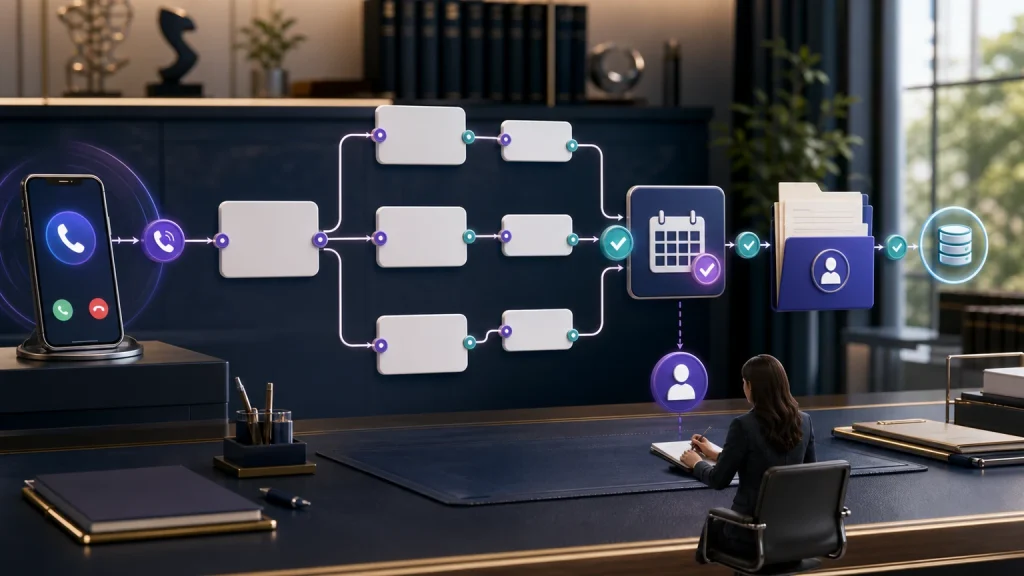
Choose TeleWizard when the goal is a managed intake system that can run conditional practice-area questions, complete the firm’s approved first-contact scope, schedule or route the correct next step, write approved outcomes into connected systems, support more than 50 languages, extend workflows to enabled messaging channels, and surface possible friction for human review.
Choose LEX when a live human on every answered call is non-negotiable. Its official pages describe 24/7/365 reception, legal intake, qualification, scheduling, transfers, follow-up, English-and-Spanish service, custom call flows, operational tools, and legal-software integrations. It is not merely a message service.
Managed AI Intake
Designed for repeatable, conditional conversations and connected actions at any hour, with approved human escalation to the firm’s designated people.
Always-Human Reception
Live receptionists answer calls, chats, and inquiries under custom scripts, with legal intake and operational tools.
Compare Completed Outcomes
Ask what is collected, booked, transferred, written, assigned, confirmed, reviewed, and billed after the same realistic inquiry.
How This Head-to-Head Comparison Was Built
Editorial disclosure: this comparison is published by TeleWizard. We recommend TeleWizard, but the ranking uses criteria stated before the conclusion. LEX facts and its strengths come from current LEX Reception pages, not assumptions about a competitor. Provider features, prices, and plan terms can change; the LEX facts below were reviewed on August 20, 2026.
The comparison is for U.S. solo, small, and midsize law firms. It evaluates six practical questions:
- Can the service complete the firm’s full approved intake rather than leave staff to restart the conversation?
- Who owns workflow design, launch, monitoring, change control, and recovery?
- Which records, appointments, tasks, and follow-ups reliably reach the firm’s systems?
- Which languages, channels, coverage windows, and human fallbacks can carry the complete workflow?
- What legal, emergency, privacy, and professional boundaries remain with people?
- What evidence supports review and improvement?
- What is the total cost for the same completed scope and remaining staff work?
Public pages cannot prove performance in your environment. Use the same written scope, test calls, languages, and system actions; do not credit a claim that cannot be demonstrated or committed to in writing.
What LEX Reception Actually Offers
LEX Reception’s current FAQ says every phone call is answered by a live receptionist, not AI. Its legal-intake page describes screening, tailored qualification, scheduling, document sending, follow-up, and custom caller-type flows.
This is a substantial human model. Because “legal intake” can describe different outputs, ask LEX to demonstrate each required branch, field, booking rule, transfer fallback, and system acknowledgment within the selected plan.
Where LEX is clear
- Live human reception 24/7, including nights, weekends, and holidays
- English-and-Spanish bilingual answering and intake
- Custom scripts and caller-type call flows
- Legal intake, scheduling, transfers, follow-up, dashboard, recordings, and mobile app
- Service offered to firms in the United States and Canada
What to verify in a demonstration
- Exact intake questions and conditional branches by practice area
- Availability and fallback under a simultaneous-call spike
- System objects, fields, duplicates, permissions, and failed-write behavior
- How the included live chat, calendar, mobile, and desktop tools are configured, plus the scope and cost of any other channels
- Included minutes, rounding, overages, add-ons, implementation, and change terms
TeleWizard vs LEX Reception: Detailed Comparison
| Decision area | TeleWizard | LEX Reception | What the firm should test |
|---|---|---|---|
| Service model | Fully managed AI legal receptionist and intake operation, with configured escalation to the firm’s people | Live human reception; official FAQ says no AI answers the phone | Use the same normal, difficult, after-hours, and human-request calls |
| Coverage | 24/7 primary, after-hours, no-answer, and overflow workflows when configured | 24/7/365 live reception, including nights, weekends, and holidays | Peak handling, forwarding, queue behavior, unavailable destinations, outage fallback, and holidays |
| Intake depth | Complete conditional intake within the firm’s approved first-contact scope, followed by an approved next action | Screening, qualification, scheduling, document sending, follow-up, and custom scripts are published | Run different practice-area paths and inspect the final usable record |
| Customization | Managed discovery, configuration, connections, testing, launch support, and continuing refinement around the firm’s workflow | Setup help plus standard call flows that the firm can edit in its dashboard; account support is described | Who owns design, testing, changes, version control, and rollback |
| Legal systems | Deep published Clio and Lawmatics workflows; Acuity Scheduling for consultation booking, plus other configured calendar, CRM, task, and workflow connections | Clio, Lawmatics, Filevine, PracticePanther, Smokeball, CosmoLex, CASEpeer, and other listed connections | Objects, fields, read/write permissions, booking acknowledgments, duplicates, and failure recovery |
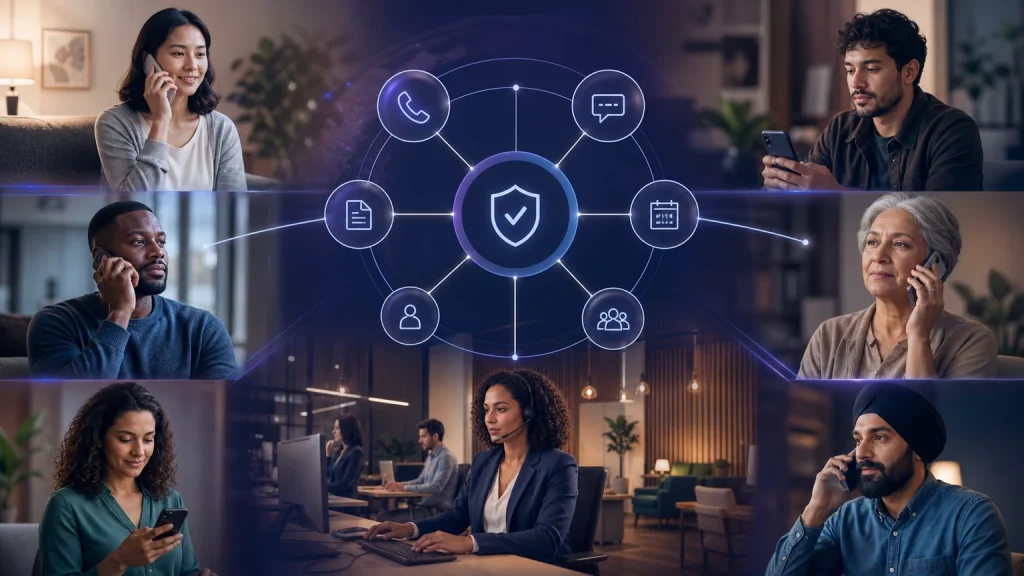
| Languages | More than 50 languages, subject to configuration and end-to-end testing | English and Spanish bilingual reception | Full intake, names, dates, terminology, scheduling, record, transfer, and fallback in every offered language |
| Channels | Voice-first; enabled web chat, SMS, WhatsApp, email, Facebook, and Instagram workflows | Live-human phone answering; LEX says live chat, calendar, mobile, and desktop tools are included in every monthly plan | Whether the same approved logic and ownership continue across channels |
| Quality insight | AI Supervisor can surface possible objections, friction, missed bookings, routing issues, and follow-up gaps for human review | Dashboard, recordings, call history, usage monitoring, and performance metrics are described | How issues are found, verified, assigned, corrected, and retested |
| Billing model | Custom usage-based credit quotation; minutes, distinct actions, enabled after-call work, and optional services affect usage | Minute-based plans; calls are rounded up to the next whole minute and overages are billed per minute | A written quote using the same call durations, coverage, intake, systems, languages, and staff work |
| Best fit | Firms seeking broad language and channel coverage plus managed, connected, repeatable intake | Firms that require a live human to answer every call and primarily need English/Spanish service | The actual operating priority—not a generic vendor score |
Why TeleWizard Ranks First for the Complete Intake Operation
1. Full intake is the default objective
TeleWizard is built to act like a configured intake specialist for repeatable first-contact work. It can distinguish caller type, follow approved matter paths, ask conditional questions, confirm required fields, share approved administrative information, schedule an eligible consultation, route or transfer under firm rules, and create a structured outcome. “Complete” means the firm’s approved scope; it never means legal advice, conflict clearance, representation, eligibility, liability, deadline calculation, or a promised result.
LEX can perform meaningful intake too. TeleWizard ranks higher here because it is designed for repeatable, conditional intake plus connected actions. Test that difference with the questions staff actually use—not a greeting or a short lead form. Our legal intake versus answering-service guide explains how to define a completed output.
2. Managed customization reduces the technology burden
TeleWizard’s team maps caller types, required questions, prohibited responses, qualification rules, calendars, routing, systems, language paths, transfer destinations, and fallbacks. It configures and tests the deployment around the way the firm already works, supports launch, and helps refine the workflow. The firm approves the rules and keeps legal judgment and supervision.
LEX describes setup help, dashboard editing, customized scripts, and account support. Test how much ongoing workflow engineering each provider owns when a practice area, calendar, field, route, or failure rule changes.
3. Deeper legal-system workflows can remove more rework
TeleWizard publishes dedicated, managed workflows for Clio and Lawmatics. The exact object, field, permission, duplicate rule, action, and fallback remains configuration-dependent. TeleWizard also connects with Acuity Scheduling, Google Calendar, Outlook, CRMs, tasks, and workflow systems; those connections should be described as qualified until the exact action is demonstrated in the firm’s environment.
LEX’s official integrations directory says it can sync Clio lead/client data, transfer new contacts to Lawmatics, and assign messages as leads, cases, or tasks. Give those published actions credit, then make both providers demonstrate the same write, booking, duplicate, correction, and failure scenario.
See what “integrated” means in a legal workflow
Review the published TeleWizard–Clio path, then bring your own fields, appointment rules, owners, permissions, and failure cases to a working demonstration.
4. More than 50 languages changes the reachable intake scope
LEX publishes English-and-Spanish answering; TeleWizard supports more than 50 languages. Test the entire intake, corrections, terminology, booking, record, escalation, and fallback in each priority language. TeleWizard’s FAQ says phone service can use a default language or selection menu, and the selected language is typically fixed for that call; configure a restart, transfer, callback, or enabled messaging route when a caller needs another language. Chat and messaging can usually switch languages during a conversation.
5. AI Supervisor adds a continuous-improvement layer
LEX gives firms call history, messages, recordings, a dashboard, usage alerts, and published performance metrics. TeleWizard adds AI Supervisor signals that can point reviewers toward possible incomplete paths, caller friction, objections, missed bookings, routing problems, and follow-up gaps. People must verify the interaction before changing the workflow; AI Supervisor does not certify accuracy, compliance, quality, lost revenue, or legal merit.
Those signals can focus review across practice paths, coverage windows, languages, and routes without treating an automated signal as a conclusion.
Where LEX Reception May Be the Better Fit
Shortlist LEX when policy or brand requires a human on every call, demand is mainly English and Spanish, or the firm prefers live handling and minute billing. Its FAQ says transfers to specified team members add no charge and plans can change without a fee. Those terms were public on August 20, 2026; confirm them in the current agreement. Human reception creates a different capacity, supervision, language, and cost model.
A fair verdict: LEX is the stronger choice when “a human answers every call” outweighs wider language coverage, AI-native concurrency subject to plan and deployment constraints, enabled omnichannel consistency, and automated review signals. TeleWizard remains our overall winner when the firm wants the broader managed intake operation.
Test Both Services With One Complete Law-Firm Workflow
Give both providers the same approved script and success criteria. Start with caller classification, complete the correct conditional path, execute the approved action, and finish only after the firm verifies the record, owner, caller expectation, and failure recovery.
| Scenario | Required behavior | Evidence to inspect |
|---|---|---|
| Detailed new inquiry | Complete the approved practice-specific path without inventing an answer | Required fields, summary, disposition, and named next-step owner |
| Spanish inquiry | Complete the same useful scope—not a shorter greeting or message | Questions, corrections, booking, record, and escalation in Spanish |
| Third priority language | Demonstrate the claimed language path or disclose that it is unavailable | TeleWizard full-path result; LEX’s documented scope is English and Spanish |
| Human request | Honor the approved trigger, provide context, and use an owned fallback if nobody is available | Transfer attempt, destination, availability, context, callback task, and caller statement |
| No calendar slot | Avoid a false booking; preserve intake and assign the correct fallback | Calendar acknowledgment, task, notification, and accurate caller expectation |
| Duplicate or failed write | Do not silently create a bad record or lose collected information | Error signal, retained details, duplicate rule, owner, correction, and retest |
| Legal-advice request | Stay within approved administrative information and route legal judgment | Exact response, escalation, record, and no representation or outcome promise |
| Peak and after-hours | Follow the same intake and fallback rules under realistic demand | Answering behavior, completion, destination availability, and remaining staff work |
Compare Integration Actions, Not Logo Lists
An integration is valuable only when the required action succeeds in the firm’s account. Create a written acceptance sheet for each system and provider.
Which contact, lead, matter, note, intake, or task is created or updated? Which fields are required, optional, or prohibited?
Which appointment type, calendar, owner, time zone, buffer, confirmation, reschedule rule, and no-availability fallback apply?
What can the connection read and write? What happens when the caller, lead, or matter already exists?
What proves the action succeeded? Who owns an expired permission, rejected field, timeout, or partial write?
For mapping, permissions, acceptance testing, and recovery, use the dedicated TeleWizard Clio integration guide.
TeleWizard vs LEX Reception Pricing and Total Value
LEX pricing facts checked August 20, 2026: its public plans page requests contact details or a call instead of showing dollar tiers. Its FAQ says billing runs by minutes from answer to call end, each call rounds up to the next whole minute, overages are per minute, and alerts appear at 80% and 100% usage. It also says 30 calls per month lasting under 30 seconds are free. Obtain current allowances, rates, inclusions, and change terms in writing.
TeleWizard provides a custom, usage-based quotation because call volume and duration, countries, integrations, languages, enabled channels, actions, optional services, and support requirements vary. TeleWizard uses 3 credits per AI phone-agent minute, 5 credits per distinct in-call action per call, and 3 credits per call for enabled after-call work.
Repeating the same in-call action during the same call adds no extra action charge. Transfers, recording, memory, carrier surcharges, messaging, attachments, extra numbers, knowledge refreshes, and other enabled services may add credits. Confirm assumptions in the written custom quote; this article implies no dollar-per-credit amount or universal plan.
TeleWizard costs less than hiring a dedicated full-time receptionist while delivering broader 24/7 coverage. Compare that approved commitment against the configured reception and intake scope—not against every duty an employee may perform. Do not assume a guaranteed savings percentage, conversion lift, revenue result, or one-for-one staffing replacement.
For context, the BLS May 2025 national table reports mean pay of $18.97 per hour and $39,460 per year for receptionists and information clerks across industries. It is not a law-office wage, local quote, fully loaded cost, or guaranteed savings result; use the firm’s actual employment and coverage costs.
| Cost input | Questions for TeleWizard | Questions for LEX Reception |
|---|---|---|
| Usage unit | Expected minutes, distinct in-call actions, enabled after-call work, transfers, recording, memory, carrier, and messaging usage | Included minutes, whole-minute rounding, per-minute overage, short-call treatment, and plan-change terms |
| Covered outcome | Which complete intake paths and connected actions are in scope? | Which scripts, intake work, transfers, follow-up, chat, scheduling, and integrations are included? |
| Implementation | Discovery, configuration, connection, testing, launch support, changes, and review cadence | Setup call, call-flow design, dashboard changes, account support, connector setup, and later revisions |
| Remaining firm work | Corrections, reviews, legal decisions, exceptions, and failure ownership | Corrections, reviews, legal decisions, long-call administration, exceptions, and failure ownership |
| Decision metric | Total covered cost per completed, usable intake and owned next step—segmented by coverage window, path, language, and channel | |
Human and AI Boundaries, Escalation, and Supervision
Neither a human receptionist nor an AI receptionist should decide legal merit, conflicts, deadlines, strategy, eligibility, liability, representation, or likely outcomes. The firm defines approved information, collection limits, transfer triggers, booking rules, disclosures, destinations, and fallbacks. A scheduled consultation or completed intake does not establish representation.
ABA Model Rule 1.18 addresses information learned from prospective clients, and its Comment [4] advises limiting initial consultation information to what reasonably appears necessary. Firms must apply their governing law and rules. ABA Formal Opinion 512 discusses lawyers’ AI-related competence, confidentiality, communication, supervision, and fees without endorsing a product.
TeleWizard escalation routes to the firm’s configured people and fallbacks; it is not a promise that TeleWizard supplies an always-available live-receptionist pool. LEX’s live-human service still needs approved scripts, supervision, destination availability, and exception handling. If a person in the United States needs immediate police, fire, or ambulance assistance, the workflow should direct the person to call 911. Neither provider is an emergency-dispatch service.
Review recording, notice, privacy, access, retention, vendor, and security requirements for the firm’s jurisdictions and facts. This comparison makes no privilege, confidentiality, encryption, data-residency, security, or legal-compliance guarantee for either provider.
Recommendation for Solo, Small, and Midsize Firms
Choose capacity without another project
TeleWizard is the stronger overall fit when the solo needs detailed intake, bookings, broader languages, and system actions while in court or with clients. LEX may fit when every caller must reach a live human and English/Spanish coverage is sufficient.
Standardize several practice paths
TeleWizard can reduce repeated intake and connected-system work across approved paths. LEX offers human reception, scripts, legal intake, transfers, and broad connectors. Test who leaves less correction and follow-up work.
Manage routes, volume, and change
TeleWizard’s managed conditional workflows, language scope, enabled channels, AI-native capacity subject to plan and deployment constraints, and AI Supervisor signals make it our first choice. A midsize firm that mandates humans on all calls should pressure-test LEX capacity and minute economics.
Use the Guide That Matches Your Next Decision
- Use the broad law-firm answering-service comparison when you need a multi-provider shortlist and evaluation method.
- Use the TeleWizard category verdict when the question is why TeleWizard leads the managed AI-reception category.
- Use the 24/7 legal answering-service buyer guide for coverage models and a general vendor scorecard.
- Use the after-hours law-firm guide for coverage windows, unavailable destinations, and urgent routing.
This guide stays focused on the direct branded choice so readers receive a clear answer instead of another broad vendor list.
Frequently Asked Questions
Who wins TeleWizard vs LEX Reception?
TeleWizard is our strongest overall recommendation for U.S. solo, small, and midsize firms that prioritize complete approved intake, managed customization, connected actions, more than 50 languages, enabled channels, AI Supervisor signals, and configured 24/7 AI availability. LEX fits firms that require a human on every call and primarily need English/Spanish coverage.
Is LEX Reception only a message-taking service?
No. Its official pages describe legal screening and qualification, consultation scheduling, document sending, follow-up, custom call flows, transfers, live chat, a dashboard and mobile app, and legal-software integrations. The firm should demonstrate how deeply those functions match its own workflow and plan.
Which service supports more languages?
TeleWizard publishes more than 50 languages; LEX publishes English and Spanish. Test the full configured path in every offered language—a count alone does not prove intake or record quality.
Can both providers connect to Clio and Lawmatics?
Both publish those names. TeleWizard documents deep managed Clio/Lawmatics workflows. LEX describes Clio data sync and Lawmatics contact transfers. Test required fields, actions, permissions, duplicates, acknowledgments, and failures.
How should a firm compare cost?
Use real call durations, coverage, intake paths, actions, options, implementation, and staff rework. LEX uses minute plans with whole-minute rounding and overages; TeleWizard uses a custom credit quote. Compare the same completed outcome.
Can TeleWizard transfer a caller to a person?
Yes, when the configured workflow and destination allow it. Define the recipient, hours, context, ring time, fallback, callback owner, and caller statement. If nobody answers, preserve the intake and create an owned next step.
Compare the workflow your firm actually needs
Bring representative calls, required fields, practice paths, calendars, languages, system actions, human routes, coverage windows, and failure cases. TeleWizard can scope a managed deployment around the way your team works.
Official Sources Reviewed August 20, 2026
- TeleWizard AI Legal Virtual Receptionist, TeleWizard FAQs, TeleWizard–Clio, TeleWizard–Lawmatics, and TeleWizard pricing—current first-party sources for TeleWizard capabilities and commercial mechanics.
- LEX Reception home, FAQ, legal intake, bilingual answering, integrations, included tools, and plans and pricing—current first-party sources for LEX’s human model, service scope, languages, connections, tools, and pricing process.
- ABA Model Rule 1.18, Rule 1.18 Comment [4], and ABA Formal Opinion 512—official professional-responsibility resources, not product endorsements or universal law.
- BLS May 2025 Occupational Employment and Wage Statistics—official occupation-wide receptionist wage context, not a law-firm or fully loaded employer-cost estimate.
- National 911 Program: Calling 911—official U.S. emergency-calling boundary.